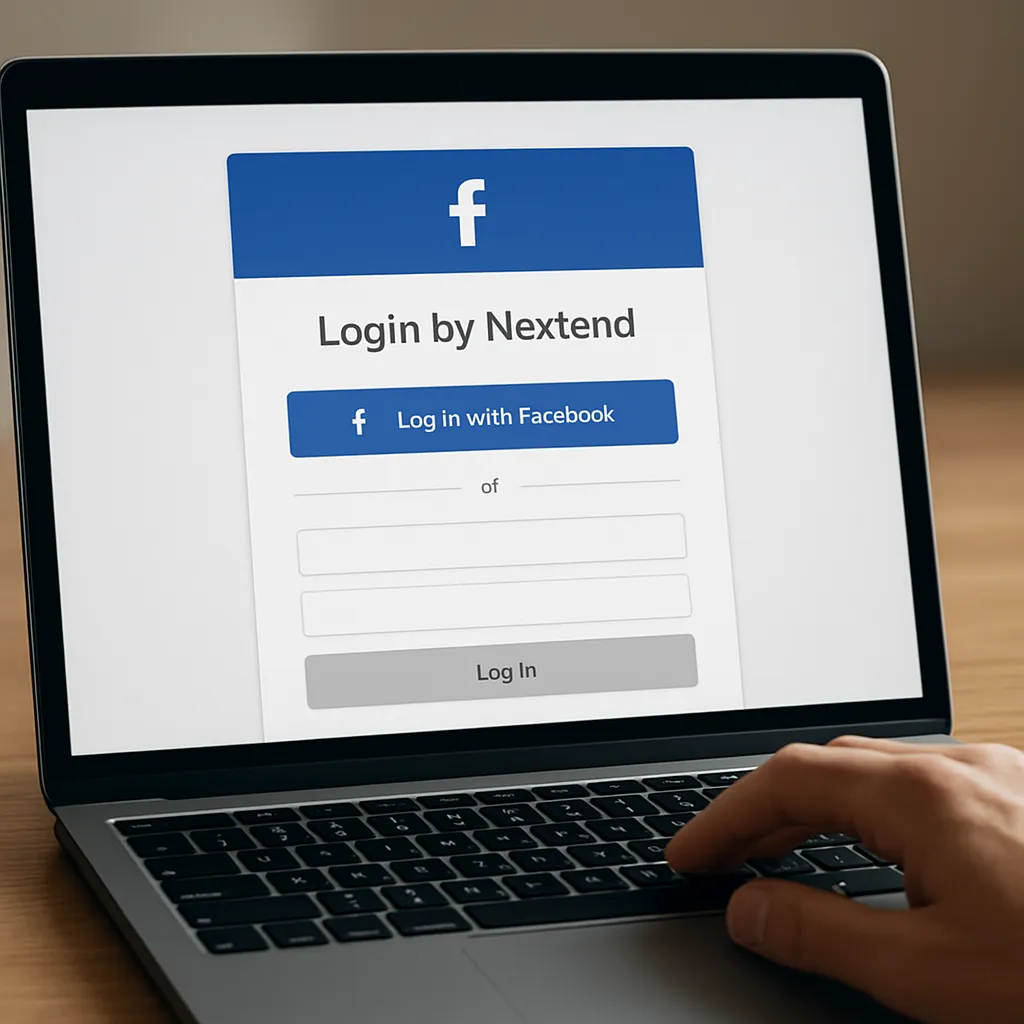
Facebook Login by Nextend
Facebook Login by Nextend is a popular WordPress plugin that makes it possible for visitors to sign in or register on a website using their Facebook accounts. Instead of creating new usernames and passwords, people can authenticate with a single click, which simplifies onboarding and encourages more frequent logins. For site owners, this means higher conversion rates for registrations and a more convenient way to manage user access. For users, it is a familiar and seamless experience that builds trust and reduces friction before they interact with the content, community or online store.
Key features and practical applications of Facebook Login by Nextend
The main task of Facebook Login by Nextend is to integrate a secure Facebook authentication flow with WordPress, without the need to write custom code. Once installed and configured, the plugin adds login buttons to the standard WordPress login form, registration page, and other strategic locations, depending on theme and shortcode placement. This allows users to enter with their existing social identity, while the plugin automatically creates or connects a WordPress account in the background.
One of the standout features is the ability to simplify the registration process to a single step. When a new visitor clicks the Facebook button, the plugin requests permission to access basic profile data such as name and email. After permission is granted, a new WordPress user account is created and associated with the Facebook profile. This eliminates long registration forms, verification emails and forgotten passwords that often discourage people from completing sign‑up processes.
Facebook Login by Nextend also supports customizing the location and style of the login button. Site owners can use shortcodes or widgets to place the Facebook login option in sidebars, pop‑ups, custom landing pages, or checkout flows. That flexibility is important for aligning the social login element with brand identity and user journeys. Proper placement and visual integration increase the chance that visitors will notice the option and actually use it, especially on mobile devices where convenience is critical.
Compatibility with common membership, e‑commerce and community plugins increases the value of this tool. Integrations with WooCommerce, BuddyPress or other user‑centric systems enable single‑click access to online shops, forums or learning platforms. Existing customers can link their WordPress accounts to Facebook to speed up future logins, and new customers can skip the classic account creation at checkout. As a result, websites that rely on user engagement and returning visitors gain a smoother interaction pattern.
A useful detail is how the plugin handles existing accounts. If a user registers via Facebook with an email address that already exists in the WordPress database, Facebook Login by Nextend can be configured to connect the new social login to the existing user profile instead of creating a duplicate. That prevents fragmentation of user data and avoids confusion when visitors try to log in using different methods. For administrators who manage large databases of accounts, this automatic linking mechanism saves manual effort and improves data consistency.
Administrators also benefit from detailed configuration options around permissions and privacy. It is possible to define exactly which profile fields should be imported from Facebook and whether certain data should be stored in WordPress user meta fields. For example, website owners may choose to store profile pictures, first and last names or locale settings. Some developers use that information to personalize dashboards, comments, or welcome messages, which makes the user experience feel more tailored without requiring extra steps from the visitor.
From a technical perspective, Facebook Login by Nextend handles the OAuth 2.0 authentication flow, token exchange and callback URLs. That kind of process can be complex and error‑prone if implemented from scratch, especially when Facebook updates its API. With a dedicated plugin, updates and compatibility fixes are centralized and easier to manage. This is particularly important for non‑technical site owners who need reliable social login but do not have the resources to maintain custom integrations.
Impact on SEO, performance and user experience
Facebook Login by Nextend is often discussed in the context of search engine optimization, even though it is not an SEO plugin in the traditional sense. It does not directly change metadata, schema markup or on‑page content that search engines crawl. However, it can have an indirect impact on SEO through user behavior metrics, accessibility of content and engagement. Understanding these relationships helps to assess whether the plugin is a meaningful component of a broader optimization strategy.
Search engines increasingly value signals like dwell time, pages per session and the likelihood that a user will return to a site. By making login and registration easier, Facebook Login by Nextend can encourage more interactions behind the login wall: posting comments, joining discussions, adding product reviews, saving wishlists or accessing user‑specific content. All of those actions increase the depth of engagement with the site. When users stay longer and explore more pages, behavioral indicators often improve, which sends positive signals to search algorithms, though the exact weighting is never fully disclosed by search engine providers.
The plugin can also indirectly influence the volume and quality of user‑generated content. For blogs and news sites, it becomes simpler to allow visitors to comment with their Facebook identity rather than creating a dedicated account. This can lead to more frequent participation, more discussions and richer content surrounding each article. Fresh and relevant user‑generated content, in the form of comments or reviews, can broaden the long‑tail keyword footprint of a website, which sometimes helps capture additional organic traffic without producing new editorial articles.
However, there are SEO caveats. If a site hides much of its content behind a login enforced via Facebook or other social methods, search engines may not be able to crawl or index those pages. While the plugin itself does not cause this limitation, site owners should carefully decide which content is public and which requires authentication. Valuable pages intended to rank in search results should remain accessible without login, or should at least provide indexable previews. Facebook Login by Nextend is most beneficial for community, profile or transactional areas that supplement, rather than replace, publicly visible content.
Performance is another crucial element in SEO. The plugin introduces additional scripts and requests linked to the Facebook API, which can have a small impact on loading times if not configured thoughtfully. To minimize this, site owners can make strategic choices about where to load the login button. For example, instead of loading social login scripts across every page, they could limit them to login, registration and account pages, or to key conversion pages. When combined with caching and optimization plugins, the performance effect is usually negligible, but it is worth monitoring using tools like Google Lighthouse or WebPageTest.
From a usability perspective, the value of Facebook Login by Nextend is more direct and obvious. Users are accustomed to social login options across the web, and the Facebook button is recognized almost instantly. For many visitors, especially those on mobile devices, typing a long email and password is inconvenient and error‑prone. One‑tap login reduces frustration, which can lower abandonment rates on sign‑up forms or checkout steps. This improved usability does not just help with conversions; it also builds a perception of professionalism and credibility for the brand.
On the other hand, reliance on Facebook as an identity provider has some potential downsides that indirectly intersect with user experience and SEO. Not all audiences are active on Facebook, and some users are reluctant to share data between platforms. A balanced approach is to offer Facebook Login as an additional option rather than the only way to create an account. Keeping a traditional email and password registration flow, or alternative methods like Google login, ensures accessibility for a broader population and avoids excluding users who prefer different privacy choices.
Privacy and data protection regulations, such as GDPR in the European Union, must also be considered. Facebook Login by Nextend itself provides settings for data handling and consent, but the site owner is ultimately responsible for compliance. It is advisable to update the privacy policy to explain how social login works, which data is stored, and how users can revoke permissions. Transparent communication fosters trust, which supports long‑term engagement and helps prevent issues that could hurt reputation or trigger legal consequences. While this is more of a legal requirement than an SEO tactic, it still contributes to overall site authority and user loyalty.
For multi‑language or international sites, the plugin can support localized login experiences. Facebook’s interface is automatically displayed in the language of the user’s account, making the login dialog familiar and understandable, even when the website itself uses another language. This helps remove barriers for users who might otherwise be intimidated by foreign‑language forms. A smoother interaction for global audiences can increase conversions and help a site grow in markets where it has not yet built strong organic visibility.
Opinion, benefits and potential limitations of using this plugin
Facebook Login by Nextend has earned a solid reputation in the WordPress ecosystem because it provides a focused and reliable function: easy Facebook authentication for visitors and site owners. In many practical scenarios, the plugin is a smart addition to membership sites, online courses, e‑commerce platforms and any project that depends on user accounts. The ability to integrate social login without writing custom code or dealing with the complexities of the Facebook API is a compelling benefit, particularly for small businesses and individual creators.
From an editorial perspective, the plugin’s strengths lie in three major areas: convenience, conversion and integration. Convenience refers to the reduced friction for end users, who generally appreciate simplified login flows. Conversion relates to the tendency for more visitors to complete sign‑up or login forms when they can use existing identities. Integration covers how well the plugin interacts with WordPress core, themes and other plugins. In all three areas, Facebook Login by Nextend delivers a well‑balanced solution that rarely causes conflicts when configured correctly.
One of the interesting aspects of this plugin is how it contributes to a broader digital strategy that connects site engagement with social media presence. When users login with Facebook, there is often a perception that the site is part of a larger trusted ecosystem. That perception can be particularly valuable for newer brands that have not yet established strong name recognition. By leveraging a familiar identity provider, they can borrow a bit of that perceived reliability and reduce visitor hesitation about creating accounts or making purchases.
The plugin also assists administrators with user management. Instead of handling lost password requests and account verification emails manually or through default templates, many of these issues become less frequent because users rely on their Facebook credentials. This does not eliminate the need for support, but it can reduce the volume of routine account access problems. For larger communities with thousands of members, that time saving can translate into lower support costs and a more scalable approach to account handling.
Despite these positives, there are limitations to consider before adopting Facebook Login by Nextend as a core element of a site. Dependency on Facebook as an identity provider means that any changes in Facebook’s API policies, outages or access restrictions can temporarily affect login functionality. The plugin developers regularly update their code to adapt, but there is an inherent reliance on an external platform. To mitigate this risk, it is wise to maintain alternative login methods and to test them periodically, ensuring that users can always access their accounts even if Facebook login encounters issues.
Another limitation is the potential mismatch between the website’s target audience and the Facebook user base. Some demographics, such as younger users in certain regions or privacy‑sensitive groups, may no longer favor Facebook as their main social network. In such cases, the impact of the plugin on registrations and engagement may be smaller than expected. Evaluating the audience with analytics data and surveys can help determine whether Facebook Login should be promoted prominently or used as a secondary option alongside other methods.
When considering security, Facebook Login by Nextend generally provides a robust framework because it leverages Facebook’s authentication infrastructure, which includes measures like suspicious login detection and optional two‑factor authentication. At the same time, site owners must still apply standard WordPress security practices: maintaining regular updates, using strong admin passwords, and protecting against common threats. Social login does not replace fundamental security hygiene, but it can reduce the risk associated with weak user‑chosen passwords since the core credential management is delegated to Facebook.
An additional point worthy of attention is data portability and user autonomy. While logging in with Facebook is convenient, some users may later wish to disconnect from social features or delete their Facebook accounts altogether. Facebook Login by Nextend makes it possible to handle such scenarios by offering ways to unlink the social account and rely on a standard WordPress login instead. Communicating this capability in account settings can reassure visitors that they are not locked into a single method of authentication, reinforcing respect for user choices.
Analytically minded site owners can also treat the plugin as a tool for understanding user behavior more deeply. By tracking how many registrations or logins come from Facebook versus traditional methods, they can draw conclusions about the success of different acquisition channels. For example, if a significant percentage of new users choose Facebook Login, this may justify increased investment in Facebook Ads or organic social campaigns. In this way, the plugin supports a more data‑driven approach to marketing and conversion optimization, turning the login mechanism into a source of insights as well as a usability enhancement.
In summary, Facebook Login by Nextend is a specialized plugin that focuses on delivering efficient and user‑friendly Facebook authentication within the WordPress environment. It does not transform SEO on its own, but it contributes indirectly by improving engagement, encouraging user‑generated content and reducing friction in key interactions. The benefits in terms of convenience, conversions and integration are clear for many types of sites, though they must be balanced against dependency on an external platform and the evolving habits of different audiences. For most WordPress projects that rely on user accounts, it remains a valuable and well‑regarded option that complements broader design, usability and marketing strategies.