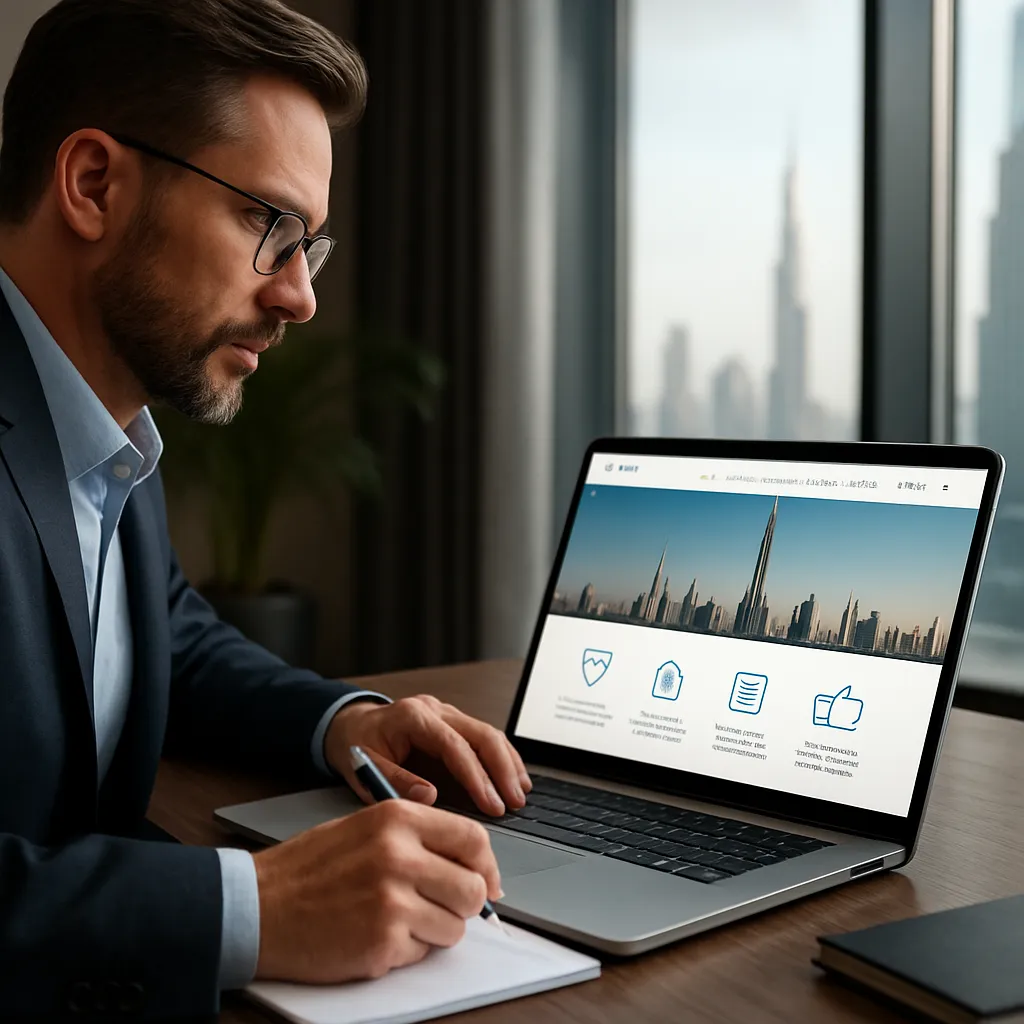
The Role of Trust Signals on Dubai Websites
Trust can make or break the performance of a website, especially in a competitive, fast‑growing market such as Dubai. Brands invest heavily in design, advertising and content, yet many still overlook the subtle but powerful trust signals that determine whether a visitor feels safe enough to buy, submit a lead form or share personal data. In a city that positions itself as a global digital hub, understanding how to design and optimize trust signals on websites is a critical element of effective internet marketing.
Why Trust Signals Matter So Much on Dubai Websites
Dubai’s digital ecosystem has unique characteristics that amplify the role of trust. The population is highly international, regulations are evolving fast, and users often interact with brands they have never heard of before. In such an environment, clear and credible trust signals are not a luxury; they are a conversion driver.
Globally, multiple studies confirm the impact of perceived trust on online performance. Research from Edelman’s Trust Barometer shows that around 81% of consumers say that trusting a brand is a deciding factor in purchase decisions. Various UX and CRO studies report that adding or improving visible security badges, customer reviews and clear contact information can raise conversion rates by 10–42%, depending on industry and implementation quality. Although precise statistics for Dubai alone are limited, local digital agencies often note that improving trust elements is one of the most cost‑effective ways to increase ROI on paid traffic in the region.
Dubai’s market has some specific trust challenges:
- A large share of new residents and tourists who are unfamiliar with local brands.
- High presence of cross‑border e‑commerce, where users worry about shipping, returns and customer support.
- Strong competition in key sectors like real estate, luxury retail, travel, hospitality and professional services.
- High smartphone penetration and mobile‑first behavior, which makes concise, instantly recognizable **trust** cues especially important.
For marketers, this context changes how landing pages, e‑commerce platforms and lead generation sites should be built. Trust is not just a legal or security requirement; it becomes a central part of the value proposition and a critical **conversion** lever.
Core Types of Trust Signals Relevant to Dubai
Trust signals can be grouped into several categories: security and privacy, brand and authority, social proof, transparency, user experience quality and local relevance. Each of these interacts with typical expectations of users in Dubai and the wider GCC region.
Security and Privacy Signals
The most basic trust layer is technical security. Yet it is also one of the easiest to overlook or miscommunicate. For users in Dubai, where online payment and fintech solutions are widely adopted, credible security signals are essential to reduce friction at checkout or when filling in sensitive forms.
- SSL certificates and HTTPS – A website without HTTPS is instantly suspicious. Browsers now warn users about “Not secure” sites, which can crush conversion rates. For Dubai businesses, a visible HTTPS lock icon, modern TLS protocols and absence of mixed‑content warnings are a minimum requirement.
- Recognizable payment gateways – Integrations with trusted gateways such as Stripe, PayPal, Checkout.com, Tabby, Tamara or local bank gateways act as implicit trust endorsements. Displaying their logos near the payment section boosts perceived safety.
- Security badges and seals – Logos from well‑known security providers or compliance programs (e.g., PCI DSS compliant) can reassure users. Overuse or fake badges, however, can have the opposite effect, so authenticity is crucial.
- Clear privacy policy – With the UAE introducing its own data protection regulations, users and corporate buyers increasingly expect transparent privacy notices, cookie policies and explanations of data usage, especially for lead generation in sectors like healthcare, finance and real estate.
Marketers should combine technical best practices with visible communication. It is not enough to implement security; users need to see and understand it in plain language. Microcopy near forms like “We protect your data with advanced encryption and will never share it without your consent” can improve both trust and form completion rate.
Brand, Authority and Professionalism Signals
A polished brand presentation and signals of legitimacy carry particular weight in Dubai, where residents are used to high standards in offline experiences: premium malls, top‑tier hotels and meticulously designed real estate projects. Users unconsciously expect a similar level of professionalism from digital experiences.
- Professional design and visual hierarchy – Clean layouts, consistent typography, high‑quality imagery and responsive design are basic indicators that a brand is serious. Poor design, cluttered pages or stock photos that do not match the local context immediately erode trust.
- Corporate information – Displaying the company’s legal name, trade license number, physical office address in Dubai (or elsewhere in the UAE) and phone numbers adds credibility. B2B buyers especially look for this before submitting large inquiries.
- Industry certifications and memberships – Real estate portals or agencies can show RERA registrations; medical clinics can list DHA or MOH approvals; financial services can show Central Bank of the UAE regulation; hotels can reference Dubai Tourism. Such validations are powerful **signals** of legitimacy.
- Media mentions and partnerships – Logos of reputable media outlets or well‑known partners (“As seen in Gulf News, Khaleej Times, Arabian Business”) can elevate authority quickly, provided they are genuine and up to date.
Every visible detail contributes to the user’s snap judgment: Is this a serious, established organization or a temporary operation that might disappear with my money or data?
Social Proof and Community Signals
Social proof is one of the most potent categories of trust signals and is directly linked to internet marketing strategy, content production and customer relationship management. In Dubai’s highly social, status‑conscious and influencer‑driven environment, this dimension is especially powerful.
- Customer reviews and ratings – Integrations with Google Reviews, Trustpilot, Booking.com, TripAdvisor, Careem or local listing platforms can display aggregated ratings. A BrightLocal survey (global) has shown that 87% of consumers read online reviews for local businesses; similar behavior is clearly observable in Dubai, especially for restaurants, clinics, hotels and service providers.
- Testimonials with real identities – Written testimonials should include real names, photos and, where relevant, company names and positions. Video testimonials, especially from recognizable local clients or influencers, can dramatically lift credibility.
- Case studies and success stories – Detailed stories showing challenges, solutions and outcomes for UAE‑based clients help visitors imagine their own success and reduce perceived risk in B2B and high‑value B2C decisions.
- Social media presence – Visible links to active Instagram, LinkedIn, X (Twitter), TikTok or Facebook profiles with engaged followers act as ongoing trust signals. For Dubai audiences, Instagram and LinkedIn are particularly strong credibility drivers.
From an internet marketing perspective, collecting and showcasing social proof should be an always‑on process: running post‑purchase review campaigns, encouraging UGC (user‑generated content), and repurposing social proof snippets across landing pages, email funnels and paid ads.
Localization, Cultural Fit and Legal Trust Markers
While universal UX and trust principles apply everywhere, Dubai’s demographic and cultural structure adds layers that international brands sometimes underestimate. Localization is not just about language; it is also about cultural relevance, legal conformity and alignment with local expectations regarding service and support.
Local Relevance and Language Choices
Dubai’s residents come from over 200 nationalities, with Arabic and English as dominant business and consumer languages. A website that recognizes this diversity and still feels coherent can gain a clear trust advantage.
- Bilingual or multilingual interfaces – Offering both English and Arabic versions signals respect for local users and institutional stakeholders. For government‑linked services or real estate, an Arabic interface is often expected.
- Localized content and imagery – Visuals that reflect Dubai’s skyline, lifestyle, dress codes and environments feel more authentic than generic Western stock images. Content referencing local landmarks, events or regulations subtly signals that the brand truly operates in the city.
- Currency and payment options – Displaying prices in AED by default and supporting payment methods popular in the UAE (credit cards, local bank transfers, BNPL providers, sometimes cash on delivery) immediately reduce friction.
Global CRO research indicates that localization, including language and local currency, can increase conversions by 20–70% for certain categories. In Dubai, where users often compare multiple local and international providers, this can be the difference between a closed sale and abandonment.
Regulatory and Legal Signals
Dubai and the UAE have been steadily tightening regulatory frameworks around e‑commerce, real estate, healthcare, financial services and data protection. For online marketing, this translates into added opportunities to display compliance as trust signals.
- Licenses and registrations – Explicitly listing trade licenses, free‑zone registrations, medical or educational accreditations and linking to official registries where possible offers verifiable proof of legitimacy.
- Terms and conditions clarity – Return policies, warranties, service level agreements and dispute resolution mechanisms must be written in clear, accessible language. Obscure conditions feel risky; transparent ones lower perceived risk, especially for cross‑border buyers.
- Data protection statements – Mentioning alignment with the UAE Personal Data Protection Law (PDPL) and possibly with global frameworks like GDPR (for international audiences) conveys seriousness about privacy.
For international companies targeting Dubai, featuring relevant local compliance information can help overcome the skepticism some users have toward overseas sellers.
Service Expectations and Human Availability
Another culturally relevant aspect of trust in Dubai is the expectation of responsive, often human‑led support. Many residents are used to concierge‑style services and direct contact channels.
- Visible phone numbers and WhatsApp links – Click‑to‑call and WhatsApp chat buttons, especially with local +971 numbers, act as psychological safety nets: users know they can reach someone if something goes wrong.
- Live chat and quick response promises – Stating response times (e.g., “We reply within 15 minutes during business hours”) and actually maintaining them turns a generic feature into a trust guarantee.
- Clear operating hours and time zones – Explicitly mentioning “Dubai time (GST)” avoids confusion for international visitors and sets realistic expectations.
In many A/B tests worldwide, adding phone numbers or live chat widgets has been shown to increase conversions, particularly for high‑value purchases. In Dubai’s service‑driven sectors, this effect is often stronger, as users expect immediate interaction.
Designing for Trust in Internet Marketing Campaigns
Trust signals should not be treated as decorative extras added at the end of a web design project. They must be carefully integrated into the customer journey and performance‑measured like any other marketing element. This is particularly true for paid campaigns, SEO landing pages and lead funnels that drive a significant share of revenue for Dubai companies.
Trust‑First Landing Page Strategy
When a user clicks an ad or a search result, they form an impression in milliseconds. A trust‑first strategy ensures that the first screen includes the most reassuring elements without overwhelming the user.
- Above‑the‑fold essentials – Clear value proposition, concise headline, key benefit, primary call‑to‑action and at least one strong trust signal (e.g., rating stars, “Trusted by 2,000+ Dubai customers”, security badge near form).
- Progressive disclosure of details – As users scroll, they see deeper proof: testimonials, case studies, certificates, guarantees, FAQs about concerns (shipping, returns, data, reliability).
- Consistent visual language – Trust elements (such as badges and partner logos) should be designed or aligned to match the site’s aesthetic. Mismatched colors or pixelated logos look unprofessional and reduce their positive impact.
For Dubai‑focused campaigns, local relevance should appear near the top of the page: mentions of serving the UAE market, Dubai‑based support, or examples from well‑known local companies. This immediately separates the brand from anonymous international competitors.
A/B Testing and Analytics for Trust Elements
From a performance marketing point of view, trust signals must be tested like headlines or images. Some changes will significantly increase conversions; others might be ignored or even reduce clarity.
- Testing testimonial placement and format – Carousel vs. static; text vs. video; number of testimonials; local vs. international clients. Metrics to watch: form completion rates, bounce rate, scroll depth.
- Experimenting with security messaging – Different microcopy near forms (“Secure checkout”, “100% encrypted”, “Protected by bank‑level security”) and different security badges.
- Evaluating the impact of risk‑reversal – Money‑back guarantees, free cancellation, free return policies. In hotel and travel sectors in Dubai, flexible cancellation has proven to significantly increase bookings, especially in uncertain periods.
Marketers should integrate trust metrics into dashboards: track which channels bring more skeptical visitors (e.g., cold display traffic), where additional reassurance is needed, and which trust assets produce the biggest lift in conversion rate or average order value.
Aligning Content Marketing and SEO with Trust Building
Content marketing and SEO are long‑term trust engines. For Dubai websites, authoritative content not only helps win rankings but also demonstrates expertise to visitors who are evaluating providers.
- Educational resources – Guides on topics like “How to buy property in Dubai as an expat” or “What to know before choosing a Dubai dental clinic” position the brand as a helpful expert, not just a seller.
- Data‑driven insights and local statistics – Publishing proprietary or curated data (for example, on Dubai rental trends, tourism patterns, e‑commerce behavior) shows depth and seriousness, especially for B2B audiences.
- E‑E‑A‑T alignment – Google’s focus on Experience, Expertise, Authoritativeness and Trustworthiness is directly connected to how content is presented. Including author bios with credentials, citing sources and using clear structures all reinforce trust signals for both humans and algorithms.
When content is repurposed into email sequences, social media posts or webinars, it compounds trust across touchpoints. A user who has seen valuable content before reaching the website is far more likely to respond positively to calls‑to‑action and payment prompts.
Future Trends in Trust Signals for Dubai’s Digital Market
As Dubai continues its transformation into a global smart city and innovation hub, trust signals on websites will also evolve. Several emerging trends are shaping what users will expect over the next few years.
Stronger Emphasis on Data Ethics and Transparency
With AI, personalization and big data analytics embedded in more marketing strategies, visitors will increasingly look for reassurance about how their information is used. Clear dashboards for cookie preferences, options to control communication frequency, and easy access to data deletion requests will become more common trust factors.
Businesses operating in Dubai’s financial, health and government‑related sectors will likely have to communicate compliance and ethics at a higher standard than generic global competitors. Those that manage to turn transparency into a brand asset will gain a measurable advantage in lead generation and customer loyalty.
Integration of Verified Identities and Decentralized Credentials
Dubai’s interest in blockchain and digital identity may influence site‑level trust in the medium term. Verified identity badges, blockchain‑recorded certifications or tamper‑proof reviews could become part of how advanced websites prove authenticity.
For high‑risk categories such as luxury goods, high‑value B2B contracts or education, these technologies may offer new ways to combat fraud and reinforce the perception that the brand operates at the cutting edge of both innovation and reliability.
Hyper‑Personalized Yet Trust‑Aware UX
AI‑driven personalization can significantly improve relevance, but it may also raise privacy concerns. Dubai websites that openly explain how personalization works, allow users to adjust it, and show tangible benefits (such as faster discovery of relevant properties or offers) will be better positioned to maintain trust while deploying advanced marketing tools.
Microcopy, onboarding tutorials and clear opt‑outs will be crucial here. The aim is not just legal compliance but a user feeling of control and respect.
Conclusion: Trust as a Strategic Marketing Asset in Dubai
Trust signals on Dubai websites are not just aesthetic additions or technical checkboxes. They are strategic tools that directly influence how effectively paid traffic is monetized, how many visitors convert into leads or customers, and how long relationships last. In a market defined by diversity, rapid growth and high expectations, investing in **credibility** and perceived **security** is as important as investing in campaigns and creative assets.
The most successful digital brands in Dubai view trust as a measurable performance variable. They audit their sites for weak points, integrate **social** proof and **reputation** markers throughout the journey, localize content, highlight compliance and ensure responsive human support. They test and evolve their trust architecture alongside their ads, SEO strategies and marketing automation flows.
Ultimately, websites that make trust visible, understandable and consistent stand out in a crowded digital landscape. They convert better, face fewer objections, and build stronger long‑term equity. For marketers in Dubai, mastering trust signals is not merely an optimization tactic; it is a foundation for sustainable competitive advantage in the online arena.