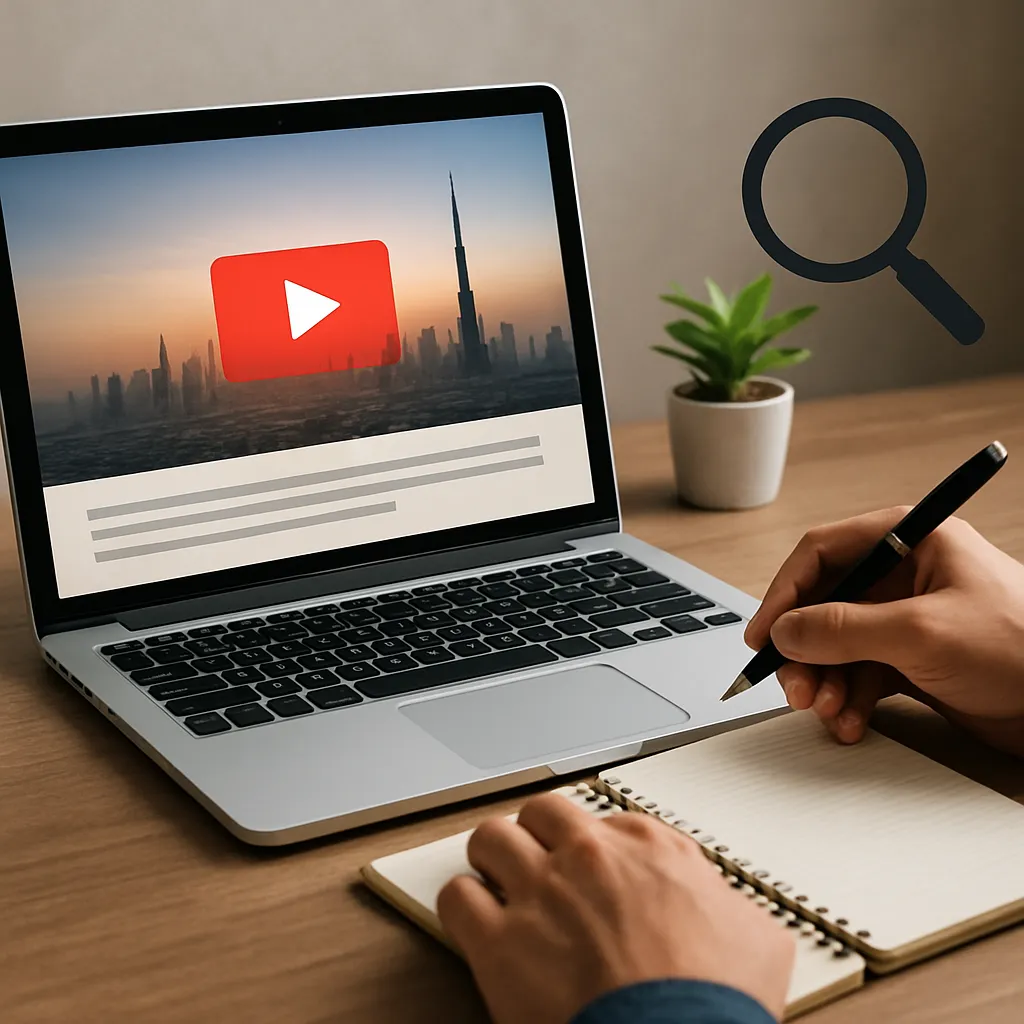
How to Optimize Video Descriptions for Dubai Searches
Video is one of the most powerful tools for reaching audiences in Dubai, a city where digital adoption, smartphone penetration and social media usage belong to the highest in the world. To stand out in YouTube, TikTok, Instagram Reels or Facebook Watch results specifically for Dubai‑related searches, brands need far more than eye‑catching thumbnails. Strategic optimization of video descriptions, tailored to local search intent, language and culture, can significantly boost visibility, watch time and conversions for both international and local businesses.
Understanding the Dubai Search Landscape for Video
Dubai is a hyper‑connected hub where residents and visitors rely heavily on online video for information, entertainment and product research. Before optimizing descriptions, it is essential to understand how users in and around Dubai search, which platforms they prefer and what types of content drive engagement.
The UAE consistently ranks among the countries with the highest social media penetration globally. According to various digital reports, social media usage in the UAE often exceeds 95% of the population, and YouTube penetration typically hovers near universal levels among internet users. This means that video content is not a niche channel but a dominant medium for discovery, learning and buying decisions.
Several factors shape search behavior in Dubai:
- A bilingual or even trilingual environment: searches are carried out in both English and Arabic, with a growing presence of Hindi, Urdu and other languages due to the expatriate population.
- A mix of local and tourist intent: queries might include “best brunch Dubai Marina,” “Dubai desert safari review,” or “how to start business in Dubai free zone,” all of which may be filtered through video‑first platforms like YouTube or TikTok.
- High mobile dominance: most searches are performed on mobile devices, which amplifies the importance of the first lines of your video description because they are most visible on small screens before the user taps “More.”
For marketers, this context underscores why optimizing descriptions is not a secondary task. It is a core component of search‑driven video strategy, influencing click‑through rates, ranking signals and conversions. YouTube states that adding detailed descriptions and relevant keywords helps its algorithm understand content better, increasing the likelihood of appearing in search results and suggested videos. In competitive verticals like real estate, tourism, finance or luxury retail—where Dubai is a global hotspot—every additional relevance signal matters.
From an internet marketing perspective, video descriptions play at least four critical roles:
- They provide context for algorithms to classify and rank your content.
- They guide viewers with links and calls‑to‑action, turning views into leads or sales.
- They help differentiate local relevance, signaling to platforms that your content is about Dubai, not another city with a similar name or unrelated topic.
- They enable semantic optimization, which is increasingly important as search engines and recommendation systems rely on natural language understanding.
Crafting High‑Impact Video Descriptions for Dubai Searches
Effective description optimization for Dubai combines classic SEO best practices with local insights. The goal is to clearly explain what the video is about, include strategically chosen Dubai‑related keywords and deliver compelling copy that encourages viewers to watch and take action.
1. Prioritize the First 150 Characters
On most platforms, especially on mobile, only the first line or two of your description is visible by default. In YouTube search results, for example, the snippet that shows under the title is pulled from these first characters. This makes the opening sentence a prime piece of real estate for both engagement and discoverability.
For Dubai‑focused content, you should:
- Include the primary Dubai keyword in the first sentence, such as “Dubai real estate investing,” “Dubai travel guide,” or “Dubai social media marketing tips.”
- Make it explicit who the video is for: “for expats,” “for tourists,” “for SMEs in Dubai,” “for luxury shoppers.”
- Hint at a clear benefit or outcome, for example “how to save money,” “how to avoid fines,” or “how to get more customers.”
An example opening could be: Learn how to generate qualified leads in Dubai using optimized YouTube descriptions and localized keywords that attract ready‑to‑buy customers. This line immediately aligns content with Dubai, with optimization, and with a business result—lead generation.
2. Integrate Localized Keywords and Phrases
Keyword research is still fundamental, but for Dubai searches, the focus should be on blending global terms with local modifiers. Typical patterns include:
- “in Dubai” or “Dubai‑based” appended to industry terms: “digital agency in Dubai,” “Dubai restaurant review,” “property investment Dubai.”
- Neighborhood and landmark names: “Dubai Marina,” “Downtown Dubai,” “Business Bay,” “Jumeirah Beach,” “Palm Jumeirah,” “Dubai Mall,” “Dubai Airport.”
- Regulatory and business‑focused phrases: “Dubai free zone company setup,” “VAT in UAE,” “DED license in Dubai.”
For example, a real estate video might include in its description: This video covers off‑plan property investment in Business Bay and Downtown Dubai, with a focus on ROI, rental yields and financing options for expats. By naturally weaving in neighborhood names and investment‑related terms, you help the algorithm connect your video with frequently searched Dubai queries.
Tools like Google Keyword Planner, YouTube autocomplete suggestions and even Instagram or TikTok search hints can reveal how users phrase Dubai‑related queries. Analyze these and build a list of core and long‑tail keywords to incorporate into your descriptions. While keyword density is less rigid than in classical SEO, you still want to repeat essential phrases two to four times throughout a longer description in a natural, human‑readable way.
3. Address Bilingual and Multilingual Audiences
Dubai’s audience is remarkably diverse. A sizable share of searches related to lifestyle, shopping, government services and small business are in English, but Arabic remains crucial, especially for government, banking, charity and news‑related content. Additionally, large segments of the population speak Hindi, Urdu, Tagalog and other languages.
To adapt your video descriptions to this reality, you can:
- Add a short Arabic summary after the English description, including Arabic equivalents of your main keywords (e.g., “دبي مارينا”, “سياحة دبي”, “تسويق رقمي في دبي”).
- Include both English and Arabic transliterations for particularly important search terms, especially place names and service categories.
- Test which language mix results in better retention and click‑through rates by A/B testing thumbnails, titles and descriptions across similar videos.
On YouTube, you can also use the “translations” feature to add titles and descriptions in multiple languages. This is beneficial if you have a large Arabic‑speaking following or if your analytics show significant traffic from Saudi Arabia, Egypt or other MENA countries interested in Dubai.
4. Structure Descriptions for Scannability and Engagement
A long block of text is easy to ignore, especially on mobile. Breaking the description into segments increases readability and helps both viewers and algorithms identify key themes. A typical structure for a Dubai‑focused marketing video might look like:
- Opening hook (one to two sentences with main keyword and benefit).
- Short paragraph outlining what the viewer will learn.
- Key topics as bullet points (e.g., “Dubai lead generation,” “Google Ads for UAE,” “local influencer partnerships”).
- Links to website, landing pages, maps or booking systems relevant to Dubai users.
- Calls‑to‑action: subscribe, comment, download Dubai‑specific guides or checklists.
- Hashtags and keyword tags where relevant.
For instance, if the video is about “How to market a restaurant in Dubai,” the description could include bullet points like:
- How Dubai residents discover new restaurants via Google Maps, Zomato, Instagram and TikTok.
- Optimizing your Google Business Profile for Dubai searches.
- Using Instagram Reels and TikTok content with location tags like “Dubai Marina” or “JLT.”
- Working with local influencers to reach foodies and expats.
Each bullet reinforces Dubai relevance and uses terminology that search engines can easily parse. Scannability also encourages users to spend more time reading, which can indirectly signal quality to some platforms.
5. Embed Clear, Localized Calls‑to‑Action
A description should not only attract viewers but guide them towards the next step in your sales funnel. In Dubai, where many purchases are high value—real estate, hospitality, luxury goods—strong calls‑to‑action connected to local context are essential.
Examples of localized CTAs include:
- “Book a free consultation in our Dubai Marina office: [link].”
- “Download our Dubai marketing checklist for small businesses: [link].”
- “Reserve your desert safari spot for this weekend: [link to booking page].”
- “Visit our showroom in Downtown Dubai – map and directions here: [Google Maps link].”
Including specific districts, malls or landmarks makes your offer feel tangible and relevant to people on the ground. Additionally, adding time‑sensitive phrases like “this week,” “Ramadan offers,” or “Dubai Shopping Festival discounts” can tap into the city’s event‑driven purchasing behavior.
6. Use Time Stamps and Chapters for Complex Topics
For educational or long‑form content—such as “How to start an e‑commerce business in Dubai” or “Complete guide to Dubai property taxes”—timestamps and chapters in the description significantly enhance user experience. They allow viewers to jump directly to the section that answers their question, reducing abandonment.
For example:
- 00:00 – Introduction and who this Dubai e‑commerce guide is for
- 02:15 – Legal requirements and trade licenses in Dubai (DED, free zones)
- 08:45 – Setting up payment gateways for UAE customers
- 13:20 – Logistics and last‑mile delivery in Dubai
- 20:05 – Digital advertising channels for Dubai shoppers
YouTube can display these chapters on the video progress bar, which encourages longer viewing sessions—an important ranking factor. And because the chapter titles often contain keywords (e.g., “trade licenses in Dubai”), they further reinforce topical relevance.
Advanced Local SEO and Analytics Techniques for Dubai Video Marketing
Beyond crafting strong copy, serious optimization for Dubai searches involves connecting your video descriptions with broader local SEO efforts, data‑driven testing and cross‑platform consistency. The more targeted your approach, the better your chances of capturing high‑intent search traffic in a competitive city.
1. Align Video Descriptions with Local Landing Pages
To maximize conversion potential, video descriptions should link to landing pages that are specifically tailored to Dubai audiences instead of generic global pages. This alignment helps both users and search engines understand that your business genuinely serves the Dubai market.
For instance:
- A video on “How to choose a digital agency in Dubai” should link to a landing page optimized for “digital marketing services in Dubai,” featuring client testimonials from local brands, case studies, pricing in AED and address details in Dubai.
- A tourism vlog about “3‑day itinerary in Dubai” should link to a trip planning page with Dubai hotel recommendations, local experiences and maps.
When Google sees that the video and target page share similar Dubai‑centric keywords, NAP (Name, Address, Phone) data and structured data, it can be more confident in ranking both for relevant local searches.
2. Incorporate Local Schema and Metadata (Where Possible)
While platforms like YouTube control most metadata, you still have opportunities to enhance discoverability through external channels. Embedding videos on your website with appropriate schema markup (for example, VideoObject with location‑relevant text) can improve their visibility in Google’s video results for Dubai‑related queries.
Your on‑site video pages should:
- Use titles and headings that repeat key Dubai phrases from your video description.
- Include a transcript or detailed summary that mentions Dubai places, services and user problems.
- Mark up business information with LocalBusiness schema, referencing Dubai addresses and geo coordinates.
This synergy between on‑platform descriptions and off‑platform SEO creates a stronger overall signal about what your video covers and who it serves.
3. Leverage Hashtags and Location Tags
On platforms such as YouTube Shorts, Instagram Reels and TikTok, hashtags and location tags function as lightweight classification systems. When optimizing for Dubai searches, these elements should echo, not replace, your descriptive text.
Effective examples might include:
- #Dubai, #MyDubai, #DubaiLife, #DubaiBusiness
- #DubaiMarina, #DowntownDubai, #JBR, #BusinessBay
- #DubaiMarketing, #UAEStartups, #DubaiRealEstate
Location tags like “Dubai, United Arab Emirates” or specific neighborhoods reinforce the geographic scope of your video. Research from various social platforms indicates that content with relevant hashtags tends to achieve higher reach and discoverability, though overuse or irrelevant tagging can be penalized or simply ignored. Focus on a balanced set of five to fifteen highly relevant tags rather than spamming every popular Dubai hashtag.
4. Analyze Watch Time, Click‑Through Rates and Local Traffic
To refine your descriptions over time, you need to observe how Dubai viewers interact with your content. Platform analytics, especially YouTube Analytics, provide key metrics such as:
- Watch time and average view duration from viewers in the UAE.
- Click‑through rate (CTR) from Dubai impressions, often tied to title, thumbnail and description quality.
- Traffic sources: how many viewers found you via YouTube search, suggested videos, external sites or social media.
- Top search terms that led viewers from Dubai to your videos.
By filtering your audience to the UAE or even drilling down into Dubai when possible, you can detect patterns. For example, you might find that videos whose descriptions mention “Dubai Marina” outperform those that mention only “Dubai,” or that including Arabic summary text correlates with higher completion rates among viewers from the Gulf region.
Over time, you can run experiments—rewriting the first 150 characters, adding or removing certain Dubai neighborhood names, changing CTAs—and measuring how these adjustments affect CTR and retention. This data‑driven loop moves you away from guesswork and toward continuous performance optimization.
5. Connect Videos to Dubai‑Focused Campaigns and Events
Dubai’s calendar is packed with events such as Dubai Shopping Festival, GITEX, Expo legacy activities, food festivals, art fairs and Ramadan campaigns. Search behavior spikes around these events, and video descriptions that reference them can ride temporary waves of attention.
For a retail brand, a description might highlight: Discover our Dubai Shopping Festival offers with up to 50% off on electronics in our Dubai Mall and Mall of the Emirates stores. For a B2B technology company, a GITEX‑themed video could say: In this GITEX Dubai preview, we share how UAE enterprises can leverage cloud solutions to cut infrastructure costs.
By incorporating seasonal keywords and hashtags tied to Dubai’s event landscape, you align your content with time‑sensitive search intent. Remember to update or archive outdated links and offers after the event to avoid confusing users and harming trust.
6. Build Playlists and Series Around Dubai Topics
Another advanced tactic is organizing your videos into playlists centered on Dubai themes and making sure each description reinforces that structure. Examples include:
- “Dubai Marketing for SMEs” – a playlist covering social media, SEO, paid ads and influencer collaborations specific to the city.
- “Dubai Neighborhood Guides” – a series profiling different districts, each with descriptions optimized for that area’s name plus typical search intent (“family living,” “nightlife,” “co‑working spaces”).
- “Starting a Business in Dubai” – step‑by‑step videos on legal, financial and operational aspects, each description linking to the others.
In every playlist description and individual video description, repeat the central Dubai theme and cross‑link to related episodes. This creates a cluster of content that signals depth and authority on Dubai topics, increasing your chances of dominating search and recommendations for key local queries.
7. Align Brand Voice with Dubai’s Cultural and Regulatory Context
Finally, optimizing descriptions for Dubai is not only about keywords and structure. Tone, cultural sensitivity and regulatory compliance also matter, especially in sectors like finance, healthcare, education and real estate.
You should:
- Avoid exaggerated claims that may conflict with UAE advertising standards, especially around financial returns, medical outcomes or legal guarantees.
- Use respectful, inclusive language that acknowledges Dubai’s multicultural society.
- Clarify any legal disclaimers in your description if you discuss investment, immigration, tax or health‑related topics.
- Reference official sources when appropriate, such as government websites or recognized regulators, particularly when advising on company setup, visas or compliance.
Respecting these norms enhances brand trust and reduces the risk of content takedowns or reputational issues. It also reassures viewers that the information they are getting about Dubai is accurate and responsibly presented.
When all these elements come together—keyword‑rich yet natural language, structured and localized descriptions, integrated CTAs and continuous testing based on analytics—video descriptions become a strategic lever for reaching high‑value audiences in Dubai. For marketers intent on capturing this dynamic, affluent and highly digital market, mastering description optimization is not optional; it is a core competency that directly affects visibility, engagement and revenue.