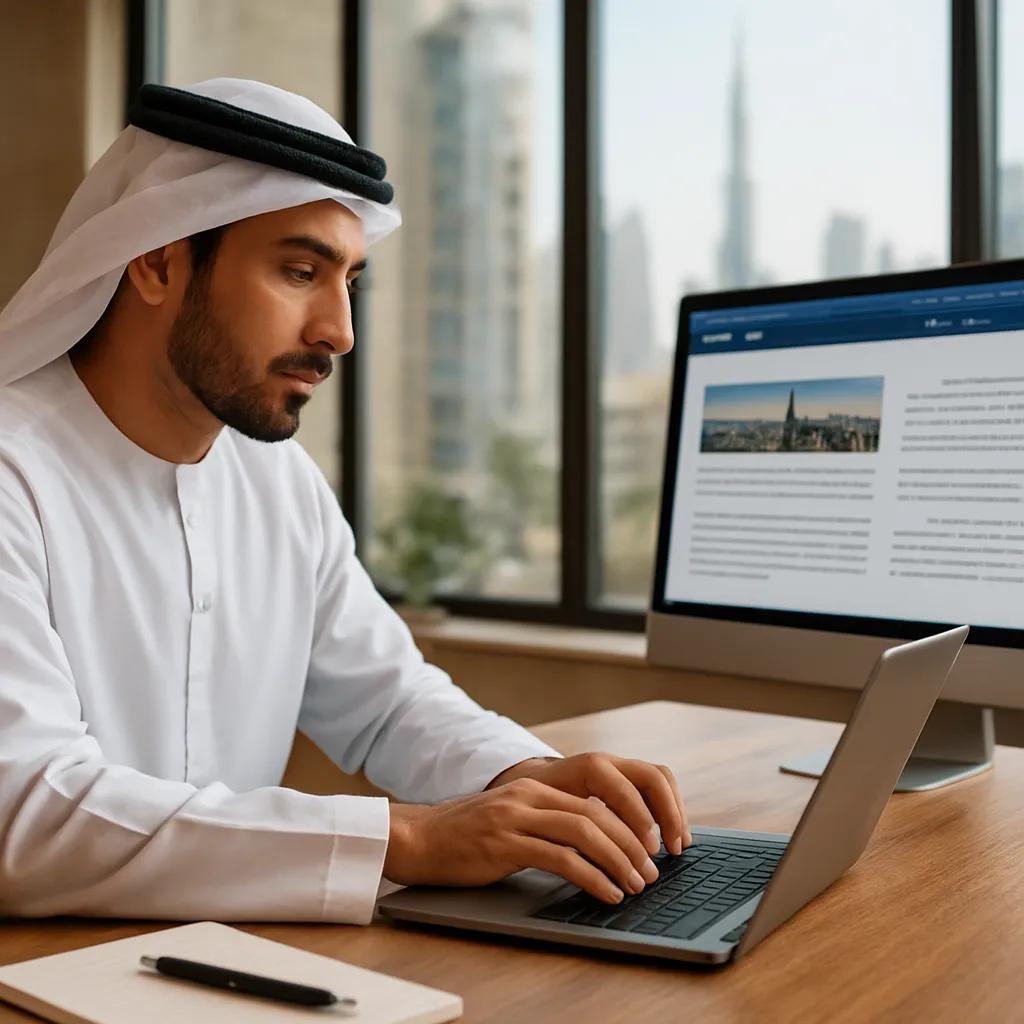
How to Optimize for Bilingual Users in Dubai
Marketing to bilingual users in Dubai means stepping into a city where cultural layers, languages, and digital behaviors intersect in a unique way. With a population dominated by expatriates and a strong presence of both Arabic and English in everyday life, brands must rethink how they build websites, campaigns, and content experiences. Instead of treating bilingual users as a minor segment, successful companies in Dubai design their entire **digital** strategy to be naturally bilingual from the ground up.
The bilingual reality of Dubai’s online audience
Dubai’s linguistic landscape is shaped by rapid economic growth, immigration and a deliberate push to become a global hub. Around 85–90% of the UAE’s residents are expatriates, and Dubai is the epicenter of this mix. English functions as the main business and lingua franca, while Arabic remains the official language and a strong cultural anchor. On top of that, large communities speak Hindi, Urdu, Tagalog, Malayalam, and other languages, but English–Arabic bilingualism is the axis that most online marketing revolves around.
Research on digital behavior in the GCC region shows that English dominates many online interactions, yet Arabic content demand continues to rise. Studies by various regional agencies suggest that Arab youth consume social media and entertainment largely in English, but still trust brands more when they see Arabic on key touchpoints: payment pages, customer support sections, legal information, or governmental interactions. In the UAE, smartphone adoption is above 95%, and time spent online is among the highest globally—often over 8 hours per day when combining social, messaging, and browsing. This makes bilingual optimization not only about translation, but also about how people switch languages on mobile, how they search, and how they share content.
What sets Dubai apart is this fluidity. A user might browse Instagram in English, search Google in Arabic, then interact with WhatsApp messages in both languages in the same hour. They might type an Arabic query using Latin letters (Arabizi), or mix both languages in a single search. For example, someone could look for “best dentist in Dubai” and later try “افضل دكتور اسنان في دبي” with similar intent but slightly different expectations of results and tone. Bilingual optimization means understanding and preparing for these shifts rather than assuming a single stable language preference.
From a marketing perspective, this environment generates unique opportunities. Bilingual users can amplify your brand across multiple linguistic communities, and Google’s algorithms can surface your content in two search ecosystems at once. Meanwhile, social platforms like Instagram and TikTok reward content that sparks high engagement regardless of language, but captions, hashtags, and on-screen texts still influence reach across different audience clusters. The challenge is to turn this complexity into a structured **strategy** instead of chaotic experimentation.
Designing bilingual marketing experiences for Dubai
To serve bilingual users effectively, brands must shape user journeys where language is a flexible tool rather than a rigid filter. This includes clear language switching options, culturally adapted visuals, user-friendly right-to-left layouts, and a content architecture that balances both languages without making either feel like an afterthought.
Building a bilingual website that really works
The first foundational choice is how to structure languages on your site. For SEO and user clarity, dedicated URLs are crucial. The two common options for the UAE market are:
Subdirectories: example.com/en/ and example.com/ar/
Subdomains: en.example.com and ar.example.com
Subdirectories are usually easier to maintain and consolidate domain authority. Whichever approach you choose, Google recommends using hreflang tags to signal language and regional targeting (e.g., en-AE, ar-AE). These tags help search engines deliver the right version to users in Dubai and avoid duplicate content issues between English and Arabic pages.
Beyond URL structure, bilingual UX decisions dramatically affect engagement:
Language switchers that are visible and intuitive should appear in the header on both desktop and mobile, not hidden in the footer or a crowded burger menu. Users should be able to switch language without being forced back to the homepage; instead, they should land on the equivalent page in the other language whenever possible.
Right-to-left layout for Arabic is essential. Don’t simply mirror text while keeping layout left-to-right. Navigation, breadcrumbs, pagination arrows, sliders, and progress bars should flip direction in Arabic. This may require a separate set of CSS rules, but it is a cornerstone of perceived professionalism and trustworthiness.
Consistent content parity between English and Arabic helps reduce friction. If a product, service, or blog post exists only in one language, bilingual users may feel that one language version is “secondary” or neglected. At minimum, core commercial and trust-building pages—pricing, services, about, contact, FAQ—should be kept in sync.
Mobile-first navigation is non-negotiable. Dubai’s audiences heavily rely on smartphones across demographics. Check that the Arabic navigation does not break on smaller devices when text expands or when fonts differ. Multi-level menus can be particularly tricky in right-to-left mode and require careful touch target sizing.
Typography plays an underappreciated role in bilingual optimization. Arabic scripts are visually denser and occupy more vertical space than Latin letters. A font that works well for English might become hard to read when extended to Arabic, especially at small sizes. Consider choosing an Arabic–Latin font pair designed to work together, maintaining visual harmony while respecting script legibility. Google Fonts offers popular pairs like Noto Sans/Noto Naskh, but brands often opt for custom combinations tailored to their identity.
Search behavior: bilingual and blended queries
Optimizing search for Dubai means going beyond direct translation and researching how people actually query in both languages. Users may:
Search in English only: “car rental Dubai marina”
Search in Arabic only: “تأجير سيارات دبي مارينا”
Use Arabizi or mixed queries: “ta2jir sayarat dubai marina” or “تأجير car في دبي”
Keyword research tools such as Google Keyword Planner, Ahrefs or SEMrush can show differences in search volume between English and Arabic terms. Industry reports indicate that in many commercial verticals—hospitality, real estate, luxury retail—English keywords may still command higher search volume, but Arabic often converts better for certain cohorts, such as local families or government-related searches. This is especially important for services like healthcare, education, and banking, where trust signals in Arabic influence decisions even when research starts in English.
To capture this demand, create native keyword lists rather than direct translations. For example, “cheap apartments Dubai” may map to “flats” rather than “apartments” for certain English speakers, while Arabic speakers might search “شقق للايجار في دبي بسعر مناسب” (apartments for rent in Dubai at a reasonable price), which reflects different slang, intent phrasing, and value emphasis. Native speakers or specialized linguists are invaluable in identifying these nuances. For bilingual users, you might even test content that acknowledges both languages, such as meta descriptions or social copy that uses bilingual triggers without confusing search engines.
Content creation: beyond translation toward localization
Translation alone rarely creates high-performing bilingual content. Localized content respects references, humor, idioms, and cultural cues. In Dubai, where a large share of Arabic speakers come from different countries (Emirati, Egyptian, Levantine, Gulf, North African), Modern Standard Arabic typically serves as the written norm. However, content tone may subtly shift based on target persona: a luxury Emirati audience often expects a more formal register, while younger Arab expats respond to a slightly more relaxed, pan-Arab style.
Consider these strategic content principles:
Plan topics per language instead of mirroring everything. Some topics resonate more with English-dominant users (global comparison guides, international certifications, expat relocation tips), while others perform better in Arabic (local regulations, family-oriented services, government programs, Islamic finance). Identify which language should lead per content theme.
Respect cultural sensitivities especially in imagery, metaphors, and examples. Visuals that work for Western expats may feel tone-deaf or overly casual for conservative segments. A bilingual content calendar should note where you need alternative visuals or case studies per language to align with audience expectations.
Align calls-to-action with language comfort. A bilingual user who read an English article might still prefer Arabic when filling out forms or speaking with a representative, especially for legal or financial commitments. Offering a language choice on key CTAs (“Request a call in Arabic or English”) can significantly improve conversion.
Localize units, dates, and references. Even when content is in English, referencing UAE public holidays, local banks, or typical salary ranges adds relevance compared to generic global articles. For Arabic pages, ensure date formats, number separators, and currency display feel natural to users accustomed to regional standards.
Effective localization also means reviewing how testimonials, case studies, and social proof are presented. Featuring Arabic-speaking customers on Arabic pages and a mix of expat and local voices on English pages mirrors the actual makeup of Dubai’s population and helps bilingual visitors find someone relatable, regardless of the language they used to arrive at your brand.
Data-driven tactics to optimize bilingual campaigns
Once the foundational bilingual experience is in place, continuous optimization relies on testing and analytics. Paying attention to how bilingual users move between your language versions, channels, and devices reveals opportunities to refine messaging, improve conversion paths, and allocate budget more intelligently between Arabic and English campaigns.
Tracking bilingual behavior with analytics
Start by setting up analytics to distinguish language versions clearly. Assign language-specific page groups, events, and funnels so that you can compare metrics like bounce rate, session duration, and conversion rate between English and Arabic. Check whether Arabic users disproportionately drop off at certain steps—such as checkout, form fill, or account creation—which may indicate mistranslation, layout issues in right-to-left mode, or mistrust of mixed-language content.
For example, an e-commerce site may observe that English pages account for 70% of traffic but only 55% of revenue, while Arabic pages drive higher average order values. In this scenario, investing in more Arabic product descriptions, Arabic-language reviews, and localized promotions could increase revenue from a smaller yet more lucrative segment. Meanwhile, English content might be optimized for recruitment of new visitors through SEO and paid media, serving more as a discovery and research layer.
Event tracking can also reveal language switching patterns. If a significant share of users toggle from English to Arabic at the pricing page, it suggests a need to surface cost-related reassurance, payment methods, and guarantees more prominently in Arabic. Conversely, if users frequently move from Arabic blog posts to English product pages, it might mean your English commercial layer is more comprehensive, but you need better Arabic commercial content to reduce friction.
Paid campaigns: segmenting by language and intent
On platforms like Google Ads, Meta (Facebook/Instagram), TikTok, and Snapchat, campaign structure can reflect Dubai’s bilingual reality. Rather than simply cloning campaigns into two languages, build them to reflect different intent patterns and audience segments.
Search campaigns in both languages should have distinct keyword sets, ad copies, and landing pages. Use language-based audiences where possible, and test whether Arabic query segments show stronger device or time-of-day patterns compared to English. For example, Arabic searches for government services may spike during working hours, while English searches for nightlife or leisure activities might surge during evenings and weekends.
Social campaigns with bilingual creatives can leverage platform-level localization. Meta’s tools allow you to serve different language copies based on user interface language or country settings. For Dubai, consider creative matrices where the video remains universal but overlays, captions, and CTAs adapt per language. This approach is especially effective for performance campaigns where ad fatigue is high, and you need multiple variations anyway.
Remarketing strategies should remember language. If someone entered through an Arabic article and added a product to cart on the Arabic site, retarget them primarily with Arabic ads and landing pages. For bilingual audiences who frequently switch, you can experiment with cross-language retargeting, but monitor conversion carefully to avoid confusion.
Audience lookalikes and interest targeting can be built separately from English and Arabic seed audiences. For instance, English-based lookalikes may skew more towards international expats, while Arabic-based lookalikes might capture Gulf and Arab expats who respond differently to promotions and seasonal offers (e.g., Ramadan campaigns, back-to-school, national holidays).
Cost metrics such as CPC and CPM may differ between Arabic and English campaigns due to competition differences. In some verticals, English auctions can be more competitive and expensive, while Arabic may still be underutilized. Regularly compare not just acquisition cost but also post-click performance by language. A slightly higher CPA in Arabic might be justified if lifetime value or referral rates are better among Arabic-dominant customers.
Social and content platforms: bilingual community building
For organic channels, community management in both languages is essential. Dubai-based followers often comment in English, Arabic, or a mix. A brand that responds promptly in the same language as the comment demonstrates cultural and linguistic flexibility, which increases loyalty and trust.
On Instagram and TikTok, subtitles and text overlays can be bilingual without cluttering the screen. One approach is to use English audio with Arabic subtitles, or vice versa, depending on your core audience. Another is to split formats: short Stories or Reels can be language-specific, while long-form YouTube content offers dubbed or subtitled options. Monitoring which language versions retain more watch time signals what your bilingual audience prefers.
Email marketing and push notifications also warrant segmentation. Tag subscribers by language preference whenever possible (via signup forms or behavioral language detection) and tailor not only language but offer framing. Ramadan campaigns, for example, may have deeply cultural resonance in Arabic, while English versions might lean on more explanatory or inclusive messaging for non-Muslim or newly-arrived expats who still participate in seasonal habits.
Conversion optimization and trust signals
Finally, conversion optimization in a bilingual context revolves around trust. For Dubai users, seeing credible, localized indicators in their preferred language can make the difference between browsing and buying. Elements that strongly influence trust include:
Customer support visibility: Clear indications that support is available in both Arabic and English—through phone, WhatsApp, live chat, or in-person visits—reduce perceived risk. Include language icons or microcopy such as “Support available in Arabic & English” directly near CTAs.
Legal and policy transparency: Terms of service, privacy policy, return policies, and warranty information should be available in both languages, with equal accuracy and prominence. Bilingual users are quick to notice if Arabic legal pages are outdated or simplified compared to English.
Payment confidence: For ecommerce, showing locally trusted payment options (such as regional gateways, bank transfers, or cash-on-delivery where appropriate) along with Arabic language confirmations and receipts increases completion rates among Arabic-preferred users. Even English-first users may find bilingual receipts reassuring in official or expense-related contexts.
Social proof tailored by language: Highlight awards, media mentions, and partnerships that carry weight for each audience. An English-speaking expat might respond to global certifications, while an Arabic-speaking customer may trust endorsements by local institutions, government initiatives, or Arabic-language influencers.
In all these efforts, the goal is not to force a choice between English and Arabic, but to create a continuum where users feel equally respected in both. Bilingual optimization in Dubai is ultimately about treating language as a strategic asset. By weaving it into website architecture, search and social campaigns, analytics, and conversion tactics, brands unlock a richer connection with one of the world’s most linguistically dynamic urban audiences—and turn that connection into measurable digital growth.