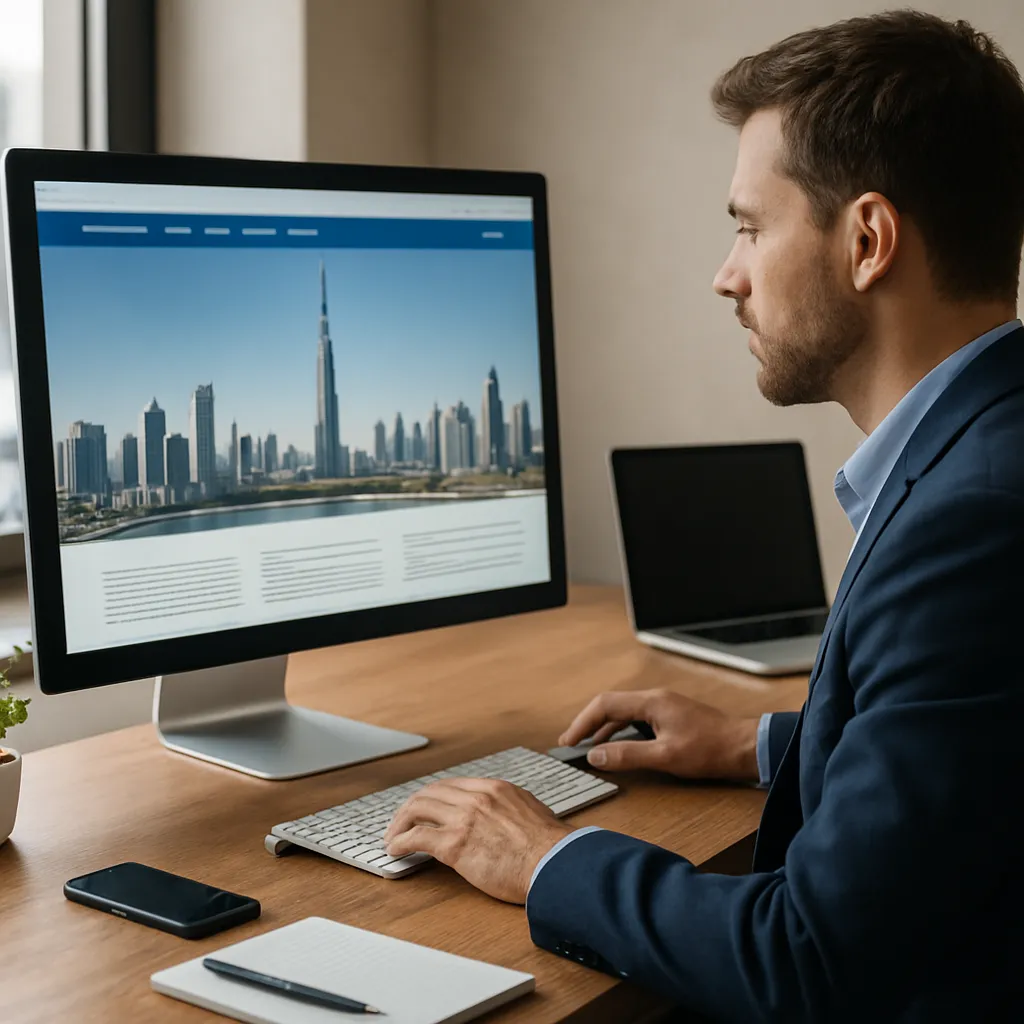
How to Optimize Your Website for Dubai Investors
Attracting capital from Dubai requires more than a generic corporate site and a few translated pages. Investors from the UAE and the broader GCC region look for professionally presented opportunities, clear data, strong social proof, and strict compliance with local and international regulations. Optimizing your website for Dubai investors means tailoring content, technology, and branding to their expectations, cultural context, and decision-making style, while also leveraging the rapid digital growth of the Emirate and its status as a global business hub.
Understanding Dubai Investors and the Digital Landscape
Dubai has evolved into a strategic gateway between Asia, Africa, and Europe, and its investor base has become increasingly sophisticated. Before changing your website, you need to understand who these investors are, how they research opportunities online, and which signals of **credibility** they prioritize.
Key characteristics of Dubai investors
Dubai-based investors include sovereign wealth funds, family offices, venture capital firms, private equity, corporate investors, and high‑net‑worth individuals. Many of them:
- Operate in a multilingual environment (Arabic and English being dominant, with English widely used in business)
- Are highly mobile and research opportunities on smartphones and tablets
- Expect **transparency** and structured data rather than promotional language alone
- Value long‑term relationships and reputation, not only short‑term returns
- Often invest through intermediaries such as advisors, consultants, or legal firms who also examine your online presence
According to the Dubai Chamber of Commerce, the Emirate hosts tens of thousands of active businesses and continually attracts FDI across sectors like real estate, technology, logistics, tourism, and green energy. Online presence is frequently the first filter investors apply when discovering or evaluating new opportunities.
Digital and mobile usage in the UAE
The UAE has some of the highest internet and smartphone penetration rates globally. Various industry reports indicate that internet penetration exceeds 98%, and mobile connections surpass the total population. Social media usage is also among the highest worldwide. This environment creates both opportunity and pressure: potential investors can evaluate you quickly, but they can just as quickly dismiss you if your site performs poorly.
Statistics from recent years in the region frequently show that over 70% of web traffic comes from **mobile** devices. This makes responsive design, fast loading, and mobile‑first layouts essential. If your website is not optimized for the way Dubai investors browse, your pitch materials may never even be read.
Technical Optimization for Dubai Investors
Technical optimization is not just about pleasing search engines; it directly affects perceived **professionalism**. A slow, insecure, or poorly localized site can signal operational weakness or lack of seriousness. For investors who might commit millions, such signals matter.
Performance, hosting, and security
Start with performance. Page speed significantly influences how your website is perceived. Google’s research has shown that as page load time increases from one to three seconds, bounce probability can increase by over 30%. For investors who regularly review many opportunities, waiting for slow pages is simply not acceptable.
- Use a high‑quality hosting provider with strong performance for users in the GCC region. Consider data centers in the Middle East or nearby hubs in Europe.
- Implement a Content Delivery Network (CDN) to reduce latency for visitors connecting from Dubai and other Emirates.
- Compress images, enable browser caching, and use modern formats such as WebP to keep file sizes small while preserving **clarity** of visual materials.
- Minimize render‑blocking resources by optimizing CSS and JavaScript and removing unnecessary scripts.
Security is equally important. A secure connection (HTTPS) is mandatory not only for SEO but for trust. An investor site without proper TLS certificates raises immediate red flags. Use reputable SSL certificates, keep your CMS and plugins updated, and implement regular security audits. Including a short description of your cybersecurity standards in your “About” or “Governance” section can further reinforce trust.
Mobile‑first and cross‑device experience
As many Dubai investors and advisors check information between meetings or while traveling, your site should be designed for mobile‑first consumption:
- Use intuitive, thumb‑friendly navigation, with a simple menu and clear hierarchy of information.
- Ensure that pitch decks, one‑pagers, and financial overviews are available in mobile‑friendly formats as well as downloadable PDFs.
- Test forms, contact buttons, and WhatsApp or call links on multiple screen sizes.
- Remember that short, well‑structured sections of text with headings and bullet points are easier to scan on smaller screens.
Consistency across devices matters. Investors might first see your brand on a phone, later revisit via laptop, and finally forward your link to colleagues on a tablet in a boardroom. Each of these experiences must be seamless.
Structured data and search optimization
Dubai investors search in a variety of ways: they may look for investment opportunities in specific sectors, search for service providers who understand UAE regulations, or research competitors before due diligence. Implementing **structured** data (schema.org markup) on your site helps search engines better understand and present your content. For example, using Organization, Product, and FAQ markup can enhance your listings with richer snippets, increasing click‑through rates.
Beyond structured data, you should optimize for relevant regional keywords:
- Include terms such as “Dubai investor relations”, “UAE‑compliant fund structure”, “Dubai‑based VC” or “investment opportunity in [sector] for GCC investors” in strategic places like headings, meta titles, and first paragraphs.
- Create geo‑targeted landing pages that explicitly reference Dubai, Abu Dhabi, and the broader GCC region, where appropriate.
- Use English as the core language but optimize meta tags for both generic and region‑specific search phrases used by target investors.
Search visibility is not only about attracting traffic; it is also about your brand’s positioning. Being easily found for **specialized** queries makes you appear established and relevant to the Dubai market.
Content, Messaging, and Cultural Alignment
Technical excellence alone will not secure interest if your message does not resonate with Dubai investors. They need to see clearly articulated value, risk management, governance, alignment with local regulations, and an understanding of the regional business culture. This is where content strategy becomes central to your optimization efforts.
Investor‑centric messaging and structure
Your website should be organized around the questions investors ask during preliminary evaluation. Instead of generic marketing slogans, provide concrete, factual information:
- Opportunity: What market gap are you addressing? How scalable is your model? Which sectors and regions do you cover?
- Track record: What are your historical returns, exits, key clients, or success stories? How long have you been active?
- Team: Who leads the company or fund? What is their experience in the Middle East or comparable markets?
- Risk: How do you mitigate regulatory, currency, and operational risks? What compliance frameworks do you follow?
- Structure: What are the legal and financial structures of your offerings, and how do they accommodate foreign or GCC investors?
Investors from Dubai often review multiple websites in one session; a clear information architecture helps them quickly understand your value proposition. Use dedicated sections such as “For Investors”, “Investor Relations”, or “Dubai & GCC Focus” to signal immediately that you speak their language.
Language, tone, and cultural considerations
While English is widely used, subtle cultural nuances matter. Respectful and professional tone is expected. Avoid slang, aggressive humor, or references that might be culturally insensitive. Instead, emphasize reliability, partnership, and long‑term vision.
Consider providing a carefully translated Arabic summary for key pages, especially if you target family offices or government‑linked entities, even though many decision‑makers are comfortable with English. The presence of Arabic content itself signals commitment to the region and awareness of the local context.
It is also beneficial to:
- Highlight alignment with regional initiatives, such as diversification away from oil, smart city development, or sustainable tourism.
- Emphasize respect for local regulations, including financial licensing and, where relevant, Sharia compliance.
- Show awareness of Dubai’s role as a free‑zone hub by referencing relevant jurisdictions if you operate there.
Data, case studies, and proof points
Dubai investors expect data‑driven presentations. Generic claims like “high growth” are less persuasive than precise indicators. Provide:
- Market size estimates from reputable sources and conservative growth projections.
- Performance metrics such as IRR, MoIC, or revenue growth where appropriate and compliant with regulations.
- Case studies with specific, measurable outcomes (e.g., “portfolio company X expanded into MENA and increased ARR by 120% in 18 months”).
- Testimonials from partners or clients who have operations in the UAE or broader GCC, subject to legal constraints.
Research suggests that detailed case studies can significantly increase conversion in B2B contexts, and the effect is even stronger for high‑value decisions like investments. Visualizing outcomes with charts and tables, while keeping them clear and not overly promotional, can be particularly effective.
Localization for Dubai and GCC: Beyond Translation
True optimization for Dubai investors goes beyond translating text. It requires strategic localization: adapting your offer, presentation, and user experience to regional expectations and practical realities in the UAE and the surrounding markets.
Geo‑targeted landing pages and offers
Create dedicated pages aimed specifically at Dubai and GCC investors. These pages can:
- Explain why your product, fund, or venture is relevant for investors based in Dubai
- Reference local regulatory frameworks, free zones, or partnerships with UAE‑based entities
- Show how you handle cross‑border issues such as tax, repatriation of profits, and legal disputes
- Provide tailored calls to action, such as booking a meeting during specific Dubai events or conferences
Such pages should be internally linked from your main navigation and from relevant blog posts or reports. They serve as a central resource you can share with prospective investors via email or messaging apps.
Legal, regulatory, and Sharia considerations
Many Dubai investors operate within tightly regulated frameworks. Your website should reflect awareness of these issues without providing unauthorized financial advice. That means:
- Clearly stating your regulatory status, licenses, and jurisdictions in which you are authorized to operate.
- Including legal disclaimers and risk warnings where you present performance data or forward‑looking statements.
- Mentioning Sharia‑compliant structures if they are part of your offer, and clarifying any advisory boards or scholars who oversee them.
Transparency here sends a powerful signal. Investors suspecting regulatory grey areas are unlikely to progress to serious talks. Making this information accessible on your website removes an early barrier to trust.
Payment, onboarding, and communication preferences
If your solution includes any online transactions, ensure that your payment options and currencies reflect regional realities, such as support for AED (UAE dirham) and widely used international mechanisms.
Even if the transaction itself is offline, the initial onboarding process—sign‑up forms, data rooms, document exchanges—should be streamlined. Provide clear instructions for:
- Submitting initial information or investor questionnaires
- Accessing due diligence materials securely, for example in a virtual data room
- Booking video calls that accommodate Gulf time zones
Communication channels are also important. Adding WhatsApp Business contact details or integrated chat options can align with how many Middle Eastern businesspeople coordinate meetings, while still maintaining a professional presentation.
Leveraging Content Marketing and Thought Leadership
Dubai’s business ecosystem is highly networked, and thought leadership plays a key role in visibility. Your website should be a hub for insightful content targeting the concerns of Dubai investors, positioning you not just as a seller of opportunities but as a knowledgeable partner.
Educational resources tailored to investor needs
Consider a content strategy that combines:
- In‑depth articles on sectors popular among Dubai investors, such as real estate, fintech, logistics, renewable energy, or hospitality.
- Guides explaining how international entrepreneurs can structure deals involving UAE investors or how to expand operations into the GCC.
- Regular market commentary demonstrating that you follow regional macroeconomic and policy developments.
Such content does double duty: it improves organic search visibility and also provides materials that your sales or investor relations team can share directly with prospects.
Events, conferences, and digital PR
Dubai hosts numerous investment, technology, and industry conferences. Your website should document your participation in these events, showcasing:
- Speaking engagements or panels involving your leadership
- Workshops or side events you organize around major conferences
- Media coverage in regional outlets, embedded or linked where copyright permits
Highlighting such activities reinforces your legitimacy in the local ecosystem. When investors recognize event logos or media brands they trust, they are more likely to give your proposal serious consideration.
Multimedia: video, webinars, and virtual tours
Investors are busy and often appreciate rich media that summarizes complex information quickly. Consider adding:
- Short video introductions from key team members explaining your thesis or product
- Recorded webinars covering topics relevant to Dubai investors, such as cross‑border expansion into MENA
- Virtual tours of facilities or assets where physical inspection is not immediately possible
Be sure to host videos on reliable platforms and embed them in a way that does not slow down your pages. Subtitles in English and optionally Arabic increase accessibility, especially when content is viewed in public or office environments with sound off.
Conversion Optimization and Relationship Building
Attracting attention is only the first step. Your website must then convert that attention into meaningful next actions: inquiries, meetings, document requests, or newsletter subscriptions. Dubai investors are unlikely to complete generic, consumer‑style contact forms. You need a more structured, investor‑friendly approach.
Designing high‑intent conversion paths
Rather than one generic “Contact us” page, create targeted calls to action throughout your site:
- “Request investor deck” on pages describing your investment opportunities.
- “Schedule a call with our Dubai liaison” for region‑focused content.
- “Access data room” for qualified leads who have passed initial screening.
Each call to action can lead to a short form that collects only the information needed at that stage—such as investor type, approximate ticket size, sector interest, and location. Overly long forms discourage busy decision‑makers, while overly short forms may not allow you to qualify leads effectively.
Building trust with social proof and partners
Social proof is highly influential. Include:
- Logos of credible partners, advisors, or portfolio companies, with their permission.
- Mentions of accelerators, free zones, or government programs with which you work.
- Selected testimonials from professional counterparts, not just end‑users.
Dubai investors frequently assess not just your company but your network. Being connected to recognized ecosystem players, whether locally or in other financial centers, can substantially improve their perception of your robustness.
Follow‑up and ongoing relations via digital channels
Your website should integrate smoothly with your CRM and email marketing tools. When an investor completes a form, they can be:
- Automatically added to a tailored mailing list focused on regional updates.
- Invited to join closed online briefings or Q&A sessions with your team.
- Provided with gated content such as detailed reports in exchange for basic information.
Consistency in follow‑up matters. Many Dubai investors expect a rapid, professional response—often within one business day or less. Automated acknowledgement emails with clear next steps, followed by a personalized reply from a responsible person, create a strong first impression.
Analytics, Testing, and Continuous Improvement
Optimizing your website for Dubai investors is an ongoing process. Market expectations, regulations, and digital habits evolve quickly in the region. To stay competitive, you must track performance and iterate based on real data, not assumptions.
Segmenting analytics by geography and device
Use analytics tools to segment your audience specifically by location (UAE, Saudi Arabia, wider GCC) and by device (mobile vs desktop). For these segments, monitor:
- Bounce rate and session duration on investor‑focused pages
- Click‑through rates on calls to action targeting Dubai investors
- Conversion rates for forms and downloads, split by geography
- Time lag between first visit and first contact or meeting request
If you see high traffic from Dubai but low conversions, you may need to adjust messaging, clarify compliance, or simplify forms. If mobile visitors from the UAE have significantly shorter sessions than desktop users, investigate whether some content is hard to read or interactions are broken on common devices.
A/B testing of content and offers
Run controlled tests where you vary one element at a time for your Dubai‑targeted pages:
- Headlines that emphasize safety and compliance versus those emphasizing growth
- Placement and wording of investor‑specific calls to action
- Length and design of forms used for initial investor contact
Such experiments can reveal which factors most strongly influence engagement from this segment. Over time, even small improvements in conversion rate can lead to a significantly larger investor pipeline.
Feedback loops with real investors and advisors
Quantitative analytics should be complemented by qualitative feedback. If you already have Dubai‑based partners or investors, ask them directly:
- How they perceive your website versus competitors
- Which information they had difficulty finding
- What would make them more comfortable sharing your site with their network
Incorporating this real‑world feedback into design and content decisions ensures that your website remains aligned with the expectations of those who matter most.
Conclusion: Turning Your Website into a Strategic Asset for Dubai Capital
For businesses and funds seeking capital from Dubai, the website is more than a digital brochure. It is a front‑line tool for signaling **trustworthiness**, demonstrating competence, and initiating serious conversations with investors who have many options and little time.
By combining fast, secure technology; investor‑centric content; cultural and regulatory **alignment**; and carefully designed conversion paths, you transform your online presence into a strategic bridge between your opportunities and Dubai’s capital. Continuous measurement and adaptation keep that bridge strong as digital behaviors and market conditions evolve, ensuring that potential investors from the Emirate find not only your site—but also a compelling reason to engage with you further.