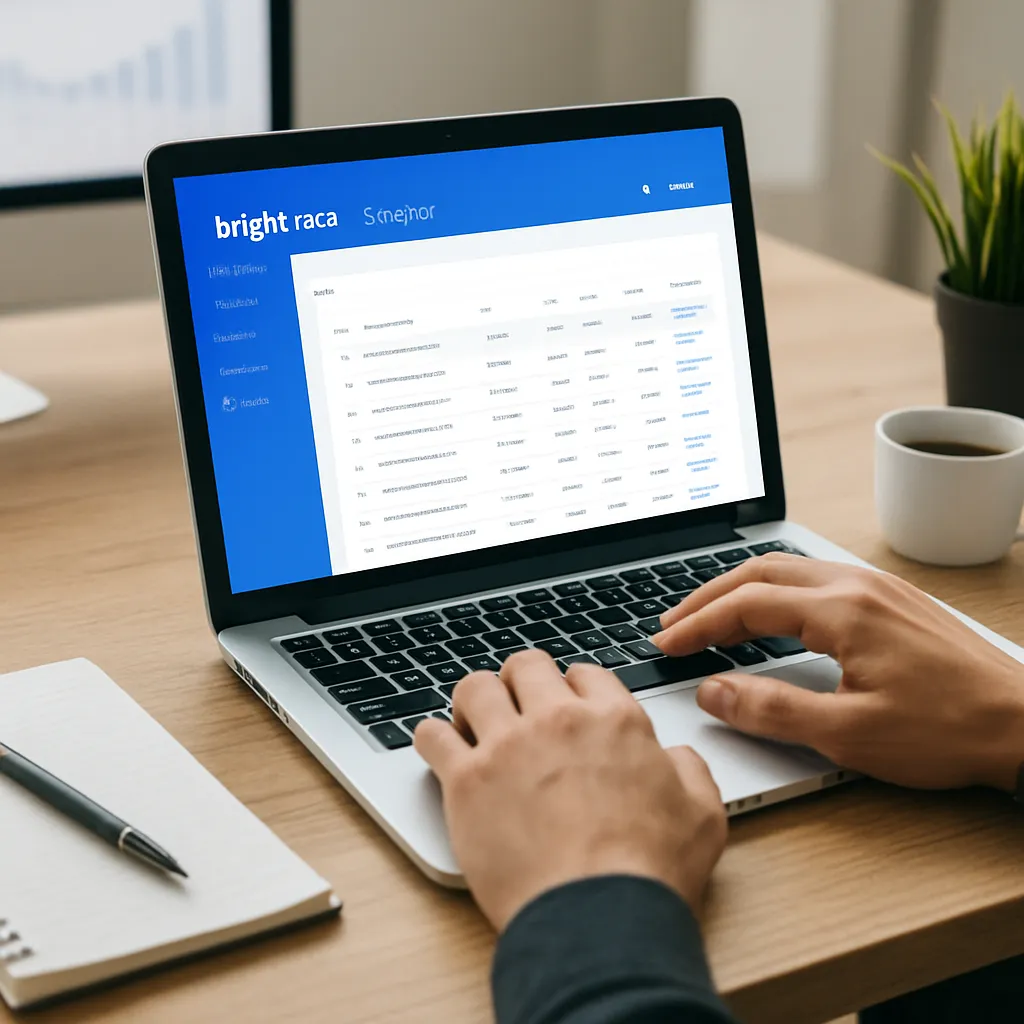
Bright Data Scraper
Bright Data Scraper has become a recognizable name among SEO professionals, technical marketers and data-driven agencies that rely on large-scale web data. Instead of manually collecting information from websites, SERPs and marketplaces, this tool automates data extraction and turns unstructured content into structured datasets that can directly power SEO strategies, competitive analysis and business intelligence. Understanding how Bright Data Scraper works – and where it truly adds value – is crucial for any organization that wants to scale its search visibility and content decisions.
What is Bright Data Scraper and how does it work?
Bright Data Scraper is a web scraping solution that runs on top of the Bright Data ecosystem. The company is known for its massive pool of residential, mobile, ISP and datacenter proxies, and the scraper layer is the part that transforms raw HTTP requests into usable data. Instead of building your own crawling infrastructure, you use a visual or API-based interface to define what you want to collect, and Bright Data Scraper handles the crawling, rendering, rotation and delivery of data.
At its core, the platform connects three key elements: a global network of proxies, a scraping engine capable of dealing with JavaScript-heavy websites, and a data pipeline that outputs results in structured formats such as JSON, CSV or via API endpoints. For SEO tasks, this means you can collect search engine results, on-page content, metadata, product listings or user-generated content from multiple domains without writing low-level networking code.
One important aspect is that Bright Data Scraper offers pre-built data collection templates known as “Data Collectors” or “Scraping APIs” for certain verticals. These can be customized, but they speed up projects targeting e-commerce sites, travel portals, job boards or SERPs. Under the hood, the service deals with issues like CAPTCHAs, geo-targeting, rate limiting and session management, all of which are traditionally painful when running scrapers on your own infrastructure.
Because the scraper operates at scale, it is typically accessed via API calls, custom workflows or no-code interfaces in the Bright Data dashboard. For many SEO teams this makes the technical barrier significantly lower. Instead of maintaining servers and writing parsers, they focus on defining what data they need, where it lives, and how often it should be refreshed.
Key features relevant for SEO and digital marketing
Not every scraping function is equally useful for SEO. Bright Data Scraper’s value for search optimization lies in several capabilities that address real-world challenges in keyword research, SERP tracking and competitive content analysis.
Massive proxy infrastructure and geo-targeting
Bright Data’s main strength is its huge proxy network, which directly benefits SEO use cases. Search results vary dramatically by country, region and even city. By combining the scraper with residential and mobile proxies, you can view and extract search engine pages exactly as a local user would see them. This is crucial when you want to understand localized SERPs for multilingual SEO, measure visibility across markets or track how competitors rank in specific regions.
In practice, this means specifying geo-location parameters for each scraping task so that requests appear to come from users in London, New York, Berlin or any other region where Bright Data has coverage. The scraper then routes traffic through the appropriate proxies, giving you realistic and reliable results for both organic and paid listings.
Handling JavaScript-heavy and dynamic websites
Many modern websites rely heavily on frameworks like React, Angular or Vue, which generate content dynamically in the browser. Traditional scraping libraries struggle with such pages because the HTML received from the server does not include the final rendered content. Bright Data Scraper solves this by offering browser-based rendering options that execute JavaScript and capture the final DOM.
For SEO, this is highly relevant when analyzing competitors that load content asynchronously, when scraping complex product pages for structured data, or when monitoring dynamic elements such as prices, reviews or availability. Being able to reliably grab the rendered HTML and associated metadata makes technical analysis and on-page audits more accurate.
Structured output and automation options
One of the biggest obstacles in web scraping is not grabbing the raw HTML but transforming it into clean, structured data that can be analyzed. Bright Data Scraper allows you to configure precise data fields – title, meta description, canonical URL, H1, price, rating, snippet text, position in SERP and more – and to export them automatically in machine-readable formats.
This matters because SEO workflows often depend on spreadsheets, BI tools or dashboards such as Google Looker Studio, Power BI or custom analytics systems. With the scraper, you can build automated pipelines: collect data nightly, push it into a data warehouse, and then visualize rankings, content gaps or SERP features over time. This automation reduces manual reporting and frees up analysts to interpret the data rather than simply compile it.
Preset scrapers for SERPs and e-commerce platforms
Instead of designing scraping logic from scratch for every site, Bright Data provides predefined data collectors for major search engines and marketplaces. These templates are helpful for less technical SEO specialists because they encapsulate typical fields such as search query, device type, location, organic results, ads, local pack entries and more.
For instance, a SERP collector can be configured to monitor a set of target keywords across multiple locations and languages, outputting an ordered list of results with URLs, titles and snippets. Similarly, an e-commerce collector might scrape product details from competitor sites to feed pricing and assortment analysis. Having these templates significantly reduces the time required to start a project and lowers the risk of parser breakage when website structures change.
Scalability and reliability for large datasets
Some SEO projects involve tracking a handful of keywords, but enterprise-level programs may monitor tens of thousands of queries across dozens of countries and devices. Bright Data Scraper is built for such scale, with infrastructure that supports a high volume of concurrent requests and large data outputs.
From a practical standpoint, this means the system can handle weekly or even daily refreshes of big keyword sets, deep crawls of entire competitor domains, or regular scraping of niche platforms where your audience is active. The reliability of this scale is a key differentiator when compared with small DIY scrapers that break or get blocked under heavy load.
How Bright Data Scraper supports SEO strategies
Bright Data Scraper does not directly change your rankings – it is not a ranking manipulation tool. Instead, it acts as a **data** layer that enables smarter decisions. When used thoughtfully, it can significantly enhance how you research, plan and monitor SEO campaigns.
Advanced keyword and SERP research
Traditional keyword tools offer search volume and difficulty scores but rarely provide an in-depth look at the full search results landscape. With Bright Data Scraper, you can build your own SERP database for high-value keywords, capturing things like featured snippets, People Also Ask boxes, image packs, video carousels, shopping results and local packs.
By analyzing this data at scale, SEO teams can answer questions that most third-party tools handle only superficially: What percentage of our target queries show commercial versus informational intent? Which SERP features dominate for a specific topic cluster? How often do competitors win featured snippets or sit at the top three positions? This level of detail helps in shaping content strategy, on-page optimization and structured data implementation.
Competitor content and backlink profiling
Scraping is also useful for systematic competitor research. By using Bright Data Scraper to crawl rival websites, you can build an index of their content: categories, article titles, meta tags, internal linking patterns, and even update frequency. When combined with other SEO metrics, this data reveals which areas of your topic space are saturated and where there might be content gaps you can exploit.
The tool can support backlink research as well. While it is not a replacement for dedicated link index services, you can use it to parse partner pages, directories, niche forums or event sites where competitors gain visibility. Extracting anchor text, surrounding context and target URLs at scale can inform your own outreach and digital PR efforts.
Monitoring technical SEO and on-page factors
Bright Data Scraper can behave like a custom crawling engine for your own site or a set of properties you manage. Instead of relying solely on general-purpose crawlers, you can define exactly which attributes to collect: response codes, canonical tags, hreflang implementations, indexation directives, schema markup, pagination rules and more.
This flexibility allows you to design highly targeted audits. For instance, you might want to monitor all pages that contain a certain parameter in the URL, or all product pages missing structured data. Running the scraper on a schedule and comparing results over time can quickly highlight regressions caused by deployments, CMS errors or third-party integrations.
Price, catalog and review monitoring for SEO context
For e-commerce businesses, SEO does not exist in isolation. Rankings and click-through rates are often affected by product assortment, pricing and social proof. Bright Data Scraper enables continuous monitoring of competitor catalogs, prices and reviews. While this information is not “SEO data” in the classic sense, it directly influences how users react to search results and product pages.
If you observe that you rank similarly to competitors but your CTR is lower, scraped data on pricing and ratings can reveal the reason. Likewise, sudden changes in a competitor’s pricing strategy or inventory can help explain shifts in organic performance. Integrating this intelligence into dashboards provides a more holistic understanding of search visibility.
Localized and international SEO insights
International SEO usually involves complex combinations of languages, regions, currencies and legal requirements. With Bright Data’s geo-targeted scraping, you can test how localized content actually appears to users across different territories. This includes verifying that the correct language version is shown, that local snippets display appropriate currency and units, and that hreflang strategies are working as expected.
For brands expanding into new markets, scraping regional SERPs gives a nuanced picture of the competitive environment. You can identify dominant local players, understand local query patterns, and see whether global marketplaces outrank local merchants. This information guides both content localization and link-building strategies.
Pros, cons and overall opinions about Bright Data Scraper
As with any powerful data collection tool, Bright Data Scraper has strengths and weaknesses. Whether it is the right fit depends on your budget, technical skills, project scale and risk tolerance.
Advantages appreciated by SEO professionals
One of the top advantages is the combination of a strong proxy network with a relatively user-friendly scraping layer. Many SEO teams previously ran into blocks because their scrapers did not rotate IPs effectively or could not simulate real users in different locations. Bright Data’s infrastructure solves a large part of this, enabling stable access to data sources that are critical for competitive research.
Another positive aspect is the flexibility of the scraper configuration. You are not locked into a rigid set of metrics; instead, you can define any HTML element, attribute or pattern you want to collect. This is essential for advanced SEO work, where you may need to track a niche markup, unique on-page signals or site-specific flags that generic tools ignore.
Scalability is also a strong point. Agencies that manage multiple clients and thousands of keywords can rely on Bright Data Scraper to handle the workload without constant babysitting. When configured correctly, projects can run for months, feeding fresh data into internal dashboards and analysis pipelines.
Drawbacks, limitations and learning curve
The most commonly cited downside is cost. Bright Data operates in a premium segment of the market, and pricing reflects the scale and sophistication of its proxy network. For small websites or freelance SEOs with limited budgets, the expense may be difficult to justify, particularly if they do not fully exploit the scraper’s capabilities. Volume-based billing means that heavy usage can quickly increase costs if not carefully monitored.
There is also a learning curve, especially for non-technical users. While the visual tools lower barriers, understanding selectors, pagination, anti-bot patterns and data normalization still requires some technical mindset. Teams without any familiarity with scraping may need time – or developer support – to design reliable collection workflows.
From an operational standpoint, over-reliance on scraped data can lead to information overload. Having the capacity to gather vast amounts of information does not automatically translate into better decisions. Organizations must invest in data governance, clear KPIs and analytical skills to turn scraped datasets into meaningful SEO actions instead of sprawling reports.
Ethical and legal considerations
Any discussion about Bright Data Scraper must address the ethical and legal dimension of large-scale data collection. Web scraping exists in a grey area: public information is generally accessible, but websites often include terms of service that restrict automated access. Moreover, data protection regulations such as GDPR and similar laws worldwide place obligations on how personal data may be collected and processed.
Bright Data provides documentation and tools that encourage responsible use, but the final responsibility lies with the user. SEO teams should avoid scraping login-protected areas, personal data or content clearly intended for private consumption. It is also important to respect robots.txt files where appropriate, throttle requests to avoid straining servers and obtain legal guidance when scraping in regulated industries. Building internal policies around acceptable targets, frequency and purpose of data collection helps mitigate risk.
When Bright Data Scraper makes sense for SEO – and when it does not
Bright Data Scraper tends to be most valuable in scenarios where data needs are large, recurring and specialized. Enterprise brands, large publishers, marketplaces and multi-country e-commerce players can gain a substantial edge by building custom data pipelines that go beyond what off-the-shelf SEO tools provide.
For example, a global retailer might use the scraper to monitor product visibility, availability and pricing across hundreds of competitors in dozens of markets, and then tie that information back to organic performance. A publisher could analyze how search intent shifts over time by collecting SERPs for entire topic clusters weekly. In such cases, the scale and complexity justify the investment in infrastructure and skills.
Conversely, smaller websites with limited keyword sets may find that traditional rank trackers and keyword tools cover most of their needs at a lower cost. If you only track a few hundred queries in one country and do not require custom scraping, Bright Data Scraper might be excessive. Similarly, teams that lack technical support or analytical capacity may struggle to fully realize the benefits.
In terms of direct SEO impact, Bright Data Scraper does not replace core fundamentals like high-quality content, solid site architecture, fast performance and good user experience. Instead, it enhances your ability to measure, compare and discover opportunities. It is best seen as a powerful extension of an already mature SEO program rather than a shortcut to higher rankings.
Conclusion: a powerful, data-centric ally for advanced SEO
Bright Data Scraper occupies a specific niche at the intersection of **SEO**, web scraping and **competitive** intelligence. For organizations that treat search optimization as a data-driven discipline, it provides access to **large-scale** datasets that standard tools cannot easily replicate. By enabling granular SERP research, deep competitor analysis, international monitoring and custom technical audits, it helps teams build strategies based on evidence rather than assumptions.
At the same time, this power comes with real responsibilities. The costs, learning curve and legal considerations mean that not every business will benefit equally. The strongest results appear when the scraper is integrated into a broader data infrastructure, supported by skilled analysts and governed by clear ethical guidelines.
Used thoughtfully, Bright Data Scraper can become a central component of an advanced SEO stack – not by magically improving rankings on its own, but by delivering the actionable **insights** needed to make better, faster and more confident optimization decisions in a highly competitive search landscape.