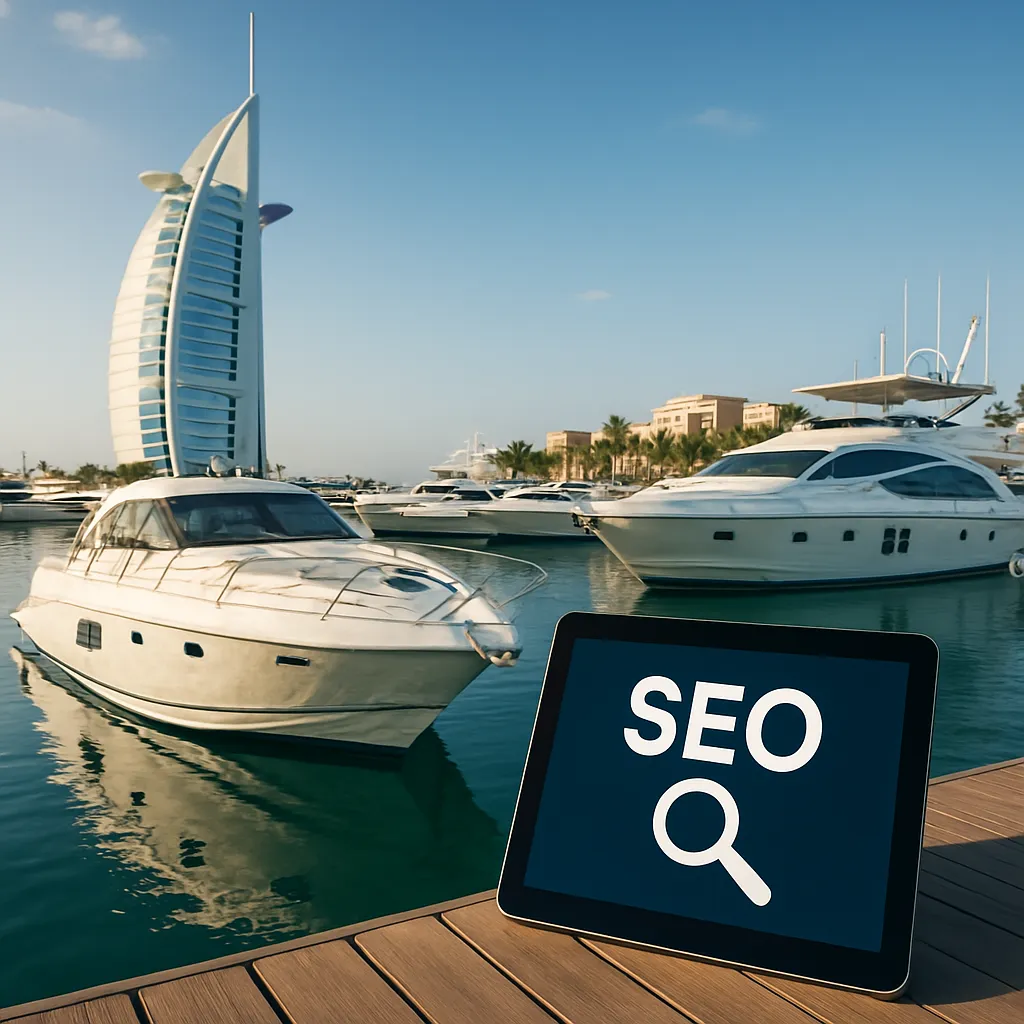
SEO for Dubai Yacht and Marine Businesses
Yachting in Dubai has transformed from a niche luxury segment into a dynamic, highly competitive industry driven by international tourism, ultra–high-net-worth residents and a year-round boating culture. In this environment, effective search engine optimization is no longer a side project but a core revenue channel. Well-planned SEO connects marinas, yacht charter operators, brokers and marine service providers with affluent, intent-driven clients right at the moment they are searching for premium experiences and long-term berthing solutions.
Understanding the search landscape for Dubai yacht and marine businesses
Dubai’s maritime economy has grown rapidly alongside its ambition to become a global tourism and investment hub. According to Dubai’s Department of Economy and Tourism, the emirate welcomed over 17 million international visitors in 2023, with a significant share engaging in coastal and marine leisure. This surge in tourism combines with a growing base of residents and investors who regard yachts as both lifestyle assets and financial investments. All of these segments use search engines as a primary research tool before making decisions.
Several trends define how potential customers search for yacht and marine services in and around Dubai:
- Strong focus on luxury and exclusivity: queries often include terms like “VIP yacht charter Dubai Marina”, “private yacht party Palm Jumeirah”, “superyacht brokerage Dubai” or “high-end yacht interior refit UAE”.
- Geo-specific intent: users specify locations such as “Dubai Marina yacht rental”, “yacht charter Jumeirah Beach”, or “Marasi Marina berth prices”. Optimizing for these micro-locations can significantly increase conversion rates.
- Experience-oriented searches: many tourists search for “sunset yacht cruise Dubai”, “New Year’s Eve yacht Dubai”, or “yacht with Jacuzzi Dubai”. These intent-rich phrases indicate a strong likelihood of booking when content and pricing are transparent.
- Mobile-first behavior: for travel and hospitality, including marine leisure, mobile search dominates. Industry reports show that over 60% of travel-related searches globally now originate from smartphones, and in the GCC this share often exceeds 70% due to younger demographics and high mobile penetration.
- Multilingual audience: Dubai’s audience is global. Besides English, high-value searches appear in Arabic, Russian, German, French, and increasingly Chinese. Optimizing content across several languages can unlock entirely new customer segments.
The organic search channel also correlates strongly with high-value conversions. Studies in travel and hospitality frequently show that 35–50% of website bookings can be attributed to organic search visibility. For yacht charter businesses, where single bookings can easily exceed US$5,000–20,000, each incremental organic lead has disproportionate financial value.
In addition, yacht brokerage and sales are long-consideration purchases. Buyers research brands, models, surveyors, marinas and financing options for months. Consistent search visibility through articles, buying guides and technical documentation builds trust, shortens sales cycles and positions your business as a knowledgeable authority.
Core SEO foundations for Dubai yacht and marine websites
A high-performing SEO strategy for yacht and marine businesses in Dubai starts with solid fundamentals. Without a technically robust and user-friendly website, even the most ambitious content plan or backlink campaign will fail to produce sustainable results.
Technical performance and user experience
Search engines like Google evaluate both the relevance of content and the quality of user experience. For marine businesses that rely heavily on high-resolution imagery, video tours and 3D walkthroughs of vessels and marinas, there is a constant risk of slow loading times.
- Website speed: optimize images through compression and modern formats (such as WebP), use lazy loading for galleries, and leverage a content delivery network. Google research indicates that mobile bounce rates increase by over 30% when load time grows from one to three seconds, a critical consideration when showcasing detailed yacht photography.
- Mobile responsiveness: ensure booking forms, yacht comparison tools and image sliders work smoothly on smaller screens. Given tourists often research experiences from hotel rooms or taxis, poor mobile UX translates directly into lost bookings.
- Secure and stable infrastructure: use HTTPS with up-to-date TLS certificates, protect forms with spam-prevention technologies and maintain regular backups. For high-net-worth clients, visible security signals also reinforce confidence when sharing personal details or making card deposits.
- Structured navigation: organize your site into clearly defined sections: yacht charter, yacht sales, marina berths, maintenance services, crew placement, events and corporate charters. This logical structure helps both visitors and search engine crawlers understand your offering.
Technical SEO audits should focus on crawl errors, duplicate content, redirect chains, broken internal links and proper use of canonical tags. For large inventory sites with dozens or hundreds of yacht listings, clean URL structures and pagination are essential to ensure that search engines index key content instead of wasting crawl budget on parameterized URLs.
On-page optimization and keyword strategy
Effective on-page optimization starts with understanding intent. A generic keyword like “yacht charter” is extremely competitive and not necessarily the best target for a Dubai-based operator. Instead, combining location, vessel type and use case often yields better-qualified traffic.
- Transactional keywords: “book yacht charter Dubai Marina”, “yacht rental Palm Jumeirah price”, “Dubai yacht party for 20 people”. These typically align with service pages and booking funnels.
- Informational keywords: “best time of year for yachting in Dubai”, “Dubai Marina vs Dubai Harbour for yacht berthing”, “how to register a yacht in UAE”. These are ideal for blog posts, guides and FAQ hubs.
- Commercial research keywords: “Azimut yacht for sale Dubai”, “Gulf Craft Majesty prices UAE”, “pre-owned Sunseeker Dubai broker”. These are aligned with detailed listing pages and brand-specific landing pages.
Each key page should include a descriptive title tag, meta description, clear heading structure and naturally integrated keywords. For example, a page targeting “luxury yacht charter in Dubai Marina” can use that phrase within the main heading, but there is no need for keyword stuffing in every sentence. Search algorithms are sophisticated enough to understand synonyms such as “private yacht hire” and “exclusive boat charter”.
High-quality content should showcase not only vessel specifications but the full customer experience: embarkation points, views of the skyline, typical itineraries around the Palm, catering options, add-on water toys, and availability of crew such as chefs and DJs. This detailed information increases page dwell time and improves conversion rates, both of which indirectly support search rankings.
Schema markup and rich results
Schema markup (structured data) provides search engines with additional context about your business. For Dubai yacht and marine operators, several schema types are highly valuable:
- LocalBusiness schema to highlight marina addresses, opening hours, phone numbers and geocoordinates;
- Product or Service schema for specific yacht charters or brokerage listings, including price ranges, capacity and duration;
- Review schema to encourage rich snippets displaying average ratings and number of reviews directly in search results.
Studies have shown that search results enhanced with rich snippets can improve click-through rates by 10–30%, especially when competitors display only plain text listings. This uplift is particularly important in premium categories where buyers research thoroughly before contacting a provider.
Local and international visibility: leveraging Dubai’s unique position
Dubai sits at the crossroads of global travel routes, which makes its yacht and marine sector uniquely international. SEO strategies must therefore combine strong local visibility with global reach across target source markets.
Local SEO for marinas, service yards and charter fleets
For marinas, repair yards, fuel stations and day-charter fleets, proximity matters. Many customers search using localized terms while in Dubai, or just before arriving. Optimizing for local search can yield highly qualified leads that are ready to book or visit.
- Google Business Profile optimization: claim and fully complete your profile with categories such as “yacht charter”, “marina”, or “boat repair shop”. Add high-quality photos of docks, facilities, waiting lounges and representative yachts, and encourage clients to upload their own photos.
- Consistent NAP data: ensure your business name, address and phone number are consistent across your website, maps platforms, tourism directories and marina guides.
- Local citations: list your business in reputable Dubai and UAE directories, yacht and boating portals, hotel concierge networks and event planning platforms. This enhances prominence signals for local search algorithms.
- Review management: actively request feedback after charters or service work, and respond politely to positive and negative reviews. Online reputation strongly influences organic click-through rates, especially when travelers compare multiple operators.
Location pages can target specific neighborhoods and marinas, such as Dubai Marina, Dubai Harbour, Business Bay Marasi Marina, Jumeirah, Deira and Abu Dhabi for cross-emirate operations. Each page should contain unique content describing local routes, attractions and logistics, rather than duplicated text with only the district name changed.
International SEO and multilingual targeting
Many yacht charter clients research their Dubai vacations from Europe, Russia, India or the GCC long before arriving. To tap into these early-stage searches, international SEO and language targeting are essential.
- Language-specific content: create dedicated pages or microsites in Arabic, Russian, German or French, focusing on the most important source markets for your business. Rather than simply translating word-for-word, adapt offers and messaging to cultural expectations.
- Hreflang tags: implement hreflang attributes to signal language and regional targeting to search engines. This helps prevent issues where, for example, Russian content appears to English-speaking users in the UK, or vice versa.
- Regional keywords: customers in Germany may search for “Luxusyacht mieten Dubai”, while Russian speakers might use “аренда яхты в Дубае”. Conduct keyword research per language rather than relying on direct translations.
- Content partnerships: collaborate with international travel bloggers, luxury lifestyle magazines and marine media to secure backlinks and brand mentions pointing to your localized pages.
Given that Dubai frequently appears in global rankings for luxury tourism and yachting destinations, tapping into international organic demand often delivers higher average order values than domestic-only strategies.
Content and link-building strategies tailored to the yacht sector
Search engines reward websites that consistently publish valuable, original content and earn references from authoritative sources. In the specialized world of yachts and marine services, this means showcasing both lifestyle appeal and technical expertise.
High-value content formats for yacht and marine businesses
Content marketing for the marine sector should go beyond simple vessel descriptions. Several formats consistently attract search traffic and qualified leads:
- Destination and itinerary guides: “Three-day yacht itinerary from Dubai Marina to Sir Bani Yas Island”, “Best anchorages around Palm Jumeirah”, “Family-friendly yacht routes in UAE waters”. These guides help travelers imagine their experience, and also answer practical questions about distances, seasons and safety.
- Buying and ownership guides: “Cost of owning a yacht in Dubai”, “Yacht registration process in UAE”, “Choosing between new and pre-owned yachts in the Gulf”. Long-form articles on these topics position brokers and marinas as trusted advisors rather than purely sales-driven entities.
- Maintenance and technical content: explain the benefits of regular hull cleaning, engine servicing intervals, electronics upgrades, or teak deck maintenance in the harsh Gulf climate. Boat owners searching for solutions to specific problems are likely to contact the provider whose content educated them.
- Event and seasonal content: create pages for “Dubai boat show highlights”, “New Year’s Eve yacht fireworks cruise”, “Formula 1 Abu Dhabi yacht packages”, and update them annually. These recurring events generate predictable search spikes every year.
- Visual content: while text is essential for search engines, supplement it with optimized images, videos and 360-degree tours. Use descriptive alt text and filenames that incorporate relevant keywords such as vessel type, marina name and service category.
Statistically, long-form content (2,000–3,000 words) tends to earn more backlinks and shares than very short posts in many industries. For yacht businesses, detailed guides illustrate authority and dedication, persuading sophisticated buyers who expect in-depth knowledge.
Authority building and backlinks in the marine niche
Backlinks from relevant, trustworthy sites act as endorsements in the eyes of search engines. For Dubai marine businesses, targeted link-building can significantly improve rankings in both local and global SERPs.
- Partnerships with hotels and resorts: many luxury hotels promote yacht excursions to their guests. Securing featured partner listings or blog mentions with links back to your site can generate both referral traffic and SEO benefits.
- Tourism boards and official portals: contribute content or offers to Visit Dubai and other regional tourism initiatives, which often maintain high-authority websites.
- Marine industry associations: membership directories for yacht clubs, boat owner associations and marine trade groups often allow member profiles with links. These provide highly relevant backlinks.
- Press coverage: announce fleet expansions, new marina facilities or sustainability initiatives. Press releases and interviews in boating magazines and luxury lifestyle media can yield strong authority signals.
- Educational content collaborations: partner with sailing schools, diving centers or water sports operators for joint articles and guides, cross-linking resources between sites.
Quality matters more than quantity. A few backlinks from respected marine publications or high-traffic tourism portals can have more impact than dozens of low-quality directory submissions.
Conversion optimization and analytics for higher revenue
Ranking high in search results is only part of the equation. Yacht and marine businesses must ensure that organic traffic turns into inquiries, bookings and long-term relationships. Conversion rate optimization, supported by solid analytics, is essential for maximizing return on SEO investments.
Designing pages that turn visitors into leads
Visitors landing on a charter or marina page should quickly understand the value proposition and how to take action. Several design and content elements are particularly effective in the marine sector:
- Clear lead pathways: visible “Request a quote”, “Check availability” or “Schedule a viewing” forms above the fold. For corporate or event charters, include dedicated forms capturing group size, preferred dates, budget and special requests.
- Transparent pricing signals: while ultra-luxury operators may not display exact prices, providing price ranges or package examples builds trust and filters out non-serious inquiries.
- Social proof: showcase client testimonials, Google review snippets and photos from real events, ideally verified by third-party platforms. Affluent clients often seek reassurance from peers before committing.
- Trust badges and certifications: highlight memberships in yacht associations, classification societies, safety certifications and insurance coverage.
- Fast communication: mention response-time expectations, live chat availability, WhatsApp contact or concierge-style service. Many high-intent users will contact the provider that offers the fastest, clearest communication path.
Small improvements can have outsized impact. If a site converts only 1% of visitors into leads, raising that rate to 2% effectively doubles the value of organic traffic without needing higher rankings.
Tracking performance and refining strategy
Robust analytics ensure that SEO decisions are guided by data rather than assumptions. At a minimum, Dubai yacht and marine businesses should track:
- Organic traffic by landing page and location
- Conversion rates for contact forms, quote requests, phone clicks and WhatsApp initiations
- Ranking trends for key service and location-based keywords
- Revenue attribution by channel, using call tracking and CRM integrations where possible
- Customer lifetime value for charter clients versus yacht buyers and marina berth holders
By analyzing which content pieces and keywords lead to high-value inquiries, businesses can refine their editorial calendars and allocate resources toward topics with the strongest financial impact. For instance, if guides about long-term berthing attract fewer visits but higher revenue per lead than generic charter pages, it may be strategic to expand that section of the site.
Sustainability, innovation and future trends in marine SEO
The marine sector in Dubai is evolving under the influence of technology, environmental considerations and changing customer expectations. These shifts also shape how SEO should be approached over the coming years.
Sustainability as a differentiator and ranking advantage
Globally, interest in sustainable tourism continues to grow. Many travelers and yacht buyers actively seek providers that minimize environmental impact. Dubai’s own initiatives around coastal conservation and emissions reduction create an environment where green practices are not only ethically desirable but commercially advantageous.
- Highlight eco-friendly initiatives: use content to describe low-emission engines, waste management protocols, shore-power usage at marinas, coral conservation efforts or partnerships with environmental NGOs.
- Create educational content: articles about protecting marine life in the Gulf, responsible anchoring, or the benefits of eco-friendly antifouling paints can attract both environmentally conscious consumers and backlinks from green organizations.
- Target sustainability-related keywords: phrases like “eco-friendly yacht charter Dubai” or “green marina UAE” may have lower search volume today but will likely grow over time, offering early-mover advantage.
Search engines increasingly incorporate user engagement and brand sentiment into their evaluation of sites. Businesses perceived as responsible and forward-thinking may benefit from stronger long-term brand searches and organic traffic.
New technologies and user behaviors
As technology advances, yacht and marine businesses should adapt SEO strategies to match new user behaviors:
- Voice search: queries via voice assistants tend to be longer and more conversational, such as “What is the best yacht charter in Dubai for a family of six?” or “How much does it cost to keep a 40-foot boat in Dubai Marina?”. Structuring content with FAQ sections and natural-language headings enhances visibility for such searches.
- Visual search and social discovery: while not strictly traditional SEO, discoverability through platforms like Instagram and YouTube complements organic search visibility. Optimization of video titles, descriptions and tags benefits both YouTube’s internal search and Google’s blended results.
- Interactive tools: yacht comparison configurators, berth availability checkers and cost calculators not only improve onsite engagement but can attract backlinks from blogs and forums referencing these tools.
Forward-looking operators who integrate these experiences into their websites will likely see increased user time-on-site, greater sharing and stronger SEO signals over time.
Integrating SEO with broader digital marketing for marine success
SEO should not exist in isolation. For Dubai yacht and marine businesses, the most profitable strategies integrate organic search with paid advertising, social media, email marketing and offline relationship building.
- PPC and SEO synergy: use pay-per-click campaigns to test new keyword opportunities and landing page concepts quickly. High-performing PPC terms can inform long-term organic targeting, while pages that rank well organically can be reinforced with branded ads to dominate search results.
- Retargeting: not all visitors book or inquire on first visit, especially when charter prices are high or yacht purchases are considered. Retargeting ads keep your brand visible while prospects continue their research over weeks or months.
- Email nurturing: capture emails via brochures or guides, then nurture leads with seasonal offers, new vessel announcements and content updates. Strong email engagement signals can indirectly influence SEO by driving repeat visits and branded searches.
- Offline events: boat shows, sea trials and marina open days generate content opportunities (photos, videos, recaps) that feed your organic presence, while SEO ensures that people searching for those events find your brand prominently.
When all channels are aligned, SEO becomes not just a way to capture demand but a bridge connecting every digital and physical touchpoint of the customer journey.
For yacht and marine businesses anchored in Dubai’s fast-growing maritime ecosystem, a structured, data-driven SEO strategy offers one of the most powerful levers for sustainable growth. By combining strong technical foundations, localized and multilingual targeting, authoritative content, and integrated analytics, operators can secure high-intent visibility among exactly the audiences most capable of driving long-term revenue and brand equity.