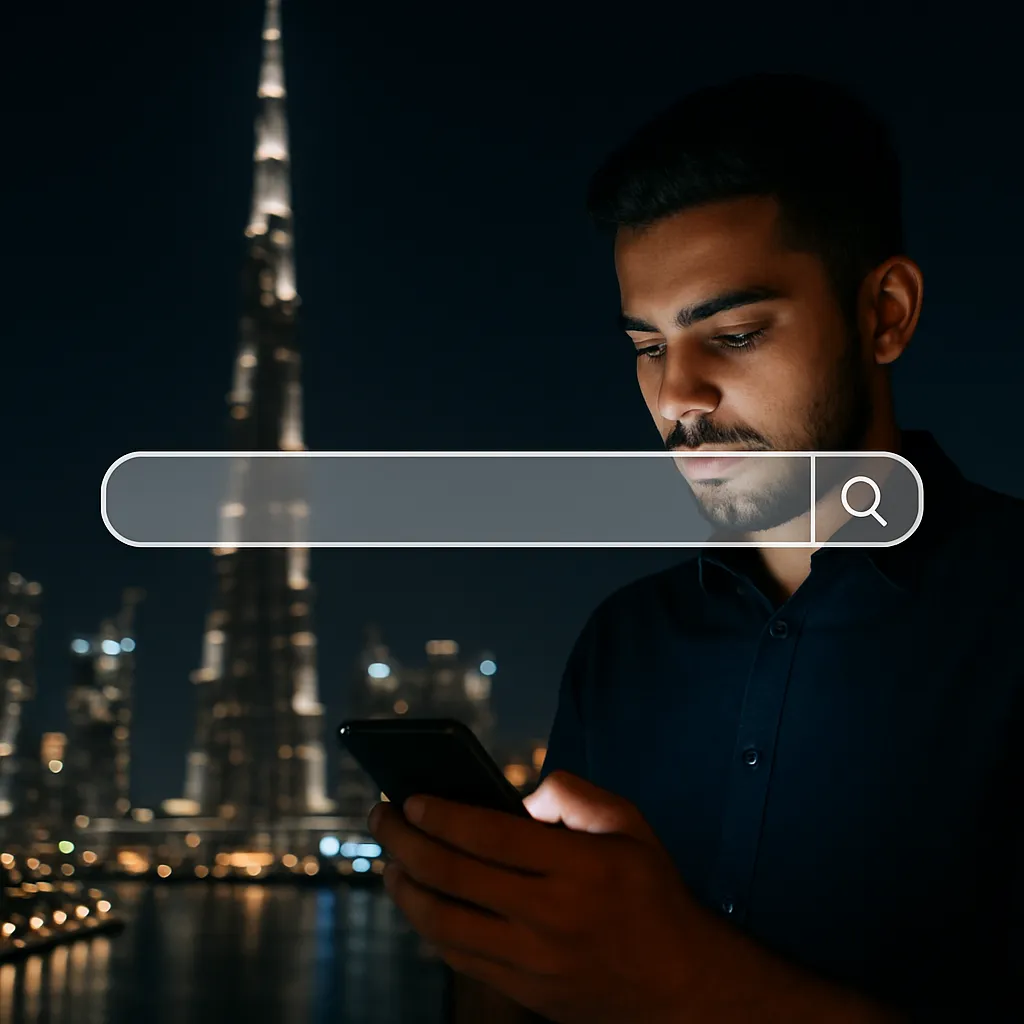
How to Optimize for Late-Night Search Trends in Dubai
Understanding how people search after midnight in Dubai opens a powerful, often underused channel for online growth. Late-night search behaviour reflects unique needs, emotions and routines of residents, expats and tourists who live in a city that rarely sleeps. For brands willing to adapt their digital strategy to these nocturnal habits, the reward can be lower competition, cheaper clicks and a stronger presence at the exact moment when intent is high and distractions are low.
The digital nightscape of Dubai: audience, intent and timing
Dubai’s lifestyle, climate and work culture strongly influence when and how people search online. Long working hours, shift-based jobs, late-opening malls, 24/7 delivery options and a vibrant nightlife all contribute to a substantial volume of searches between 10 p.m. and 4 a.m. Understanding this context is the first step to optimizing for late-night search trends.
Who searches at night in Dubai?
Several audience segments are particularly active online after dark:
- Shift workers and service staff – hotel, aviation, logistics and hospitality employees finishing or starting shifts around midnight search for food, transport, entertainment and financial services.
- Young professionals – many white-collar workers unwind online late at night, browsing for fashion, gadgets, travel deals and e-learning.
- Expats and remote workers – with families or clients in other time zones, they often handle personal tasks online in the late evening or early night.
- Tourists – explore “near me” options, attractions and services after returning to their hotels or when planning the next day’s activities before going to sleep.
- Gamers and tech enthusiasts – engage in online gaming, streaming, crypto trading or tech shopping during off-peak hours.
Across these segments you’ll typically see higher mobile usage, more casual browsing mixed with urgent last-minute needs (food, transport, medicine, customer support) and an openness to impulse purchases, especially in entertainment, food delivery and e-commerce.
When exactly are late-night peaks?
Patterns vary by season, day of week and cultural period (for example, Ramadan). While specific, up-to-the-minute data should be pulled from Google Analytics, Google Ads reports and tools like Google Trends, certain tendencies are consistent:
- Searches start rising again after 9–10 p.m., once people return home or finish social activities.
- A notable micro-peak often appears around 11 p.m.–1 a.m., driven by food delivery, ride-hailing and entertainment queries.
- Another, smaller peak can appear around 2–3 a.m., more dominated by streaming, gaming, personal finance and sometimes health-related searches.
In global studies focused on urban areas with similar characteristics to Dubai, marketers often observe that 15–25% of daily mobile searches in lifestyle and entertainment categories can occur after 10 p.m. In sectors like food delivery and ride-hailing this share can rise above 30% on weekends or during events.
Why late-night traffic is strategically valuable
Late-night search traffic is not just “extra volume”; it has qualities that can improve both revenue and brand perception:
- Lower competition – many advertisers use standard business-hour bid strategies, leaving nighttime auctions less saturated.
- Cheaper clicks – this reduced competition can mean lower CPCs in Google Ads and Meta Ads during post-midnight hours, increasing ROI for campaigns targeting immediate intent (delivery, taxi, emergency services, quick e-commerce purchases).
- Higher intent in some verticals – someone searching at 1 a.m. for “24 hour pharmacy near me Dubai” or “burger delivery JLT now” is usually ready to convert immediately.
- Stronger memory imprint – fewer distractions and a quieter environment may result in more focused attention on your content or offer, especially for video, long-form content or complex products.
Optimizing your online marketing specifically for late-night search means aligning not only keywords and bids, but also your landing pages, messaging, customer support and analytics with this unique behaviour.
Keyword, content and technical optimization for Dubai’s night searches
To capture late-night demand, you need to understand query patterns, optimize your website and content for those patterns, and ensure that your technical setup supports rapid, mobile-first experiences during off-peak hours.
Identifying late-night search intent and keywords
Late-night queries in Dubai can broadly be grouped into several intent clusters:
- Immediate needs: “24 hours”, “open now”, “near me”, “delivery”, “emergency”, “urgent”, “late night” combined with categories like food, pharmacy, clinic, mechanic, locksmith.
- Entertainment and leisure: searches for lounges, shisha cafes, cinemas, streaming platforms, gaming servers, late-night events and shows.
- Convenience e-commerce: last-minute gifts, groceries, phone accessories, electronics deals, fashion, cosmetics, digital subscriptions.
- Information and education: how-to guides, coding tutorials, language learning, personal finance, crypto, self-improvement content often consumed after work hours.
- Travel and logistics: “airport transfer Dubai”, “taxi from DXB now”, “bus timetable”, “car rental 24/7 Dubai”.
To identify your own late-night keyword set:
- Segment website traffic and conversions in your analytics by hour of day. Look for hours with above-average conversion rate or strong engagement between 10 p.m. and 4 a.m.
- Use Google Search Console to filter queries and compare night vs. day performance; export data and analyse which terms disproportionately appear at night.
- In Google Ads, use segmenting by time of day to see which keywords or campaigns deliver the most conversions after midnight.
- Use Google Trends with filters limited to the United Arab Emirates and compare interest by time for keywords like “open now”, “24 hour” combined with your category.
Once identified, group these late-night queries into carefully structured campaigns, ad groups and content clusters, making sure your wording, offers and CTAs reflect the urgency and context of night-time users.
Crafting late-night-optimized content and copy
Late-night users in Dubai are usually browsing on a mobile device, often tired, sometimes in a hurry and frequently in low-light conditions. This has direct implications for content and UX:
- Write concise, benefit-led headlines that immediately show you understand the timing and context: “Open 24/7 in Dubai Marina”, “Late-night food delivery in under 30 minutes in Downtown Dubai”.
- Use language that matches the user’s state of mind: quick, reassuring, low-friction. Avoid long intros before the main message or offer.
- Highlight availability and speed: “open now”, “instant confirmation”, “24/7 support”, “delivered tonight”. These claims, if true, should be above the fold and visually prominent.
- Localize references: mention areas (JLT, Business Bay, Deira, JVC), landmarks, and neighbourhood-specific terms that users might include in their queries or recognise instantly.
- Offer clear, single-step calls-to-action: “Order now”, “Chat on WhatsApp”, “Book your ride”, “Call emergency plumber”. Minimize additional choices that create cognitive load.
Content formats that often perform well at night in Dubai include:
- SEO-optimized landing pages for “24-hour” and “late-night” service variants (for example, 24-hour car repair Dubai, late-night dentist Dubai, 24/7 pet clinic Dubai).
- Evergreen blog posts or guides that rank for informational queries often searched at night, such as “how to open a bank account in Dubai as an expat” or “guide to renting an apartment in Dubai Marina”.
- Short, vertical video content embedded in pages or shared on social platforms for users who want quick visual explanations or demos.
Local SEO and “near me” searches after midnight
In a dense city like Dubai, late-night searches are heavily local. Many include “near me” or specific neighbourhood names, especially for urgent needs or convenience services.
To capture this local intent:
- Fully optimize your Google Business Profile with precise categories, late-night or 24/7 hours, high-quality photos, service descriptions and local keywords.
- Ensure your NAP (Name, Address, Phone) data is accurate and consistent across directories, mapping platforms and your website.
- Create dedicated location pages for key districts you serve, each optimized for “open late”, “24 hours” and “near me” type keywords.
- Encourage reviews that mention late-night service experience (for example, “They delivered at 2 a.m.” or “Open past midnight”). These user-generated signals can reinforce your relevance.
- Implement schema markup (LocalBusiness, OpeningHoursSpecification) to help search engines clearly understand your operating times and service area.
Given the popularity of ride-hailing and map-based discovery in Dubai, appearing prominently in Google Maps and similar platforms at night can drive both direct calls and navigation requests straight to your physical or service location.
Technical performance and mobile experience at night
Late-night users are particularly sensitive to friction: slow websites, broken checkout flows or required registrations can quickly push them back to search results. Technical optimization becomes a key factor in converting night traffic:
- Prioritize mobile speed – use tools like PageSpeed Insights or Lighthouse to identify bottlenecks, compress images, defer non-essential scripts and optimise server response times.
- Ensure touch elements and forms are easy to use one-handed. Large buttons, autofill support and minimal required fields are essential.
- Implement dark-mode-friendly design if possible: reduce harsh white backgrounds, ensure contrast is sufficient but not blinding, and test legibility in low-light conditions.
- Keep checkout flows short and transparent: show total costs early, offer guest checkout and support local payment methods popular in the UAE (such as card payments, BNPL options and cash on delivery where sensible).
- Monitor uptime and hosting performance especially outside business hours. If maintenance is needed, schedule it during truly low-traffic periods based on your time-of-day analytics, not generic assumptions.
Technical reliability and speed can be a major competitive advantage at night, when a user will rarely tolerate a failed attempt before switching to another provider.
Advertising, analytics and strategy for late-night dominance
Once your site and content are tailored for late-night behaviour, the next layer is to adjust your paid campaigns, measurement framework and overall digital strategy to fully exploit the opportunities in Dubai’s after-dark search landscape.
Time-based bid strategies and budget allocation
Paid search and paid social platforms allow for fine-grained control over when your ads are shown and how aggressively you bid. To optimize for late-night search trends in Dubai:
- Use ad scheduling (dayparting) in Google Ads to increase bids and budgets during time slots where your late-night conversion rate is higher than the daytime average.
- Conversely, reduce bids or pause campaigns during low-performing night hours if certain segments (for example weekday 3–4 a.m.) deliver poor ROI.
- Segment campaigns by intent: one set focused on “24 hour”, “open now” and emergency queries, another on relaxed browsing like entertainment, fashion or educational content. Apply different bidding and budgeting rules to each.
- For Meta Ads and other social platforms, test late-night-only ad sets with creatives specifically referencing the time (“Still awake in Dubai Marina? Free delivery until 3 a.m.”).
- Continuously compare CPC, CTR and conversion rate across time segments in your reports, adjusting bids at least monthly based on fresh data.
In many markets, advertisers see 10–20% lower CPCs at night, but this must be validated with real Dubai-specific data from your account. The goal is not just lower cost per click, but lower cost per acquisition and higher revenue per impression.
Creative and messaging tailored to nocturnal users
Your ad copy and visuals should signal that your brand is alert and available when the user is searching. This includes:
- Mentioning operating hours in headlines or descriptions (“24/7 locksmith in Dubai”, “Midnight food delivery in JVC”).
- Using imagery that reflects night-time context: city lights, indoor cozy settings, or people using mobile devices in the evening.
- Highlighting benefits important late at night: fast delivery, safety, discreet service, round-the-clock support.
- Testing short, conversational lines that match the user’s informal, late-night mood (“Late-night cravings?” “Can’t sleep?” “Need a ride from DXB now?”).
For remarketing campaigns, consider separate sequences for users who interacted with your brand at night. If someone browsed high-value items at 1 a.m. but did not convert, a follow-up ad the next evening with a limited-time offer can nudge them to finish the purchase.
Aligning customer support and operations
Optimizing for late-night searches is not only a marketing decision; it touches operations, customer service and logistics. Promising 24/7 availability or rapid night delivery requires resources and systems to back those claims.
- Ensure your call centre or chat support is staffed during the hours you advertise. If full staffing is impossible, consider AI chatbots with clear escalation paths and fallback options.
- Use WhatsApp Business and other messaging apps popular in Dubai, as late-night users may prefer text to voice calls.
- Coordinate with delivery partners, drivers or on-call staff to ensure that orders and requests arriving from your late-night campaigns can actually be fulfilled.
- Align your internal KPIs to recognize night-time performance, not just daytime metrics, so that teams are rewarded for success in these additional hours.
Without operational alignment, late-night campaigns risk generating frustration instead of loyalty. Satisfied customers, however, often become strong advocates, especially in tightly connected expat and local communities.
Measuring and refining late-night performance
A precise measurement framework is essential to understand whether your late-night optimization is truly delivering incremental value rather than just shifting conversions from day to night.
- Use hourly breakdowns in Google Analytics and your ad platforms to track revenue, leads, calls, app installs and micro-conversions by time of day.
- Build custom dashboards that display key metrics for late-night windows (for example, 10 p.m.–4 a.m.), broken down by device, channel and location.
- Incorporate call tracking and click-to-call reports, as many urgent night-time conversions may occur over the phone rather than via web forms.
- For local services, track direction requests and store visits (where available) as proxies for offline conversions driven by online search.
- Regularly run A/B tests on night-specific landing pages, comparing different headlines, CTAs, layouts and offers targeted at nocturnal users.
When analysing performance, look not only at direct last-click conversions, but also at assisted conversions and longer customer journeys. Someone who discovers your brand through a helpful guide at midnight may later convert on a desktop during daytime; this assisted value should be captured in your attribution model.
Seasonality, cultural context and special periods
Dubai’s late-night search behaviour is strongly influenced by cultural and seasonal factors. For instance, during Ramadan, late-night and pre-dawn searches increase noticeably as daily routines shift. Food delivery, grocery shopping, charity donations, event searches and retail browsing can see spikes after iftar and especially in the last 10 nights of Ramadan.
Similarly, major shopping events such as Dubai Shopping Festival, New Year’s Eve celebrations, global sports events and big concert nights can drive temporary surges in night-time queries related to transport, dining, last-minute tickets and accommodation.
To leverage these dynamics:
- Plan campaign calendars around key local events and religious periods, explicitly adjusting your late-night bids and creatives.
- Prepare specific landing pages and offers that acknowledge these occasions (for example, “Ramadan late-night delivery in Dubai”, “New Year’s Eve taxi booking Dubai”).
- Monitor search volume trends weekly during these periods to react quickly to emerging opportunities.
By integrating cultural intelligence into your data-driven approach, you stand a much better chance of capturing attention and building trust with Dubai’s diverse population.
Building a sustainable late-night search strategy in Dubai
Optimizing for late-night search trends in Dubai is not a one-off tactic; it is a long-term strategy that combines local insight, technical excellence, operational readiness and continuous experimentation.
At the foundation lies a deep understanding of the city’s unique rhythm: a high concentration of expats, a strong service economy, round-the-clock retail and hospitality, and a population that often remains active online well past midnight. Above this foundation you can layer:
- Rigorous keyword and intent research focused on “24/7”, “open now”, location-based and urgency-driven searches.
- SEO and local SEO that prioritize mobile experience, fast load times and clear signals of availability and proximity.
- Paid media structures that exploit lower competition and variable intent at night through smart scheduling, bidding and tailored creatives.
- Analytics frameworks that give visibility into 24-hour performance and support quick decision-making based on real user behaviour.
- Aligned operations and customer support, ensuring every promise made in ads and landing pages can be fulfilled at any hour.
For many businesses in Dubai – from restaurants, clinics and pharmacies to ride-hailing, e-commerce, education platforms and entertainment venues – this nocturnal layer of strategy can unlock a segment of the market that competitors underestimate or ignore. Those who adapt their marketing and operations to the real, late-night habits of Dubai’s residents and visitors will be well positioned to capture not only additional revenue, but also long-term loyalty built in the quiet hours when reliable, responsive brands are remembered most clearly.