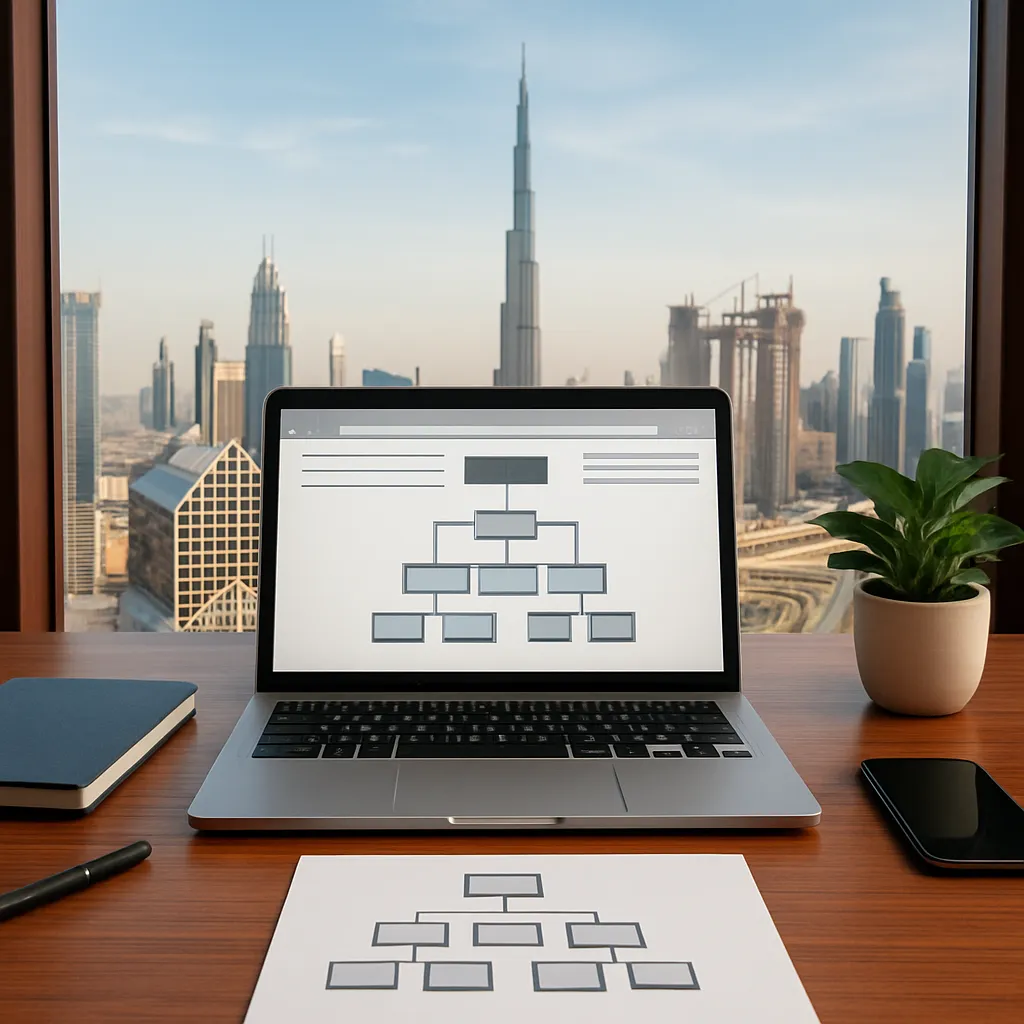
How to Improve Website Architecture for SEO in Dubai
Effective website architecture is one of the most underrated elements of SEO and digital marketing in Dubai. While many brands invest in content and paid ads, they often overlook how the structure of their site influences crawlability, user experience, conversions and long‑term growth. In a competitive market like the UAE, where users expect fast, mobile‑friendly and bilingual experiences, improving website architecture can be the difference between ranking on page one or disappearing in search results.
Understanding Website Architecture in the Context of Dubai SEO
Website architecture is the way pages, navigation, internal links and technical elements are organized. For search engines, it defines how easily bots can discover, crawl and index content. For users, it shapes how fast they find what they need, how long they stay and whether they trust your brand enough to convert.
In Dubai, several market‑specific factors make architecture especially important:
- High smartphone penetration (over 95% according to UAE telecom reports) makes mobile-first architecture essential.
- Multi‑language expectations (typically English and Arabic, sometimes Russian or Chinese) require careful URL and navigation planning.
- Strong competition in sectors like real estate, tourism, finance and e‑commerce means that even small architectural inefficiencies can cost rankings and revenue.
Global SEO studies show that sites with a clear, shallow structure tend to perform better. For example, research from Backlinko and other industry sources indicates that pages closer to the homepage (within 3 clicks) are crawled more often and are more likely to rank. In practice, that means fewer buried pages and more logical, topic‑based groupings.
Designing a Scalable, SEO‑Friendly Structure for Dubai Websites
Improving website architecture starts at the level of planning and information hierarchy. Whether you are rebuilding a website for a Dubai hotel, law firm or e‑commerce store, your architecture should mirror how real users search and browse.
Plan Around Search Intent and Local Market Segments
Start by mapping the main categories based on keyword research and business priorities. For example, a Dubai digital agency might structure its site around services like:
- SEO Services in Dubai
- PPC Management UAE
- Social Media Marketing Dubai
- Web Design and Development
Each of these becomes a top‑level category in the architecture, with subpages targeting more specific intents, such as “technical SEO audit in Dubai” or “e‑commerce PPC for UAE retailers.” This approach aligns with how users search and how Google groups related topics, supporting stronger topical authority.
Use a Shallow, Logical Hierarchy
A good rule of thumb is that any important page should be reachable within three clicks from the homepage. For most Dubai businesses, a structure such as the following works well:
- Homepage
- Main categories (Services, Locations, Industries, Blog, About, Contact)
- Subcategories and detailed pages under each main category
A hotel website, for instance, might use:
- Rooms & Suites
- Dining
- Spa & Wellness
- Meetings & Events
- Dubai Attractions
Under “Dubai Attractions” you could create child pages for “Dubai Mall,” “Burj Khalifa,” or “Desert Safari.” This structure supports SEO for tourism‑related queries and keeps the architecture tightly organized.
Implement SEO‑Friendly URL Structures
URL structure is an integral part of architecture. In multilingual Dubai environments, you should:
- Use clear, keyword‑rich slugs (e.g. /seo-services-dubai/ instead of /page123/).
- Separate languages with subfolders (e.g. /en/, /ar/) rather than mixing languages on the same URL.
- Avoid overly deep folder nesting (e.g. /services/seo/technical/audit/ is often unnecessary).
Search engines use URLs to understand content relationships and hierarchy. A clean structure supports rich internal linking, easier analytics and better user experience.
Design Navigation for Users First, Bots Second
Your main navigation, footer and internal menus should reflect the site hierarchy and guide users through the most important journeys. Key principles include:
- Clear, descriptive labels (e.g. “SEO Services” instead of “Solutions”).
- Highlighting high‑value commercial pages (e.g. “Get a Quote,” “Book Now,” “Free Consultation”).
- Including a logical mega‑menu for large e‑commerce or multi‑service sites, with categories and subcategories easy to scan.
For Dubai audiences, consider localized labels like “Dubai Branches” or “UAE Offices” to reinforce geo‑relevance. Internal navigation links should use descriptive anchor text, such as content marketing services in Dubai, rather than generic “click here.”
Technical Foundations: Crawlability, Speed and Mobile UX
Even the best planned architecture fails if search engines cannot access or properly interpret your pages. Technical SEO ensures that Google and other engines can crawl, index and rank your Dubai website efficiently.
Optimize Crawl Budget and Internal Link Flow
For large e‑commerce or classified sites popular in the UAE, crawl budget becomes critical. To improve it:
- Use a well‑structured XML sitemap that includes only canonical, indexable URLs.
- Block low‑value or duplicate sections (filters, session parameters, search results pages) via robots.txt or noindex where appropriate.
- Ensure that important commercial pages receive strong internal linking from navigation, category pages, and editorial content such as blogs.
Studies from major SEO tools show that pages with more internal links tend to receive more organic traffic. Strategically linking from high‑authority pages (e.g. popular blog posts about Dubai marketing trends) to key service pages helps distribute link equity and improve rankings.
Prioritize Speed and Core Web Vitals in the UAE
Dubai has advanced infrastructure, but mobile networks and user devices still vary, especially among tourists and international visitors. Google’s Core Web Vitals – Largest Contentful Paint (LCP), First Input Delay (FID, now Interaction to Next Paint) and Cumulative Layout Shift (CLS) – are part of the ranking equation and directly tied to architecture and code structure.
To improve performance:
- Use lightweight, well‑coded themes. Avoid bloated builders that add unnecessary scripts.
- Implement image optimization (WebP, compressed images, responsive sizes).
- Use a reputable CDN with edge servers near the UAE to reduce latency.
- Reduce JavaScript blocking critical rendering pathways, particularly on mobile.
Industry benchmarking often shows that every one‑second delay in mobile load time can reduce conversions by up to 20%. For a Dubai hotel, real estate portal or online store, this directly impacts revenue.
Build a Mobile‑First Architecture
With the majority of Dubai users browsing on smartphones, your architecture must assume mobile as the primary context:
- Ensure key content and navigation elements are immediately accessible above the fold on small screens.
- Use thumb‑friendly navigation and clearly visible calls to action like “Call Now” or “WhatsApp Us,” which are widely used in the region.
- Avoid complex hover‑dependent menus that do not translate well to touch interfaces.
Google’s mobile‑first indexing means that the mobile version of your site is what primarily determines your organic visibility. Any hidden or hard‑to‑reach content on mobile will likely underperform in search.
Multilingual and Local SEO Architecture for Dubai
Dubai’s multicultural environment makes multilingual and local SEO critical for many verticals. Architecture must support language, region and local intent cleanly and consistently.
Plan Language Variants with Clear URL Logic
The most sustainable approach for Dubai websites is to use subfolders for each language, for example:
- example.com/en/seo-services-dubai/
- example.com/ar/خدمات-سيو-دبي/
This structure is easier to manage than separate domains and allows both versions to benefit from shared domain authority. To ensure search engines understand language relationships, implement hreflang tags connecting English and Arabic pages. This reduces the risk of serving the wrong language to users searching in Dubai.
Align On‑Page Elements with Local and Language Intent
Architecture should also guide your content decisions. Each key category and landing page should be localized for Dubai and the UAE where relevant:
- Include Dubai‑specific terms (e.g. “SEO company in Dubai Media City,” “digital agency in Business Bay”).
- Reflect local payment, currency and regulatory requirements on transactional pages.
- Provide Arabic equivalents for critical navigation items, forms and calls to action.
This does not only influence ranking, but also trust and conversion. Many users feel more comfortable engaging with content that speaks directly to their location and language.
Optimize for Local Search Features
Local SEO is tightly connected with architecture. For businesses with physical locations in Dubai, ensure that:
- Each branch or office has its own dedicated, well‑structured landing page.
- Location pages are linked from a “Locations” or “Branches in Dubai” hub page.
- NAP data (name, address, phone) is consistent across these pages and your Google Business Profile.
This structure helps Google connect your website to map pack listings and local queries such as “SEO agency near me” or “real estate office in Dubai Marina.”
Content Hubs, Internal Linking and Topic Authority
Modern SEO in Dubai is less about isolated pages and more about demonstrating depth on key topics. Website architecture should therefore include content hubs that cluster related articles, guides and service pages.
Create Thematic Hubs for Strategic Topics
For example, a Dubai digital agency might build a content hub around “Dubai SEO and marketing strategy,” containing:
- A core pillar page: “Complete Guide to SEO in Dubai.”
- Supporting articles on technical SEO, link building in the UAE, content marketing for Arabic audiences.
- Case studies showing performance improvements for Dubai clients.
All these pages interlink, with the pillar page acting as a central hub. This architecture signals to search engines that your site is an authority on Dubai‑focused SEO, increasing your chances of ranking for competitive queries.
Use Contextual Internal Links Strategically
Beyond navigation menus, contextual internal links placed within body content are powerful. When writing a blog post about “Google algorithm updates and their impact on UAE businesses,” you might link key phrases like organic traffic growth, conversion optimization or Dubai e‑commerce SEO to relevant service or hub pages.
Best practices include:
- Using descriptive anchor text that indicates the topic of the target page.
- Linking from high‑traffic informative content to high‑value commercial pages.
- Avoiding over‑optimization by varying anchors naturally.
Over time, this creates a robust internal network that strengthens your architecture and supports discoverability of older but still valuable content.
Data‑Driven Optimization and Continuous Improvement
Improving website architecture for SEO is not a one‑time task, especially in a fast‑moving market like Dubai where competition, user behavior and search algorithms evolve quickly. Ongoing analysis and optimization are essential.
Leverage Analytics and Search Console Data
Use tools like Google Analytics and Google Search Console to identify architectural issues:
- Pages with high impressions but low click‑through rate may need clearer titles or better placement in navigation.
- Pages with high bounce rate and low engagement may be poorly integrated into user journeys.
- Crawl error reports can highlight broken internal links, removed pages or misconfigured redirects.
By aligning this data with your site structure, you can decide which sections need reorganization, consolidation or expansion.
Monitor Behavior of Dubai and UAE Segments Specifically
If your business serves multiple regions, separate performance analysis for Dubai and UAE users. Check:
- How local users navigate the site compared to international visitors.
- Which landing pages perform best for users located in Dubai.
- Differences in device usage, session length and conversion rate by region.
This allows you to tweak architecture in a way that better supports the behavior and expectations of your Dubai audience, for example by promoting WhatsApp contact on mobile or prioritizing Arabic content in certain journeys.
Align Architecture with Business and Brand Growth
As your Dubai business expands – adding new services, regions or languages – revisit architecture early rather than simply bolting on new sections. A proactive approach helps avoid bloated navigation, duplicate content and cannibalization, where multiple pages compete for the same keywords.
For example, if you launch performance marketing services in addition to SEO, consider creating an integrated “Digital Marketing in Dubai” hub rather than isolated landing pages. This maintains a coherent structure and clearer story for both users and search engines.
Conclusion: Architecture as a Competitive Edge in Dubai SEO
Website architecture is not just a technical concern; it is a strategic lever for building visibility, trust and conversions in one of the world’s most dynamic markets. For brands operating in Dubai, a well‑planned and continuously optimized structure can amplify every other investment you make in traffic, visibility and conversions.
By focusing on a logical hierarchy, SEO‑friendly URLs, multilingual clarity, mobile‑first performance and strong internal linking, you create a foundation that supports long‑term organic growth. Combined with data‑driven iteration and an understanding of local user behavior, architecture becomes a sustainable competitive advantage for your online presence in Dubai.