SerpAPI
SerpAPI has become one of the most talked‑about tools among technical SEOs, data engineers, and product teams that rely on large‑scale search data. Instead of manually scraping Google or other search engines, SerpAPI offers a ready‑made, structured interface that delivers search results via API. This makes it especially attractive for building SEO dashboards, content analysis systems, competitor monitoring tools, and even AI applications that need fresh search data. Understanding what SerpAPI actually does, how it works, and whether it truly helps with SEO is essential before investing time and budget into integrating it into your workflow.
What SerpAPI Is and How It Works
SerpAPI is a real‑time search results API designed to provide structured data from various search engines without the need for custom scrapers. Instead of writing and maintaining your own scripts to parse HTML from Google or other platforms, you send a request to SerpAPI’s endpoint and receive clean JSON containing all relevant elements of the search results page.
At its core, SerpAPI acts as a specialized intermediary between your application and search engines like Google, Bing, Baidu, DuckDuckGo, Yahoo, Yandex, and others. It handles all the complicated tasks that typically plague developers and SEO teams who try to build their own scraping solutions: rotating proxies, solving CAPTCHAs, adapting to layout changes, and respecting rate limits. You simply define the query, location, language, and device parameters, then parse the structured response.
SerpAPI focuses heavily on returning detailed and well‑labeled elements from the search engine results page (SERP). This often includes organic listings, ads, featured snippets, People Also Ask boxes, image carousels, knowledge panels, local results, and more. For SEO, this is valuable because it exposes not only the ranking URLs but also the context around them: SERP features, competition type, and the mix of informational versus transactional content.
The platform is oriented toward developers and data‑driven SEO professionals. It offers client libraries for major programming languages like Python, Ruby, JavaScript, PHP, and others, which significantly lowers the barrier to integrating search data into existing systems. Authentication is handled via API keys, and SerpAPI’s pricing is based on the number of searches performed, with tiers that scale from small projects to enterprise‑level usage.
Key Features and Use Cases for SEO
For SEO practitioners, SerpAPI’s value comes from the breadth and granularity of the data it exposes. Instead of relying on limited rank‑tracking screenshots or manually checking SERPs, you can automatically collect rich, structured information for thousands or even millions of queries. This enables more advanced analysis, automation, and experimentation than classic rank trackers generally provide.
Access to multiple search engines and verticals
Although most SEOs initially focus on Google, SerpAPI supports several engines and specialized search verticals. This includes endpoints for Google Search, Google Maps, Google Shopping, Google Images, Google News, and even Google Scholar. Each of these returns structured information tailored to that vertical, such as local business listings from Maps or product data from Shopping.
For global SEO campaigns, the ability to specify region, language, and device parameters makes it possible to simulate searches from different markets and analyze SERPs exactly as users in those locations would see them. This is particularly helpful when you want to understand local search intent, the strength of local competitors, or the visibility of your brand in new regions.
Structured SERP elements and feature tracking
One of SerpAPI’s standout strengths is the level of detail it provides for SERP features. Modern search results pages are full of rich elements: featured snippets, video carousels, Top Stories, People Also Ask (PAA), images, FAQs, and more. These features often attract substantial clicks and shape user behavior, so understanding when and where they appear is vital to modern SEO.
SerpAPI sections out different components of the SERP into distinct JSON fields, enabling granular analysis. For example, you can track how often a featured snippet appears for specific query clusters, identify which domains most frequently capture those snippets, and measure shifts over time. You can also analyze PAA questions to uncover content gaps, or monitor image and video boxes to see whether your media assets appear.
This structured approach to SERP data lets you move beyond simple ranking metrics to a more sophisticated assessment of your search visibility. Instead of just asking “What position is my page ranking in?”, you can ask “How much SERP real estate does my brand occupy across different features, and how does that compare to competitors?”
Advanced keyword research and intent analysis
SerpAPI can be a powerful engine for keyword research when combined with your own data processing or external tools. By programmatically querying large lists of keywords and parsing the resulting SERP structures, you can infer search intent categories, detect long‑tail opportunities, and find semantically related queries that may not surface in traditional keyword tools.
For example, analyzing PAA questions and related searches in bulk can reveal recurring phrases and topic patterns. You can cluster these programmatically to build content calendars and information architectures that reflect how users actually explore a topic. Likewise, examining which SERP features show up for a keyword (e.g., news, shopping, maps, videos) supports more nuanced decisions about content format and channel prioritization.
Competitor monitoring and content benchmarking
Because SerpAPI retrieves the entire SERP with all domains and features, it’s suitable for systematic competitor tracking. You can monitor how competitors perform across different markets, how often they occupy featured snippets, which URLs they use to capture specific keyword themes, and how their presence shifts over time in relation to algorithm updates or campaigns.
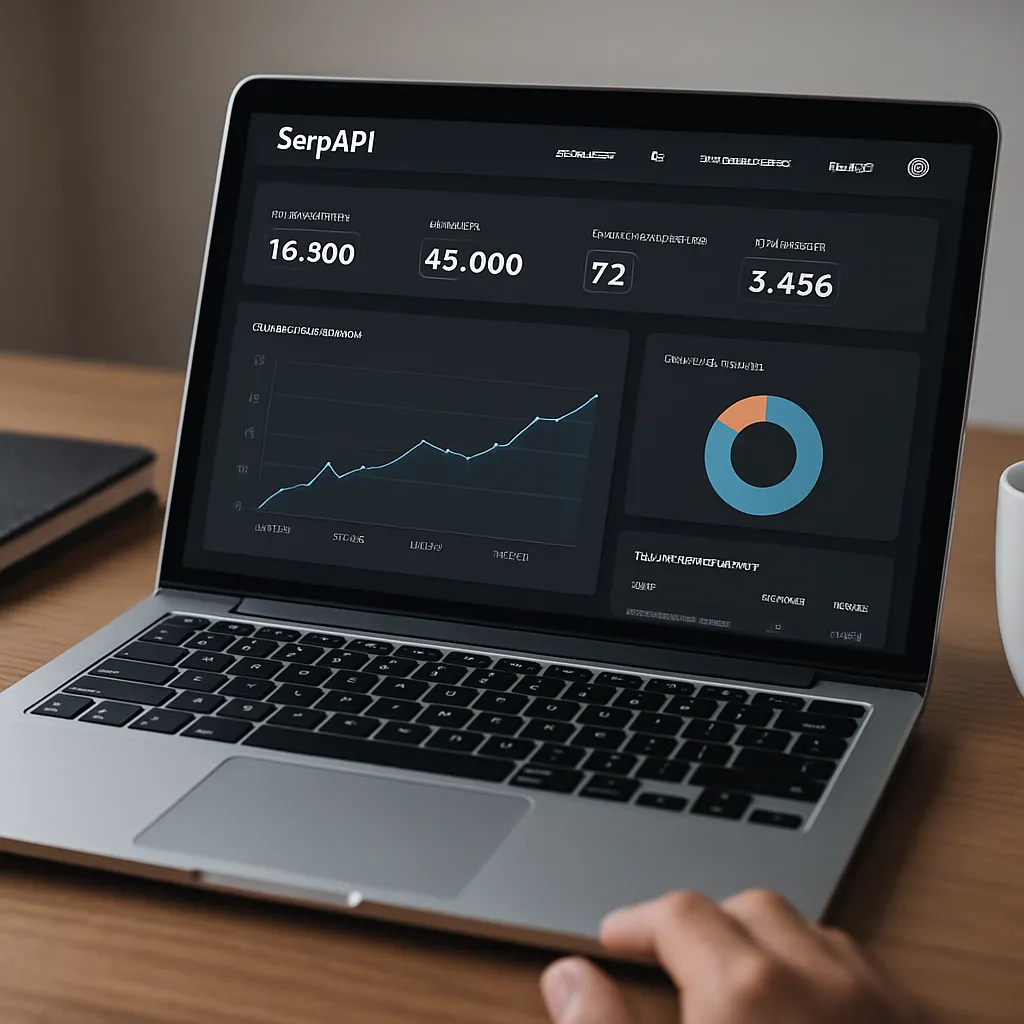
By storing historical SerpAPI responses, SEO teams can build in‑house benchmarking dashboards. These can help visualize trends such as share of voice for certain query groups, volatility of specific SERP features, and the performance of brand versus non‑brand queries. Such insights are difficult or impossible to extract using only manual checks or traditional rank trackers with limited context.
Local SEO and Google Maps data
For businesses with physical locations, SerpAPI’s support for Google Maps and local pack data is particularly relevant. It allows you to fetch details about local search results, including business names, ratings, addresses, and positions in the local pack. You can also simulate searches from specific coordinates or cities, which is crucial to understanding hyperlocal visibility.
Local SEO workflows can therefore be automated at scale. Agencies can monitor hundreds of locations for their clients, track NAP consistency, and spot situations where a competitor starts to outrank a location in map packs. Integration with business intelligence systems can tie this data back to store‑level revenue or lead generation metrics.
Technical Perspective: Integration and Scalability
From a technical point of view, SerpAPI is engineered for flexible and scalable integration. This is a significant advantage over traditional scraping approaches, which often become unstable or expensive to maintain as projects grow. By abstracting away the complexity of scraping infrastructure, SerpAPI lets engineering teams focus on data usage rather than data collection.
API design and language support
SerpAPI exposes a simple HTTP‑based interface. You send URL‑encoded parameters specifying the search engine, query, and other options, then receive JSON in response. This makes it straightforward to integrate into almost any environment that can perform HTTP requests. Official and community‑maintained libraries exist for languages like JavaScript, Python, Ruby, Node.js, PHP, and others, so most development teams can start quickly.
Parameters typically include key elements such as query term, geographic location, language, device type (desktop or mobile), and pagination. For specialized endpoints like Maps or Shopping, additional parameters allow more precise filtering. The consistent pattern across endpoints means that once a team learns the core API model, extending usage to new search types is relatively smooth.
Handling proxies, CAPTCHAs, and rate limits
One of the most frustrating aspects of custom SERP scraping is constant maintenance—search engines actively fight bots and automated scraping. IP blocking, CAPTCHAs, layout changes, and dynamic content can all break scraping scripts at any time. SerpAPI takes responsibility for handling these challenges, managing a robust proxy network, and updating their parsing logic as SERP layouts evolve.
This offloading has both operational and strategic benefits. Operationally, teams avoid spending engineering hours on low‑level scraping tasks and firefighting breakages. Strategically, it reduces the risk that an SEO initiative or reporting feature suddenly fails due to a subtle HTML change. As long as SerpAPI maintains its service, the data pipeline remains relatively stable.
Scalability and performance considerations
SerpAPI is designed to support large volumes of requests, which is essential for enterprise SEO, price comparison platforms, or AI systems that rely on frequent querying. The provider offers various pricing tiers and concurrency options, so teams can ramp up from experimentation to production without re‑architecting their approach.
However, scalability also depends on how the consuming application is built. Teams must still design efficient storage, processing, and caching strategies. For example, if you query millions of SERPs per month, you need robust data warehousing and pipelines that can extract the metrics you care about without overwhelming your infrastructure. SerpAPI supplies the data, but turning that data into actionable insight requires thoughtful engineering and analytics design.
Integration with AI and automation tools
SerpAPI has become particularly attractive in the context of machine‑learning and AI‑driven SEO. Large language models, recommendation systems, and custom search experiences often need a continuous feed of up‑to‑date search data to stay relevant. SerpAPI’s simple and predictable API makes it easier to connect these models to the live search environment.
For example, a content recommendation engine can use SerpAPI data to detect which topics are gaining visibility in SERPs and then guide editors toward relevant formats and keywords. Similarly, an AI assistant that answers questions about specific industries could query SerpAPI on the fly to supplement its answers with fresh search information, blending static training data with real‑time results.
Does SerpAPI Actually Help with SEO?
From an SEO strategy perspective, SerpAPI is not a magic ranking tool but a powerful enabler. It does not directly increase rankings or manipulate algorithms; instead, it provides high‑quality, structured search data that can be turned into better decisions, faster experimentation, and more responsive content strategies. Whether it “helps with SEO” therefore depends on how teams use it.
Improved visibility analysis and reporting
Classic SEO tools often simplify the search landscape into a single ranking position or an average visibility score. While this can be useful at a high level, it hides the complexity and dynamism of modern SERPs. SerpAPI allows teams to reconstruct this complexity by accessing all SERP elements and features. This, in turn, supports more nuanced measurement frameworks.
For example, an SEO team can build reports that track not just average rank, but share of SERP features, frequency of brand appearances in images or videos, distribution of PAA mentions, and volatility of featured snippets for priority keywords. Such multi‑dimensional reporting reveals opportunities and risks that might otherwise go unnoticed.
Faster experimentation and feedback loops
SEO success often comes down to learning speed. Teams that can test hypotheses quickly and adjust content based on real‑world feedback build sustainable advantages. SerpAPI supports this by making it easy to monitor the impact of changes on SERPs over time, including subtle shifts in feature presence or competitor behavior.
For instance, if you optimize a page to target a featured snippet, you can schedule SerpAPI checks to see whether the snippet appears, which site holds it, and how its wording evolves. You can also test different schema implementations or content formats and track how they influence your presence in rich results. This accelerates the process of discovering what actually works for your specific audience and niche.
Advanced customization beyond generic SEO tools
Many SEO teams eventually reach the limits of off‑the‑shelf tools. They want custom dashboards, internal KPIs, vertical‑specific metrics, or tight integration with other business data that standard tools don’t provide. Because SerpAPI exposes raw, granular SERP data, it enables this kind of customization.
By combining SerpAPI with data warehouses, visualization tools, and internal analytics, organizations can create bespoke SEO platforms tailored to their strategy. They might connect search data with CRM information to measure the value of rankings by customer lifetime value, or merge SERP feature visibility with attribution models to evaluate how search influences multi‑channel journeys. In this sense, SerpAPI acts as a foundational data source for advanced SEO analytics.
Limitations, Risks, and Ethical Considerations
Despite its advantages, SerpAPI is not without limitations and trade‑offs. Understanding these helps set realistic expectations and guides responsible use.
Dependence on a third‑party provider
Relying on SerpAPI means entrusting a critical data pipeline to an external company. While this reduces maintenance burden, it introduces vendor risk: pricing changes, service interruptions, or shifts in support for specific engines could affect your systems. For mission‑critical applications, risk mitigation strategies—such as redundant providers, caching, and fallbacks—should be considered.
Some organizations prefer to keep full control over their scraping efforts for compliance or privacy reasons. For them, SerpAPI might serve as one component of a broader strategy rather than the sole source of truth. Still, the cost‑benefit balance often favors a specialized provider for many commercial projects.
Costs at scale
SerpAPI uses a pay‑as‑you‑go model, typically charging per search. While entry‑level plans are affordable for small teams and experiments, very large volumes can become costly. At scale, organizations must carefully budget their query usage and optimize data collection strategies.
This may involve sampling rather than querying every possible keyword, prioritizing high‑value segments, or scheduling less frequent checks for stable terms. Intelligent request design and caching can significantly reduce unnecessary calls, keeping costs aligned with the business value generated.
Data interpretation and analysis complexity
SerpAPI provides raw, detailed SERP data, but it does not interpret that data for you. Teams still need analytical expertise to derive insights and avoid misinterpretation. SERPs are noisy environments, influenced by personalization, testing, and regional nuances. Drawing causal conclusions from SERP changes requires careful methodology and, ideally, multiple data sources.
Moreover, the richness of the JSON responses can be both a strength and a challenge. Without well‑structured schemas and clear objectives, teams may collect far more data than they can meaningfully analyze. Designing a focused data strategy—defining which metrics matter, how they will be processed, and who will use them—is essential to unlocking real SEO gains.
Legal and ethical boundaries
Any activity involving automated access to search engines must be considered in light of legal and ethical frameworks. Different jurisdictions have varying rules on scraping and data usage, and search engines themselves set terms of service. SerpAPI positions itself as a compliant intermediary and assumes responsibility for many operational aspects, but users should still consult legal counsel for high‑impact or sensitive use cases.
Ethically, organizations should ask whether their use of search data respects user privacy, aligns with platform guidelines, and contributes to a healthy digital ecosystem. For most SEO‑oriented use cases, this is straightforward, but awareness and transparency remain important.
Overall Opinion: Who Benefits Most from SerpAPI?
Overall, SerpAPI stands out as a powerful, developer‑friendly tool that significantly lowers the barrier to accessing high‑quality SERP data. It is particularly well‑suited to organizations that already have, or are willing to build, technical capabilities around data pipelines, custom dashboards, and automation. For such teams, SerpAPI often becomes a central component of their SEO and competitive‑intelligence stack.
In terms of user profiles, data‑driven SEO agencies, SaaS platforms, price comparison websites, and AI product teams may gain the most from integrating SerpAPI. They can translate raw search data into differentiated products, advanced reporting, and faster experimentation cycles. Individual SEOs and small businesses can also benefit, especially if they collaborate with developers or leverage lightweight integrations, but may find traditional all‑in‑one SEO tools sufficient for basic needs.
SerpAPI does not replace strategic thinking, content quality, or technical site optimization. It enhances them by providing a comprehensive, flexible, and scalable view of the search landscape. Used thoughtfully, it enables more precise targeting, better competitive awareness, and more responsive SEO programs. For organizations serious about building their own search intelligence capabilities rather than relying solely on generic dashboards, SerpAPI is a compelling option worth exploring in depth.