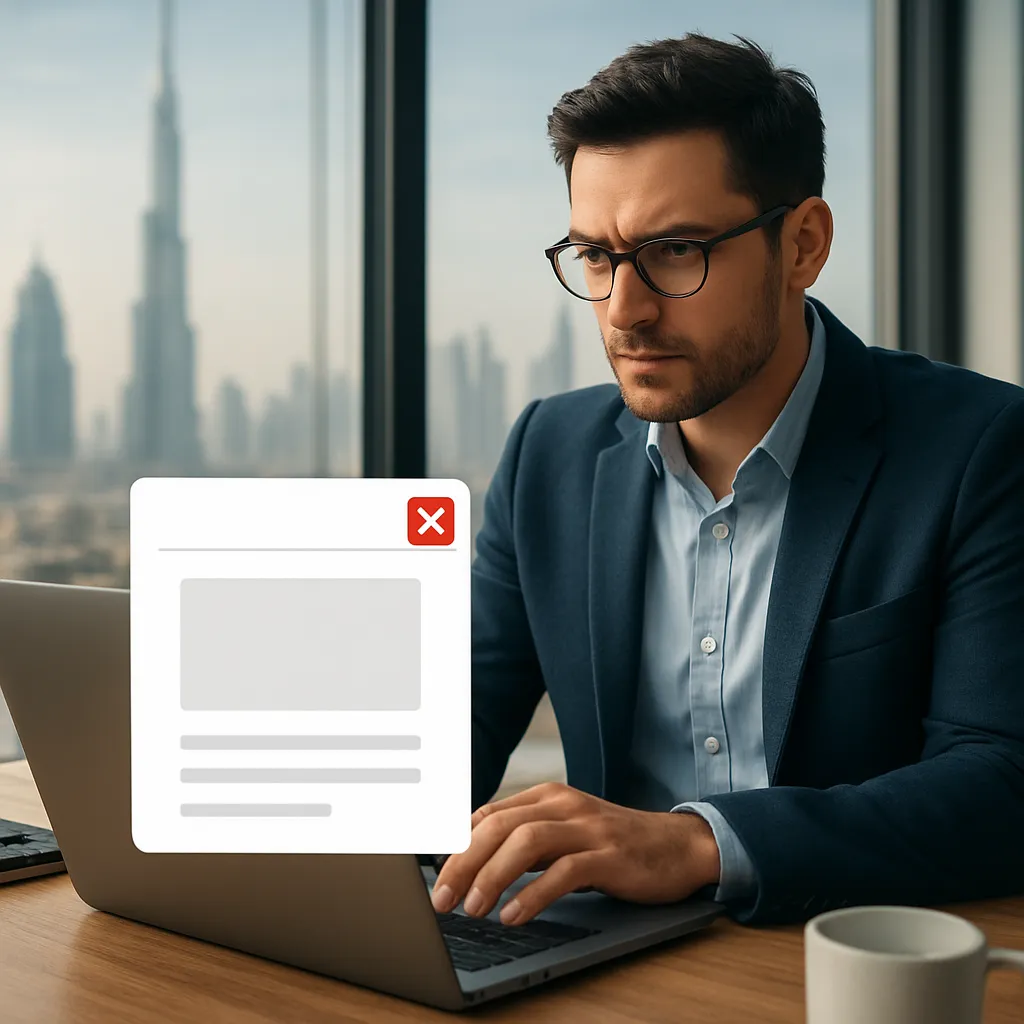
How to Optimize Pop-Ups Without Hurting SEO in Dubai
Pop-ups can be a powerful growth lever for brands in Dubai’s competitive digital landscape, but they are also a common reason for higher bounce rates, lower engagement, and even search visibility issues when implemented poorly. Balancing user experience, conversion optimization, and **SEO** is especially challenging in a city where mobile-first customers, strict advertising standards, and intense competition shape how websites are built and marketed. This article explains how to design, configure, and test pop-ups so they support your **online marketing** strategy in Dubai without triggering search engine penalties or frustrating users.
Why Pop-Ups Matter for Digital Marketing in Dubai
In a fast-growing market like Dubai, website traffic is expensive to acquire. Brands invest heavily in **PPC**, social ads, influencer partnerships, and offline campaigns to bring users to their websites. Allowing those visitors to leave without capturing an email, a phone number, or initiating a WhatsApp chat means missing out on future revenue opportunities. That is why pop-ups—when used intelligently—remain a crucial part of the **conversion** toolkit.
Research backs up their potential. Global benchmarks from email platforms and CRO agencies show that well‑optimized pop-ups can reach average opt-in rates between 3–10%, with top performers exceeding 20% on highly targeted offers. For ecommerce brands in the GCC region, internal case studies often show that 10–30% of the email list growth comes directly from pop-up forms. Given that email still generates a median ROI of around 30–40x per dollar spent in many sectors, even modest improvements in pop-up performance can translate into meaningful revenue gains.
Dubai adds several local nuances:
- High mobile penetration means many users browse via smartphones on relatively fast 4G/5G networks, but still expect instant loading and smooth UX.
- User journeys often include research in English and Arabic, switching between mobile and desktop, and using multiple channels such as WhatsApp and Instagram.
- Certain verticals—real estate, tourism, luxury retail, and financial services—rely heavily on lead generation, where pop-ups can be a dominant list-building method.
However, **Google** has been explicit about penalizing intrusive interstitials (a category that includes many pop-ups), especially on mobile. If your offers block content, appear too soon, or are difficult to dismiss, you risk undermining not only user satisfaction but also your visibility in search results. The challenge is to deploy pop-ups that drive sign-ups, bookings, and inquiries, while still staying within SEO and UX best practices.
Understanding Google’s View on Pop-Ups and Interstitials
Not all pop-ups are equal in the eyes of search engines. To design pop-ups that do not damage organic visibility, you first need to understand how **Google** evaluates on-page experiences and where the line is between acceptable and intrusive behavior.
Intrusive Interstitials and Mobile Rankings
Google introduced a specific signal targeting intrusive mobile interstitials to improve searchers’ experience after they click a result. The aim is simple: when users land on a page from search, they should be able to access the main content easily without being forced through a disruptive overlay.
Examples of problematic implementations include:
- A full-screen pop-up that immediately covers the content on mobile and requires dismissal before reading.
- Pop-ups that reappear multiple times in the same session despite being closed.
- Overlays with tiny or hidden close buttons, making it difficult for users to continue browsing.
While Google does not ban pop-ups outright, it treats repeated or overly aggressive patterns as a negative signal. This effect is particularly pronounced on mobile, which is critical in Dubai, where mobile sessions often account for 60–80% or more of traffic, depending on the industry.
Core Web Vitals and User Experience
Beyond explicit interstitial guidelines, pop-ups can indirectly harm performance via **Core Web Vitals**—metrics that measure loading, interactivity, and visual stability. Poorly implemented scripts, heavy images in overlays, and last‑second layout shifts when a pop-up appears can negatively impact:
- Largest Contentful Paint (LCP)
- First Input Delay (FID) or its successor metric
- Cumulative Layout Shift (CLS)
Dubai users, who are accustomed to fast, polished digital experiences from leading brands, will quickly abandon a slow or unstable website. That behavioral data (bounce rates, short session durations, few pageviews) can then feed back into search algorithms that increasingly rely on engagement signals as part of holistic quality assessment.
Legal and Trust Considerations in the Region
While this article focuses on SEO and performance, trust and compliance are equally important. In sectors like real estate, healthcare, aviation, or banking, aggressive or misleading pop-ups can erode brand image and generate complaints. Even when not explicitly regulated, collecting personal data through pop-ups requires clear language, honest value propositions, and transparent consent mechanisms.
An approach that respects privacy and user intent is both ethically sound and commercially beneficial. Transparent, permission-based marketing tends to yield better long-term engagement and lower unsubscribe rates than tactics perceived as manipulative or spammy.
Designing Pop-Ups That Convert Without Hurting SEO
The key to using pop-ups safely is to think of them as a part of your site’s overall experience rather than isolated conversion hacks. Each detail—timing, size, copy, animation, device targeting—contributes to whether they feel helpful or intrusive. In Dubai’s digital market, where competition is fierce, focusing on quality over volume is often the smarter strategy.
Timing and Triggers: When Should Pop-Ups Appear?
Instant, page‑load pop-ups are one of the most common mistakes. They hit users before they have any context, which harms trust and makes it harder for searchers to reach the content Google promised in the snippet. Safer options include:
- Scroll‑based triggers: Show the pop-up after a user has scrolled 40–70% of the page. This indicates genuine interest and respects the initial intent to view the content.
- Time‑delay triggers: Use a delay of at least 10–20 seconds on content-heavy pages, allowing people to orient themselves first.
- Exit‑intent triggers on desktop: For Dubai B2B or high-ticket services, prompting just before a user tries to close the tab can recover leads without disturbing the main experience.
- Interaction‑based triggers: For example, opening a pop-up when a user clicks “Download Dubai Property Guide” or “Get Ramadan Offers” ensures the overlay is clearly linked to intent.
For mobile SEO safety, avoid full‑screen pop-ups that appear immediately upon landing from search. If you want to highlight an important campaign, consider less intrusive formats like a sticky bar at the top or bottom of the screen that expands only on tap.
Size, Placement, and Mobile-First Design
On smartphones, screen real estate is scarce. A pop-up that might seem moderate on desktop can become overwhelming on a mobile device. Good design principles include:
- Limiting pop-up size to a small portion of the screen on mobile, keeping visible access to some main content.
- Ensuring a clear, large “X” or “Close” text button, placed intuitively and with sufficient padding so users do not accidentally click the call to action.
- Using a lightweight overlay background to maintain context (users should still sense the page behind the pop-up, not feel transported to a new site).
- Designing for tap, not click: larger buttons, simple forms, and minimal fields, given that many Dubai users will interact with one hand on the go.
Responsive behavior is critical. Test how your pop-ups render on different smartphones common in the UAE, from high-end models to mid-range Android devices. Visual bugs or unscrollable overlays can damage both experience and analytics, as users may hard-close the tab before your scripts register their actions properly.
Offer Strategy: Relevant, Localized, and Value-Driven
Even the most technically perfect pop-up will fail if the offer is generic or misaligned with user needs. In Dubai, where audiences are highly segmented by language, income brackets, and cultural background, relevance is vital. Consider:
- Localizing offers for peak seasons such as Ramadan, Eid, Dubai Shopping Festival, or major expo-style events.
- Presenting value in clear, direct language: “Get 10% off your first stay in Dubai Marina” or “Receive the 2026 Dubai Real Estate Investment Guide”.
- Using **personalization** when possible (e.g., different pop-ups for users interested in luxury villas vs. apartments, or tourists vs. residents).
- Keeping the copy concise, with a visible benefit and minimal friction (short form fields, optional phone number rather than mandatory, etc.).
Data from conversion optimization tools often shows that reducing form fields from five to three can uplift conversions by 10–25%, with minimal impact on lead quality when the rest of the funnel is well designed. In Dubai’s high‑lead‑cost sectors like real estate or high-end hospitality, this uplift can significantly reduce cost per acquisition.
Performance and Technical Implementation
Each additional script, tracking pixel, and pop-up library adds weight to your pages and can slow them down. To balance functionality with speed:
- Use asynchronous loading for pop-up scripts so they do not block rendering of core content.
- Lazy‑load images and only fetch heavy assets when the user is close to triggering the pop-up.
- Compress and optimize all visuals and icons used in overlays.
- Minimize dependencies: avoid stacking multiple tools that all try to display pop-ups simultaneously.
Regularly review your **analytics** for page load metrics, especially for users in the UAE region. Combine this with Google Search Console data to ensure your Core Web Vitals remain within recommended thresholds. If implementing a new pop-up or switching a vendor causes major degradation, reconsider or adjust your configuration before rolling it out across the entire site.
Local Best Practices for Pop-Ups in Dubai
Implementing global best practices is a strong starting point, but fine‑tuning your pop-up strategy to the Dubai context can provide a crucial edge. Demographics, cultural norms, and common browsing behaviors all influence how visitors react to overlays and calls to action.
Bilingual and Multilingual Experiences
Dubai’s population is diverse, with large communities of Arabic, English, Hindi, Urdu, and Russian speakers, among others. For most brands, catering effectively to English and Arabic visitors covers the majority of search traffic. When designing pop-ups:
- Ensure language alignment with page content and traffic sources (English pop-ups on English content, Arabic on Arabic content).
- Consider different offers or phrasing for each language group, respecting cultural nuances and expectations.
- Test right‑to‑left layouts properly for Arabic; close buttons, images, and fields must align naturally with RTL design norms.
Local businesses often find that Arabic-language pop-ups may convert at different rates than English versions, even on identical pages. Monitoring those differences can guide content investments and segmentation strategies.
Respecting Cultural and Religious Sensitivities
Certain times of the year, such as Ramadan, have specific behavioral patterns. Users may browse more at night, be more price‑sensitive, or respond differently to imagery and tone. Adjust your pop-up strategy to:
- Use culturally appropriate visuals, avoiding anything that might be interpreted as disrespectful or out of touch with local norms.
- Highlight seasonal promotions or charitable initiatives in ways that feel genuine and considerate.
- Adjust send times and follow‑up sequences from collected leads to align with altered daily routines.
A respectful approach enhances brand perception and can increase willingness to subscribe or share contact information, especially in sectors that rely on long-term trust like education, healthcare, and financial services.
Aligning Pop-Ups with Local User Journeys
Modern customers in Dubai often begin research on a mobile device, continue later on a laptop, and finalize decisions via WhatsApp, phone, or in-person visits. Your pop-ups should reflect those journeys:
- Offer WhatsApp chat options or callbacks in addition to email forms, especially in service sectors such as clinics, salons, and property agencies.
- Segment visitors based on acquisition channel; for example, a user arriving from “Dubai hotel deals” search may respond better to an immediate discount than to a long content download.
- Coordinate with offline campaigns in malls or outdoor advertising by using similar language and visuals in your pop-up creatives.
Local analytics regularly show that combining multiple contact options (email + phone + WhatsApp) within a carefully designed pop-up can boost overall engagement. The key is not to clutter the design but to present choices logically and clearly.
Testing, Measuring, and Iterating Without Risking SEO
No matter how well you plan your pop-ups, ongoing testing is essential. User behavior changes during different seasons, economic cycles, and even weather patterns that affect mall visits versus online shopping. A structured approach to experimentation lets you improve results while controlling for SEO impact.
A/B Testing Pop-Ups Responsibly
Split-testing headlines, colors, and triggers can significantly increase conversion rates. However, there are some precautions to take to avoid confusing users or search engines:
- Keep tests within the same UX and SEO boundaries: do not compare a small, delayed pop-up with an instant full-screen interstitial if you want to maintain consistent compliance.
- Run tests for long enough to gather statistically meaningful data, especially when traffic is segmented by region or language.
- Monitor not only conversion metrics but also bounce rate, time on site, pages per session, and return visits from UAE users.
When you notice a variant that produces more sign-ups but clearly harms engagement metrics, consider it a false win. Over time, a friction-heavy experience can reduce organic traffic, which may more than offset short-term gains in lead volume.
Monitoring SEO Signals and Technical Health
Because pop-ups can influence page performance and engagement, you should treat every major change as a hypothesis to be validated with real data. Recommended practices include:
- Tracking Core Web Vitals through tools such as PageSpeed Insights or your preferred monitoring suite and segmenting results by mobile traffic from the UAE.
- Reviewing Google Search Console for any shifts in average position, click‑through rate, or impressions for key landing pages where pop-ups are active.
- Checking error logs and console messages to ensure that new scripts do not create JavaScript conflicts or block critical content from rendering and indexing.
It can also be helpful to maintain a simple change log for your website. Mark when new pop-ups, overlays, or chat widgets go live, and correlate those dates with any significant movements in search performance or engagement trends. This basic discipline helps you diagnose issues early and prevents guessing when something goes wrong.
Balancing Lead Quantity with Lead Quality
Pop-ups can quickly inflate email lists and lead databases, but not all contacts will be equally valuable. In Dubai, where cost per click and media spends are often higher than in many other regions, tracking downstream revenue and not just sign-up volume is important. To optimize for quality:
- Segment pop-up offers by product category, user intent, or funnel stage instead of using one generic “Subscribe to our newsletter” overlay.
- Use progressive profiling: capture only the essentials at first (email, country), then collect additional data later as the relationship deepens.
- Attribute revenue or qualified leads back to specific pop-up campaigns in your CRM or analytics platform.
Brands that monitor the entire customer journey often discover that certain pop-up campaigns generate fewer sign-ups but far higher conversion-to-sale rates. Prioritizing those can improve overall ROI while maintaining a clean, non-intrusive onsite experience.
Putting It All Together for Sustainable Growth
Pop-ups in Dubai’s digital ecosystem should not be viewed as quick tricks to capture attention, but as carefully integrated components of a broader **user‑experience** and acquisition strategy. By respecting search guidelines, optimizing performance, and tailoring offers to local behaviors, you can achieve a balance where visitors feel helped rather than interrupted, and where your site’s **visibility** in organic results remains protected.
The path forward involves combining technical discipline with strategic creativity:
- Follow mobile‑first and Core Web Vitals standards to ensure overlays do not slow down or destabilize your pages.
- Use intent‑based triggers and moderate designs that allow content to remain easily accessible after search clicks.
- Invest in localized, high‑value offers—whether exclusive Dubai promotions, guides, or personalized consultations—that genuinely merit attention.
- Continuously test and refine your approach based on real behavior from users in the UAE, tracking both engagement and long‑term revenue impact.
When these elements work in unison, pop-ups become a strategic asset rather than a liability. They support your **digital** marketing campaigns, nurture leads across channels, and contribute to sustainable growth without sacrificing rankings or reputation in one of the most competitive online markets in the region.