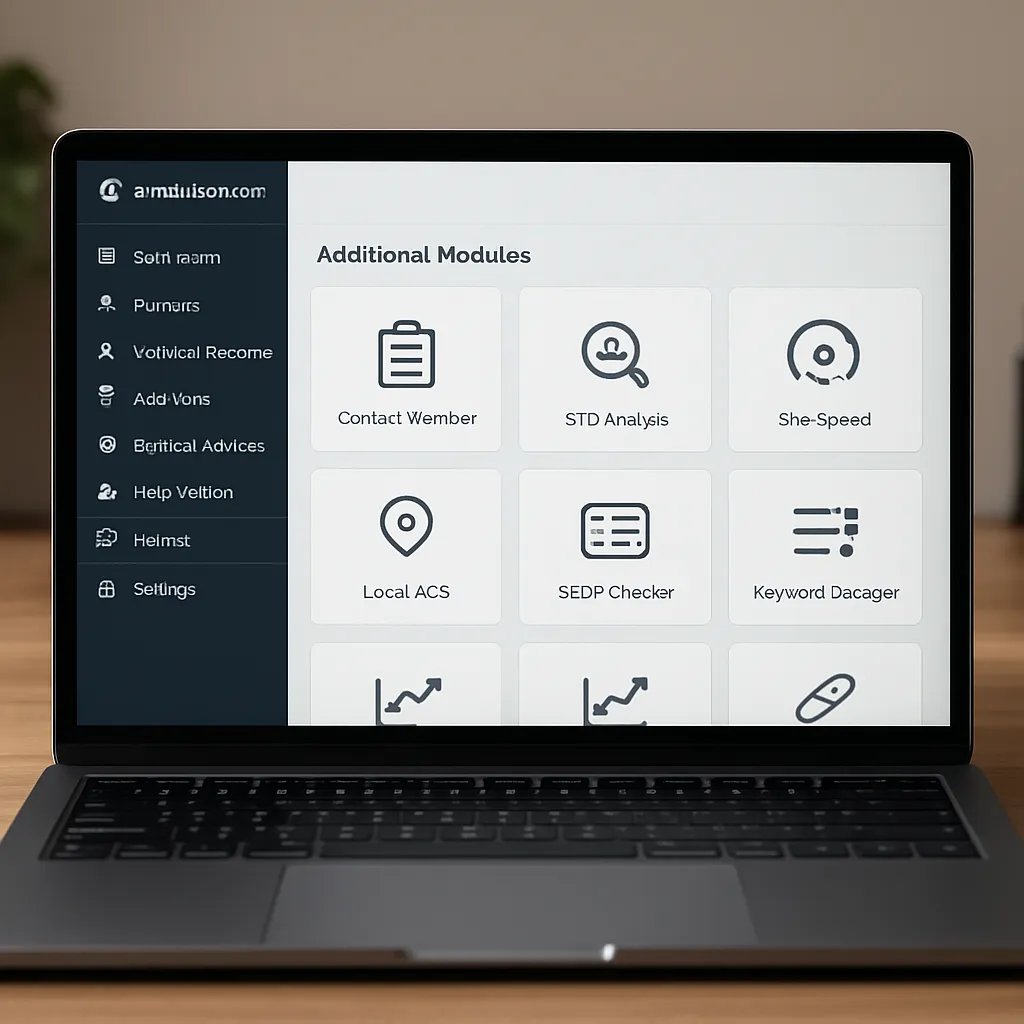
Systrix Toolbox (Additional Modules)
Systrix Toolbox, a powerful suite of additional modules built around the well‑known SISTRIX ecosystem, has grown into one of the more interesting all‑in‑one environments for professional SEO analysis. While many tools promise to cover every aspect of search engine optimisation, only a few manage to provide both depth and usability in a single interface. The additional modules of Systrix Toolbox extend the core platform with specialised features for visibility tracking, competitive research, content optimisation and technical diagnostics, giving SEO professionals and digital marketers a broader and more actionable view of organic performance.
What is Systrix Toolbox and how does it fit into an SEO workflow?
Systrix Toolbox is designed as a modular SEO environment that connects a wide spectrum of data sources and functionalities into one coherent interface. Rather than focusing exclusively on rankings or keyword research, it attempts to cover the main areas that matter for ongoing optimisation: domain visibility, content quality, backlinks, on‑page health and competitive benchmarking. In practice, this means that analysts and marketers can work inside one system instead of constantly jumping between half a dozen partial tools.
The concept of “additional modules” within the Systrix Toolbox refers to distinct, focused components that can be enabled depending on a project’s needs. In a typical setup, users combine modules like organic visibility tracking with keyword research, link analysis and technical monitoring. Each module comes with its own set of reports, filters and data visualisations, but they remain interconnected inside a unified workspace. This integration is a core strength: data can be cross‑referenced more easily, and patterns can be spotted that would be difficult to detect if the information were scattered across tools.
From a workflow perspective, Systrix Toolbox supports several essential SEO activities. It helps identify which URLs bring the most traffic, which queries drive that traffic, and how visibility evolves over time. It highlights pages that can be improved through content expansion or technical polishing. It enables quick competitive overviews, revealing where rival domains gain visibility, which keywords they dominate and where they are losing ground. And it assists with reporting, offering visual trends and exportable datasets that make it easier to communicate results to clients or internal stakeholders.
For teams that manage multiple websites or large domains, the central goal is efficiency. The added modules in Systrix Toolbox are meant to reduce friction in daily SEO work. Instead of manually scraping search results, maintaining oversized spreadsheets or building custom dashboards from scratch, analysts can rely on pre‑built reports and mature data pipelines. This is not just a convenience; it reduces the risk of errors and ensures that strategic decisions are based on consistently collected and processed data points.
Key modules and practical applications of Systrix Toolbox
The power of Systrix Toolbox lies in the breadth and depth of its modules. While each module can be used separately, the real value emerges when several are combined into an integrated approach. Below are the most relevant categories and how they can be applied in actual SEO work.
Organic visibility and keyword analysis
One of the central ideas around Systrix Toolbox is the concept of organic visibility indicators. These metrics allow users to see at a glance how a domain’s presence in search results has changed over time. By tracking visibility for both the entire domain and specific directories or URLs, SEOs can isolate which sections are growing and which are stagnating or declining. This kind of long‑term monitoring is crucial for diagnosing the impact of algorithm updates, website migrations or major content changes.
Keyword analysis within the toolbox goes beyond simple volume and position reports. The modules typically provide information on historical ranking trends, SERP features, competition levels and search intent patterns. This allows content teams to prioritise queries that are not only popular but also realistically attainable given the domain’s authority and topical relevance. In large campaigns, the ability to quickly map thousands of keywords to specific landing pages or content clusters is a major strategic advantage.
The keyword data is also useful for identifying quick‑win opportunities. For instance, the toolbox can be used to isolate terms where a website ranks on the second or third page of results. By focusing content and link building efforts on these borderline queries, it is often possible to gain substantial additional traffic with relatively modest effort. In reporting, visibility graphs and ranking distributions help visualise these gains in a clear and persuasive manner.
Competitor research and benchmarking
Another critical area where Systrix Toolbox has strong applications is competitor research. The additional modules focused on competition allow users to compare multiple domains at once, examine overlaps in ranking keywords and discover gaps where only some competitors are visible. This workflow is especially powerful for brands entering a new market or trying to break into a competitive niche.
By analysing which queries competitors dominate, SEOs can infer their underlying strategies, such as emphasis on informational content, aggressive link acquisition or specific topical clusters. Furthermore, by monitoring the visibility curves of competing domains, it becomes possible to notice when a rival gains or loses ground, which often correlates with changes in site structure, link profile or content tactics.
Within such modules, it is common to see features like keyword intersection reports, where shared and unique terms are clearly distinguished. This helps identify both head terms where everyone is fighting for visibility and long‑tail phrases that remain under‑served. For agencies, these insights can be turned into clear proposals: they can show a client where they are relatively strong and where specific content or optimisation initiatives could yield measurable competitive advantages.
Content analysis and on‑page optimisation
Content‑oriented modules in Systrix Toolbox typically focus on identifying which pages bring organic traffic, measuring their relevance for target topics and flagging potential areas for improvement. Instead of guessing which content deserves attention, users can prioritise pages that already have some visibility but are underperforming given their potential. This approach is especially valuable for large editorial sites and e‑commerce platforms with thousands of URLs.
Some implementations support topic and intent clustering, helping to group related queries and align them with suitable landing pages. This is beneficial for avoiding keyword cannibalisation, where multiple pages compete for the same term and weaken each other’s chances. By consolidating overlapping content or clearly differentiating pages by intent, overall visibility often improves.
On‑page diagnostics may include checks such as title and meta description quality, heading structure, content length ranges, internal linking patterns and signals of thin or duplicate content. While these checks do not replace a full technical audit, they provide a quick overview of whether important SEO basics are consistently implemented. Over time, improving these details across hundreds of pages can contribute significantly to better rankings and click‑through rates.
Backlink metrics and link profile evaluation
Off‑page signals remain a cornerstone of search visibility, and Systrix Toolbox includes modules dedicated to backlinks and link building evaluation. These components are used to analyse the volume, quality and topical relevance of incoming links, as well as to track how the link profile evolves over months and years. For many SEO specialists, this is vital for understanding why certain domains outrank others despite similar on‑page optimisation.
The toolbox generally allows users to segment backlinks by domain authority levels, link types, anchor texts and linking pages. This segmentation is useful in multiple scenarios: identifying strong partnerships worth nurturing, isolating spammy links that may require disavowal, or discovering mentions without links that represent outreach opportunities. Longitudinal charts highlight whether the link acquisition rate is steady, accelerating or stagnating, helping teams assess the sustainability of their current strategies.
Competitor backlink comparisons further enhance decision‑making. By examining where competitors receive links from, SEOs can identify industry‑specific sites, directories, regional portals or media outlets that may also be open to collaboration with their own brand. When used together with keyword and visibility data, this creates a full picture: certain ranking advantages may be clearly tied to superior backlink profiles, guiding where marketing budgets and outreach efforts should be concentrated.
Technical health monitoring and diagnostics
While Systrix Toolbox is not primarily a crawling engine like some dedicated audit platforms, its additional modules usually provide meaningful technical insights that support overall site architecture and performance optimisation. These may include detecting significant changes in indexing behaviour, sudden drops in visibility concentrated on specific directories, or anomalies that hint at canonical, noindex or redirect issues.
In many cases, combining technical observations with visibility data is more actionable than looking at pure crawl statistics. A spike in server errors, for example, is more urgent when it clearly correlates with a sharp decline in rankings for a group of URLs. By layering these signals, the toolbox can help teams prioritise which technical issues to handle first, focusing on those with the greatest impact on organic traffic.
Beyond clear errors, technical monitoring modules may also draw attention to suboptimal patterns: pages that are too deep in the click path, critical content not linked from major navigation elements, or slow‑loading templates affecting mobile rankings. When such findings are connected to actual visibility losses or stagnation, they carry more weight in discussions with development teams and decision‑makers, making it easier to justify technical investments.
Does Systrix Toolbox really help with SEO? An informed evaluation
The central question around any SEO platform is not whether it has impressive features, but whether it contributes meaningfully to better organic outcomes. In the case of Systrix Toolbox, the answer depends on how it is integrated into everyday processes, the skill level of its users and the strategic clarity of the campaigns involved. Used thoughtfully, it can significantly enhance the quality and speed of analysis. Misused, it can become an expensive dashboard with little impact on real‑world rankings.
Strengths that make Systrix Toolbox valuable
One of the clear strengths of the toolbox is its emphasis on visibility‑oriented metrics and long‑term trends. Rather than focusing exclusively on raw ranking positions for isolated keywords, it encourages users to think about the broader organic footprint of a domain. This perspective is particularly useful for decision‑makers who need to understand whether their overall digital presence is becoming stronger or weaker in the eyes of search engines.
A second strong point is the integration of multiple modules under a single interface. For advanced users who previously relied on a patchwork of tools, this can substantially reduce operational complexity. The ability to move from visibility graphs to keyword sets, then to specific landing pages and their link profiles, all within one system, allows for more holistic problem‑solving. For agencies and in‑house teams managing complex sites, this connectedness saves both time and cognitive effort.
The platform is also appreciated for its reliability of data and historical depth. Having access to several years of visibility curves and keyword movements facilitates robust analyses around algorithm updates, seasonal fluctuations and the long‑term impact of major redesigns. Such historical context is invaluable when explaining current performance to clients or stakeholders who may be focused solely on short‑term fluctuations.
Another frequently mentioned advantage is the clarity of its visualisations. Graphs and charts are designed to be interpretable even by non‑specialists, which is essential in collaborative environments where SEO teams must constantly communicate with developers, content creators and managers. By translating complex datasets into intuitive visual forms, the toolbox helps bridge the gap between expert analysis and executive decision‑making.
Limitations and areas where complementary tools may be needed
No tool is perfect, and Systrix Toolbox is no exception. One limitation is that it is generally not a replacement for specialised crawling or log analysis software. For exhaustive technical audits, dedicated crawlers that simulate search engine bots and provide granular reports on every URL, header response and resource are still necessary. The toolbox offers high‑level visibility‑based technical insights but cannot always match the depth of those focused solutions.
Additionally, although the keyword and backlink datasets are extensive, they are not complete representations of the entire web. This is true for any third‑party SEO platform: coverage and update frequencies vary by region, language and niche. For small markets or highly specific verticals, some gaps may exist, meaning that analysts must cross‑check critical findings with alternative sources such as search console data or other research tools.
Another factor to consider is the learning curve. While the interface is generally user‑friendly, extracting maximum value from the advanced modules requires a solid understanding of search engine mechanics, data interpretation and statistical thinking. Teams that expect the toolbox to generate instant answers without strategic thinking may be disappointed. The most successful users tend to be those who combine strong SEO fundamentals with the platform’s granular data and flexible reporting options.
Cost can also be a consideration, especially for smaller businesses or solo consultants. Comprehensive access to multiple additional modules comes with a price that some may find challenging to justify if they only need occasional high‑level checks. For organisations that consistently run complex campaigns, the investment is more easily recovered through improved decision quality and saved labour, but this balance must be evaluated on a case‑by‑case basis.
How Systrix Toolbox influences practical SEO outcomes
From a practical standpoint, the real impact of Systrix Toolbox emerges when its data is tightly woven into the decision cycles of SEO campaigns. When teams regularly review visibility trends, investigate keywords that change positions dramatically and correlate those movements with technical or content changes, they tend to detect issues sooner and act with more precision. Over time, this leads to more stable growth and fewer severe drops after algorithmic updates.
Because the toolbox emphasises structured monitoring, it encourages a more disciplined approach to optimisation. Rather than chasing random opportunities, teams can define clear KPIs around visibility indices, topical coverage and organic traffic from priority pages. They can then track progress using standardised reports, making it easier to iterate on strategies and benchmark outcomes across multiple projects.
The platform also supports experimentation. For example, an SEO team might roll out a new internal linking structure on one section of the site and use the toolbox to monitor how that section’s visibility changes relative to the rest of the domain. Similarly, content refreshes or template adjustments can be measured in terms of their effect on rankings and clicks. This experimental mindset, grounded in measurable data, is one of the hallmarks of mature SEO practice.
Another practical benefit lies in cross‑departmental communication. When developers, copywriters and marketing managers can all see how specific changes influence visibility and keyword positions, alignment improves. Instead of subjective debates about which initiatives matter, stakeholders can point to concrete graphs and numbers. This transparency often accelerates implementation of SEO‑friendly changes and reduces resistance to technically oriented recommendations.
Finally, Systrix Toolbox indirectly contributes to better SEO by elevating the strategic perspective of those who use it. With comprehensive data at their fingertips, analysts can spend less time collecting numbers and more time interpreting them. They can identify macro‑trends, such as shifts in user intent or the growing prominence of certain SERP features, and adapt their tactics accordingly. This move from reactive, task‑driven optimisation to proactive, insight‑driven strategy is where the platform’s long‑term value truly lies.
Expert impressions and overall assessment of Systrix Toolbox
Among professionals who have worked with multiple SEO platforms, the consensus is that Systrix Toolbox is a robust, feature‑rich environment particularly well suited to data‑driven teams. It is not marketed as an all‑purpose marketing cloud in the way some broader suites are; instead, it focuses on doing search analysis and visibility tracking at a high level of quality. For agencies, consultants and in‑house SEO departments handling medium to large properties, this focus is often exactly what is needed.
In expert discussions, the toolbox is frequently praised for the reliability of its visibility metrics and the clarity of its historical trend data. The additional modules for competitor analysis, content performance and backlinks are considered strong, especially when the goal is to obtain an integrated view rather than isolated metrics. The ability to rapidly identify where a site is gaining or losing ground compared to its competitors is a decisive advantage in fast‑moving markets.
At the same time, seasoned users emphasise that the tool should be seen as part of a broader ecosystem of analytics and research instruments. It works best when combined with data from search engine consoles, web analytics platforms and specialised crawlers. Systrix Toolbox acts as a central analytical hub where these signals are interpreted and turned into actionable strategies, rather than a single magic solution that replaces all other systems.
From a strategic point of view, one of the most valuable aspects of the toolbox is how it supports continuous optimisation. SEO is not a one‑off project but an ongoing process of adaptation to changing algorithms, user behaviours and competitive landscapes. The additional modules in Systrix Toolbox are designed precisely for this ongoing work: they track the evolution of visibility, surface new opportunities and highlight risks before they escalate into severe traffic losses.
For organisations considering adoption, it is important to approach the platform with realistic expectations and a clear plan. The toolbox provides granular, timely data and versatile visualisations, but it does not decide which content should be produced, how technical debt should be prioritised or which markets to enter. Those strategic decisions still require experienced professionals or well‑trained teams. The platform’s role is to give those people the information and structure they need to act effectively.
In conclusion, Systrix Toolbox, with its extended set of additional modules, represents a mature and capable solution for modern search engine optimisation work. It supports the full cycle of analysis, planning, implementation and review, turning raw ranking and backlink data into structured insights. When deployed by teams with the willingness to interpret and act on the information it provides, it can significantly improve the precision, speed and impact of SEO campaigns. As search environments continue to evolve, tools that offer this kind of integrated, visibility‑oriented perspective are likely to remain central to professional optimisation practices.