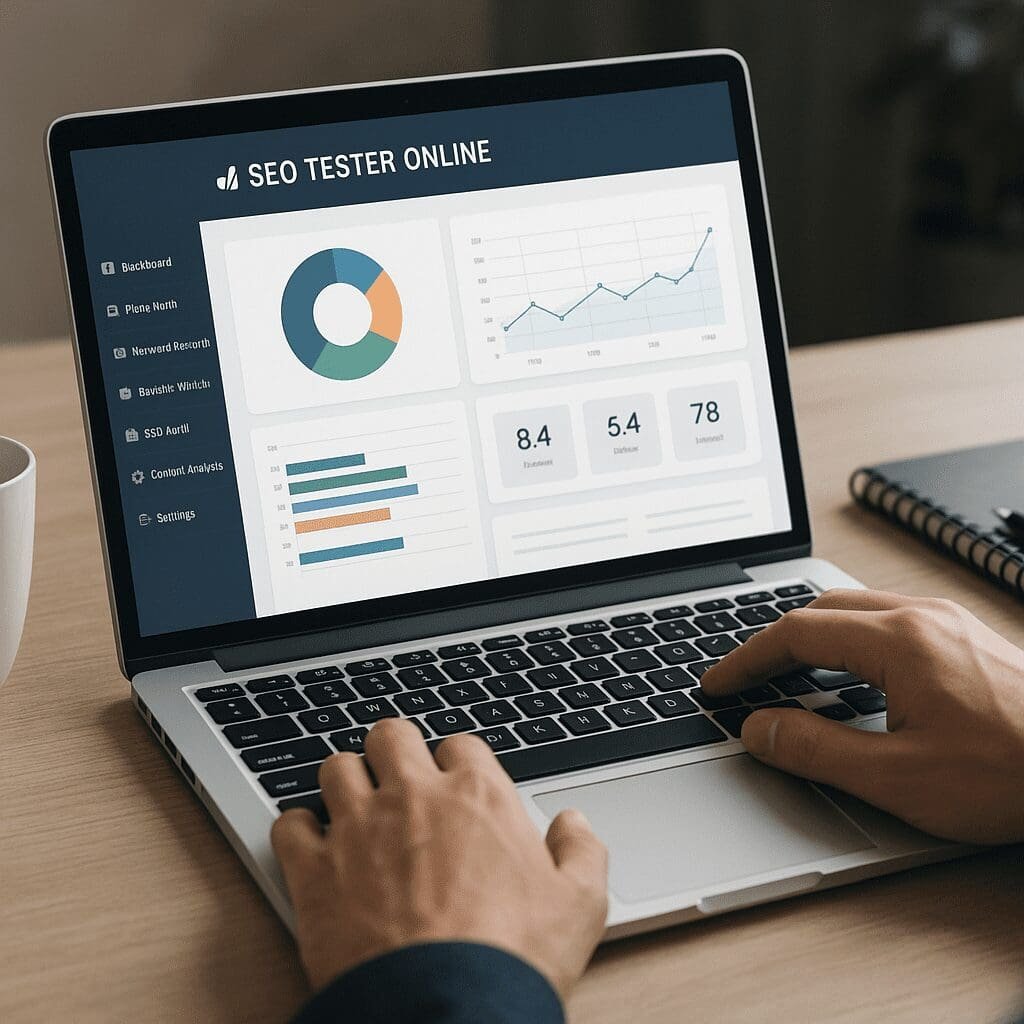
SEO Tester Online
SEO Tester Online is a cloud-based toolkit designed to help marketers, entrepreneurs, and web developers analyze their sites, find growth opportunities, and turn data into actionable improvements. Its appeal lies in bringing multiple optimization workflows into one place: from strategic planning and content ideation to technical checks and progress tracking. This article explains what the platform is, how it can fit different teams and skill levels, whether it truly moves the needle for organic traffic, and what to consider before adopting it as a core part of your SEO stack.
What SEO Tester Online Is and Why It Exists
At its core, SEO Tester Online aims to reduce friction in everyday optimization tasks. Instead of juggling spreadsheets, browser extensions, and multiple single-purpose tools, it consolidates discovery, diagnosis, and monitoring into a single interface. The platform’s structure typically revolves around projects tied to domains or subfolders, with modules that scan your pages, analyze search intent, evaluate content, and monitor rankings. The goal is both tactical — spot issues and fix them — and strategic — identify the opportunities that will drive sustainable traffic and conversions.
For freelancers and small agencies, SEO Tester Online can serve as an “operating system” for ongoing site health and editorial planning. For in-house marketers, it helps align content, technical teams, and stakeholders around a common set of metrics and priorities. And for founders or solo operators, it provides guardrails that make optimization approachable without expert-only complexity. Under the hood, automation and repeatable workflows play a prominent role so that routine checks happen consistently and you can spend more time interpreting data, not collecting it.
Core Capabilities and How They Help
Technical Foundations and Site Health
Search engines reward sites that are fast, accessible, and easy to understand. A strong technical foundation gives your content a fair chance to rank. SEO Tester Online’s scanning helps surface the category of issues that often hide in plain sight: missing or duplicate tags, thin content, canonical conflicts, broken links, low-quality internal linking patterns, and performance bottlenecks. Automated checks transform what would be a tedious manual review into an organized list with severity indicators and suggested fixes.
This type of analysis is especially valuable for teams inheriting legacy sites or e-commerce catalogs with thousands of URLs. By grouping problems (for example, pagination, faceted navigation, and multilingual tags), you can fix classes of issues rather than individual pages — a force multiplier that saves significant effort. The platform’s emphasis on audit workflows helps you establish a baseline and then track whether your changes actually move the needle over time.
Discovering Demand and Choosing Your Battles
Any content plan lives or dies by its grasp of real user demand. SEO Tester Online’s research functionality helps identify topics, refine ideas, and prioritize based on difficulty and potential. Rather than chasing vanity queries, you can focus on the long-tail and problem-solution phrases that align with your products or services. The ability to cluster related terms allows you to structure pillar pages and supporting articles, avoiding cannibalization while covering topics comprehensively.
This is where the platform’s approach to keywords becomes practical: combining search volume and competitive hints with intent cues, such as modifiers that signal transactional versus informational needs. A well-curated content map created in the tool can streamline editorial calendars and reduce the back-and-forth between marketing and subject matter experts.
On-Page Optimization and Content Quality
Even great ideas underperform without effective on-page execution. SEO Tester Online assists by surfacing missing elements, readability issues, internal links to add, and opportunities for structured data. Content scoring systems guide writers with data-informed prompts while leaving creative direction intact. This helps teams who want consistency across many authors or local sites, and it supports translators or regional marketers who need to adapt a central strategy without drifting off-course.
Where the platform adds value is in making optimization less subjective. Instead of arguing over title character counts or keyword placement, you can lean on guidelines that reflect search engine behavior and user expectations. Combined with versioning and checklists, it becomes easier to enforce standards and ship content that meets both editorial and technical criteria.
Rank Tracking and Progress Monitoring
Ranking positions are not the only metric that matters, but they are a reliable proxy for visibility and momentum. SEO Tester Online tracks rankings for your selected queries and segments them by page, intent, or topic cluster. Over time, trend lines reveal whether your optimizations are paying off and where competitors are closing the gap. Alerts draw attention to sharp changes so you can investigate algorithm updates, site changes, or competitor actions.
When paired with traffic and conversion data from analytics platforms, rank tracking becomes a decision-making tool: move resources toward keywords with rising conversion rates, or defend positions where you generate disproportionate revenue. The trick is cadence — daily checks for volatile pages, weekly or monthly for stable or seasonal areas — and the platform makes it straightforward to set those rhythms.
Links, Mentions, and Authority Growth
Authority signals remain a cornerstone of organic performance. While SEO Tester Online is not positioned as a dedicated link index, it contributes to your authority strategy by helping you audit internal links, uncover orphaned pages, and spot opportunities to consolidate similar content. These improvements often yield faster gains than chasing new external links because they clarify your site’s structure for both users and search engines.
You can also track outreach success by logging acquired backlinks and observing how they correlate with rank and traffic changes. For teams running digital PR or co-marketing campaigns, this creates a feedback loop: which formats, partners, or angles lead to the biggest visibility lift, and which pages benefit most from new citations.
Data, Dashboards, and Stakeholder Communication
The best optimization programs succeed not only on execution but also on communication. SEO Tester Online centralizes performance snapshots so that marketers, executives, and clients reference the same source of truth. Clear dashboards and customizable segments support meaningful conversations: what changed, why it matters, and what comes next. Robust reporting shortens meetings, aligns expectations, and secures buy-in for the next wave of work.
Integrations and Workflow Fit
Tools earn their keep when they play nicely with the rest of your stack. SEO Tester Online’s approach to integration is to make importing data from common sources simple and exporting insights to your PM or BI systems straightforward. This reduces duplicate work, improves data consistency, and keeps the SEO lens visible inside broader marketing and product operations. The less you copy-paste, the faster you move.
Practical Workflows That Extract Maximum Value
For Freelancers and Small Agencies
- Run an initial site-wide scan to establish a baseline. Group issues by type and impact, then pitch a phased roadmap that balances quick wins and structural fixes.
- Build a content plan clustered by intent and product relevance. Assign topics to a lightweight editorial calendar aligned to your client’s seasonality and resources.
- Set rank tracking for priority terms and automated reports for monthly reviews. Use these to show progress and reprioritize tasks with the client.
- Create internal linking sprints by auditing cornerstone pages. Document before-and-after performance to justify ongoing optimization retainers.
For In-House Marketers
- Map business objectives to search demand. Establish a KPI stack that flows from rankings to qualified visits to revenue, so teams see the full chain of impact.
- Use technical scans to create tickets for web developers, with clear acceptance criteria and test steps. Avoid vague “fix SEO” requests.
- Develop content briefs with on-page guidelines, examples, and internal link targets. Attach them to tasks so writers and editors work from the same playbook.
- Consolidate duplicate or overlapping articles into authoritative hubs. Monitor improvements in time on page, internal navigation, and conversions.
For E‑Commerce and Large Catalogs
- Audit category and filter pages to prevent index bloat. Implement canonicalization, noindex, and parameter handling as appropriate.
- Standardize templates for titles, H1s, and structured data. Use dynamic rules while allowing manual overrides for hero SKUs.
- Automate checks for out-of-stock products to manage deindexing or redirection gracefully, preserving link equity.
- Create content at scale with programmatic templates for FAQs, comparisons, and sizing guides that meet user intent across many SKUs.
Strengths That Stand Out
Three characteristics tend to resonate with teams adopting SEO Tester Online:
- Focus on ease-of-use and clarity. Non-specialists can understand the findings, and specialists can go deeper without friction.
- Balanced coverage across technical, content, and measurement. You can run end-to-end optimization cycles without leaving the platform.
- Action-oriented suggestions. The platform doesn’t just flag problems; it points toward likely fixes and helps prioritize by impact.
Alongside these strengths, many users appreciate the platform’s usability for everyday tasks and its sensible automation options that keep checks running in the background. Together, these traits help maintain momentum even when headcount is limited.
Limitations and Trade-offs to Consider
- Depth versus breadth. All-in-one platforms trade some specialization for convenience. If your work hinges on massive proprietary link indexes or hyper-advanced log-file analysis, you may still need niche tools.
- Learning the metrics. While dashboards simplify many decisions, you still need a grasp of how search works to interpret edge cases or anomalies correctly.
- Dependency risk. Relying on any single platform for every task can create blind spots. Pair it with external sources for corroboration when making high-stakes calls.
These trade-offs are not unique to SEO Tester Online; they reflect the typical balance modern suites strike between comprehensiveness and specialization. The payoff is speed and alignment, especially for small teams or organizations at the start of their SEO journey.
Does It Actually Improve Organic Performance?
A tool never guarantees results; execution does. That said, platforms that streamline discovery, prioritization, and follow-through tend to produce real gains because they reduce wasted effort. In practical terms, teams using SEO Tester Online can expect to detect and resolve technical blockers faster, focus on topics with clearer business value, and monitor movement with fewer blind spots.
Consider the compounding effects of four cycles: clean up site architecture; publish optimized, intent-matched content; improve internal links to concentrate authority; and reinforce winning pages through refreshes and outreach. Each cycle becomes easier when diagnostics, content guidance, and tracking sit in one place. Over a quarter or two, this tends to translate into more impressions, higher click-through, and increased conversions. The caveat is rigor — define your hypotheses, measure baselines, and hold your team to a cadence that the platform supports well.
Data Strategy: From Noise to Insight
Data is only useful if it is timely, trusted, and tied to decisions. Set clear conventions inside SEO Tester Online: naming standards for projects, consistent tagging for campaigns, and dashboards that map directly to goals. Align the platform with your analytics setup so outcomes are visible beyond rankings — conversions, assisted revenue, and lead quality. Establish thresholds for action: for example, when a priority term drops by three positions for two consecutive weeks, trigger a review of competitor changes, content freshness, and internal link support.
By codifying these playbooks, you lower the cognitive load on the team and make success repeatable. New hires inherit a system, not a set of ad hoc tasks, and stakeholders can see progress without micromanagement. For many organizations, this governance piece is where the real ROI emerges.
Comparing SEO Tester Online to Other Options
Every team’s comparison matrix looks different, but it often includes depth of technical crawling, keyword data coverage, link index size, content brief quality, and ease of collaboration. Some competitors excel at one domain (for instance, massive link graphs or advanced log analytics) while others emphasize editorial workflows and content scoring. SEO Tester Online occupies a pragmatic middle ground: strong enough to run end-to-end programs, approachable enough for non-experts, and flexible enough to fit into diverse stacks.
If you already use a heavyweight crawler or a specialized link platform, consider how SEO Tester Online can complement rather than replace them. Many teams use it as the control room for planning, execution, and stakeholder communication while relying on specialist tools for deep dives. The deciding factor is often speed to insight and how comfortably your team can live in the interface day to day.
Time, Cost, and ROI Considerations
Licensing costs matter, but the bigger lever is labor efficiency. Ask: how many hours does the platform save per month across researching, diagnosing, coordinating, and reporting? Multiply by your blended hourly rate and compare the result to the subscription. Also factor the opportunity cost of slower iteration — in competitive niches, delays compound. Anecdotally, teams that consolidate workflows and reduce manual overhead free up capacity for higher-leverage work like strategic partnerships, new product pages, and conversion rate optimization.
Plan your adoption in phases. Start with technical hygiene and essential rank tracking. Next, formalize your content pipeline. Then refine internal linking and structured data. At each phase, capture a before-and-after snapshot so ROI is visible. This staged approach prevents overwhelm and makes the investment easier to justify.
Opinion: Who Will Love It, and Who Might Not
SEO Tester Online is a strong fit for marketers who want a clean, consolidated workflow that spans technical health, content strategy, and visibility tracking. Teams that value out-of-the-box guidance, straightforward dashboards, and collaborative clarity will likely get the most from it. In contrast, specialists who live in the extremes — massive enterprise sites with deep custom stacks, or researchers obsessed with experimental data — may prefer pairing it with niche tools for specific tasks.
My overall view is that it raises the floor of SEO excellence for small and mid-sized organizations and acts as a reliable backbone even for larger teams. The blend of guidance and flexibility supports both quick wins and long-term compounding gains without demanding a steep learning curve. That balance is difficult to achieve — and it’s the reason many users stick with it.
Best Practices for a Smooth Start
- Define scope: choose a manageable set of pages or sections to monitor first. Expand once your team establishes habits.
- Standardize tags and labels: consistent organization turns raw data into living documentation of your strategy.
- Connect data sources early: hook up analytics and search data so interpretations go beyond rankings.
- Create playbooks: document fix patterns for recurring issues so anyone on the team can execute them confidently.
- Review cadence: set weekly triage for new issues and monthly strategy sessions to reprioritize.
Security, Governance, and Collaboration
When a tool becomes central to your operations, access control and auditability matter. Assign roles that match responsibilities, from read-only stakeholders to editors and admins. Use project-level permissions to segment clients or business units. Keep a changelog of major edits to templates or rules, and align it with your ticketing system to preserve context. This light governance ensures your gains are durable and knowledge persists even as teams evolve.
Where It Fits in a Modern Marketing Stack
SEO does not live in a vacuum. It intersects with paid search (shared landing pages and messaging), lifecycle marketing (retention content and help centers), and product (information architecture and performance). SEO Tester Online slots in as the central nervous system for organic visibility while handing off to other systems for execution: content management for publishing, analytics for behavior and conversions, and project management for delivery.
Well-integrated stacks avoid duplicate work and contradictory KPIs. When a platform supports clean integration paths and aligns with established tools, you spend more time deciding and less time reconciling numbers. That alignment is often the difference between sporadic wins and compounding outcomes.
Measuring What Matters
Healthy programs distinguish between leading and lagging indicators. Technical fixes and new articles are leading; rankings and traffic are lagging; revenue is the ultimate lagging metric. Inside SEO Tester Online, design dashboards that reflect this chain. For example: number of resolved high-severity issues, number of briefs created and published, rank movement in target clusters, organic sessions to key pages, and assisted conversions. To close the loop, annotate major releases or promotions so performance spikes have context.
Teams that measure this way become resilient to short-term volatility and less prone to chasing noise. They use the platform to sustain cadence, not just to react to drops.
Final Take
SEO Tester Online brings together the essentials of modern organic growth: diagnosing site health, uncovering opportunity, guiding on-page quality, and tracking progress with purpose. Its standout attributes — approachable interface, thoughtful workflows, and actionable suggestions — make it a reliable partner for marketers who need to do more with less. While specialists may still reach for niche tools in extreme cases, most organizations will find that this platform covers the majority of daily needs with a strong balance of depth and speed.
If your team values clarity over complexity and wants a single place to plan, execute, and communicate, the platform is an excellent candidate. Lean on its analytics for visibility, its crawling for site health, and its structured approach to content for compounding gains. With disciplined habits and a bias toward action, it can be the backbone that turns intent into outcomes.