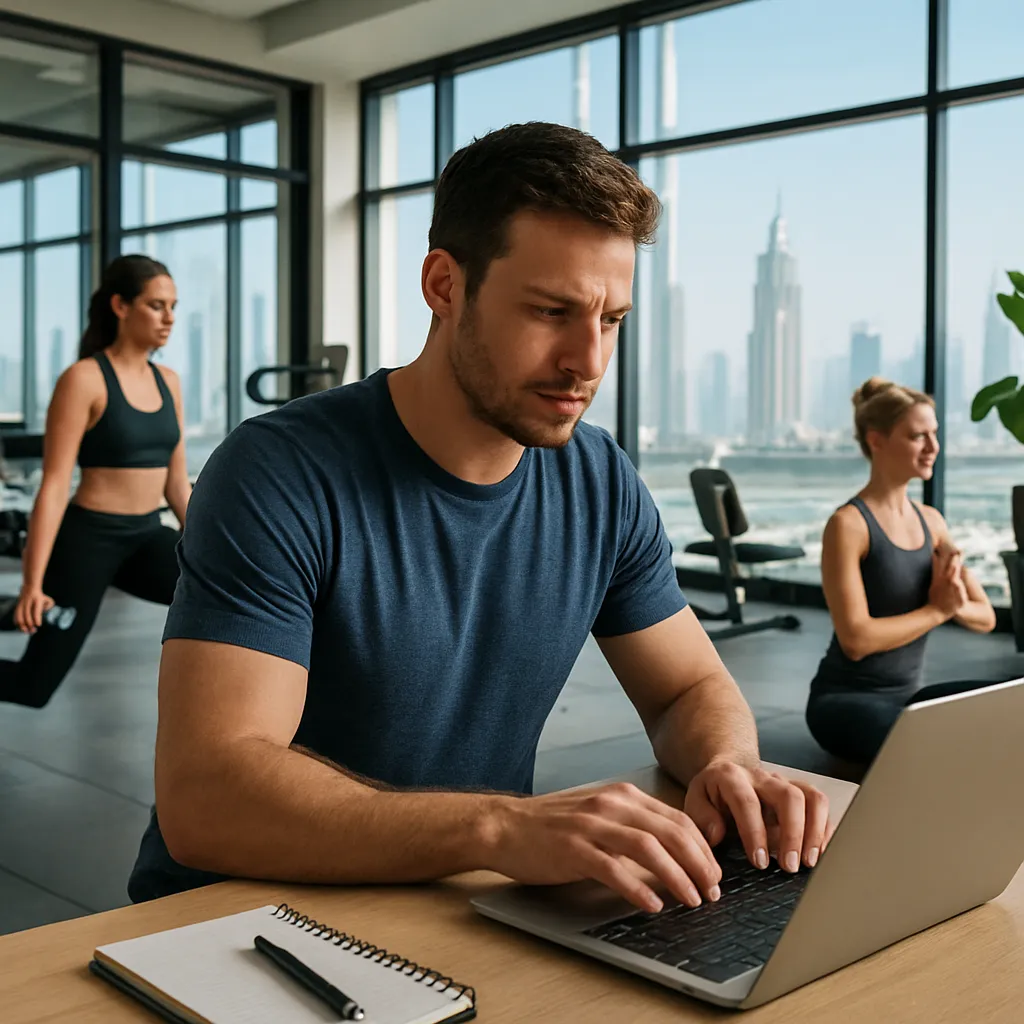
SEO for Fitness and Wellness Centers in Dubai
Search engines have become the front desk, street signage, and sales team for fitness and wellness brands serving residents, office workers, and visitors across the emirate. With internet penetration above 99% in the UAE and smartphones in nearly every pocket, the pathways to discovery and booking now flow through query boxes, maps, and review platforms. This guide distills practical, Dubai-specific tactics that turn visibility into memberships, class bookings, and treatment plans—while balancing technical excellence with culturally informed messaging and measurement.
Market snapshot and search behavior in a high-growth, high-intent city
Few cities compress as much demand density into such a compact geography as Dubai. Roughly 89% of residents are expatriates, speaking a wide mix of languages, while English and Arabic dominate digital journeys. Tourism adds another surge: more than 17 million international overnight visitors came in 2023, many looking for short-term gym access, hotel-adjacent wellness, saunas, IV therapies, or recovery services. That blend produces “always-on” local discovery patterns: residents search by neighborhood and convenience; visitors search by proximity to hotels and landmarks; office workers search by commute routes and break windows.
Google’s market share in the UAE hovers around 97%, and “near me” queries have grown several hundred percent globally over recent years, aligning with the emirate’s map-first decision-making. Mobile typically accounts for a large majority of consumer web sessions in the UAE, often near three-quarters of traffic for B2C categories. Practically, that means a studio in JLT competes not just with an operator in Dubai Marina but with the listing that’s three taps closer to the user’s thumb. It also means hours, parking info, ladies-only facilities, and price transparency must be obvious in the snippet—before a user even decides to click.
Keyword strategy that mirrors real demand: bilingual, micro-local, and intent-led
Effective SEO in this landscape requires keywords that line up with who is searching, where they are, and why they’re searching right now. Go beyond generic “gym in Dubai” phrases and build clusters around hyperlocal intent and life moments.
- Neighborhood granularity: “CrossFit in Business Bay,” “Pilates reformer Jumeirah,” “hot yoga Al Barsha,” “boxing gym DIFC,” “EMS training JLT.” Micro-areas like JBR, City Walk, Bluewaters, Mirdif, Silicon Oasis, and Dubai Hills often behave as their own demand pockets.
- Visitor intent: “day pass gym near Burj Khalifa,” “hotel gym pass Dubai Marina,” “ice bath near Palm Jumeirah,” “sports massage Downtown Dubai,” “sauna near DXB Terminal 3.”
- Wellness modalities: “lymphatic drainage massage,” “sports physiotherapy,” “IV drip hydration,” “prenatal Pilates,” “injury rehab Dubai,” “corporate wellness programs.”
- Cultural and practical qualifiers: “ladies-only gym,” “female trainer Arabic,” “mixed classes evening,” “free parking gym,” “Ramadan workout timings.”
- Problem/benefit framing: “back pain physio,” “postnatal recovery,” “muscle gain program,” “marathon training plan Dubai,” “padel conditioning coach.”
Map these terms by intent: discovery (research), evaluation (comparing providers), and action (booking). Use keyword modifiers that matter locally: “open now,” “near metro,” “with sauna,” “with pool,” “with childcare,” and seasonal hooks like “summer indoor bootcamp” or “Dubai Fitness Challenge classes.” For bilingual coverage, align English and Arabic variants at the page level rather than machine-translating on the fly; handwritten translations preserve nuance and intent match.
Local foundations: the Map Pack is your new storefront
For gyms, studios, clinics, spas, and recovery centers, the Local Pack can drive a disproportionate share of leads. Prioritize the assets that feed it.
- Google Business Profile (GBP): Select the most precise primary category (e.g., “Pilates studio,” “Gym,” “Wellness center,” “Massage spa,” “Physiotherapist”), then add secondary categories that match services. Fill every field: detailed business description with priority keywords, accurate opening hours (including Ramadan and holiday exceptions), amenities (parking, showers, ladies-only timetable), and booking links. Add a WhatsApp click-to-chat number if you use it for sales or support.
- Photos and videos: Post authentic, well-lit photos of interiors, equipment, locker rooms, and parking access. Short vertical videos of classes, recovery zones, or treatment rooms can significantly improve conversion from Maps views to calls or directions.
- Posts and offers: Weekly GBP posts help freshness and engagement. Rotate class schedules, limited-time offers, and Dubai Fitness Challenge tie-ins. Include UTM tags on all GBP links to attribute traffic in your analytics.
- Reviews strategy: Ask for reviews politely but consistently after first visit, completion of a package, or a milestone (e.g., 10th class). Respond to all reviews with gratitude and useful detail; for multilingual audiences, consider bilingual responses when appropriate. Flag only violations—never argue.
- Citations and consistency: Ensure NAP (name, address, phone) is uniform across the website footer, Meta pages, Apple Maps, Bing Places, and booking platforms like ClassPass, Mindbody, or Fresha. Even small inconsistencies can hurt local trust signals.
On-page excellence for services, schedules, and proof
Service pages outperform generic “About us” pages when structured around specific intents. Each high-value modality—reformer Pilates, CrossFit, EMS, manual therapy, sports massage—deserves its own URL with benefits, contraindications, pricing ranges, FAQs, and CTAs.
- Service details: Clarify who it’s for, expected outcomes, session length, coach/therapist credentials, and how many sessions are typical to see results. Transparency increases trust and bookings.
- Class and timetable SEO: Publish machine-readable schedules with filters for neighborhood, time of day, gender-specific classes, coach, and level. Embed structured data for events when applicable.
- Location landing pages: If you operate in multiple districts, build unique pages with neighborhood-relevant content: directions from the nearest metro stop, parking maps, nearby landmarks (e.g., Dubai Marina Mall), and localized testimonials.
- Evidence and safety: In wellness and physiotherapy, users scrutinize credentials, safety protocols, and outcomes. Prominently display DHA or other relevant licenses where applicable, plus coach certifications.
- Calls to action: Offer multiple conversion paths—book a trial, WhatsApp us, call now, schedule a posture assessment, claim a visitor day pass, request corporate rates. Match CTAs to the page’s intent stage.
Technical pillars: speed, multilingual hygiene, and resilience
With most discovery happening on phones, performance is non-negotiable. Optimize images, use modern formats (WebP/AVIF), compress aggressively, and lazy-load below-the-fold media. Lighthouse and Core Web Vitals provide clear targets; aim for sub-2.5s LCP, low CLS, and fast TTFB from a Middle East CDN edge. This is especially critical when your audience is on 4G/5G while commuting.
For bilingual sites, implement proper hreflang for English and Arabic variants, including right-to-left support and mirrored navigation. Avoid doorway pages or shallow duplicates; each language version should fully serve the user, not just exist for bots. If you run schedule-heavy pages, implement caching strategies and prerendering to avoid slow client-side hydration spikes.
Structured data and topic authority in wellness
Mark up the site with appropriate schema: Organization, LocalBusiness (or specific subtypes like HealthClub, SportsActivityLocation, MedicalBusiness, Physiotherapy), Service, Product (for packages), and Event (for classes or workshops). Use FAQPage schema where your answers are truly helpful; avoid bloat or spam.
Wellness and physiotherapy topics often fall under YMYL (Your Money or Your Life) criteria. Demonstrate E-E-A-T with real author bios, credentials, clinic licenses, references to consensus medical guidance where relevant, and a clear editorial policy for health content. Host coach or practitioner profile pages with verifiable qualifications and links to professional bodies. Ensure your disclaimers are sensible and that advice encourages physician consultation when appropriate.
Content that wins in a city of seasons, cultures, and events
Publishing useful, intent-matched content is where fitness and wellness brands create durable moats. Build an editorial calendar around Dubai’s rhythms:
- Ramadan: Guidance on training and recovery while fasting, hydration timing, adjusted class schedules, sleep tips, and safe modifications.
- Summer heat: Indoor endurance plans, electrolytes, sauna/cold exposure safety, and how humidity affects perceived exertion.
- Dubai Fitness Challenge (30×30): Free community classes, step challenges, weekly recaps, trainer Q&As, and neighborhood pop-ups.
- Tourism windows: “Visitor gym passes explained,” “Top 5 hotel-adjacent recovery options,” “Short-stay training plans for business travelers.”
- Sport culture: Padel conditioning, golf mobility, marathon prep for Dubai Marathon, triathlon brick sessions, Spartan Race strength prep.
- Women’s health: Prenatal and postnatal training safety, pelvic floor rehab, female-only schedules, coach spotlights in Arabic and English.
Mix formats: quick reads, deep guides, checklists, and short subtitled videos for silent feeds. Encourage UGC—member progress journals, transformation case studies (with permissions), and athlete spotlights. Align each piece with a clear goal: rankings for long-tail terms, awareness for top-of-funnel education, or nurturing for email and WhatsApp sequences.
Authority and links: partnerships, PR, and neighborhood gravity
In a relationship-driven city, the best backlinks often come from real-world partnerships:
- Hotels and serviced apartments: Create “wellness partner” pages linking both ways. Offer guest passes, in-room recovery kits, or concierge booking codes tracked via UTM.
- Corporate hubs: DIFC, Media City, Internet City, and Business Bay companies often subsidize wellness. Publish corporate wellness landing pages and secure mentions in HR portals or intranets.
- Events and communities: Sponsor local run clubs, padel leagues, or yoga-in-the-park sessions. Seek coverage on community calendars and local news sites.
- Professional networks: Physiotherapists, dietitians, and sports physicians can co-author content and link from clinic pages or professional directories.
- Platforms: Maintain accurate, enriched profiles on ClassPass, Mindbody, Fresha, and relevant local listings by the Department of Economy and Tourism or Dubai Sports Council events.
Press moments abound: new branch openings in emerging districts, Ramadan or summer initiatives, unique modalities (e.g., contrast therapy), or research-backed training programs. Pitch bilingual releases including data—participation rates, member outcomes, or innovative corporate pilots—so coverage earns links and trust.
Conversion design: remove friction and match intent
Ranking is only half the battle. Turn views into bookings with frictionless, trust-rich UX. Reduce the number of taps from Maps or SERPs to a confirmed slot. Prominent CTAs should match context: on a phone at 7:30 am, “Book 8:00 class” is better than “Learn more.”
- Instant booking: Integrate your scheduler above the fold on service pages. Offer Apple Pay/Google Pay to minimize form fill on mobile.
- WhatsApp and call: In the UAE, WhatsApp is a de facto business channel. Enable click-to-chat and scripted quick replies for common queries—prices, day passes, ladies-only hours, parking. Use call tracking numbers for Locations to measure Map Pack lift.
- Pricing clarity: Publish transparent ranges or packages. For physiotherapy, indicate insurance considerations or medical necessity notes where relevant.
- Social proof: Display Google rating, review count, and curated testimonials near CTAs. Add trust badges (licenses, partner hotels, corporate clients) without clutter.
- Microcopy: “Cancel any time,” “First-timers welcome,” “Female trainers available,” “Shower and towel included,” and “Free parking” can be decisive.
Paid search synergy that accelerates SEO learnings
Search ads validate keyword quality and reveal commercial intent quickly. Use PPC to test copy, offers, and landing pages, then roll winners into organic templates. Defend your brand terms (especially in competitive districts) and cover gaps for new locations where organic equity is still growing. For bilingual markets, run ad groups in both English and Arabic, coordinating sitelinks to matching language pages.
Retargeting should reflect intent depth: timetable viewers see class reminders; service readers see testimonial snippets; cart abandoners get a gentle nudge with limited-time day pass pricing. Align campaign geo-fences to genuine service radii—residents near a metro line two stops away may convert better than drivers 6 km across Sheikh Zayed Road at rush hour.
Measurement, KPIs, and revenue attribution
Define success beyond rank tracking. Useful KPIs include:
- Local visibility: Map Pack impressions, direction requests, calls, and clicks from Google Business Profile. Track by location where relevant.
- Organic conversions: First-time bookings, day pass purchases, membership sign-ups, lead forms, and WhatsApp starts. Attribute all with UTM discipline.
- Lead-to-member rates: From trial to recurring membership; from initial consult to treatment plan acceptance in clinics.
- Capacity utilization: Class occupancy and treatment room utilization by hour and day of week—what SEO segments fill soft spots?
- Customer lifetime value: Retained months, package renewals, and cross-sells (e.g., physiotherapy to performance coaching).
Configure enhanced events and server-side tracking where feasible. Call tracking with DNI (dynamic number insertion) ties voice leads back to keywords and pages. Connect CRM or booking platforms (Mindbody, ClassPass APIs, Fresha) to link marketing channels to revenue. Robust analytics let you prioritize the pages that truly move the P&L, not just vanity metrics.
Common pitfalls to avoid
- Generic pages: Thin, catch-all “Services” pages that fail to match specific intents like “sports massage for runners” or “prenatal Pilates timetable.”
- Outdated schedules: Class pages that don’t reflect holiday or Ramadan timings erode trust and hurt repeat bookings.
- Slow media: Massive hero videos throttling mobile performance during peak commute searches.
- Language mismatch: Auto-translated Arabic pages with incorrect right-to-left formatting or culturally tone-deaf phrasing.
- Inconsistent NAP: Slightly different spellings of tower names or addresses across platforms confusing Maps.
- Review neglect: Unanswered negative reviews on GBP while advertising “five-star service” on site pages.
- One-size CTAs: Forcing a long form when the user simply wants a quick WhatsApp confirmation of ladies-only hours.
Cultural and compliance considerations in the UAE
Respect for cultural norms strengthens brand perception and reduces friction. Use imagery and copy consistent with community standards—clearly label ladies-only spaces, and avoid intrusive photography in gender-segregated areas. During Ramadan, adjust messaging and scheduling thoughtfully. For wellness claims, avoid exaggerated promises; where medical benefit is implied, include measured language and disclaimers.
On data privacy, align with UAE PDPL principles: clear consent for remarketing, transparent data use, and secure handling of health-related inquiries. Cookie consent banners should be informative but unobtrusive; explain the value exchange when collecting data for personalization or reminders.
Playbooks for different fitness and wellness models
Multi-branch gym networks
- Create a master location hub with dynamic filters, then dedicated, richly unique landing pages per branch with walkable landmarks, metro proximity, parking, coach rosters, and timetable embeds.
- Distribute reviews across branches to reflect reality; don’t centralize all praise under HQ.
- Publish transparent membership tiers and perks shared across locations while emphasizing each branch’s specialty (e.g., Marina’s waterfront runs, Business Bay’s express lunch classes).
Pilates, yoga, boutique studios
- Own modality terms plus equipment specifics: “reformer vs. mat,” “Cadillac tower benefits,” “hot 26 sequence explained.”
- Feature coach bios prominently; students often choose based on teaching style. Include short coach-intro videos with subtitles.
- Build series-based content: 4-week core reset, beginner’s pathway, or prenatal trimesters—each with SEO-focused landing pages and nurture flows.
Physiotherapy and recovery clinics
- Service pages per condition and modality: ACL rehab, rotator cuff, plantar fasciitis, dry needling, shockwave therapy, lymphatic drainage.
- Clear triage CTAs: book assessment, upload MRI/doctor referral, insurance questions answered. Include outcome timelines and home-exercise program samples.
- Highlight clinician credentials, DHA license details where applicable, and multidisciplinary coordination (coach-physio-nutritionist loops).
Wellness spas and IV therapy
- Demystify offerings: what’s in each drip, safety screening, session durations, contraindications, and realistic expectations.
- Target traveler intent: jet lag recovery, immune support pre-conference, hydration after outdoor activities.
- Leverage hotel partnerships and in-room collateral with QR to a localized landing page tracked per property.
Review acceleration and reputation moat
Volume, velocity, and diversity of reviews influence both rankings and clicks. Build a compliant, consistent process:
- Timing: Trigger SMS/WhatsApp review requests within 2–6 hours of visit while the experience is fresh. Include a single GBP link with tracking parameters.
- Routing: For unhappy customers, offer a quick escalation path before requesting a public review—prioritize service recovery.
- Multilingual: If you serve a high proportion of Arabic speakers, periodically request Arabic reviews to reflect real audience mix.
- Content cues: Encourage specifics—class name, coach, facility detail, and neighborhood—so keywords appear naturally within reviews.
Data-driven content pruning and enhancement
Annual audits prevent content rot. Identify pages with impressions but weak CTR; rewrite titles and meta descriptions to reflect benefits and local hooks (“Free parking in Al Barsha,” “Steps from Sobha Realty Metro”). Merge cannibalizing posts into authoritative hubs and 301 the rest. Refresh successful guides with new sections and internal links to monetized pages. Add FAQ schema where it clarifies decisions. Track before/after changes in impressions, clicks, and assisted conversion rates.
Advanced technical and UX touches that compound impact
- Location-aware modules: Suggest the nearest branch based on IP or browser location with a clear opt-in. Display “Next available class near you” widgets.
- Appointment routing: If a therapist or reformer bed is booked, show the next nearest location with availability—not just “No slots.”
- Accessibility: Add clear alt text, sufficient color contrast, and keyboard navigation. Accessibility is both ethical and a quality signal.
- Micro-performance: Inline critical CSS, preconnect to third-party CDNs (booking widgets), and defer non-essential scripts.
- Reliability: Monitor uptime and set alerting for booking engine outages; nothing crushes organic ROI like users arriving to broken flows.
WhatsApp-first service and SERP optimization
In the UAE, many customers prefer fast messaging over forms. Treat WhatsApp as a conversion surface: standardized replies for pricing, class capacity, directions, and cancellation policies; deep links from GBP and site CTAs; and optional catalog items for day passes or packages. Train staff on response SLAs, tone, and escalation to calls when needed. Measure lead quality by assigning UTM parameters to wa.me links per campaign and per location.
Seasonality, pricing, and offer architecture
Dubai’s calendar creates distinct demand waves: cooler months bring outdoor events and higher visitor flow; summer emphasizes indoor and recovery. Structure offers to fit:
- Visitors: 3- or 7-day passes with towel and sauna included; clear hotel-nearby pages for each district.
- Residents: First-timer bundles (e.g., 3 classes + orientation), Ramadan-friendly time blocks, post-holiday “reset” programs.
- Corporate: Lunchtime express sessions, onsite classes, or hybrid packages with app-based challenges.
Test price framing: anchor high with an all-access package, then present a seasonally relevant mid-tier, and a trial at the bottom. Reflect these tiers in SERP snippets with concise benefit-led meta descriptions.
Future-facing: AI overviews, voice search, and zero-click experiences
As search interfaces evolve, more answers appear in panels, map cards, and AI-generated overviews. To stay visible:
- Own entities: Consistent brand, person (coach), and service entities across schema, GBP, and major profiles strengthen your inclusion in overviews.
- Answer engines: Build concise, authoritative answers to common questions—safety, how-tos, and comparisons. These feed AI summaries and People Also Ask.
- Voice and in-car: Optimize for “near me now” phrases and make address/parking instructions voice-friendly. Keep hours accurate; voice assistants punish stale data.
Pragmatic 90-day rollout plan
- Days 1–15: Audit technical performance, fix Core Web Vitals bottlenecks, implement analytics and call tracking, standardize NAP, and optimize GBP per location.
- Days 16–45: Build or revamp top 10 service pages and 3 neighborhood pages; translate priority pages; implement schema; publish 2 evergreen guides tailored to Dubai seasonality.
- Days 46–75: Launch review acceleration, secure 5–10 local partnerships for links/mentions, and run PPC tests to validate keywords and offers.
- Days 76–90: Prune/merge weak content, roll PPC learnings into on-page copy, expand WhatsApp playbook, and present a KPI dashboard focused on bookings, occupancy, and LTV.
What great looks like in this market
The leaders don’t just rank—they help. Their map listings are fully informative; their pages anticipate questions; their calendars and prices are transparent; their imagery matches expectations; and their booking feels effortless on a phone in a taxi. Reviews read like mini-guides. Coaches and clinicians have real bios. Partnerships point a stream of qualified visitors their way. When a new trend hits—padel, contrast therapy, marathon season—they publish first and best, turning curiosity into committed clients.
Key takeaways for sustainable growth
- Start with the Map Pack: A complete, active GBP plus consistent citations is the fastest lever for discovery-driven bookings.
- Build depth, not breadth: Intent-specific pages and bilingual quality outrank bloated, generic sites.
- Write for real life: Parking, metro, ladies-only hours, Ramadan schedules, and price transparency move the needle more than slogans.
- Measure to learn: Connect traffic to bookings and retention; let the data tell you which services, pages, and neighborhoods deserve more investment.
- Partner locally: Hotels, corporates, events, and medical peers provide high-quality links and steady referral demand.
- Iterate constantly: Update schedules, enrich reviews, test offers, and refresh content with seasonal relevance.
With a disciplined foundation, smart partnerships, and audience-aware storytelling, fitness and wellness operators can turn search engines into a compounding growth channel. Treat visibility as a service—answer better, guide faster, prove value—and watch rankings, bookings, and loyalty rise together.
Glossary of high-value terms used: SEO, Dubai, local, mobile, content, backlinks, schema, E-E-A-T, conversion, analytics.