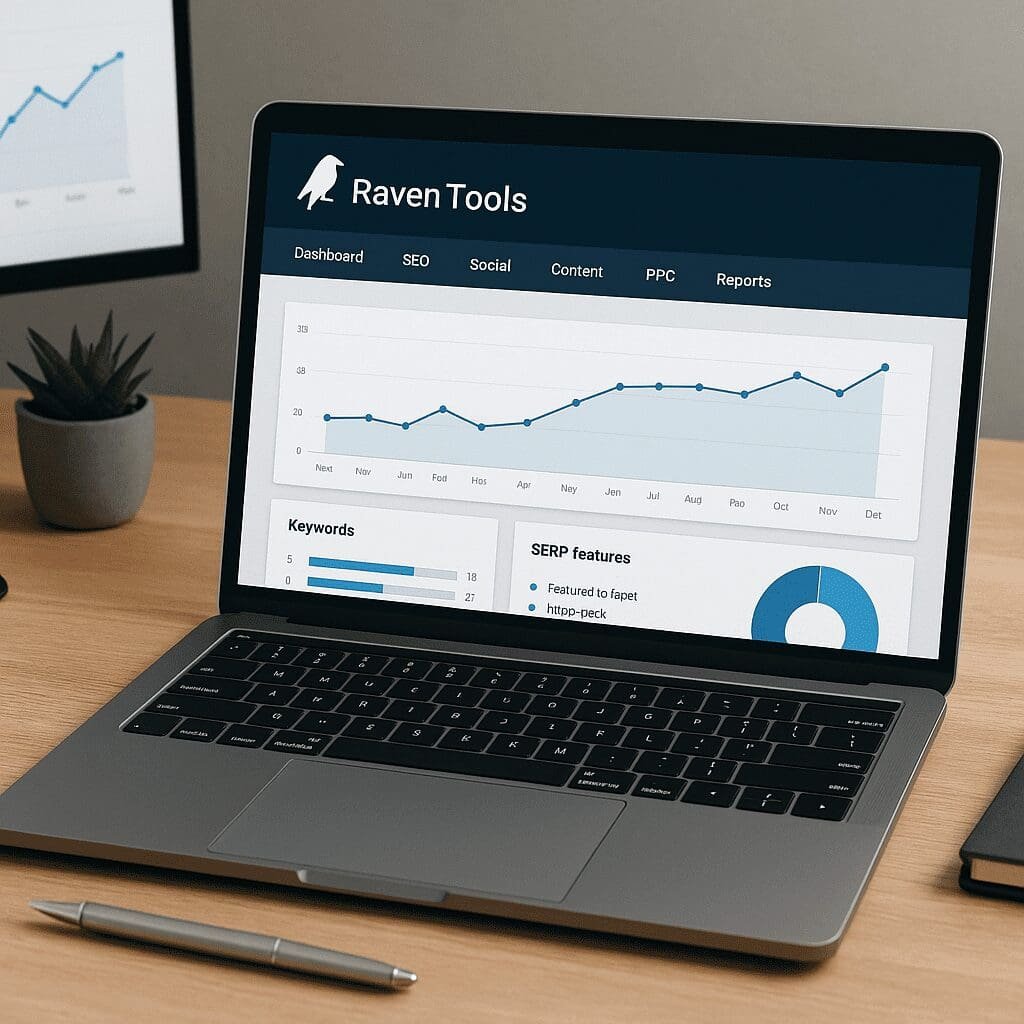
Raven Tools
Raven Tools is a long-standing platform built to simplify search marketing operations, especially for teams that manage multiple sites or clients. Instead of being a single-purpose app, it pulls dozens of data sources into one place and helps you analyze performance, find issues, and present results clearly. For agencies, freelancers, and in-house marketers who spend a lot of time moving between analytics, keyword tools, audits, and spreadsheets, Raven’s value lies in consolidation, speed, and repeatability. It is not a silver bullet that magically boosts rankings, but it does provide the measurement, prioritization, and collaboration layer that modern campaigns rely on.
What Raven Tools Is and Who Benefits Most
At its core, Raven Tools is an all‑in‑one marketing analytics and management suite with a strong bias toward client-facing work. It centralizes performance data, offers flexible visualization, and streamlines routine tasks like monthly reports and status updates. The platform has been refined over many years, with a focus on making complex metrics easy to read for non-technical stakeholders while still giving practitioners the depth they need to diagnose problems and demonstrate outcomes.
Who gets the most value?
- Agencies juggling dozens of clients who need consistent dashboards, branded deliverables, and smooth coordination between account managers and specialists.
- Freelancers who want to professionalize deliverables and reduce the time spent assembling slides, screenshots, and spreadsheets.
- In-house teams that must align marketing, product, and leadership around shared KPIs and a clear narrative of progress.
Raven’s strength is breadth rather than hyper-specialization. Dedicated technical crawlers or deep link intelligence platforms may go further in their niches, but Raven brings those domains together and wraps them in cohesive workflows, especially for reporting and communication.
Core Components and How They Fit Together
Unified Performance Dashboards
Raven’s dashboards are the front door to the platform. You connect key properties—search engines, analytics suites, ad networks, and social platforms—and assemble widgets that tell your performance story. Flexible date ranges and comparisons make it straightforward to answer executive-level questions without jumping across multiple tools. For teams, shared dashboards provide a single source of truth and reduce the friction of ad hoc updates via email or chat.
Keyword Research and SERP Alignment
Raven’s keyword research workflows help you discover and organize opportunities around intent and difficulty. Rather than chasing isolated phrases, you can group related queries into themes that map to landing pages and content clusters. The platform supports practical decisions like which terms deserve their own page, which should be consolidated, and where to augment existing assets with FAQs or supporting sections. It also surfaces competitive signals to help you estimate the quality and volume of content required to contend for a given topic.
Rank Tracking for Visibility Trends
While rankings are not the only measure of success, Raven’s rank tracking makes visibility trends tangible to both practitioners and clients. You can monitor positions over time by device, location, and search engine, and correlate changes with technical fixes, content releases, or algorithm updates. Alerts and scheduled summaries reduce the need to log in daily while ensuring you catch significant movements—both wins you can celebrate and drops you should investigate.
Site Auditing and Technical Hygiene
Technical health underpins all search performance, and Raven’s site audit component focuses on crawlability, indexation, metadata quality, and internal linking signals. The audit categorizes issues by severity and provides actionable explanations so your development or content team can fix them quickly. Because the tool remembers past crawls, you can demonstrate remediation over time and tie improvement to performance metrics. This closes the loop between technical debt and business impact.
Backlink Intelligence and Link Management
Raven pulls in link data from established providers and makes it easier to interpret and present. You can analyze backlinks at the domain and URL level, flag toxic patterns for outreach or disavowal discussions, and track net gains or losses. For teams running outreach, the link manager helps you catalogue prospects, statuses, anchors, and landing pages in a single workspace, ensuring continuity when team members hand off tasks or clients switch owners.
Competitor and SERP Landscape Analysis
Beyond your own properties, Raven helps you map the competitive landscape—who is winning page one real estate, which content angles they use, and where there are gaps. This is especially helpful for establishing realistic goals with stakeholders: understanding that a query is dominated by high-authority media and marketplaces, for example, can steer you toward more winnable adjacent terms or different SERP features.
Advertising, Social, and Multi-Channel Rollups
Because search rarely lives in isolation, Raven consolidates paid search, social, and web analytics alongside organic metrics. This multi-channel view clarifies whether organic growth is lifting overall traffic, how paid campaigns interact with brand query volume, and which landing pages deserve additional investment. A unified narrative is easier to sell internally and reduces siloed decision-making.
Integrations and Data Pipelines
The platform offers broad integrations with popular sources—analytics suites, search property tools, ad platforms, and reputable third-party datasets. The practical upside is less manual CSV wrangling and fewer logins to maintain. Data freshness depends on the source and plan limits, but for most campaign reporting cadences, Raven’s sync windows are sufficient. When deeper analysis is needed, Raven supports exports so you can augment the data in spreadsheets or BI tools.
Automation, Templates, and Scheduling
Time saved is value earned, especially for teams repeating similar workflows across many clients. Raven emphasizes automation through scheduled reports, recurring audits, and reusable templates. Account managers can codify a best-practice deck—branding, methodology slides, KPI pages—and let the platform populate it with the latest metrics. This reduces variability, accelerates delivery, and ensures continuity even as team members rotate.
How Raven Tools Contributes to Real-World SEO Outcomes
Tools do not rank pages—people do. But the right system amplifies focus and reduces wasted effort. Raven aids outcomes in several ways:
- Diagnosis: You see where traffic and conversions originate, which pages underperform, and which technical issues obstruct crawlers.
- Prioritization: Severity scores and trend lines help triage what to fix first, aligning technical and editorial roadmaps with business goals.
- Attribution: By aligning analytics, rankings, and link signals, you can connect work done to results achieved, increasing confidence and budget support.
- Communication: Clear white-label deliverables help non-specialists understand why a task matters and what it accomplished.
The difference becomes clear over a typical 90‑day cycle. Week 1–2: run an audit, baselines for visibility and conversions, and a competitive theme map; align stakeholders on what to tackle. Week 3–8: ship technical fixes, publish content for top clusters, begin outreach for priority pages. Week 9–12: assess ranking and traffic deltas, refine internal linking, expand content where momentum appears, refresh executives with a clean before/after deck. Raven’s cadenced workflows reinforce that rhythm.
Example Workflows
- Local service business: Track city-level rankings, citations, and GMB interactions. Use the audit to enforce NAP consistency and optimize location pages with schema. Report on calls and form fills tied to organic sessions.
- Ecommerce catalog: Monitor indexation and duplication patterns across filters, variants, and pagination. Layer product review volume into decision-making and track category page visibility as a leading indicator of revenue.
- Content-led startup: Build topic clusters around core jobs-to-be-done, map internal linking hubs, and monitor how new supporting articles lift the primary pillar over 6–12 weeks.
- Site migration: Pre/post snapshots for crawl stats, redirect coverage, canonical consistency, and high-value page rankings; quickly surface any regressions and their root causes.
Strengths, Limitations, and How It Compares
Where Raven Tools Shines
- Client-grade communication: Clean visuals, consistent narratives, and scheduled deliverables reduce friction with stakeholders.
- Breadth over bloat: Enough depth to diagnose common technical, content, and link issues without overwhelming non-specialists.
- Operational efficiency: Templates and recurring jobs standardize quality across multiple projects and team members.
- Cost-to-value: For many teams, consolidating separate point tools and manual reporting pays for the subscription quickly.
Where Specialists May Want More
- Deep technical crawling: Dedicated crawlers (e.g., desktop software or specialized SaaS) can probe advanced JavaScript rendering, server anomalies, or large-scale edge cases more thoroughly.
- Link index scope: Hardcore link prospectors and digital PR teams may prefer platforms that prioritize the largest possible index and fine-grained link classification.
- UI learning curve: While approachable, configuring truly bespoke dashboards and reports can take time, especially for teams with complex data blends.
- Data freshness: Some sources update on a cadence that is perfect for weekly/monthly reports but less ideal for hour-by-hour firefighting.
Alternatives and Complements
Raven occupies a pragmatic middle ground. It competes partially with large all-in-one suites and partially with reporting-first platforms. In many stacks, teams run Raven alongside a specialized crawler or a deep link intelligence tool. The winning combination depends on scale, budget, and whether client reporting is central to your workflow or an occasional deliverable.
Pricing Considerations, Onboarding, and Best Practices
Pricing and Limits
Raven’s plans typically differ by number of domains/campaigns, user seats, and resource allotments (tracked keywords, crawl pages, data retention). If you serve a large portfolio, prioritize plans that allow wide coverage and ample historical storage; trends and deltas become more persuasive the longer you track them. Always estimate your monthly data needs, including seasonal spikes, so you do not throttle critical monitoring mid‑campaign.
Onboarding Checklist
- Connect core properties first: analytics, search properties, ad accounts, and social pages. Validate permissions and data freshness windows.
- Establish baselines: capture the first 30 days of metrics into a locked snapshot deck—this becomes your anchor for all future comparisons.
- Build reusable templates: one dashboard for executives, one for practitioners, and one monthly report skeleton that auto-populates.
- Define alert thresholds: material ranking drops on priority terms, significant crawl anomalies, and sudden conversion shifts.
- Tag events: label major site updates, campaigns, or algorithm date ranges to contextualize charts later.
Best Practices for Lasting Value
- Align KPIs with customer journeys: connect impressions and rankings to sessions, behavior, and conversions so discussions stay business-relevant.
- Use cohorts and segments: branded vs. non-branded, new vs. returning, top-funnel vs. bottom-funnel pages to uncover where leverage truly lies.
- Create a content feedback loop: identify pages on the cusp of page one and feed them targeted enhancements—internal links, FAQs, media depth.
- Track link risk and opportunity: monitor anchor distribution and referring domain diversity for your most valuable pages.
- Schedule executive summaries: automate a concise monthly email with key deltas, wins, and the next three actions.
Opinions From the Trenches: Where Raven Tools Delivers
From a practitioner’s standpoint, Raven shines when the job is equal parts doing and showing. Technical and content work matters, but stakeholder alignment is what unlocks budgets and staying power. Raven lowers the cost of persuasion by standardizing the way you present insights, exceptions, and outcomes. That structure also disciplines teams internally: if your monthly report cannot clearly tie actions to results, it becomes obvious early, and priorities can shift accordingly.
The platform’s balanced depth is a strength for most teams. You have the essentials to diagnose common issues, plan content against demand, and monitor link dynamics. If your work requires advanced crawling rule sets, machine-rendered snapshots at scale, or forensic server log analysis, pair Raven with a specialist tool. Most small and mid-sized programs will not hit those extremes, and the operational gains from consolidation will outweigh any deficits.
Common Objections and Nuanced Answers
- “We already have analytics and search console.” Those are foundational, but Raven unifies, contextualizes, and presents them side by side with rankings, link data, and ad metrics—cutting hours of manual assembly.
- “Our clients want prettier reports.” Raven’s branded templates, annotations, and executive summaries are designed precisely for that purpose, without compromising substance.
- “Data freshness worries me.” For daily firefighting, log directly into source tools; for weekly/monthly decision cycles, Raven’s refresh cadence is typically more than adequate—and repeatable.
- “Isn’t this just for agencies?” In-house teams benefit too, especially for cross-functional communication, governance of technical hygiene, and historical context across product releases.
Lesser-Known Tips to Get More from Raven
- Build “spotlight” widgets for high-velocity pages: keep a rotating set of top risers and decliners on your home dashboard to catch fast opportunities.
- Create thematic scorecards: instead of raw metrics only, track coverage and depth for key topics—supporting articles created, internal links added, and SERP feature captures.
- Use annotations consistently: tag algorithm events, migrations, or PR hits so that any spike or dip is instantly explainable.
- Schedule crawl snapshots before and after major releases: you will thank yourself when a regression is suspected and you need undeniable proof.
- Export selectively for deep dives: Raven’s charts are the narrative, but when stakeholders raise edge cases, pull the underlying data to answer precisely.
Verdict: A Practical, Client-Ready Workhorse
Raven Tools is a practical choice for marketers who value clarity, cadence, and collaboration. It helps you find problems, quantify opportunities, and present progress in a form that builds trust. For advanced specialists who live at the extremes—massive JavaScript sites, intricate internationalization, industrial-scale link prospecting—Raven will play best as the reporting and orchestration layer alongside niche tools. For everyone else, it can be the operational backbone that makes search programs transparent, repeatable, and persuasive.
Most importantly, Raven is built around the idea that better conversations produce better outcomes. When stakeholders understand both the why and the what, they keep funding the work that moves the needle. Used with discipline—consistent baselines, thoughtful measurement, and strong communication—Raven Tools can deliver a positive ROI not just by improving performance, but by reducing the time you spend proving it.
Does Raven Tools “Help SEO” in Practice?
The short answer is yes—by making the right work more visible and the wrong work harder to justify. Raven streamlines evidence gathering, clarifies priorities, and institutionalizes progress. It will not substitute for strategy, content quality, or technical craftsmanship. But it will reduce friction at every handoff: from analyst to developer, from writer to editor, from marketer to executive. In the real world, that’s often the difference between a plan that stalls and a plan that ships.
Final Guidance for New Users
- Start with one lighthouse dashboard and one monthly template; perfect them before cloning to the rest of your portfolio.
- Do not track every term—track the terms that define your market, plus a rotating cast of high-potential opportunities.
- Hold a 30‑minute recurring review where the team scans trends, picks three focus actions, and assigns owners. Let Raven’s data drive the agenda.
- Document your conventions: how you name campaigns, tag events, and label goals. Consistency compounds value over time.
Raven Tools is not just another toolbox—it is a framework for disciplined search marketing. If you commit to that discipline, you will find it accelerates discovery, compresses the time to insight, and strengthens every conversation you have with the people who fund the work. For teams that live and die by clarity and cadence, it earns its place in the stack.
To summarize the essentials without fanfare: Raven brings together SEO fundamentals, clean communication, and operational rigor. Pair it wisely with specialized tools where needed, and it will serve as a durable foundation for programs that must scale without sacrificing quality.