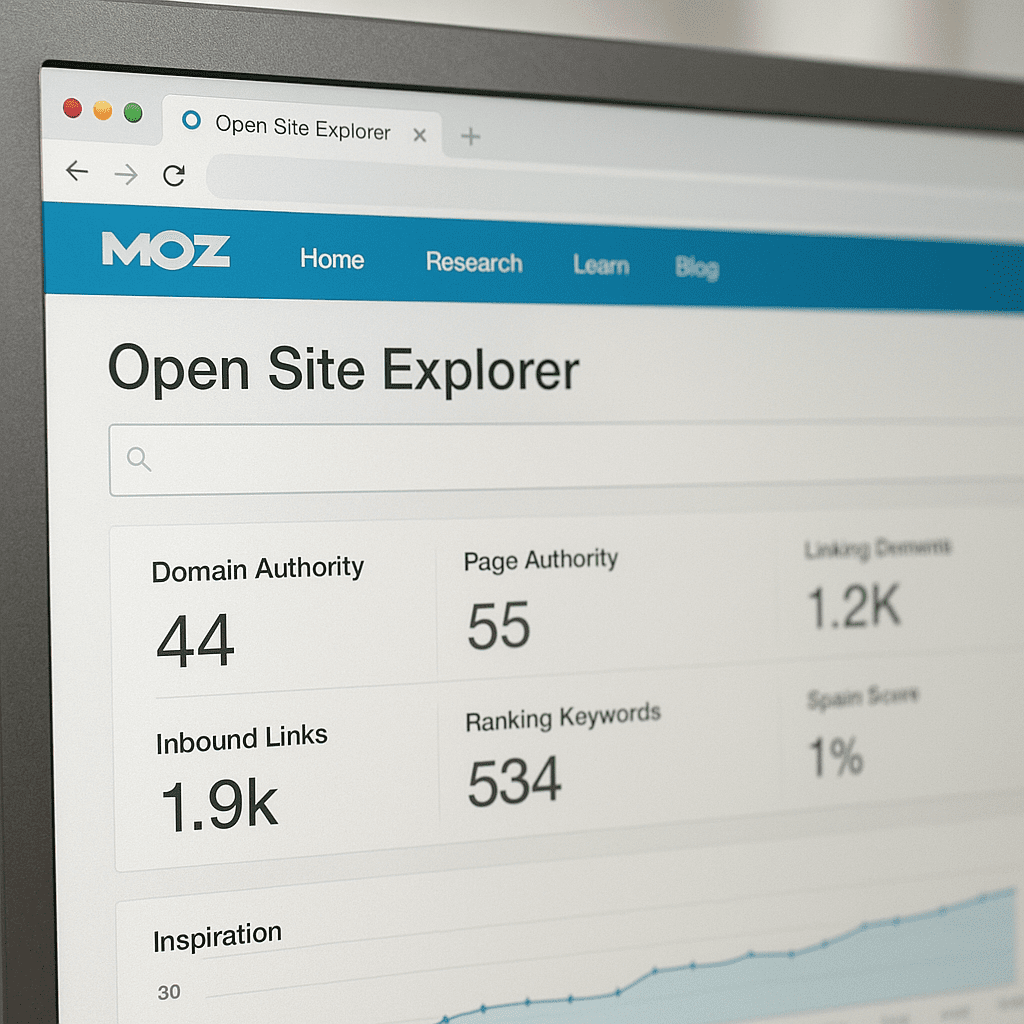
Open Site Explorer (Legacy Moz Tool)
Open Site Explorer, often called OSE, was one of the most recognizable link analysis tools of the 2010s. Built by Moz (then SEOmoz), it gave marketers an accessible window into how the web’s link graph influenced visibility in search results. Even though OSE is now a legacy tool, its concepts and workflows remain embedded in how practitioners think about SEO today. Understanding what OSE did, how it was used, and where it fell short helps explain both the evolution of Moz’s platform and the best ways to approach link data in the modern search landscape.
What Open Site Explorer Was and Why It Mattered
Open Site Explorer sat at the intersection of education and analytics. It surfaced a simplified model of authority, trust, and link distribution at a time when many search professionals were moving away from toolbars and toward platform-based auditing. Where Google stopped publishing PageRank, OSE offered its own lens through metrics like Domain Authority, Page Authority, and MozRank. For freelancers, in-house marketers, and agencies needing a quick snapshot of a domain’s link health, OSE delivered clarity without overwhelming users.
Its purpose was twofold: first, to quantify a page’s perceived ability to rank based on the quality and quantity of links; second, to reveal linking patterns that informed strategy. This dual use made OSE equally useful for prospecting and for diagnosing why a page or domain lagged behind competitors. The tool’s approachable interface meant it became a default for many beginners, while its export features and API support made it workable for larger teams building repeatable workflows.
Core Metrics: The Language OSE Gave to Marketers
All analytics tools create a language that guides how users think. OSE popularized several concepts that still define conversations about links:
- Domain Authority (DA): A 0–100 score predicting a domain’s ability to rank relative to others, based on its link profile. DA became a widely used shorthand for comparing sites, setting minimum thresholds for link targets, and tracking progress over time.
- Page Authority (PA): Similar to DA, but page-level. PA helped marketers prioritize internal pages for optimization and external pages for link outreach.
- MozRank and MozTrust: MozRank approximated raw link popularity, while MozTrust aimed to reflect link distance from seed sites deemed trustworthy. Together, they helped separate raw quantity from quality.
- Spam Score: An indicator based on common webspam patterns. It provided a warning system to evaluate the risk of acquiring or retaining certain links.
- Anchor and linking domain reports: OSE revealed top anchor text, linking domains, and top pages, which guided both diagnosis and strategy.
Because these metrics were on consistent scales and easy to grasp, they helped teams align on goals. A content manager could ask for five DA 40+ links to a product guide; an analyst could report the PA growth of a key landing page following a campaign. Even if imperfect, the metrics made link conversations measurable and repeatable.
How Practitioners Used OSE in Day-to-Day Work
OSE’s design reinforced practical tasks. If you were planning a link building campaign, you could start with a competitor’s URL, export its linking domains, filter by authority, and build a prospect list. If you were auditing a site, you could assess link concentration at the domain and page levels, identify patterns that suggested risk, and plan remediation.
Common workflows included:
- Competitive gap analysis: Identify which domains link to competitors but not to you, then prioritize those with DA/PA thresholds to create a targeted list.
- Top pages mapping: Export a site’s best-linked pages to understand what the market values; use this to inform new content and to funnel authority internally.
- Anchor text checks: Locate over-optimized anchors that could trigger algorithmic scrutiny; plan to dilute with branded or natural anchors.
- Broken link building: Find competitor 404 pages with inbound links, recreate or improve the content, and pitch replacement links.
- Historical tracking: Record DA/PA and root domain counts monthly to correlate with ranking changes and campaign activity.
These workflows relied on OSE’s ability to surface linking domains, top-linked pages, and authority markers at a glance. The repeatability of these tasks made the tool valuable even to advanced teams who paired it with other data sources.
Where OSE Shined—and Where It Did Not
Strengths:
- Clarity: DA/PA offered a coherent shorthand for prioritization.
- Ease of use: The interface made link analysis less intimidating for newer marketers.
- Education: OSE helped an entire generation internalize the importance of links and how to evaluate them.
- Cost accessibility: A free tier and reasonably priced plans lowered barriers for small teams.
Limitations:
- Coverage and recrawl frequency: Competing tools sometimes found more links, especially in obscure niches.
- Freshness: Discovery lag could make very recent links slow to appear relative to other indexes.
- Metric abstraction: DA/PA are comparative and modeled; treating them as direct ranking factors led to misinterpretations.
- Granularity: Advanced users occasionally needed deeper data (e.g., crawl paths, link-level attributes at large scale) than OSE exposed in-app.
These constraints didn’t negate the tool’s utility, but they shaped how savvy teams used it: as a strong directional compass rather than the sole source of truth.
Did Open Site Explorer Actually Help SEO?
Yes—when used appropriately. OSE helped marketers make better decisions across multiple stages of the search lifecycle. Consider three illustrative scenarios:
- Prioritizing content for promotion: By mapping which pages had the highest PA and the richest link profiles, teams identified content types worth scaling. This increased the efficiency of resource allocation.
- De-risking anchor text: OSE’s anchor text reports made it easy to see problematic patterns early, enabling teams to adjust outreach copy and disavow questionable links before penalties or suppressions emerged.
- Filling competitive gaps: Comparing your linking domains with a competitor’s often revealed communities, media outlets, and directories you had overlooked. Each acquired domain improved your relative link neighborhood.
OSE also supported internal linking decisions. By surfacing top-linked pages and their authority, practitioners could route that authority to underperforming pages via internal links, improving link equity flow in a strategic way. When combined with on-page improvements and technical hygiene, these efforts correlated with measurable gains in organic visibility.
The Legacy Status: Transition to Moz Link Explorer
Moz retired Open Site Explorer as a standalone in favor of Moz Link Explorer, launched to provide a larger, fresher index and improved metrics. The transition addressed many of OSE’s bottlenecks, including slower discovery and gaps in coverage. Link Explorer retained the conceptual core—DA, PA, spam indicators—while enhancing reporting depth and the underlying crawl infrastructure.
Several important evolutions accompanied the retirement of OSE:
- Index scale and freshness: Link Explorer’s index expanded substantially and recrawl cycles accelerated, improving discovery of new backlinks.
- Metric improvements: Updates to the DA model (widely referred to as DA 2.0) refined how link features predictability correlate with SERP outcomes.
- Workflow integration: Link data became more tightly integrated with Moz Pro’s campaigns, on-page tools, and keyword tracking, enabling cross-signal analysis.
While nostalgia for OSE persists, the practical recommendation is simple: replicate OSE’s workflows inside Link Explorer or pair Moz with other providers to cross-validate discoveries.
Practical Workflows to Recreate the OSE Experience Today
1) Build a targeted link prospect list
Steps:
- Input three to five competitor domains into a modern link tool and export their linking domains.
- Normalize and deduplicate domains, then score by DA and topical relevance.
- Segment by opportunities: resource pages, editorial sites, niche communities, vendors/partners, and unlinked mentions.
- Match content candidates to each segment and prepare tailored outreach pitches.
Outcome: A prioritized pipeline of prospects with clear content-to-prospect fit and authority thresholds.
2) Balance anchor text to reduce risk
Steps:
- Aggregate your top anchors across key landing pages; categorize as branded, URL, topical, or commercial.
- Compare mix against your competitors’ distributions; identify over-representation of commercial anchors.
- Adjust briefs and templates to favor branded and natural phrasing; ensure future pitches follow the target distribution.
Outcome: A healthier anchor profile that supports rankings without amplifying risk signals.
3) Reclaim link equity and fix leaks
Steps:
- Find 404 or redirected pages with historic links; reinstate content or map to the most relevant live URL.
- Identify image hotlinks and request proper attribution links.
- Locate brand mentions without links and convert them via lightweight, value-first outreach.
Outcome: Net-positive link gains without net-new acquisition, often the fastest wins available.
4) Internal linking powered by authority
Steps:
- List your top PA pages and map their topical clusters.
- For each top page, add two to four contextual internal links to underperforming pages in the same cluster.
- Refresh anchor phrasing for relevance and uniqueness to avoid duplication.
Outcome: Improved distribution of authority across the site, reinforcing priority pages with minimal development dependency.
What OSE Taught the Industry
The most enduring lesson from OSE is not a single metric but a mindset: model-based authority is comparative and probabilistic. DA and PA are not rank guarantees; they are signals that correlate with potential. Good strategy uses them as guides—never as absolutes.
OSE also proved the value of transparency. By exposing the anatomy of link profiles—anchors, linking domains, top pages—it enabled more nuanced conversations between technical and non-technical stakeholders. Content teams could see how their assets contributed; PR teams could measure impact beyond impressions; executives received a digestible indicator of progress.
Finally, OSE showed that democratizing data expands the talent pipeline. Many of today’s strategists cut their teeth with OSE, learned the basics of competitive analysis, and graduated to more complex stacks. That educational role, as much as the software features, is a central part of the tool’s legacy.
Common Misunderstandings and How to Avoid Them
- Treating DA as a goal in itself: DA rises as a byproduct of stronger link profiles and better content. Chase useful links and useful content, not a number.
- Equating quantity with quality: Ten mid-authority, on-topic links can outperform a single high-DA link from an irrelevant page. Relevance and placement matter.
- Over-optimizing anchors: Anchors should read naturally in context. A balanced mix is both safer and more sustainable.
- Ignoring internal distribution: External acquisition is only half the story; internal links determine how efficiently authority circulates within your site.
- Relying on one data source: Cross-checking with multiple indexes reduces blind spots and increases confidence.
Comparisons with Other Link Tools
During OSE’s heyday, alternatives emphasized different strengths. Some tools crawled the web more aggressively, yielding larger link counts and faster discovery. Others surfaced richer link-level attributes and deeper historical trend lines. OSE’s comparative advantage was its usability and the simplicity of its metrics. For many teams, a hybrid approach worked best: use OSE for prioritization and education, then validate and expand with complementary datasets.
In practice, selecting a toolset depends on your vertical, your budget, and your workflow. News-heavy niches may require the fastest discovery; evergreen B2B may benefit more from refined prospecting lists and relationship building. The underlying principle remains: pick the instruments that best answer your questions, and be willing to triangulate.
How to Think About Authority and Relevance Post-OSE
Open Site Explorer popularized the view that authority can be abstracted into a score. That is useful—but modern strategies pair authority with topical relevance and user intent. If you earn links from pages that are both authoritative and contextually relevant, you’re building signals that compound. Aligning page-level intent with the queries you target, ensuring content actually satisfies that intent, and then earning links that validate the content’s value—that is the virtuous cycle OSE helped teams visualize.
The craft of acquiring links has similarly matured. High-performance programs blend digital PR, community participation, partnerships, and resource creation. Each tactic feeds different parts of your profile: branded anchors from press, keyword-bearing anchors from practical guides, navigational links from directories, and passive links from data assets. This balance creates resilience as algorithms evolve.
Opinion: The Enduring Value of a Legacy Tool
As an analyst tool, OSE was opinionated: it asked users to trust modeled metrics and a curated view of the link graph. That opinionation had a positive effect—it trained marketers to ask the right questions. Relative strength over absolute counts; quality over raw volume; context over vanity metrics. Those instincts age well.
Even if you never used OSE, you benefit from its influence. The normalization of DA/PA changed how stakeholders budget for link work, how agencies set expectations, and how content creators evaluate potential partners. The fact that its successor, Link Explorer, remains central in Moz’s platform speaks to the durability of the underlying concepts.
Actionable Tips for Modern Link Analysis Inspired by OSE
- Define tiered authority thresholds: Tier A (DA 60+), Tier B (DA 40–59), Tier C (DA 20–39) for prospecting—then layer topicality and traffic requirements.
- Measure movement, not just snapshots: Track DA/PA and linking domains monthly alongside ranking and click improvements to isolate impact windows.
- Prioritize linkable assets: Data studies, free tools, deep guides, and templates attract editorial links more consistently than product pages.
- Close the loop: For every net-new link, ensure internal links route value to the page that should rank. Reassess after every content sprint.
- Guardrail anchors: Set a cap for exact-match anchors at the page level; enforce with outreach templates and partner guidelines.
From OSE to Today: A Sensible Stack
A balanced approach borrows OSE’s clarity while leveraging modern capabilities:
- Use DA/PA for prioritization, but inspect link-level context before acting.
- Combine link data with log-file insights and on-page audits to see how crawlability and content quality amplify or mute link value.
- Automate prospect vetting: authority thresholds, topical tagging, traffic estimates, and editorial standards checks.
- Maintain a prospect CRM to track stages from identification to pitch to placement to monitoring, ensuring compounding results over time.
This stack keeps the spirit of OSE alive—simple models guiding disciplined execution—while addressing its historical limitations through richer data and tighter integration across disciplines.
Final Reflection: Why OSE Still Comes Up in Conversations
Open Site Explorer is remembered fondly because it made something complex feel navigable. It gave marketers the vocabulary and feedback loops needed to improve. While the tool itself has been superseded, the frameworks it popularized—authority scores, prioritized prospecting, anchor balance, internal routing of value—remain central to high-performance search programs.
If you approach modern link analysis with the same pragmatism OSE encouraged—clear goals, comparative metrics, disciplined validation, and user-first content—you will keep benefiting from the foundations it laid. Tools change; the principles endure.
Glossary of Key Concepts Popularized by OSE
- DA (Domain Authority): Modeled estimate of ranking potential at the domain level.
- PA (Page Authority): Modeled estimate of ranking potential at the page level.
- MozRank/MozTrust: Signals approximating popularity and trust.
- Spam Score: Likelihood indicator based on patterns correlated with spam.
- Top Pages: Pages with the most inbound links or highest PA; useful for internal linking and content strategy.
- Linking Domains: Unique domains linking to your site; a stronger predictor than total links alone.
- Anchors: The clickable text of a link; central to relevance signals and risk management.
Putting It All Together
Open Site Explorer’s greatest value was enabling clear, repeatable processes: diagnose, prioritize, act, and measure. Whether you’re using Moz Link Explorer or a multi-tool stack, the same sequence applies. Start with a clean reading of your profile, contrast it against the competitive set, focus on the few levers that move outcomes, and reinforce wins through internal architecture. Keep authority and relevance in balance. Keep metrics in perspective. And keep the human side—relationships, storytelling, and real utility—at the core of your link acquisition efforts.