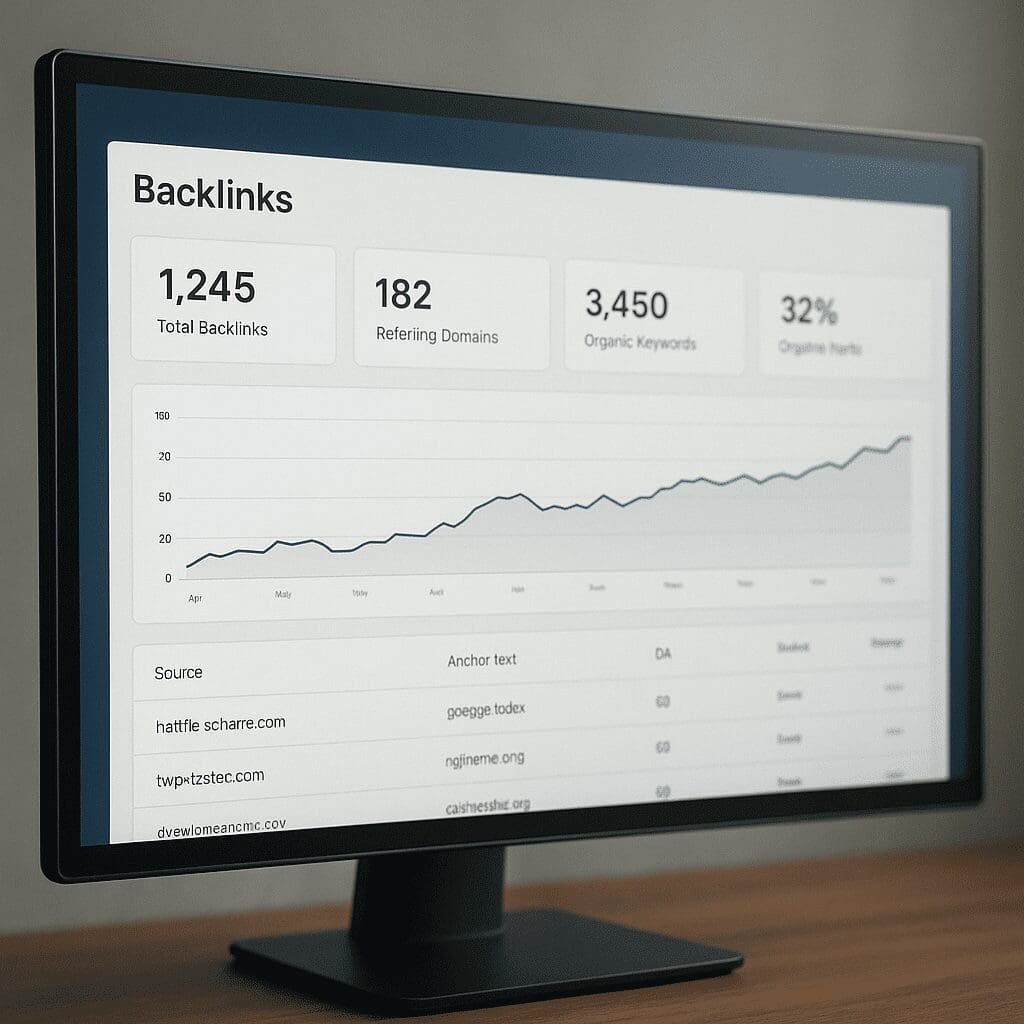
Monitor Backlinks
Monitor Backlinks is a dedicated platform built to help marketers, agencies, and site owners understand which external pages link to their websites, how those links change over time, and what that means for overall organic visibility. While all-in-one suites try to cover every facet of search, Monitor Backlinks narrows in on the external link graph—the fabric of references that signals relevance, credibility, and topic relationships across the web. Used thoughtfully, it becomes a living ledger of your link profile, surfacing opportunities to build relationships and to protect against low-quality citations that might dilute performance or waste resources.
What Monitor Backlinks Is—and Why Backlinks Still Matter
Backlinks are more than simple referrals; they are structural signals that convey topical alignment and reputation. For engines that must index a staggeringly large and constantly shifting corpus, links help establish which documents deserve attention and which sit on the margins. That is why a purpose-built tool for tracking link acquisition, attrition, and quality can be valuable. Monitor Backlinks positions itself in this very space: a way to discover new mentions, verify if they pass equity, understand the context of those mentions (anchors, placement, surrounding text), and prioritize follow-up. Its philosophy is that you can’t manage what you can’t see—and without clear sight into links gained and lost, you can misread the drivers behind traffic and conversions.
Historically, backlink tools had to balance breadth (finding as many referring pages as possible) with depth (enriching each link with quality metrics and context). Monitor Backlinks focuses on depth and actionability: new and lost link alerts, taggable lists, filtering by attributes (nofollow/dofollow, redirect type, HTTP status), and structured export for reporting. It also aims to bridge link monitoring with performance indicators, so that users can connect link events to changes in visibility instead of treating links as an isolated vanity metric.
Core Capabilities and How They Support Strategy
Most editions of Monitor Backlinks have centered on a handful of capabilities that translate directly into day-to-day workflows. Below are the pillars that matter in practice and how they influence decision-making.
Discovery and Alerts
- New link detection: Periodic crawls and integrations surface fresh referring pages, showing when a domain first started linking and whether the page still returns a 200 status.
- Lost link notifications: When a referring page disappears, removes the link, or changes from dofollow to nofollow, you receive an alert. This lets you reclaim valuable placements before they are permanently lost.
- Change tracking: Some links drift in prominence as pages update; detecting anchor changes or shifts from body to footer placement can inform outreach or content updates.
Quality Assessment
- Authority and relevance signals: Links are enriched with metrics intended to approximate the likelihood that a link can influence performance. Think topical relevance, linking page strength, and domain reputation.
- Link attributes and placement: Dofollow versus nofollow is one axis; another is the link’s position and context (e.g., editorial body content versus sidebar). These details help you prioritize actions and understand why certain links correlate with stronger outcomes.
- Toxicity flags: Automated heuristics highlight potentially risky links (spam networks, hacked pages, thin content) so you can isolate them quickly for manual review.
Anchor and Context Analysis
- Anchor distribution: Over-optimized anchors can be a risk indicator. Visualizing the spread of branded, generic, and partial-match anchors helps you maintain a natural profile.
- Language and topical cues: If your page attracts anchors from off-topic domains, you can revisit on-page clarity or refine link acquisition sources to improve relevance.
Competitor Monitoring
- Side-by-side profiles: Track how your industry peers acquire links—pace, referring domains, and anchor themes—so you can benchmark progress and identify gaps.
- Link gap mining: Find domains that link to multiple competitors but not to you. These are often warm opportunities for outreach because the site already covers the topic or sector.
Integration and Reporting
- Search Console and analytics connections: Correlate link events with impressions, clicks, and average position for affected pages. This moves discussion from “how many links” to “which links changed behavior.”
- Disavow file handling: Generate and manage disavow entries with transparency and documentation, reducing the operational risk of manual edits.
- Exports and dashboards: Share concise snapshots with stakeholders, with filters that match your model (by campaign, tactic, market, or product line).
Does Monitor Backlinks Actually Help SEO Performance?
The short answer is yes—when used with intent. A link monitoring system is not a ranking engine in itself; rather, it supplies the visibility and structure required to compound results from your publishing and promotion. There are three main ways Monitor Backlinks contributes to outcomes:
- Attribution: By timestamping link events and mapping them to page-level changes in impressions and clicks, you can identify which placements likely contributed to movement. This lets you double down on effective tactics and retire the rest.
- Quality control: Identifying risky footprints early prevents negative patterns from escalating. You can prune harmful signals, adjust anchor strategy, or request fixes from publishers before issues harden into penalties.
- Efficiency: Link building is resource-intensive. When you know where wins come from, outreach becomes more targeted, and content promotion finds higher-converting audiences. That leads to a more favorable cost-per-link and faster payback.
It’s important to acknowledge correlation-versus-causation. Not every link causes an uplift, and not every uplift depends on links. However, a clear view of your link profile and its changes equips you to ask the right questions. If a key page gains several topical, dofollow references from reputable sources and soon after sees improved visibility, the alignment is suggestive—even if not causally proven. Conversely, if a page stalls despite content improvements, you might discover that its strongest competitors have significantly deeper and fresher coverage from relevant domains. In practice, these insights guide priorities and budget allocation more than any single metric.
Who Benefits Most: Solo Marketers, In-House Teams, and Agencies
Different organizations come to Monitor Backlinks with different needs. A solo publisher often wants alerts and straightforward prioritization to avoid manually spot-checking links. In-house teams need auditability—ways to tag links by campaign, market, and product so that outcomes can be rolled up to leadership. Agencies seek scale: repeatable workflows across many clients, consistent reporting, and the ability to compare segments like branded versus non-branded anchors in seconds.
For each group, success depends on discipline. The tool won’t decide what content to create or where to pitch, but it will surface which pitches land, which publishers retain links, and which niches respond to your content formats. That feedback loop is what accelerates learning. Teams that practice weekly triage—reviewing new and lost links, flagging issues, and assigning follow-ups—tend to build a steadier trajectory of referring domains and improved coverage of priority topics.
Strengths and Weaknesses: A Balanced Opinion
On the positive side, Monitor Backlinks is refreshingly focused. Instead of burying link tracking under a heap of unrelated features, it streamlines the interface around discovery, qualification, and action. Alerts arrive at the level that matters—per link and per page—so you can prioritize without wading through noise. The tagging model and export options make it easy to report in the language your stakeholders expect (campaign, geography, funnel stage). And the disavow workflow, when present, reduces friction for risk management by preserving a clear audit trail.
On the limitations side, a dedicated link tool may not replace broad competitive research suites. If you need deep keyword market maps, technical site audits, or content gap analysis at scale, you will likely pair Monitor Backlinks with complementary platforms. Coverage depth can also vary by market and language; no index is perfect, so you might occasionally cross-check critical link events using a second data source. Lastly, any automatic toxicity scoring is only a starting point—manual review remains essential to avoid accidental over-pruning.
Practical Workflows That Make the Tool Pay for Itself
Weekly Link Health Triage
- Review new links gained by high-impact pages (top converters, cornerstone content, and category hubs). Validate whether they pass equity and are contextually relevant.
- Investigate lost links that once drove meaningful referral traffic or supported key themes. Reach out to restore if the removal was accidental or tied to site migration changes.
- Scan for sudden anchor shifts or sitewide footer inclusions that could suggest template updates or CMS quirks that risk diluting intent.
Campaign-Level Attribution
- Tag links by campaign (digital PR, resource page outreach, partnerships) and by content format (data study, how-to, comparison). Within 2–4 weeks, check which campaigns yield the most high-quality referring domains.
- Compare link acquisition timelines against search impressions for the same pages to isolate lag time between coverage and visibility changes.
Competitor Gap Mining
- Identify domains that reference two or more industry peers. These sites already publish in your niche and are more receptive to coverage.
- Prioritize outreach to these sources with context-specific pitches: complementary data, original visuals, or expert commentary that extends their existing articles.
Anchors, Relevance, and Risk: What to Watch Closely
Anchor text distribution deserves constant attention. Extreme concentrations of exact-match phrasing—even from decent domains—can read as manipulative. Natural profiles feature a blend of branded, URL, and descriptive anchors that reflect organic writing patterns. Monitor Backlinks helps visualize this distribution at the page and domain level, so you can steer acquisition toward diversity while keeping topical relevance intact. If your category is clustered around a small set of transactional phrases, consider expanding the content types that attract more descriptive anchors (e.g., studies, glossaries, or explainer videos).
Relevance is equally critical. Links from pages that genuinely cover your subject tend to age better and synchronize with user behavior signals (time on page, scroll depth, internal navigation). Use topic tags and publisher categorization to separate generalist mentions from tightly aligned, editorially earned references. When you see pockets of low-relevance links accumulate, revisit your discovery sources and refine your briefings to journalists or partners. Over time, the signal-to-noise ratio of your link profile becomes a moat that compounds.
Risk management is your safety net. Automated flags help, but manual checks are necessary for unusual spikes or patterns (sudden bursts from foreign blog networks, expired domains repurposed as link farms, or link swaps with templated anchors). If you uncover problematic patterns and publisher outreach fails, the disavow mechanism offers a corrective lever—use it sparingly, document rationale, and prioritize domain-level entries only for widespread issues.
Integrations, Data Hygiene, and Governance
Connections to performance datasets are what transform link logs into decision support. When you integrate with Search Console and your primary analytics platform, you gain the ability to tie link events to impressions, clicks, and conversion proxies. This alignment discourages vanity metrics and encourages a business-first view: if a link doesn’t move discovery, engagement, or assisted conversions, it may still be valuable (e.g., brand exposure), but you should label it accordingly and calibrate expectations.
Data hygiene matters. Establish a canonical tagging taxonomy, ensure team members apply tags consistently, and set scheduled reviews to retire outdated campaigns. Keep notes at the link level when you take actions (requested corrections, escalations, or outreach touches). Documented notes pay dividends when staff rotate or when stakeholders ask why certain links were pruned.
KPIs That Matter and How to Read Them
- Referring domains over time: Prefer steady growth over short spikes. A sustainable slope suggests you’re building legitimacy rather than gaming systems.
- Topical relevance score or category match: Track the share of links from closely related topics. Rising relevance correlates with stronger long-term performance.
- Anchor diversity index: Monitor the ratio of branded and natural anchors to partial and exact match. Healthy diversity reduces risk while signaling clarity.
- Link retention rate: Measure what percentage of links persist after 30, 90, and 180 days. High churn may indicate misaligned tactics or low-quality sources.
- Equity-weighted link velocity: Not all links are equal. Weight new links by quality to avoid celebrating quantity without substance.
- Coverage of target pages: Ensure each strategic page earns links; a few pages hoarding all links can bottleneck overall growth.
How Monitor Backlinks Compares to All-in-One Suites
General suites excel at breadth: keyword research, technical audits, content ideation, and link index coverage rolled into one subscription. Monitor Backlinks, by contrast, specializes in clarity and action around external references. If your team already relies on a broad tool for discovery and auditing, Monitor Backlinks can be the dedicated day-to-day tracker that keeps link operations sharp and accountable. If your budget allows only one platform, weigh the importance of deep link reporting versus cross-functional search tasks. Many mature teams run a hybrid stack: an all-in-one for market modeling and site health, plus a focused link monitor for operational granularity.
Common Pitfalls and How to Avoid Them
- Chasing raw counts: A hundred weak links seldom outperform a handful of truly relevant, editorial links. Filter ruthlessly for quality and context.
- Overreacting to toxicity scores: Heuristics are hints, not verdicts. Always inspect sampled pages before taking irreversible actions.
- Ignoring on-page clarity: If your anchors trend vague or off-topic, the page may need clearer headings, FAQs, or schema—link context mirrors content clarity.
- Forgetting internal linking: External links open the door; internal links guide users (and crawlers) to critical sections. Pair wins with internal updates to spread equity.
- Neglecting relationship building: Transactional swaps are brittle. Publisher relationships—founded on helpful assets and trustworthy commentary—drive durable coverage.
Set-Up Blueprint: From First Crawl to Action
- Connect properties and verify ownership; ingest existing disavow files if relevant.
- Integrate Search Console and your preferred analytics tool to enable event-level correlation.
- Define tags for campaigns, markets, product lines, funnel stages, and content formats.
- Import a short list of key competitors to benchmark referring domain overlap and velocity.
- Configure alerts for high-value pages, lost links with equity, and anchor anomalies.
- Schedule weekly triage with clear owners: one person verifies quality, another handles outreach, a third maintains reporting.
- Create a living playbook of “good sources” with notes on editorial preferences and response rates.
Real-World Scenarios and Tactics
Digital PR Campaign Launch
Before launch, tag the destination page and supporting assets. As coverage lands, Monitor Backlinks will surface placements; you can quickly identify which publications linked with brand mentions versus descriptive anchors, which used nofollow, and which syndicated content. Use this data to refine follow-up pitches, secure corrections, and request updates where reasonable (e.g., switching a plain URL to contextual, descriptive text).
E-Commerce Category Growth
For a category hub that underperforms despite strong on-page work, compare its referring domains to the top-ranking pages. Identify the unique sources the leaders have and build targeted content that those sources frequently cite: buying guides, comparison charts, or seasonality data. As links accrue, correlate the timing with category page visibility and revenue. If visibility improves but conversion lags, adjust category UX alongside link acquisition to capture the full benefit.
Local Service Expansion
Expanding into a new city requires local citations and editorial coverage. Track local media, chambers of commerce, and neighborhood blogs. Monitor Backlinks helps ensure these references persist and remain accurate during the first six months—when small errors (wrong phone numbers, outdated URLs) often appear. Flag and fix quickly; the compounding effect of accurate local mentions pays off in maps and localized organic results.
Opinion: Where Monitor Backlinks Shines
As a focused platform, Monitor Backlinks excels at turning an amorphous set of link events into a structured pipeline of actions. It speeds up validation, makes lost-link reclamation part of the weekly routine, and puts campaign-level measurement within reach for teams without heavy data engineering. Its tight feedback loops encourage smarter content investment: when you can see what earns links, you build more of it—and when you see noise, you curtail it.
The caveat is that no backlink tool should be treated as a strategy unto itself. The best outcomes come when link monitoring is integrated into a broader plan: audience research, content that earns coverage on merit, technical foundations that allow crawlers to understand your pages, and measurement frameworks that weigh revenue alongside traffic. In that ecosystem, Monitor Backlinks is a useful nerve ending—sensitive, fast, and tuned to the signals that matter.
Best Practices Checklist for Consistent Wins
- Align link goals with business outcomes: choose target pages and topics based on revenue potential and customer needs.
- Anchor diversity by design: produce assets that naturally attract branded and descriptive anchors, not just transactional phrases.
- Map link gains to internal linking updates within 72 hours to propagate equity.
- Reclaim lost links weekly, starting with the highest-value pages and sources.
- Maintain a publisher CRM: notes on response time, editorial preferences, and update policies reduce friction on future pitches.
- Review toxicity flags monthly with human oversight; document rationale for any disavow action.
- Quarterly, audit tag hygiene and retire or merge stale campaign categories.
Conclusion: A Focused Lens on the Signals That Matter
Monitor Backlinks provides clarity in a domain where clarity is scarce. By surfacing the who, what, and why behind external references—and tying them to performance—you gain sharper prioritization and faster learning cycles. It won’t replace a holistic search stack, and it won’t write your content or pitch your stories, but it will make those efforts more measurable, less wasteful, and progressively smarter. For teams serious about compounding impact from earned mentions, the platform is a strong operational ally: precise where it needs to be, flexible where it counts, and aligned with the fundamental realities of modern search.
Finally, a quick reminder on terminology that often crops up when using a tool like this: SEO is the broader discipline, backlinks are the off-site signals that carry reputation, authority is the inferred weight of a site or page, anchor is the clickable context of a link, disavow is the safety mechanism for rejecting harmful references, outreach is the process of earning coverage, competitors are your benchmark set, rankings are the outcomes you watch, analytics provides behavior context, and trust is the north star you cultivate through relevance and consistency. Keep those concepts straight, and Monitor Backlinks becomes not just a tracker, but a compass.