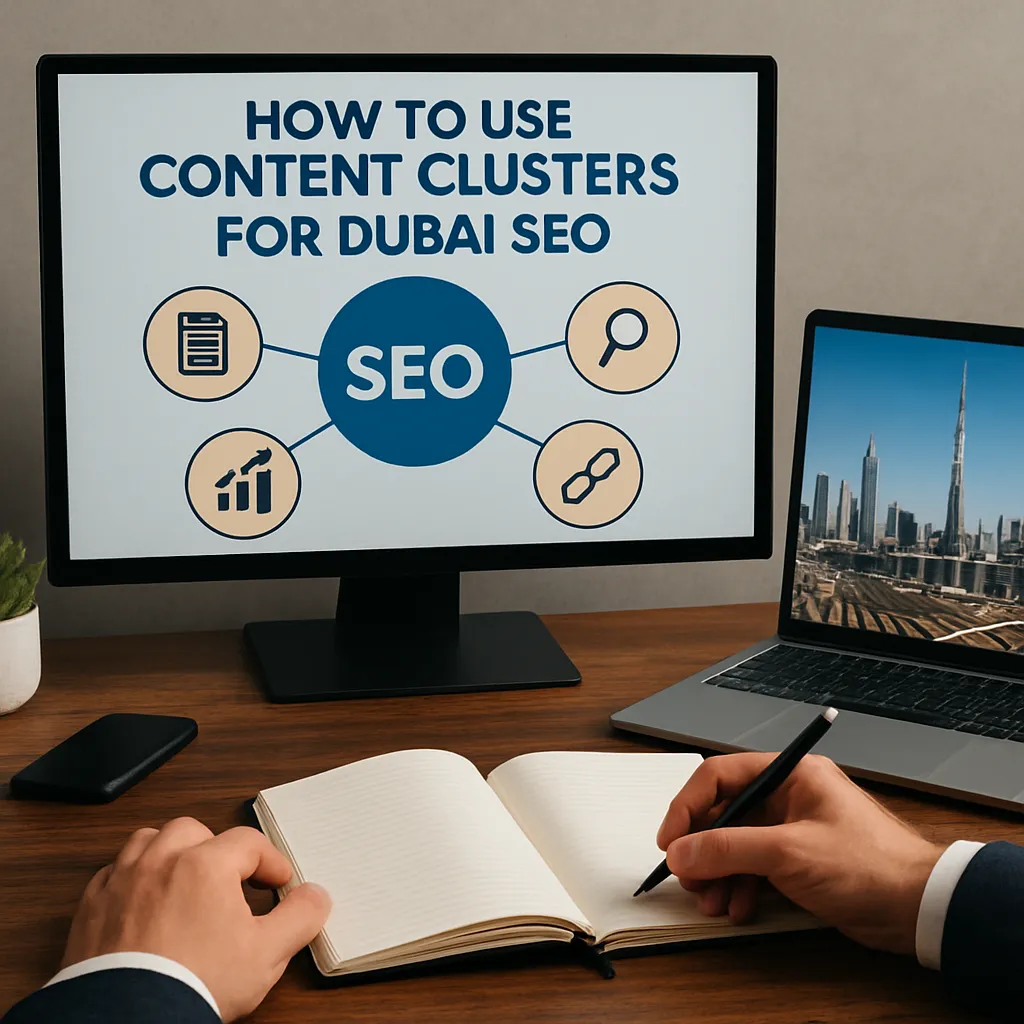
How to Use Content Clusters for Dubai SEO
Search in Dubai moves fast, across languages and neighborhoods, through tourists planning itineraries and residents comparing providers. Marketers who treat each keyword as an isolated battle lose momentum; those who organize topics into interconnected hubs consistently win relevance, clicks, and revenue. Content clusters transform scattered articles into a system, enabling durable rankings, a better crawl path, and a measurable path to bookings and leads in the emirate’s competitive verticals from real estate to hospitality to healthcare.
What content clusters are and why they’re perfect for Dubai
A content cluster is an information architecture that groups pages around a comprehensive hub known as a pillar page. The pillar covers a broad topic end to end, while supporting pages each address a tightly focused subtopic. Strategic internal linking connects the set, signaling breadth and depth to search engines and guiding users toward the right action.
This model excels in Dubai for three reasons:
- Multilingual and multicultural demand: English and Arabic queries coexist with Russian, Hindi, and Chinese transliterations. Clusters let you cover variations without cannibalization by mapping each language and sub-intent to its own node.
- High competition across high-value niches: Real estate, luxury retail, clinics, logistics, finance, and tourism all fight for the same SERP real estate. Clusters build topical authority that outlasts single-page wins.
- Mobile-first behavior and map-heavy SERPs: Location modifiers like in Marina, JLT, Deira, or Business Bay are common. Clusters integrate guides, FAQs, and location pages, supporting local SEO outcomes like the map pack.
Useful market context helps you prioritize effort. According to StatCounter data for 2024, Google controls roughly 97–98% of search market share in the UAE, so the cluster strategy should be Google-first. Sistrix’s large-scale click-through analysis shows an average 28.5% CTR for the number-one organic result, making comprehensive, interlinked coverage a lever for disproportionate visibility. Google has also reported that 28% of local searches lead to a purchase within 24 hours, which explains why well-organized location clusters frequently convert better than scattered standalone posts.
At a practical level, clusters reduce waste. Instead of 50 disjointed pages, you create a single hub with related child pages that answer layered search intent from discovery to comparison to transaction. This structure improves crawl efficiency, prevents keyword cannibalization, and helps teams plan, produce, and measure at scale.
Research first: Build a Dubai-focused cluster plan
Clarify business and audience goals
- Define the primary business outcome: calls, form fills, WhatsApp chats, online checkout, showroom visits, or bookings. Your measurement framework and page templates should reflect this from day one.
- Segment audiences: residents vs. tourists; Arabic-first vs. English-first; B2B decision-makers vs. consumers; budget vs. luxury buyers. Each segment warrants different subtopics, formats, and CTAs.
Do layered keyword research
- Start with topics, not single terms: choose hubs such as moving to Dubai, dental implants Dubai, corporate tax in UAE, coworking spaces Dubai, or family things to do in Dubai.
- Map intent for each cluster: informational (guides), transactional (pricing, booking), navigational (brand or place names), and commercial investigation (best, compare, vs.).
- Analyze SERP features: People Also Ask, map packs, snippets, images, videos, reviews. Your child pages should target the features you actually observe.
- Score topics: demand, difficulty, business value, multilingual opportunity, and seasonality. Consider Ramadan hours, Dubai Shopping Festival, school terms, COP28-style event spikes, and tourist high season.
Design cluster architecture
Pick a central hub that matches a revenue driver and build subpages around it. For example, a real estate brokerage might structure a Homes for Sale in Dubai pillar like this:
- Pillar: Homes for Sale in Dubai – Neighborhoods, Prices, Fees, Mortgages, and Process
- Clusters:
- Buying Process in Dubai for Expats [Step-by-Step]
- Dubai Mortgage Guide: LTVs, Rates, Documents
- Service Charges Explained: Apartments vs. Villas
- Neighborhood Deep Dives: Dubai Marina, Downtown, Arabian Ranches, JVC
- Off-Plan vs. Ready Properties: Pros, Cons, Risks
- Transaction Costs Calculator [Interactive]
- Arabic-language versions of key pages with hreflang and localized examples
Apply the same logic to tourism, clinics, or logistics. A desert safari operator could build a Dubai Desert Safari pillar, with child pages on morning vs. evening tours, quad bike permits, best months, pickup locations by district, packing lists, and Arabic pages aligned to local queries.
Create the pillar and supporting content that actually wins
What a winning pillar covers
- Comprehensive scope: definitions, options, pricing ranges, regulations, FAQs, and decision factors on one well-structured page.
- Clean hierarchy: H2 and H3 sections that mirror the subtopic pages and link to them contextually.
- Conversion elements: comparison tables, calculators, trust badges, location-specific CTAs, and chat options aligned to mobile behavior to lift conversion rate.
- Schema markup: Organization, LocalBusiness, Product, Article, and FAQ where appropriate to help eligibility for rich results.
- Visual clarity: scannable blocks, Dubai-relevant images, bilingual cues, and lightning-fast load times to fit a mobile-heavy audience.
Supporting pages: depth and intent matching
- One intent per page: each child article answers a narrow question fully. For example, Best Pediatric Dentists in Dubai Marina should not sprawl into orthodontics or JLT.
- Format for SERP features: Q&A for People Also Ask, comparison tables for commercial queries, and how-to structures for featured snippets.
- Localize precisely: include districts, landmarks, transit notes, opening hours, and cultural considerations. Provide Arabic equivalents where demand exists.
- Media variety: embed short videos for onboarding and add image alt text with neighborhood context to earn image visibility.
On-page essentials
- Titles and metas: lead with topic and intent, include location where relevant, and write benefit-led descriptions.
- Headers: align with observed SERP questions; avoid stuffing.
- Content quality: cite local authorities, provide dates for policies, and add expert review where claims affect safety or finance.
Link the cluster like a pro
Clusters fail or fly based on internal linking. Tie your hub and spokes together with consistency and restraint:
- Contextual links: from each section in the pillar to its corresponding child page, and back to the pillar from each child near the top and bottom.
- Anchor discipline: use natural, descriptive anchors; vary phrasing to avoid over-optimization; keep anchors aligned to the page’s primary intent.
- Navigation and breadcrumbs: show users where they are in the cluster. Breadcrumbs help crawlers understand hierarchy.
- Avoid dilution: do not link every page to every other page. Reinforce topical neighborhoods, not chaos.
- Freshness loops: when you publish a new child page, update the pillar and any relevant siblings to link to it.
Local SEO integration for Dubai clusters
Many cluster topics demand location signals. Integrate your local SEO foundation with your content system:
- Google Business Profile: pick accurate primary and secondary categories, add Arabic and English descriptions, list services, and use UTM tagging for website, appointment, and call buttons to track impact by cluster.
- Location pages: build high-quality district pages that include service coverage, directions, transit options, parking, and localized testimonials. Link these pages from relevant cluster nodes.
- NAP consistency: ensure name, address, and phone are identical across major directories. Add schema with geo-coordinates and opening hours.
- Reviews: embed and respond to reviews. Create content that naturally earns reviews on the topics you cluster around.
- Map pack alignment: if a SERP is map-heavy, target it with a location page or service area page rather than a generic blog post.
Build trust with E-E-A-T in a global city
Trust signals matter even more when audiences are evaluating providers from abroad or navigating new laws. Demonstrate E-E-A-T through:
- Expert bylines and bios with Dubai-specific credentials and licensing details.
- Citations and external references to UAE government portals and regulators.
- Date stamps and update logs on policy-sensitive content like taxes, visas, and healthcare.
- Clear disclosures, especially in YMYL categories, and contact pathways with real addresses and phone numbers.
Promotion and link earning tailored to the UAE
- Digital PR: data studies on Dubai neighborhoods, tourism seasonality, or consumer pricing earn coverage from local outlets and business groups.
- Partnerships: co-create resources with universities, accelerators, or chambers; earn links that reinforce topical clusters.
- Community and events: publish guides tied to festivals, marathons, fairs, and conferences. Update yearly to build compounding visibility.
- Social seeding: LinkedIn for B2B, Instagram and TikTok for lifestyle, YouTube Shorts for how-tos. Bring users to your pillar when they are primed to compare.
Measurement: cluster-level KPIs and forecasting
Track performance at the topic level, not just by page, to see compounding gains:
- Cluster visibility: impressions and average position in Google Search Console filtered by the hub’s query set.
- Ranking distribution: percentage of queries in top 3, 4–10, 11–20. Aim to move the distribution, not just a single head term.
- Organic entry mix: proportion of traffic landing on the pillar vs. child pages. Over time, you should see deeper landings as your coverage grows.
- Assisted outcomes: calls, WhatsApp clicks, downloads, and micro-conversions that lead to pipeline, not only last-click sales.
- Revenue mapping: tie clusters to opportunity stages in CRM for B2B or to coupon codes and booking IDs for B2C.
Use realistic forecasting. If Sistrix’s benchmark CTR suggests 28.5% for position one, model traffic by expected positions across your query set rather than hoping for universal rank-one wins. Factor seasonality for Dubai’s tourism and retail peaks, and assign different conversion assumptions by page type, device, and language.
Workflow and governance so the system scales
- Editorial briefs: each page gets an intent statement, target queries, outline, internal links to include, schema, and primary CTA.
- Localization: plan for English-first or Arabic-first content per topic, decide when to translate vs. transcreate, and test dialect choices for Arabic.
- Design components: reusable blocks for comparison tables, FAQs, calculators, and neighborhood cards keep UX consistent.
- Maintenance: schedule refresh cycles for policy pages and performance-based updates for evergreen guides.
A hypothetical blueprint: Dubai tour operator
- Pillar: Dubai Desert Safari Guide – Packages, Prices, Pickup Points, and Safety
- Child pages:
- Morning vs. Evening Safari: Which Is Better for Families
- Dune Bashing Safety and Age Restrictions in Dubai
- Quad Bike and Buggy Permits Explained
- Pickup Points by District: Marina, JLT, Downtown, Deira
- What to Wear by Season: Winter vs. Summer
- Arabic version of the pillar and top pages with hreflang
- Photo Spots and Etiquette in the Desert
- Group and Corporate Packages with VAT Invoices
- Refund and Weather Policy FAQ
- Internal linking:
- Pillar sections link to each child page under a clear H2.
- Each child links back to the pillar and to two contextually related siblings.
- Location pages link to pickup points and vice versa.
- Measurement:
- Track bookings by landing page and query cluster in GA4.
- Attribute calls and WhatsApp clicks with UTM parameters.
- Monitor map pack impressions for pickup-related queries.
Common pitfalls and how to avoid them
- Thin hubs: a 700-word overview is not a true pillar. Invest in depth, visuals, and tools.
- Keyword cannibalization: do not target the same intent on multiple child pages. Consolidate overlapping articles.
- Ignoring Arabic: if there is meaningful Arabic demand, build native experiences, not auto-translations. Add correct hreflang.
- Over-linking: excessive cross-links blur topical neighborhoods. Keep hubs focused.
- Set-and-forget: update for new laws, seasons, and events or you will lose trust and rankings.
Technical enablers that strengthen clusters
- URL structure: hub at /topic/ with child pages at /topic/subtopic/ or clean equivalents. Avoid unnecessary parameters.
- Schema: LocalBusiness for location pages, FAQ for structured answers, Product for packages, and BreadcrumbList for hierarchy.
- Core Web Vitals: optimize images, fonts for Arabic script, and interactivity on mobile.
- Index management: prevent tag, filter, and thin pages from polluting the cluster via noindex and canonicalization.
- Sitemaps: ensure the hub and all children are included, and submit on publish for faster discovery.
From zero to traction: a 90-day plan
- Days 1–30: research and architecture
- Define two high-value pillars, build topic maps, and write detailed briefs.
- Create design components and technical templates, including schema.
- Days 31–60: production and integration
- Publish each pillar with at least five strong child pages.
- Update older posts to fit the new clusters; add links and redirects.
- Launch Arabic versions where demand exists; configure hreflang.
- Days 61–90: promotion and iteration
- Run digital PR with a data angle tied to the pillar.
- Seed content on social and email; collect first wave of reviews.
- Analyze GSC data by cluster; refresh underperforming sections.
Advanced tactics for competitive niches
- Comparison engines: programmatically generate compare pages for regulated markets, then manually enhance the top performers.
- Calculators and tools: loan estimators, fee calculators, journey planners, or packing checklists win links and time on page.
- First-party data: anonymized booking or inquiry trends in Dubai create PR-worthy studies that point directly to your pillar.
- Topic pruning: consolidate or redirect cannibalizing pages to strengthen the primary URL.
Why clusters compound value over time
Clusters create a positive feedback loop. Better coverage leads to broader rankings, which attract links and engagement. Those signals reinforce the hub, raising the discoverability of child pages. In a city where expatriates move in waves, new regulations appear, and events create seasonal spikes, a cluster system lets you update one hub and ripple freshness and relevance across dozens of URLs.
Putting it all together
Use content clusters as the backbone of your Dubai strategy: choose commercially meaningful topics, build comprehensive hubs, align every child page to a specific intent, and interconnect them with disciplined links. Anchor the system in solid SEO fundamentals, precise keyword research, and relentless attention to search intent. Infuse it with trust via E-E-A-T, connect it to maps and reviews through local SEO, and design for a mobile-heavy audience to maximize conversion rate. With Google dominating UAE search and click-share concentrated at the top, the brands that invest in genuine content clusters and a well-structured pillar page will build durable advantage and measurable growth in Dubai’s most competitive markets.