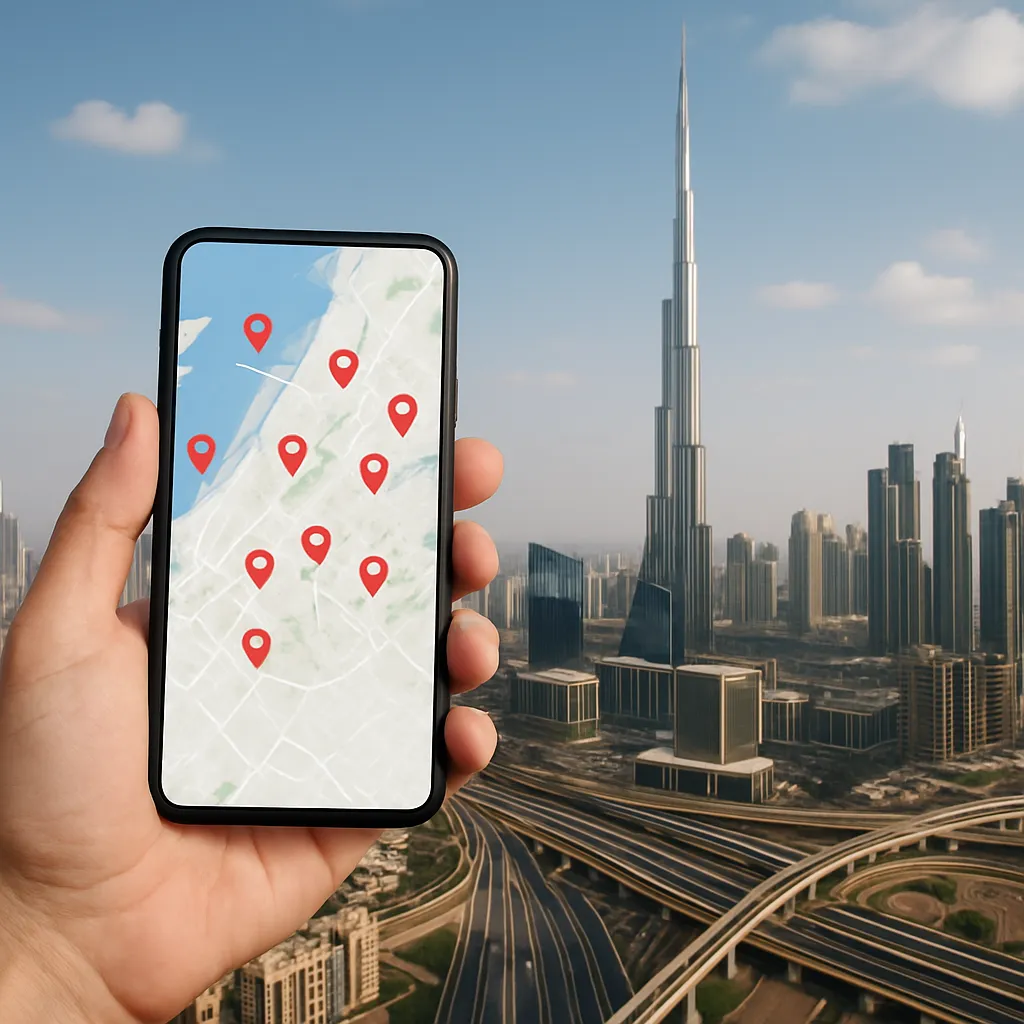
How to Improve Local Rankings Across Dubai Districts
Local SEO across Dubai is uniquely challenging because the city functions as a mosaic of high-density districts with very different audiences, search behaviors, and languages. Winning visibility in Dubai Marina does not guarantee the same in Deira, and what converts in Jumeirah might miss the mark in Business Bay. This guide lays out a practical roadmap to increase discovery across the emirate’s neighborhoods, blending data-driven tactics with the on-the-ground nuances that matter—bilingual queries, seasonal hours, mobile-first journeys, tourism flux, and the realities of navigating maps in a city where PO Boxes still exist alongside tower names and famous landmarks.
Understanding Dubai’s Local Search Landscape
Search intent in Dubai is intensely location-driven. Industry studies consistently show that nearly half of Google queries exhibit local intent, and when people search for something “near me” on mobile, a large majority visit a related business within a day, with a significant portion making a purchase soon after. For consumer-facing categories—restaurants, beauty, clinics, retail, and home services—visibility in the map results is often the single biggest driver of footfall and calls. Multiple independent click-share analyses indicate that the map-based Local Pack can attract roughly a third (and sometimes more) of total clicks on local result pages.
Dubai adds complexity on three fronts:
- Bilingual discovery: English and Arabic coexist, yet both have variations. Users search for “JLT dentist,” “Jumeirah Lakes Towers dentist,” and “طبيب أسنان أبراج بحيرات جميرا.” Tourists add terms in Russian, Hindi, or Chinese for major attractions and shopping areas.
- District-driven demand spikes: Downtown Dubai and Dubai Marina pulse with tourism and evening leisure; Business Bay peaks on weekdays; Deira and Bur Dubai skew toward wholesale and traditional retail; Al Barsha and Mirdif favor family services.
- Address conventions: Dubai’s addressing culture leans on landmarks (e.g., “near Mall of the Emirates,” “Sheikh Zayed Road exit 32”), tower names, and community names. That should shape your site content and map listings.
The three pillars of local rankings
Regardless of district, local visibility is governed by three interlocking signals: proximity (how close the business is to the searcher or the implied location), relevance (how well the listing and page content match the query), and prominence (overall authority, citations, reviews, brand mentions, and engagement). In practice, you can’t control where a user stands when they search, but you can concentrate relevance and prominence around each priority district with the right information architecture, content, and reputation strategy.
Map the districts that matter
Start with a demand audit. Pull Search Console queries that include district modifiers (e.g., “in Dubai Marina,” “near JBR,” “in Al Barsha,” “بالقرب من دبي مارينا”) and analyze call logs, directions, and walk-in origins from your Google Business metrics to identify the top five to ten districts worth targeting first. Overlay this with conversion data by location in Google Analytics 4 (GA4) and Point-of-Sale or CRM records to ensure you’re chasing not just traffic but profitable demand.
Google Business Profile excellence for multi-district visibility
Your Google Business Profile (GBP) is the control room for local discovery and conversion: it feeds the Local Pack, Google Maps, and knowledge panels. In Dubai, where mobile and maps usage is high, small changes cascade into meaningful outcomes. Google’s own research has shown that listings with rich photos drive more website visits and direction requests, and complete profiles are significantly more likely to be perceived as reputable. The mechanics are straightforward; the execution discipline is what separates leaders from the pack.
Choose the right listing setup
- Storefront model (one or multiple branches): Set the precise pin at the tower, mall, or street entrance. Avoid using a PO Box as your street address; instead, include a landmark in your description (e.g., “Ground floor, Marina Plaza, adjacent to Dubai Marina Mall”).
- Service-area business (SAB): If you visit customers (e.g., AC repair, cleaning), hide your address and specify service areas. While GBP prefers cities and regions, your website should carry district pages to signal relevance at a finer grain.
- Hybrid model: For showrooms with field teams, keep the address visible and add service areas that reflect on-the-ground coverage.
Categories, attributes, and content that match district intent
- Primary category: Be precise (“Skin care clinic” vs “Clinic”). Secondary categories: Add legitimate, non-spammy variants.
- Attributes: Payment types, wheelchair access, women-led, outdoor seating, halal, delivery/pickup, appointment required—these filters frequently drive tap-throughs in Dubai’s map results.
- Products/Services: Populate with real offerings and district language cues (“Laser hair removal in Al Barsha near Mall of the Emirates”).
- Photos and videos: Cover exterior (entrance, parking), interior, team, and offerings. Update seasonally (e.g., Ramadan décor, new menus).
- Business hours: Reflect the UAE Monday–Friday workweek and Saturday–Sunday weekend. Update Ramadan and Eid hours in advance.
- Messaging and bookings: Enable chat, add booking links, and connect call tracking. Use UTM parameters on Website, Menu, and Appointment links to measure performance by listing.
- Posts: Publish weekly offers, events (e.g., Dubai Fitness Challenge tie-ins), and district-specific highlights.
Arabic + English naming and descriptions
Keep your trade name consistent with your license while accommodating bilingual discovery. Use the English legal name in the business name field if required; infuse Arabic search terms naturally into the description and posts. On your site, include Arabic content sections or a fully localized Arabic page for each district you target.
On-site architecture that scales by district
Even if GBP fuels map visibility, your website is the relevance engine. A scalable architecture lets you create genuine neighborhood authority without spinning up thin, duplicated pages.
Build a hub-and-spoke structure
- City hub: Create a primary “Dubai” landing page that summarizes your offerings, coverage, and trust signals (licenses, awards, media mentions, anchor clients).
- District spokes: Build one page per priority area—Dubai Marina, JLT, JBR, Downtown Dubai, Business Bay, Jumeirah, Al Barsha, Deira, Bur Dubai, Palm Jumeirah, Al Quoz, Mirdif, Al Nahda, Dubai Silicon Oasis, International City—based on actual demand.
- Internal links: From the Dubai hub, link to all district pages. Cross-link district pages where user journeys overlap (e.g., Dubai Marina ↔ JBR ↔ JLT). Add breadcrumb navigation.
Make each district page genuinely local
- Unique opening paragraph referencing district specifics: nearby landmarks, typical customer use cases, parking/Metro access (e.g., DMCC Metro for JLT, Dubai Marina Tram, Burj Khalifa/Dubai Mall Metro).
- Clear NAP block: Name, local phone number, WhatsApp click-to-chat, hours, map embed, and driving/Metro directions written out.
- District FAQs: “Do you offer home visits in Jumeirah 1 vs Jumeirah 3?” “Is parking available at Marina Walk?”
- Localized social proof: Reviews that mention the district, photos from that branch, and district-relevant case studies.
- Arabic content section: A concise Arabic paragraph featuring the district name and primary keywords (e.g., “أفضل صالون في دبي مارينا”).
- Event and seasonality: Ramadan offers, Dubai Summer Surprises, DSF, New Year’s hours in Downtown.
Technical signals that amplify relevance
- schema: Use LocalBusiness schema for each district page with name, telephone (local code), areaServed, hasMap, geo coordinates, priceRange, and sameAs (social profiles). If you have multiple branches, generate unique schema blocks per location.
- hreflang: Implement hreflang for en-AE and ar-AE versions of each district page to reduce duplication and serve the right language.
- Canonical + pagination: Avoid duplication across district pages; only target district modifiers relevant to the content.
- Performance: Pass Core Web Vitals. Lazy-load heavy images, optimize map embeds, and compress videos; mobile speed is a ranking and conversion driver.
- Tracking: Tag all GBP links with UTMs. Use event tracking for tap-to-call, WhatsApp, directions, and booking.
A reusable outline for district pages
- H2: Service + district name
- Short intro tying service benefits to district lifestyle
- Top three reasons to choose you in that district (proximity to landmarks, late hours, bilingual staff)
- Gallery and video tour
- Pricing/offer modules in AED with district promos
- Embedded map with directions, parking info, and public transit tips
- Localized testimonials and review widgets
- FAQ + CTA: Call, WhatsApp, Book
- Arabic section with concise copy and district mention
Reviews, ratings, and reputation by neighbourhood
Reviews are the lifeblood of local trust. Consumer surveys indicate that almost all buyers read online reviews for local businesses, and a clear majority prefer a 4.0+ star rating before considering a visit or booking. Response quality and speed matter: fast, empathetic replies can salvage unhappy experiences and signal reliability to others. Because Dubai caters to residents and international visitors, build a review profile that reflects both—English for reach, Arabic for local resonance, and occasional Russian/Hindi/Chinese where relevant to your audience mix.
Acquisition playbook
- Automate requests: Send review prompts via SMS/WhatsApp within a few hours of service. Always obtain consent for messaging; respect UAE anti-spam rules.
- Segment by district: Use per-branch or per-page review links with UTMs to measure which area drives more responses.
- On-site prompts: QR codes at counters, tents on tables, and NFC tags near exits for quick scans.
- Incentives: Avoid paying for reviews. Instead, run general giveaways that don’t require a positive rating to enter.
- Language cues: Provide a short template in English and Arabic to help customers articulate their experience.
Responding and moderating
- Response SLAs: Aim to respond to new reviews within 24 hours. Thank positive reviewers and reference the district or staff they interacted with.
- Negative feedback: Move complex issues to private channels quickly; return later with a public resolution note if appropriate.
- Spam control: Flag clear policy violations (irrelevant, hateful, or competitor spam). Keep documentation of incidents.
Citations, directories, and maps beyond Google
Consistent NAP data and authoritative citations support prominence and help verification across ecosystems. In Dubai, start with the global mapping backbone, then layer regional and category-specific listings.
- Maps/ecosystem: Apple Maps, Bing Places, HERE, TomTom, OpenStreetMap, Foursquare. These feed in-car navigation, apps, and travel platforms used by Dubai residents and visitors.
- Verticals: TripAdvisor for attractions/hospitality, Zomato/Deliveroo/Talabat for F&B, booking platforms for clinics and salons, property portals for real estate service providers.
- Regional visibility: Ensure your business details are accurate on major GCC/UAE directories and any Dubai government or quasi-government partner directories relevant to your license category.
- Social discovery: Instagram, Snapchat, and TikTok location stickers and Maps features can drive younger demographics; align naming with your GBP.
Maintain a single source of truth for NAP. Use local numbers where possible (or dynamic number insertion for tracking) but ensure the primary number is consistent across core listings to avoid fragmentation.
Content and PR that generate local links and brand searches
Local prominence accelerates when your brand becomes part of the district conversation. Think partnerships, community features, and PR hooks specific to each area’s rhythm.
- District guides: Create “Best of” and “Where to” content focused on each neighborhood—“Family brunches in JBR,” “After-work wellness in DIFC,” “Weekend activities in Mirdif.”
- Event tie-ins: Align with Dubai events calendars—Ripe Market, Dubai Fitness Challenge, Dubai Summer Surprises, Dubai Shopping Festival—and publish timely pages with offers and schedules.
- Local media: Pitch neighborhood stories to Time Out Dubai, What’s On, and lifestyle publishers; share data summaries (e.g., “Top beauty trends in Dubai Marina in 2025”).
- Community presence: Sponsor building or community newsletters (JLT clusters, JVC community forums), parent groups, or school events in Al Barsha/Mirdif.
- Micro-influencers: Partner with district-based creators who regularly feature those neighborhoods; track code redemptions by district.
Paid boosters for organic local growth
Paid media can raise your organic ceiling, especially in competitive districts. Smart, small budgets—localized precisely—often punch above their weight.
- Google Ads geotargeting: Use radius targeting around district centroids or pin drops at landmarks to tighten exposure. Layer “near me” and district-modified keywords. Add location extensions tied to your GBP.
- Local campaigns: Test Google’s local formats that optimize for calls, visits, and directions. Consider Performance Max with a location feed for multi-branch brands.
- Waze ads: Catch drivers near your storefronts or service zones, particularly along Sheikh Zayed Road corridors.
- Social hyperlocal: Instagram/Snap with tight geofences for launches, Ramadan offers, or weekend traffic in leisure districts.
- Retargeting by district page: Serve tailored creatives that match the neighborhood a user viewed.
Keep paid and organic in sync: run the same USPs and offers on your GBP posts, district pages, and ads. Use call tracking to attribute calls by district and channel.
Measurement: tracking rankings and revenue by district
Rankings matter, but revenue rules. Build a measurement stack that surfaces both.
- GBP Insights: Monitor calls, direction requests, website taps, and high-volume queries. Watch for district seasonality (e.g., Marina in winter weekends).
- GA4: Create exploration reports by landing page (district pages) and by user location. Track tap-to-call, WhatsApp clicks, bookings, and form submissions as conversions.
- Search Console: Group district pages into a page filter; track impressions and clicks for district-modified queries.
- Local rank tracking: Use grid-based tools to measure visibility across pins inside each district. Optimize content where coverage is weak.
- Call/lead routing: Assign tracking numbers or form hidden fields by district page to feed CRM pipelines; measure lead-to-sale by neighborhood.
Define KPIs per district: coverage in the Local Pack for top 10 keywords, calls per week, direction requests, conversion rate, and revenue per lead. Set OKRs quarterly; iterate content and reputation tactics based on gaps.
Playbooks by business model
Restaurants and cafes
- Menu accuracy across aggregators (Deliveroo, Talabat) and GBP products. Ramadan hours and Iftar/Suhoor menus live early.
- District pages emphasize parking, family-friendliness, shisha/indoor/outdoor seating, and proximity to promenades (Marina Walk, The Walk at JBR).
- Photo cadence: Update weekly; showcase crowd energy at peak times in tourist zones.
- Reviews: Encourage mentions of dishes and ambience; respond in English and Arabic.
Clinics and salons
- Regulatory trust: List DHA approvals, practitioner bios, and certifications. Add female/male practitioner filters if relevant.
- Booking UX: One-click booking from district pages; WhatsApp triage for quick questions.
- Content: Before/after galleries localized by district; FAQs addressing parking and building access.
Home and field services
- Service-area clarity: District coverage lists with same-day/next-day availability clocks.
- Emergency hooks: 24/7 callouts for AC/plumbing in summer peaks; show real response times by district.
- Trust: Background-checked teams, ID badges, and insurance details on-page.
Multi-location retailers
- Branch pages with live stock indicators if possible; curbside/collection instructions.
- Mall navigation: Step-by-step directions from key entrances; integrate mall maps when allowed.
- Localized promos: Weekend deals in leisure districts; commuter-hour offers in Business Bay/DIFC.
Common pitfalls in Dubai and how to avoid them
- Thin district pages: Copy-paste city pages with a different neighborhood name. Fix with real photos, district FAQs, landmarks, and Arabic sections.
- Inaccurate map pins: Dropping the pin on the PO Box or wrong tower entrance. Validate on foot and add a geotagged photo.
- Ignoring Arabic: Overlooking Arabic queries and content in a bilingual city. Add at least concise Arabic blocks per district page.
- Weekend and Ramadan hours not updated: Confuses users and suppresses conversions. Schedule updates weeks in advance.
- Category sprawl in GBP: Stuffing categories dilutes relevance. Keep one precise primary category and a few accurate secondary ones.
- Phone number chaos: Mixing national hotlines, call tracking, and branch numbers across listings creates NAP drift. Standardize and document.
- Review gating: Only inviting happy customers or filtering negative feedback violates platform policies and can backfire.
- Neglecting off-Google maps: Skipping Apple, HERE, and TomTom leaves gaps in car navigation and iOS discovery.
A 90-day roadmap to lift local rankings across districts
Days 1–30: Foundation and fixes
- Audit GBP: Names, categories, attributes, hours, photos, messaging, products/services, and Posts. Correct pins and add UTMs.
- Citations: Standardize NAP; claim Apple Maps, Bing Places, HERE, TomTom, and key verticals.
- Architecture: Build the Dubai hub and 3–5 highest-potential district pages with unique content, Arabic sections, and LocalBusiness schema.
- Reviews: Launch automated, consent-based SMS/WhatsApp asks; publish response guidelines and SLAs.
Days 31–60: Relevance and reputation expansion
- Publish 3–5 more district pages; add localized FAQs and photo galleries.
- PR and content: Release one district guide and pitch one local story to lifestyle media.
- Paid pilots: Launch tightly geofenced ads in two districts; measure calls, CTR, and assisted conversions.
- Tracking: Implement call tracking and GA4 events for tap-to-call, WhatsApp, bookings, and directions.
Days 61–90: Optimization and scale
- Rank grids: Identify weak map coverage pockets and adjust content or links accordingly.
- Conversion lifts: Test new GBP photos, offers, and opening hours alignment with demand peaks.
- Reputation: Double down on districts with low review velocity; solicit bilingual reviews.
- Scale: Replicate winning patterns across remaining districts; refine outreach to community groups and micro-influencers.
Dubai-specific keyword and language tactics
- Modifier matrix: Combine service terms with districts and colloquial abbreviations (e.g., “JBR,” “SZR” for Sheikh Zayed Road, “Marina Walk,” “DIFC Gate”).
- Bilingual variants: Pair English and Arabic on pages and in posts—“AC repair Dubai Marina” alongside “تصليح مكيفات دبي مارينا”.
- Pluralization and transliteration: Account for “Al Barsha” vs “Al Barsha’a/Al Barsha 1–3,” “Jumeirah” vs “Jumaira/جميرا.”
- Landmark anchoring: “Near Mall of the Emirates,” “beside Dubai Canal,” “opposite BurJuman Mall” can increase clicks and reduce no-shows.
Why this works: aligning with local ranking signals
Each move intensifies one or more of the core signals: proximity (via accurate pins, service areas, and geofenced ads), relevance (through district pages, bilingual copy, structured data, and district-specific FAQs), and prominence (earned media, authoritative citations, and steady reviews). Together they expand coverage on the map grid, push you into the Local Pack more frequently for district-modified and “near me” queries, and convert more of those impressions into profitable actions—calls, bookings, direction requests, and visits.
Advanced tactics and edge cases
- Multiple branches in one district: Differentiate by tower names, entrances, and micro-areas (e.g., JLT Cluster A vs Cluster D) to avoid listing confusion.
- Kiosks and pop-ups: Use temporary hours and Posts for seasonal activations (e.g., winter beach pop-ups at JBR); track with unique UTMs.
- Tourist surges: Pre-schedule multilingual content for peak visitor months; emphasize landmarks and payment options (Apple Pay, international cards).
- B2B districts: In Business Bay/DIFC, highlight corporate services, invoices, and VAT handling; publish case studies with nearby companies when permitted.
- Accessibility and parking: In dense areas, instructions on basement parking or valet can materially lift show-up rates.
Geospatial advertising as a discovery catalyst
Thoughtful geofencing makes your brand unavoidable to the right users without burning budget. Start with 1–2 km radii around key landmarks per district and exclude overlapping zones where performance lags. Sync creatives with the district page headlines, maintain consistent offers on GBP Posts and ads, and let call tracking identify which fences drive incremental revenue. Over time, shrink or shift fences to match true catchment areas inferred from conversion data.
Sustainable execution: process over hacks
Dubai changes quickly—new towers, traffic patterns, storefronts, and audiences. The brands that sustain local rankings treat this as a process, not a one-off sprint. Implement quarterly district audits, content refreshes, and reputation reviews. Align teams so store managers or field crews submit fresh photos and tips weekly. Keep a centralized NAP playbook. Ensure your analytics clearly attribute outcomes to districts so budget follows proven winners.
Final takeaways
- Anchor everything in the three pillars: relevance, prominence, and the reality of searcher proximity.
- Make Google Maps work for you through GBP mastery, accurate pins, rich attributes, and seasonal updates.
- Scale a district-first site architecture with localized content, Arabic support, and robust structured data.
- Win trust publicly with steady, bilingual reviews and swift, empathetic responses.
- Amplify with maps/ecosystem citations and neighborhood-focused PR that earns mentions and links.
- Use paid geotargeting and social to accelerate district discovery and validate which neighborhoods warrant more investment.
- Measure beyond rankings—calls, directions, bookings, revenue—and keep iterating by district.
Executed together, these strategies create a compounding advantage: denser map coverage, stronger district relevance signals, and enduring brand familiarity that outlasts algorithm shifts across Dubai’s diverse, fast-moving neighborhoods.