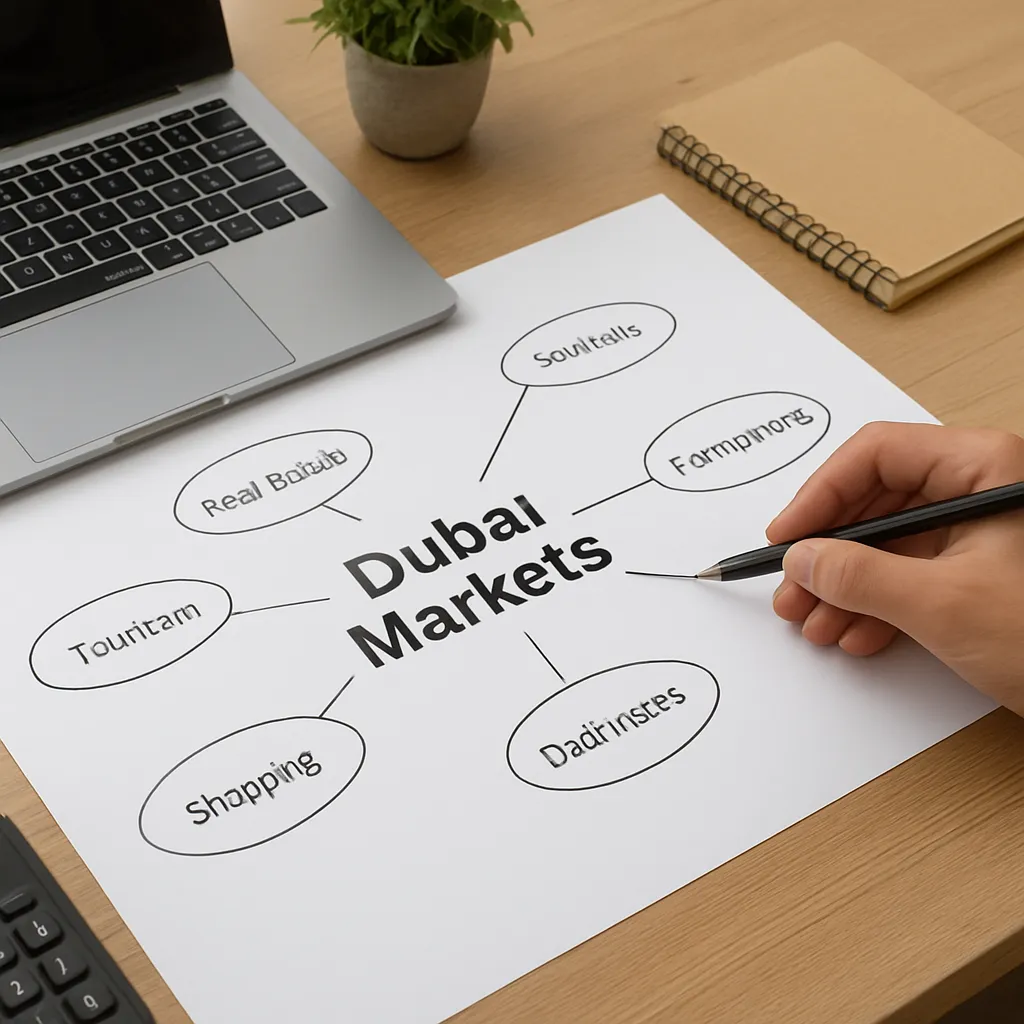
How to Create a Keyword Map for Dubai Markets
Understanding how to build a strategic keyword map for Dubai markets is essential for any brand that wants to win organic visibility, Paid Search efficiency and measurable growth in the UAE. The city’s unique blend of expatriate communities, luxury tourism, strong B2B ecosystem and Arabic‑English bilingual reality makes keyword research more complex than simply exporting ideas from other countries. A well‑executed keyword map will not only reflect how users in Dubai search, but also how they move between languages, devices and neighborhoods when looking for products and services.
Specifics of Dubai’s digital landscape
Dubai stands out within the Middle East in terms of internet usage and buying power. According to various regional reports, overall internet penetration in the UAE regularly exceeds 99%, and mobile connections often surpass the size of the population, which underlines how critical mobile search is for any SEO or PPC strategy. For marketers, this means that a robust keyword map must prioritize mobile intent, local modifiers and on‑the‑go queries such as “near me” and “open now”.
Another factor is the city’s multicultural demographic. A majority of residents are expatriates, coming from South Asia, Europe, other Arab countries, the Philippines and beyond. This diversity shapes the search landscape in several ways:
- A high share of searches are in English, even for traditionally Arabic categories such as government services or local food.
- Arabic searches remain important for Emirati users and many residents from other Arab states; mixing Arabic and English brand names in the same query is common.
- Some long‑tail queries contain transliterations, for example “tawtheeq dubai” or “tasheel center near marina”, which are neither pure Arabic nor pure English but a hybrid form.
Dubai is also a regional hub for luxury retail, hospitality, real estate and financial services, where competition for search visibility is strong and cost per click for some finance and property keywords can be extremely high. In such a saturated environment, a clean and well‑structured keyword map is a core asset: it helps avoid cannibalization between pages, reduces wasted ad spend and provides a framework for ongoing optimization and reporting.
Defining the goals of your keyword map
A keyword map is more than a list of phrases; it is a systematic assignment of target search terms to specific URLs or content types. Before collecting keywords, clarify what the map must achieve for your business in Dubai. This step influences how granular you need to be, which tools to prioritize and how you will measure value.
Common goals for brands in the Dubai market include:
- Expanding organic visibility for local service areas such as “AC repair in Dubai Marina” or “interior design JLT”.
- Improving conversion rates for high‑value categories like “luxury villas for sale in Palm Jumeirah” or “family law firm in Dubai”.
- Building a content hub around topics relevant to residents and visitors, such as visas, schooling, healthcare or business setup.
- Reducing paid search costs by finding mid‑ and long‑tail queries with lower competition and clearer intent.
Try to quantify the opportunity. For example, if your analytics shows that 60% of your users are already in the UAE and 40–50% of those come from Dubai, you can estimate potential traffic gains from higher rankings for local phrases. Tools like Google Keyword Planner, Semrush or Ahrefs can show monthly search volume for terms such as “Dubai dentist” or “best brunch Dubai”, allowing you to model scenarios for organic traffic increases at different ranking positions.
Collecting seed keywords for Dubai markets
Seed keywords form the starting layer of your map. They should reflect your main products or services, your brand positioning and the way customers in Dubai describe what you offer. A practical approach is to split seed keywords into four broad groups:
- Core commercial terms (e.g., “Dubai car rental”, “Dubai accounting services”).
- Brand and competitor terms (e.g., your brand + “Dubai”, close rivals, common misspellings).
- Informational topics (“how to register company in Dubai”, “best schools in Dubai”, “Dubai tourist visa requirements”).
- Location‑specific modifiers (districts like “Deira”, “Business Bay”, “JVC”, landmarks such as “Burj Khalifa area”).
There are several practical sources to identify these seeds:
- Search Console data: For existing sites, this is one of the richest data sets. Filter impressions and clicks by country (UAE) and, where relevant, by city using Google Analytics or a log‑file analysis to identify queries most likely tied to Dubai.
- On‑site search logs: Many businesses see a high volume of internal search. Phrases like “Marina branch”, “Arabic speaking doctor”, or “parking in DIFC” can quickly reveal how users think.
- Competitor research: Take major Dubai competitors and examine the keywords they rank for. In many niches, local aggregators (e.g., property portals, restaurant booking sites) dominate the SERPs. These can be valuable references for category naming and clustering.
- Customer service transcripts: Live chat and call center data often contain recurring questions that can be converted into long‑tail search terms.
By the end of this phase, you should have a broad but not yet structured list of phrases covering the main revenue drivers, main neighborhoods and informational topics that influence conversions in Dubai.
Expanding and localizing your keyword list
Once seeds are in place, expand the list to capture related terms, synonyms and question‑based queries. For Dubai markets, localization is critical: users do not simply search for “lawyer” or “apartment for rent”; they use combinations of location, language and price attributes that reflect local reality.
Effective tactics for expansion include:
- Autocomplete and People Also Ask: Start typing “Dubai apartment for” or “Dubai lawyer for” in Google and note the autosuggestions. Scroll to People Also Ask questions that mention visas, free zones, tenancy contracts or salary requirements.
- Related searches at the bottom of the SERP: These often include longer phrases like “cheap apartments for rent in Dubai monthly basis” or “best Filipino restaurant Dubai”.
- Third‑party tools: Keyword research platforms provide phrase match and question lists for geo‑modified terms such as “in Dubai” or “near Dubai Mall”. Focus on those with transactional or clear informational intent.
- Social platforms: Forums and groups used by residents (for example, on Facebook, Reddit or community portals) show regional vocabulary and pain points: “family friendly brunch Dubai Marina”, “pet friendly building in JVC”, “RTA fines payment online Dubai”.
Localization should incorporate the way residents talk about neighborhoods and infrastructure. Someone may search “clinic near Al Rigga metro station” rather than the clinic’s official street address. Similarly, tourists might use “near Dubai Mall” or “close to Burj Khalifa” while residents rely on “Business Bay”, “JLT” or “JBR”. Integrate all of these variants into your keyword map, linking them to appropriate landing pages or local content sections.
Accounting for bilingual and mixed‑language searches
Dubai’s bilingual reality requires special attention. Even if your website is primarily in English, your keyword map should at least acknowledge Arabic queries, and, for some industries, fully support them.
There are four useful categories of queries from a language standpoint:
- English‑only queries (e.g., “Dubai hair transplant clinic”, “digital marketing agency Dubai”).
- Arabic‑only queries (written in Arabic script) that describe the same services.
- Mixed queries where the service is described in English but the location or brand is Arabic, or vice versa.
- Transliteration queries: Arabic concepts typed with Latin characters, like “tasheel Dubai timings” or “Ejari renewal online”.
If your customer base is heavily Arabic‑speaking, consider a parallel Arabic keyword map with dedicated URLs, hreflang implementation and content in Arabic, not just machine translation. In less Arabic‑dependent verticals, it can still be beneficial to optimize page titles, meta descriptions and on‑page copy to include critical Arabic terms or transliterations that are widely recognized by expats and residents.
Segmenting keywords by intent for Dubai audiences
Intent segmentation is crucial because it defines which type of content should target each keyword. For Dubai users, the line between research and action can be short, especially for services like transportation, food delivery or last‑minute hotel bookings.
Cluster your keywords into four main groups:
- Transactional: The user is ready to buy or contact you (e.g., “book desert safari Dubai”, “buy gold in Dubai”, “corporate lawyer Dubai fees”). These go to service pages, product pages or booking funnels.
- Commercial investigation: The user compares options (e.g., “best IVF clinic in Dubai”, “top nurseries in Dubai Marina”, “free zone vs mainland company setup Dubai”). These fit comparison pages, guides and category overviews.
- Informational: The user wants to learn (e.g., “how to get UAE residence visa”, “Dubai tenancy law security deposit”). These require detailed blog posts, FAQs or resource hubs.
- Navigational: The user is trying to reach a particular brand or portal (e.g., “RTA Dubai fines”, “DEWA login”). These relate mostly to brand management and sitelink optimization.
In Dubai, some queries appear informational but actually carry strong commercial intent. For example, “schools in Dubai for Indian curriculum” or “best real estate agents in Dubai” often lead directly to contact or application. When mapping intent, review not only the keyword wording but also the existing SERP: if you see many ads and local business packs, that is a signal of commercial value.
Geographical and micro‑local mapping
A distinctive feature of Dubai is the importance of specific districts and real estate developments. Residents frequently search with community names, and some communities themselves function almost as separate micro‑markets.
To capture this behavior, create a structure where each main service lines up against the most relevant communities and landmarks. Examples include:
- Dentist + Dubai Marina, JBR, JLT, Business Bay, Deira, Al Barsha.
- Gym + Dubai Marina, JVC, Motor City, Downtown Dubai.
- Property for rent/sale + Palm Jumeirah, Arabian Ranches, Dubai Hills, Silicon Oasis.
Each of these intersections deserves its own entry in the keyword map and, when business volume justifies it, a dedicated landing page. The benefit is twofold: higher relevance for local queries and better user experience for people who want providers near their home or office.
Furthermore, consider the interplay between Dubai and neighboring emirates. Many users who work in Dubai but live in Sharjah or Ajman may search for cross‑emirate queries such as “bus from Sharjah to Dubai timings” or “rent apartment in Ajman work in Dubai”. Including such patterns in your research broadens your reach, especially for transportation, housing and employment‑focused businesses.
Creating the actual keyword‑to‑URL map
After you have a comprehensive list of localized keywords with clear intent categories, you can assign them to specific URLs. This is where your keyword map becomes a practical tool for content planning, technical optimization and internal linking.
A spreadsheet is still one of the most effective formats for building the map. At a minimum, include the following columns:
- Keyword
- Search volume (UAE or Dubai‑level, depending on tool)
- Intent type
- Language (English, Arabic, mixed)
- Primary URL
- Secondary or supporting URLs (for related content or blog posts)
- Priority level (based on commercial value and difficulty)
- Notes (e.g., “target in Ramadan campaign”, “add Arabic version Q2”)
Each significant page should have one primary keyword and several close variants. For example, a page about corporate formation services might target “business setup in Dubai” as the primary term, with secondary phrases such as “company formation in Dubai”, “start a business in Dubai” and “Dubai free zone company setup”. The map ensures you do not create multiple pages that chase the same keyword, which can divide authority and confuse search engines.
For large Dubai‑focused websites, such as property portals or classifieds, you may also include technical notes in the map: canonical tags for similar listing pages, rules for pagination, and parameters that should be blocked from indexing. Integrating keyword mapping with technical SEO early can prevent index bloat and duplication later.
Integrating paid search data from Dubai campaigns
Dubai is a hyper‑competitive environment for many industries, which pushes brands to invest heavily in paid search. This paid data can significantly improve your keyword map. Campaigns reveal which queries actually drive conversions, not just clicks, and at what cost.
Export search term reports from your Google Ads or other PPC platforms, filtered for UAE and, if possible, by city. Then:
- Identify high‑converting terms with manageable cost per acquisition; these often deserve dedicated landing pages and strong organic support.
- Spot negative keywords that waste budget, such as irrelevant job queries or free‑seeker phrases, and ensure you do not overemphasize them in organic content.
- Compare conversion rates between similar terms, for example “Dubai lawyer” vs. “law firm in Dubai” vs. “best lawyer Dubai”. This can inform how you name pages and craft title tags.
Over time, align your SEO and PPC strategies. For high‑CPC terms where organic ranking is achievable, your keyword map may prioritize SEO investment. For extremely competitive phrases with limited organic potential but strong commercial intent, allocate more budget to ads and focus your content on longer‑tail or educational angles that attract the same audience earlier in their journey.
Using local search features and structured data
For brick‑and‑mortar businesses in Dubai, local search features such as Google Business Profile, map packs and local reviews play a major role. While your keyword map primarily connects queries to pages, it should also indicate which terms are best addressed through local optimization rather than only through traditional organic rankings.
For example, “coffee shop in Dubai Marina” or “barber near JLT” typically surface a map pack with pins and review ratings. Align these keywords with your location pages and ensure that each physical branch has:
- An optimized and verified Google Business Profile with precise coordinates, categories and business hours.
- Localized on‑site content that repeats the neighborhood name, nearby landmarks and relevant attributes (pet friendly, ladies only hours, parking).
- Consistent NAP (Name, Address, Phone) data across directories, especially popular local listings used by Dubai residents.
Structured data markup, such as LocalBusiness, Product or FAQ schema, helps search engines interpret your pages and sometimes triggers rich results. Mapping which pages should receive which markup type can be part of the same document where you map keywords to URLs, allowing developers and content teams to work from a unified plan.
Seasonality and event‑driven keywords in Dubai
Dubai’s calendar is strongly shaped by religious holidays, shopping festivals and tourism peaks, all of which generate specific search patterns. Integrating these into your keyword map gives you a framework for content and campaign timing.
Key seasonal triggers include:
- Ramadan and Eid: Queries around “iftar deals Dubai”, “Ramadan tents Dubai”, “Eid offers Dubai Mall” peak during this period. Food, retail and hospitality brands especially must track these terms.
- Dubai Shopping Festival and other sales events: Searches for “Dubai sale”, “DSF offers”, “discount electronics Dubai” rise steadily and affect both online and offline sales.
- Tourism high season (typically cooler months): Terms like “Dubai desert safari”, “Dubai yacht rental”, “Dubai city tour deals” see strong upward trends.
- School and university cycles: “Schools in Dubai admission”, “university in Dubai fees”, “British curriculum school Dubai” fluctuate around admission periods.
In your keyword map, mark seasonal keywords with tags such as “Ramadan”, “DSF”, “winter tourism” and set review dates in advance. This allows you to refresh and re‑promote relevant content each year rather than re‑inventing it. As new events like regional expos, major concerts or sports tournaments are announced, create new keyword clusters aligned with those opportunities.
Content strategy built on the Dubai keyword map
Once your keyword map is in place, it becomes the backbone of your broader content strategy. Each cluster of keywords should correspond to one or more content assets, forming a natural path from discovery to conversion.
For example, suppose your business provides digital marketing services in Dubai. Your map might contain these clusters:
- Core services: “digital marketing agency Dubai”, “SEO company in Dubai”, “social media management Dubai”.
- Industry‑specific verticals: “real estate digital marketing Dubai”, “clinic marketing in Dubai”, “restaurant marketing Dubai”.
- Educational content: “how much does digital marketing cost in Dubai”, “SEO salary in Dubai”, “best marketing courses in Dubai”.
- Local guides and case studies: “case study ecommerce Dubai”, “Instagram marketing for Dubai restaurants”.
Each cluster becomes a mini topic hub with a main pillar page and supporting articles that interlink. The pillar page targets the broad commercial term, while supporting pieces address narrower questions and long‑tail variants. This structure reinforces topical authority, assists internal linking and matches the diverse ways in which Dubai‑based users search around a topic.
Pay close attention to cultural and regulatory context in content. Legal services, financial products, medical procedures and government‑related information must reflect UAE law and guidelines, which may differ significantly from those in other countries. Aligning your content strategy with genuine local expertise increases both search performance and user trust.
Monitoring performance and refining the map
A keyword map is not a static document; it should evolve with the Dubai market, your product offering and changes in search behavior. Establish a process to review and update the map regularly.
Recommended practices include:
- Monthly review of Search Console performance for UAE traffic, with filters where suitable for Dubai‑oriented pages. Track clicks, impressions and average position for key mapped terms.
- Quarterly update of keyword volumes and SERP features using your research tools, especially for priority clusters and seasonal groups.
- Ongoing integration of PPC search term data, new negative keywords and emerging long‑tail queries.
- Monitoring competitors: watch how new players enter the Dubai scene, especially in hotspots like real estate, fintech or edtech, and which terms they target aggressively.
When you find high‑impression queries where you rank on page two or low page one, strengthen their associated URLs. Enhance on‑page content, refine title and meta descriptions, improve internal linking from relevant articles or category pages and, where necessary, update or localize copy to better resonate with Dubai residents and visitors.
Measurement, KPIs and business impact in Dubai
The ultimate value of a keyword map lies not in the document itself, but in its impact on business metrics. Define KPIs that are specifically meaningful in the Dubai context and align them with your map.
Common metrics include:
- Organic sessions from Dubai (or UAE) for mapped URLs, tracked over time.
- Conversions (leads, bookings, sales) attributed to pages that target high‑value keyword clusters.
- Reduction in cost per acquisition for keywords where organic rankings improve and paid reliance drops.
- Share of search for key categories: how often your brand appears versus competitors for a set of critical terms.
In sectors like real estate or professional services, even modest improvements can translate into substantial revenue. Ranking a lead‑generating page for “Dubai business setup” from position eight to position three, for example, can dramatically boost both traffic and inquiries if your offer is competitive and localized.
By tying every major keyword cluster in your map to one or more business KPIs, you ensure that optimization efforts stay focused on returns rather than vanity metrics. Over time, this approach turns the keyword map into a central planning tool, connecting marketing, sales, content and product strategy in the unique and fast‑moving environment of Dubai.