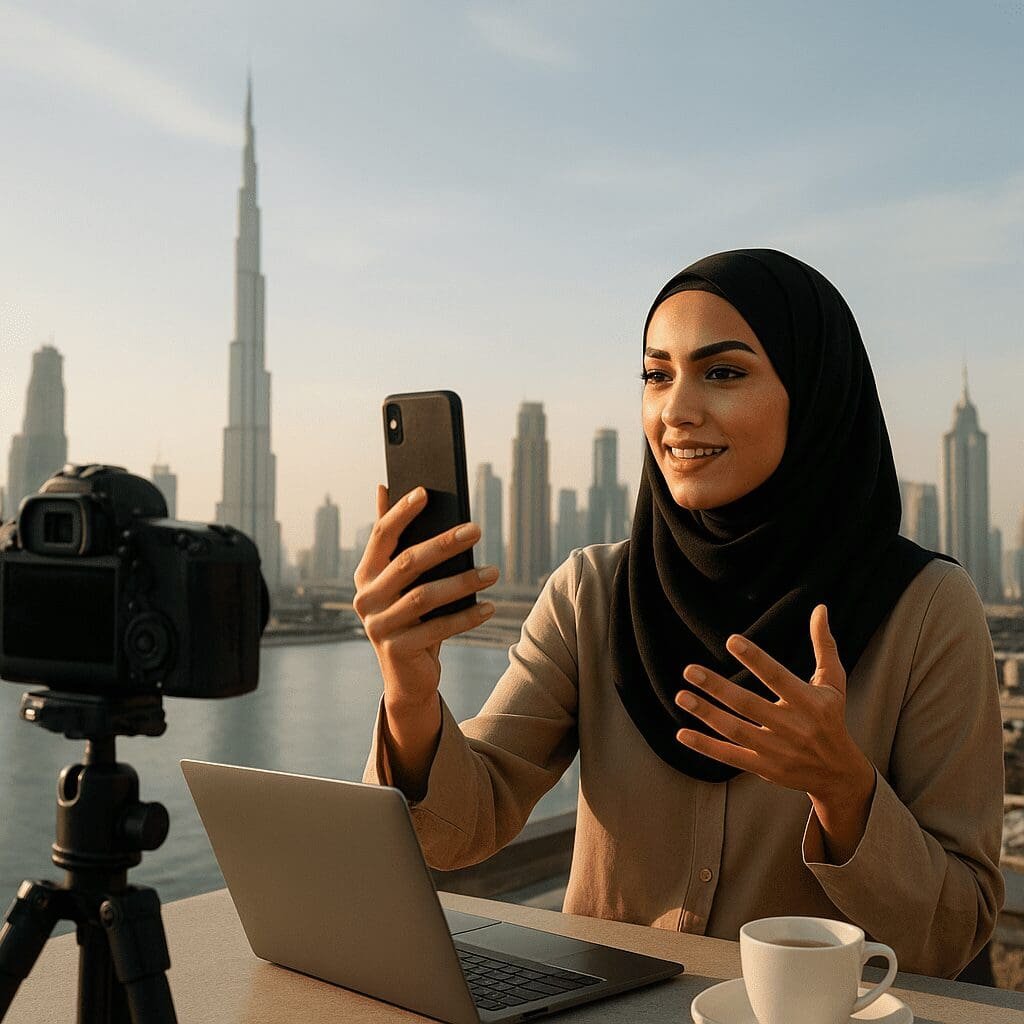
How Influencer Marketing Supports SEO in Dubai
Few places combine luxury retail, hospitality, real estate, and a cosmopolitan lifestyle as intensely as Dubai. In this market, creators shape purchase decisions long before a user types a query into a search bar. That is precisely why influencer marketing, when engineered for search outcomes rather than vanity metrics, becomes a powerful accelerant for SEO: it earns credible mentions, stimulates branded demand, generates quality signals across the open web, and fills the SERP with assets you control or influence. Add the city’s bilingual Arabic–English audience and near-universal smartphone usage, and the synergy between creator-led storytelling and organic search becomes a durable competitive moat.
The digital context: why influencers and search are inseparable in Dubai
The UAE consistently ranks among the world’s most connected nations. Internet penetration is reported close to 99%, and social media penetration exceeds 100% of the population due to multi-account behavior. Residents spend roughly three hours per day on social platforms, and Google commands well over 95% share of search activity. This means audiences in Dubai discover products in two flows that constantly reinforce each other: a push flow (social feeds driven by creators) and a pull flow (search queries crystallizing intent after seeing content).
Influencer marketing’s global footprint has grown into a multi‑billion‑dollar channel; industry surveys frequently estimate average returns around $5–$6 in value for every $1 spent, depending on sector and measurement model. In the Gulf, where visual platforms like YouTube, Instagram, and TikTok reach massive, mobile-first audiences, the effect is amplified for categories like luxury, hospitality, automotive, and F&B—sectors that dominate Dubai’s economy. Creator content doesn’t just entertain; it frames the consideration set, primes keywords users will later search, and distributes links and entity mentions that organic algorithms use as relevance and quality signals.
That social–search handshake is particularly strong during peak commercial moments: Ramadan and Eid campaigns, the Dubai Shopping Festival and Dubai Summer Surprises, major trade shows (GITEX, Arabian Travel Market), and seasonal hospitality peaks. During such periods, social narratives drive interest spikes that surface as branded search, category queries, and high click-through rates on content assets you seeded via creators—helping your domain acquire durable organic advantage long after the campaign ends.
Mechanisms: how influencer activity strengthens organic visibility
1) Links, mentions, and entity reinforcement
High-quality creator posts can lead to natural backlinks from blogs, media, and community forums as content is cited and discussed. Even when posts themselves sit on social platforms with nofollowed links, the halo effect includes:
- Unstructured mentions of your brand across the open web that reinforce entity recognition and brand–topic associations in search systems.
- Co-citation and co-occurrence: your brand appearing near authoritative entities (events, districts like JBR or DIFC, trusted creators) that strengthen topical relevance.
- Referral cascades: a well-produced YouTube video or blog review prompts journalists or niche publishers to create their own coverage and link to your site.
For paid collaborations, apply rel=”sponsored” (and in some cases rel=”nofollow”) to stay compliant with Google’s link guidelines. You can still earn organic, editorially given links when creators inspire third parties to write about you.
2) Branded demand, CTR, and behavioral signals
Compelling creator stories raise branded search volume—one of the most reliable, defensible levers in organic growth. When more users query your brand name plus category keywords (e.g., “best rooftop brunch Dubai [Brand]”), Google receives repeated confirmation that your entity is relevant to the topic space. These queries usually produce higher-than-average click-through rates (CTR) and dwell time on your properties, both of which correlate with stable rankings for brand-related and adjacent non-brand terms.
3) Earning E-E-A-T through credible experiences
Search quality systems increasingly value lived experience and subject-matter credibility. When respected influencers with real expertise publish hands-on reviews, tutorials, or comparisons, they provide the kind of experience signals that support E-E-A-T. Tactically, bolster this by:
- Including creator bylines on your site for co-authored pieces with short bios, credentials, and links to their profiles.
- Publishing behind-the-scenes footage that validates originality and real-world usage.
- Inviting creators to contribute FAQs that match People Also Ask questions and long-tail queries.
4) Owning SERP real estate beyond blue links
Creator-led assets help you occupy more surface area across SERP features:
- YouTube videos embedded on your pages can rank in video carousels and appear in Google Discover, sending recurring organic traffic.
- Short-form clips can index via Perspectives and surface for “how-to,” “review,” and “best” queries.
- Image-rich posts improve your presence in image packs for visual intent searches like venue tours or product close-ups.
Each asset expands your search visibility even if your primary domain doesn’t hold the top blue link. Share of SERP matters: the more result types you influence, the more traffic and trust you capture.
5) Content flywheel and topical authority
Influencer campaigns generate a continual stream of prompts for your editorial roadmap. Questions in comments reveal search-worthy topics; creator scripts become outlines for evergreen guides; user-generated content fuels comparison and FAQ pages. Over time, this creates a topical cluster that signals breadth and depth—hallmarks of topical authority.
Local relevance: the Dubai blueprint for creator-led organic growth
Bilingual queries and cultural nuance
Dubai’s audience searches in both English and Arabic, often mixing transliteration (e.g., “iftar near me Dubai” and “افطار دبي”). Plan bilingual keyword research and incorporate regional Arabic terms and Gulf dialect nuances where appropriate. Creators fluent in both languages can craft captions, subtitles, and blog copy that match how people actually search. For upscale segments, blend Arabic prestige terms with English category keywords to ensure coverage of luxury-oriented intents.
Neighborhood and landmark anchors
Local SEO in Dubai revolves around districts and landmarks: Downtown, Dubai Marina, JBR, Business Bay, City Walk, Dubai Hills, and Palm Jumeirah. Encourage creators to reference precise neighborhoods, malls, and venues in titles, descriptions, and on-page H2/H3s. These geo-anchors help your pages trigger for “near me” and “best in [district]” searches and improve relevance in the Map Pack. Pair creator posts with updates to your Google Business Profile (photos, posts, Q&A) to amplify geographic signals.
Vertical-specific cues
- Hospitality and dining: Room tours, brunch reviews, chef collaborations, Ramadan experiences; structured data for events and menus; reservation schema; creator-led 360 tours embedded on landing pages.
- Luxury retail: Unboxings, fit guides, capsule drops tied to Dubai Shopping Festival; rich media galleries; stock availability and store locator pages optimized with creator imagery.
- Real estate: Walk-through videos for off-plan projects; community comparison guides; Arabic/English FAQs about payment plans and handover timelines.
- Automotive: Test drives on Dubai roads; performance comparisons; Arabic subtitles for broader reach; local financing and insurance FAQs.
From campaign to compound SEO gains: a practical framework
1) Set search-led objectives and KPIs
- Primary: Organic sessions and revenue for priority pages; growth in non-brand rankings within target clusters; increase in branded search volume.
- Secondary: Assisted conversions from organic after influencer exposure; video impressions and watch time on search-discoverable assets; SERP CTR improvements.
- Diagnostic: New referring domains; sentiment and share of voice in creator content; Discover and Perspectives visibility.
2) Curate the right creator mix
- Macro creators for reach and association with authority; micro creators for engagement and niche relevance; community creators for hyperlocal influence (e.g., district-focused food reviewers).
- Prioritize creators who publish on search-indexed surfaces (YouTube, blogs, podcasts) in addition to social-only platforms.
- Verify authenticity: check audience location (UAE-heavy for local aims), engagement quality, and past brand safety performance.
3) Co-create content mapped to search demand
Build a keyword-to-asset map for each creator. Examples:
- YouTube: “Best iftar buffets in Dubai 2026” → creator video + corresponding on-site guide featuring the video embed, schema markup, and jump links.
- Blog: “Dubai Marina vs. JBR: where to stay?” → co-authored comparison article with creator photos and neighborhood tips.
- Instagram/TikTok: Short teasers that push to a long-form page or YouTube review, each with clear CTAs and UTM tracking.
Ensure each asset supports a cluster: pillar page (comprehensive guide) + supporting creator-led pieces targeting long-tail queries.
4) Link and attribution hygiene
- For paid posts: use rel=”sponsored” on links; encourage creators to link to your most relevant page, not just the homepage.
- For syndication: if creators republish your content, add a canonical tag to your original page to consolidate signals.
- For tracking: use UTMs to segment traffic by creator and format; in GA4, build exploration reports that connect influencer sessions to organic return visits.
5) Multi-surface distribution
- On-site: Create a creator hub showcasing collabs, embedded videos, and quotes—an internal link magnet.
- YouTube: Optimize titles with primary keywords and location; add chapters; include bilingual descriptions.
- Social: Turn FAQ comments into on-site FAQ sections; pin posts that consistently drive searches.
- PR: Pitch creator stories to local media; coverage can yield editorial links and Knowledge Panel reinforcement.
Content formats that index and convert
Search-optimized video
YouTube is a cornerstone in the UAE. For hospitality, retail, and property tours, long-form videos rank well and keep sending traffic. Best practices:
- Front-load keyphrases in the title; include Dubai district names.
- Provide time-coded chapters answering distinct queries; add Arabic subtitles.
- Repurpose highlights into Shorts, linking back to the main video and on-site guide.
Creator-led guides and comparisons
Co-authored blog posts and downloadable itineraries are evergreen search assets. Pair creator authority with structured data (FAQ, HowTo, ItemList) and internal links to booking or product pages. Include neighborhood maps, operating hours, and local tips. The combination of expert perspective and helpful details matches searchers’ intent while signaling helpfulness.
UGC and reviews as trust accelerants
Aggregate creator quotes on product pages and local landing pages. Encourage reviewers to address specific questions (“Is there valet at Business Bay?”, “Does the rooftop allow families?”). Mark up genuine reviews with schema and keep moderation tight against spam. UGC reinforces credibility and helps match People Also Ask questions.
Industry playbooks tailored to Dubai
Hospitality and dining
- Run a Ramadan content series with nightly iftar reviews, then pivot to Eid brunch roundups.
- Publish a bilingual “Best new restaurants in Dubai [Year]” pillar updated monthly; seed it with creator embeds.
- Measure: organic bookings from the pillar and associated creator YouTube videos; map-pack ranking uplift for target neighborhoods.
Luxury retail
- Use creators for capsule-drop storytelling tied to mall locations (Dubai Mall, Mall of the Emirates) with Store schema and localized inventory pages.
- Turn try-on reels into evergreen sizing and care guides; link from guides to product PDPs.
- Measure: rise in “brand + Dubai Mall” searches, PDP organic revenue, and Discover traffic.
Real estate
- Commission community comparison videos (Dubai Hills vs. Arabian Ranches) and embed them in long-form neighborhood guides.
- Publish Arabic landing pages covering financing terms and developer-specific FAQs with creator input.
- Measure: leads from organic; ranking for “best community for families Dubai” and Arabic equivalents; growth in referring domains from property forums.
Measurement: proving the SEO lift from creator programs
Baseline and incrementality
Before launch, baseline the following for at least 4–8 weeks:
- Branded search volume (Search Console impressions for brand terms).
- Organic sessions, revenue, and assisted conversions to target pages.
- Non-brand rankings and share of voice across priority clusters.
- Referring domains and domain authority proxies.
After launch, assess changes relative to the baseline, factoring in seasonality (Ramadan, DSF). Use geo-segmentation (UAE vs. other markets) and media mix models or simple time-series comparisons if resources are limited.
Creator-level dashboards
- Organic lift after exposure: track cohorts who first arrived via influencer UTMs and returned organically within 30 days.
- Query movement: increases in “brand + category” and “brand + location” queries.
- SERP ownership: number of result types (web, video, images, Perspectives) influenced for target queries.
Hypothetical example
A boutique hotel in Business Bay partners with 8 bilingual food and travel creators across YouTube and Instagram. Over eight weeks, branded search impressions rise by 38%, the “best brunch Business Bay” guide climbs from position 11 to position 3, and YouTube sends 9,000 incremental visits with a 4.2% booking conversion on the brunch offer page. Three local publishers pick up the story, adding editorial links to the guide. The result: sustained rankings and direct organic bookings even after paid promotion stops.
Compliance, ethics, and risk management in the UAE
Dubai’s regulatory environment expects professionalism. Influencers typically need appropriate permits, and sponsored content must be disclosed. From an SEO perspective, disclosures do not harm rankings; in fact, transparency supports trust. Apply rel=”sponsored” on paid links, avoid link exchanges or guaranteed dofollow arrangements, and prioritize value-focused content over coupon spam.
Mitigate common risks:
- Fake followers and engagement pods: audit audience quality and engagement authenticity; tie compensation to measurable outcomes beyond likes.
- Thin or duplicate content: insist on unique angles, original media, and creator experiences; add canonical tags where republishing is necessary.
- Overreliance on one platform: diversify across YouTube, blogs, and newsletters so search-indexed assets compound.
- Brand safety: set clear guidelines on locations, dress codes, and claims in line with local norms and platform policies.
Future-facing tactics: creator SEO in a changing search landscape
Search is incorporating more human perspectives, short videos, and social discussions. Google’s Perspectives and Discover increasingly spotlight creator content that demonstrates experience and helpfulness. Expect more multimodal results for local queries—maps, short clips, carousels—where a well-structured creator program gives you an edge.
- Structured data everywhere: mark up videos, FAQs, products, and events to qualify for rich results.
- Creator knowledge graphs: maintain consistent creator bios, social handles, and bylines to strengthen entity understanding.
- Bilingual snippet optimization: write meta titles and descriptions that match real phrasing in English and Arabic; test transliteration variants.
- AI summaries and overviews: prioritize depth, originality, and citations so your assets are favored when overviews appear.
Execution checklist for Dubai teams
- Define search-led KPIs; map creator assets to keyword clusters in English and Arabic.
- Select creators with UAE-heavy audiences and search-indexed channels (YouTube, blogs, podcasts).
- Co-create evergreen guides, comparisons, and location pages with creator embeds and bilingual copy.
- Enforce link hygiene (rel=”sponsored”), canonicalization, and clean UTMs; build creator-level GA4 dashboards.
- Update Google Business Profile with creator media; align posts with neighborhood signals.
- Pitch creator narratives to local media for editorial links; monitor share of SERP across web, video, images, and Perspectives.
- Audit quarterly: branded demand, non-brand rankings, referring domains, Discover visibility, and assisted organic revenue.
Conclusion: creators as enduring engines of organic growth
Influencer marketing in Dubai is not just a top-of-funnel awareness play. When designed with search in mind, creator programs manufacture durable advantages: natural links and mentions, stronger entity relationships, richer SERP coverage, and a flywheel of audience questions that evolve into helpful on-site resources. The outcome is compounding organic performance across seasons and cultural peaks. Blend credible creator experiences with technical rigor, bilingual relevance, and ethical collaboration, and you’ll turn social proof into search power—expanding your footprint, trust, and revenue in one of the world’s most competitive digital marketplaces.
By treating creators as partners in discovery rather than isolated media placements, Dubai brands can transform influence into measurable, defensible organic growth—anchored in authentic stories, search-friendly structure, and a relentless focus on user value.
Key terms emphasized: SEO, Dubai, influencers, backlinks, authority, E-E-A-T, content, visibility, brand, conversions.