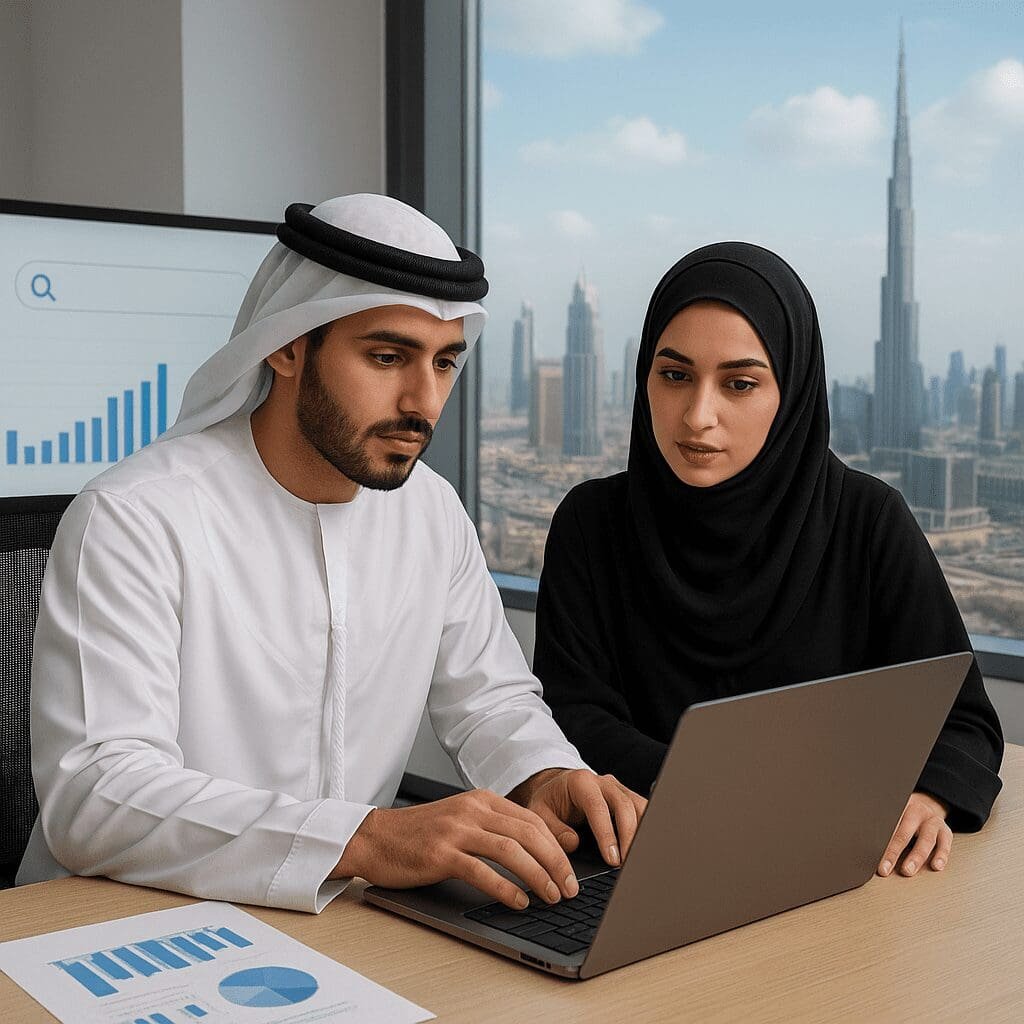
Understanding Search Behavior of Dubai Consumers
Dubai’s search behavior is shaped by a rare blend of ultrafast connectivity, multicultural demographics, and a retail and services landscape that moves at the speed of the city itself. Understanding how people in Dubai discover information, evaluate options, and make decisions online is vital for any brand competing in the Gulf. This article explains what people actually type (or say) into search bars, why they do it, and how marketers can build strategies that reflect the rhythms, languages, and expectations of consumers who live and work in the emirate.
The digital context: how Dubai’s environment shapes search
The UAE is among the world’s most connected markets. Multiple independent reports suggest internet penetration is around the 99% mark, with smartphone adoption comfortably above 95%. In practice, this means nearly every consumer in Dubai can access information anywhere, at any moment. Combined with a modern logistics and payments infrastructure, this connectivity turns search into a decisive micro-moment in the path to purchase.
Search engine share is extremely concentrated. According to StatCounter snapshots for the UAE throughout 2024–2025, Google holds roughly the mid-to-high 90s percentage of the search market, leaving Bing and other engines with marginal roles, except in B2B or corporate environments where Microsoft defaults may have minor influence. For marketers, this concentration simplifies technical priorities but raises the stakes for visibility in a competitive SERP packed with Shopping results, local packs, ads, and rich features.
Another defining feature is language. Dubai’s population is majority expatriate, with English often serving as the lingua franca, Arabic holding cultural and regulatory importance, and South Asian and other languages adding nuance to how users query. This leads to bilingual, mixed-language search behavior. Consumers switch between English, Arabic, and sometimes transliterated or phonetic spellings. Optimizing for such bilingual behavior requires careful keyword research across scripts and dialects, including Gulf Arabic nuances and non-Arabic scripts used by expat communities.
Mobility shapes intent and speed of decision-making. The majority of queries in Dubai are likely to originate from phones; brands should assume a mobile-first posture for design, content, and analytics. Location signals matter, and “open now” or “near me” qualifiers remain influential, particularly in food, beauty, health, real estate viewings, and automotive services. Short distances and fast roads mean users often act within minutes; the SERP that wins those crucial minutes wins the sale.
Key data points to anchor strategy (estimates based on 2024–2025 industry datasets and local platform insights):
- Internet penetration: approximately 99% across the UAE
- Smartphone adoption: generally reported at 95%+ among adults
- Search engine market share: Google in the mid-to-high 90s percentage
- YouTube consumption: extremely high reach in UAE; video search plays a notable role in product discovery and review research
- E‑commerce market size: widely estimated in the multi‑billion‑dollar range and growing at a double‑digit annual pace
Language, culture, and the anatomy of intent
Every search is a proxy for intent. In Dubai, intent is shaped by cultural calendars, multilingual environments, and the city’s pace. From a marketer’s perspective, there are several layers to map.
Language mixing and transliteration
Users regularly mix English and Arabic in the same session, and sometimes in the same query. Arabic Gulf dialect words can appear alongside English category terms, while expats may search in their native languages for brands, immigration queries, banking, healthcare, and real estate. Transliteration is common: users might type Arabic phrases in Latin script (e.g., “iftar near me dubai”) or English brand names in Arabic. Robust keyword research includes:
- Native Arabic keywords with dialect variations and right‑to‑left layout testing
- English category terms and brand names with local spelling variants
- Transliterated forms and popular misspellings
- Long‑tail queries combining place names, malls, and neighborhoods
Temporal patterns: workweek, Ramadan, and event-driven spikes
Since 2022, the UAE has aligned with a Monday–Friday workweek. Search volume often peaks during weekday evenings and weekends, with categories like dining, entertainment, and retail seeing Saturday surges. Ramadan changes daily rhythms; post‑iftar spikes are common, and late-night delivery and shopping searches increase. Eid drives travel, gifts, and fashion searches; back‑to‑school triggers electronics and education-related queries; year‑end travel and retail events (like November’s major sale period) fuel discount-seeking patterns.
Trust-building and evaluation behavior
Dubai consumers value speed and reliability, but they also scrutinize social proof. Structured and unstructured reviews carry significant weight. Local press coverage, micro‑influencer content, and presence in comparison sites complement the SERP. For service categories (clinics, real estate brokers, law firms), personal recommendations and ratings on Google Business Profile, Facebook, and local directories can meaningfully shift click-through rates.
Category-specific search behaviors to know
Real estate
Property search is a dominant theme in Dubai. Users compare communities (Marina vs. Downtown vs. Business Bay), unit types (studio, 1BR), ownership structures (freehold), and fees. “Off‑plan” gains share in boom cycles. Multi-language content (English, Arabic, Russian, Hindi/Urdu) expands reach. Critical elements include detailed neighborhood guides, transit connections, school proximity, and mortgage calculators. Call extensions and WhatsApp click‑to‑chat help convert mobile intent quickly to a viewing.
Luxury retail and jewelry
High-spend shoppers search for boutique names, limited editions, and personalization options. The line between online discovery and boutique appointment is thin; appointment booking widgets, video consultations, and WhatsApp are conversion catalysts. Messaging should balance exclusivity and finance options (especially for watches and fine jewelry). Emphasize authenticity guarantees and after-sales support. The term luxury signals expectations of white-glove experiences and precision in presentation; sloppy localization or slow mobile pages erode perceived value.
Food, grocery, and rapid commerce
Convenience dominates. Users query cuisines, dietary tags (halal, vegan), opening hours, and last‑mile speed. Grocery and rapid commerce brands compete on assortment breadth and fast delivery. Search ad copy focusing on delivery time windows, stock availability, and promo codes often outperforms generic branding. Local SEO hygiene for each outlet (accurate hours, menu schemas, and “open now” signals) is crucial.
Travel and leisure
Dubai residents are frequent travelers; searches span weekend getaways, visas, PCR/health requirements (less now, but still historically relevant), and dynamic holiday pricing. Inbound tourism means international users compare attractions, hotels, and transportation. Optimizing for multiple languages and surfacing practical guides increases conversion rates. Video search and short‑form content influence discovery for attractions and dining.
Automotive
Car buyers and renters search by brand, tier (economy to supercar), and financing or subscription models. Marketplaces aggregate attention; dealers must compete with structured inventory data, high-quality images, and responsive VDPs. For maintenance and detailing, local intent (near me) and reviews direct footfall. Transparent labor and parts pricing boosts trust.
Healthcare
Clinics and hospitals must combine medical authority signals with convenience cues (insurance acceptance, location, appointment availability). E‑E‑A‑T (experience, expertise, authoritativeness, trustworthiness) frameworks guide content quality. Multilingual navigation is critical for expatriate segments. Page speed and accessibility matter for patients on mobile.
What the SERP looks like in Dubai
The modern SERP in Dubai is crowded. Beyond 10 blue links, you’ll see local packs, Shopping carousels, video features, People Also Ask, and sitelinks that often resolve the query without a click. This zero‑click behavior is a double‑edged sword. On one hand, brand visibility increases if you own the knowledge panel, local pack, or featured snippets. On the other, traffic may be cannibalized. Marketers should treat SERP real estate like shelf space and engineer presence across multiple elements.
- Local pack: Requires complete Google Business Profiles with localized categories, attributes, images, and consistent NAP
- Shopping: Merchant Center health, structured feeds, rich attributes (price, availability, size), and local inventory feeds for omnichannel retailers
- Video: Short, subtitled explainers and reviews tailored for mobile screens; upload to YouTube and embed on site
- FAQ and how‑to: Schema markup to earn rich results; ensure content genuinely answers user questions
Pricing, promotions, and the calculus of value
Dubai shoppers straddle premiumization and value-seeking. High-end spending coexists with savvy deal hunting during mega sales. Transparent price communication and total cost clarity (fees, taxes, delivery) reduce friction. BNPL options (e.g., Tabby, Tamara) are mainstream in many categories; articulating installment terms in ad copy and product pages increases conversion for higher AOV items. For daily needs, free or low-cost delivery thresholds influence cart size.
Communicate policies clearly: returns, exchanges, and warranty terms matter for trust. For international brands, locally relevant guarantees and service centers reduce perceived risk.
The multilingual SEO and content playbook
Winning organic visibility in Dubai requires technical precision and nuanced content strategy.
- Hreflang and site architecture: Separate and correctly tag language versions (en‑AE, ar‑AE). Avoid automatic language redirects that break crawling.
- Right‑to‑left design: Ensure Arabic pages render properly, with careful typography and mirrored UI patterns.
- Keyword research: Build parallel maps for English and Arabic, including transliterations and neighborhood modifiers (e.g., Al Barsha, JLT, Mirdif).
- Schema: Product, LocalBusiness, FAQ, HowTo, and Review schemas improve eligibility for rich results.
- Page speed and Core Web Vitals: Mobile performance is a conversion lever; lazy‑load media, compress images, and streamline JS.
- Authority signals: Thought leadership, local PR (Gulf News, Khaleej Times), and high‑quality backlinks from UAE organizations.
- Content formats: Guides, calculators, comparison tables, and short videos that answer practical queries.
- Store finders and local landing pages: Indexable pages per branch with consistent data and embedded map directions.
Localization must extend beyond words to services and policies. Genuine localisation includes local payment methods, delivery windows synced to real operations, and customer support in relevant languages. Content that merely translates without adapting context underperforms.
PPC and Shopping strategies tuned for Dubai
Paid search in Dubai is competitive, with CPCs swinging during peak seasons. Smart bidding trained on robust first‑party signals helps stabilize CPA. Consider the following:
- Campaign structure by language: Separate Arabic and English to control budgets, bids, and ad testing.
- Search terms: Include mixed-language and transliterated variants; monitor negatives to avoid wasting spend.
- Ad assets: Localized sitelinks (malls, neighborhoods), callouts (free same‑day delivery), structured snippets (brands, services).
- Extensions: Location, call, and lead‑form extensions; WhatsApp click‑to‑chat where applicable.
- Performance Max and Shopping: Feed hygiene is non‑negotiable—accurate GTINs, titles with attributes, local inventory, rich images, and availability signals.
- Margin‑aware bidding: Layer product margins to avoid overspending on low‑profit SKUs during sale periods.
- Remarketing and CRM lists: Use lifecycle segmentation (new vs. returning residents, frequent travelers, VIP buyers) for tailored messaging.
Social search, video, and cross-channel influence
Many Dubai consumers treat YouTube and Instagram as “search engines” for inspiration and validation. TikTok’s role in discovery is significant for beauty, fashion, F&B, and attractions. Align SEO with social by recycling top-performing queries into short videos and Stories. Use captions in both Arabic and English. Encourage UGC and creator reviews; embed on product and category pages to keep users on-site and reduce pogo-sticking back to SERPs.
Commerce enablers: payments, logistics, and service design
Service design must match promises made in ads and organic snippets.
- Payments: Offer cards, Apple Pay/Google Pay, BNPL, and business invoicing where relevant. Local currency clarity matters.
- Logistics: Communicate exact time windows, real-time tracking, and pickup options. For perishables, emphasize cold chain assurances.
- Support: Multilingual chat and WhatsApp are expected. For enterprise services, fast human response beats form funnels.
- Policies: Simple returns and transparent fees lower abandonment.
Analytics and measurement for a multilingual, multi-format funnel
Without measurement that reflects Dubai’s realities, optimization becomes guesswork.
- GA4 event design: Track search‑like behaviors (site search, filter interactions), call clicks, WhatsApp clicks, and store locator usage.
- Cross‑domain and offline: Connect leads to CRM and attribute in‑store conversions via coupon codes or POS integrations.
- Attribution windows: Shorten for rapid commerce; lengthen for real estate and high‑consideration services.
- Consent and privacy: Align with UAE’s PDPL; adopt server‑side tagging and consent mode to retain signal fidelity.
- Quality signals: Monitor call recordings (with consent), lead scoring, and first‑contact resolution to assess lead quality, not just volume.
Seasonality and moments that matter
Dubai’s marketing calendar is punctuated by high-impact moments that change search behavior:
- Ramadan and Eid: Nighttime activity spikes, gifting, modest fashion, charity, and events.
- Dubai Shopping Festival and Dubai Summer Surprises: Citywide retail promotions increase deal-hunting queries and brand switching.
- November sales: Regional variants of Black/White Friday drive electronics, fashion, and household demand.
- Back‑to‑school: Laptops, tablets, stationery, uniforms, tutoring.
- Tourism peaks: Winter months draw inbound travelers researching hotels, attractions, and dining.
Plan budgets and inventory early; pre‑emptive content (gift guides, festival calendars, fasting‑friendly dining lists) captures early discovery and earns backlinks from local media and bloggers.
From clicks to conversations: the WhatsApp effect
WhatsApp is deeply embedded in daily life in Dubai. It functions as an inquiry channel for retail, healthcare, real estate, and services. Click‑to‑chat lowers friction, especially on mobile. Treat WhatsApp as part of the analytics fabric: tag links, log outcomes (appointment booked, deposit taken), and surface FAQs that agents can paste quickly. Voice notes and rich media (catalogs, PDFs) help move prospects from curiosity to commitment.
Beyond keywords: crafting propositions that convert
The tactical foundation is essential, but propositions win markets. Make sure your offer speaks to what Dubai buyers value:
- Speed with certainty: Promise and meet tight delivery or appointment windows.
- Clarity: Avoid hidden fees; state total cost upfront including taxes and surcharges.
- Quality cues: Certifications, guarantees, and local service centers.
- Community proof: Ratings, testimonials, and local media mentions.
- Personalization: Arabic/English service, flexible payment, tailored bundles.
Case-style illustrations
Fashion e‑commerce: A mid-market brand splits campaigns by language, adds Arabic product descriptions with accurate sizing equivalents, and highlights free next‑day delivery in Dubai with a low threshold. Using Performance Max with clean feeds and Arabic sitelinks, they cut CPA 18% while raising ROAS. UGC try‑on videos embedded on PDPs increase dwell time and reduce returns.
Multi‑clinic healthcare: A clinic group creates localized pages per branch with unique doctors, insurance panels, and appointment slots. Structured data earns FAQ rich results. Arabic videos explain common procedures. Calls and WhatsApp interactions are tracked as conversions. They improve lead quality by filtering symptom queries with nurse-led live chat, boosting booked appointments by 22%.
Real estate brokerage: The firm publishes in-depth neighborhood guides in both Arabic and English, integrates mortgage calculators, and adds lead magnets for off‑plan project brochures. WhatsApp chat connects prospects to agents in their preferred language. Appointment booking routed to calendars reduces back‑and‑forth. Organic traffic scales alongside a rising share of branded searches.
Common pitfalls to avoid
- Pure translation without cultural adaptation or service alignment.
- Slow mobile experiences and heavy pop‑ups that block content.
- Generic ad copy ignoring delivery windows or payment options.
- Incomplete Google Business Profiles with outdated hours or images.
- Ignoring post‑click messaging: untracked WhatsApp, unstaffed live chat, or slow response times.
Preparing for the next wave: AI, voice, and evolving SERPs
Generative AI is reshaping how users discover options and compare features. Expect blended results where conversational answers coexist with ads, Shopping, and local listings. Brands that structure data (schema), publish expert content, and maintain consistent entity profiles (same name, category, and addresses across the web) will be more legible to both search engines and AI overviews.
Voice usage in the UAE continues to rise alongside better Arabic speech recognition. To capture voice queries, write in natural language, answer concise questions high on the page, and maintain clean local listings so assistants can return precise results. For product discovery, short videos with captions and chaptering improve findability on YouTube and social search.
Operationalizing excellence: people, process, platforms
Teams that win in Dubai blend performance marketing with strong operations. Create cross‑functional pods (marketing, product, logistics, customer support) with shared targets. Run weekly diagnosis on search terms, feed health, stockouts, and store‑level performance. Invest in a CRM with robust segmentation. Automate marketing for predictable spikes (weekends, Ramadan evenings) and build playbooks for weather, traffic, or event-driven surges.
Putting it all together
Understanding Dubai’s search behavior means viewing the consumer journey as fast, mobile, multilingual, and expectation-rich. A brand that ranks without delivering on operations will lose repeat business. A brand that delivers but stays invisible on the SERP will cede ground to faster marketers. The winners integrate technical excellence, sharp propositions, and service design that earns repeat custom.
Priority checklist for Dubai-focused marketers
- Map multilingual queries: English, Arabic (Gulf), transliterations, and neighborhood modifiers.
- Own local SERP elements: Google Business Profiles, Shopping feeds, video snippets, FAQs.
- Engineer speed: Page load, checkout friction, and last‑mile delivery windows.
- Prove value: Clear price, policies, and social proof with verified reviews.
- Align channels: SEO, PPC, social video, and WhatsApp into one funnel with shared metrics.
- Respect privacy: PDPL‑aligned consent, server‑side tagging, and transparent data use.
- Plan seasonality: Ramadan/Eid, DSF, summer events, and November mega sales.
- Resource Arabic UX: Right‑to‑left layouts, culturally fluent copy, and genuine localisation.
- Enable flexible payments: Cards, wallets, BNPL; spotlight terms in ad copy.
- Measure what matters: Lead quality, LTV, and store‑level outcomes—not just clicks.
Final perspective
Dubai compresses time: discovery, evaluation, and purchase can happen in a single micro‑moment on a smartphone between meetings or during a late‑evening scroll. Brands that respect this cadence—through localized content, frictionless experiences, and responsive service—turn searchers into customers and customers into advocates. In a market where expectations are high and loyalty is earned daily, the details make all the difference: localized language, trusted reviews, transparent price, fast delivery, and consistent trust signals. Nail those details, and the algorithms tend to follow.