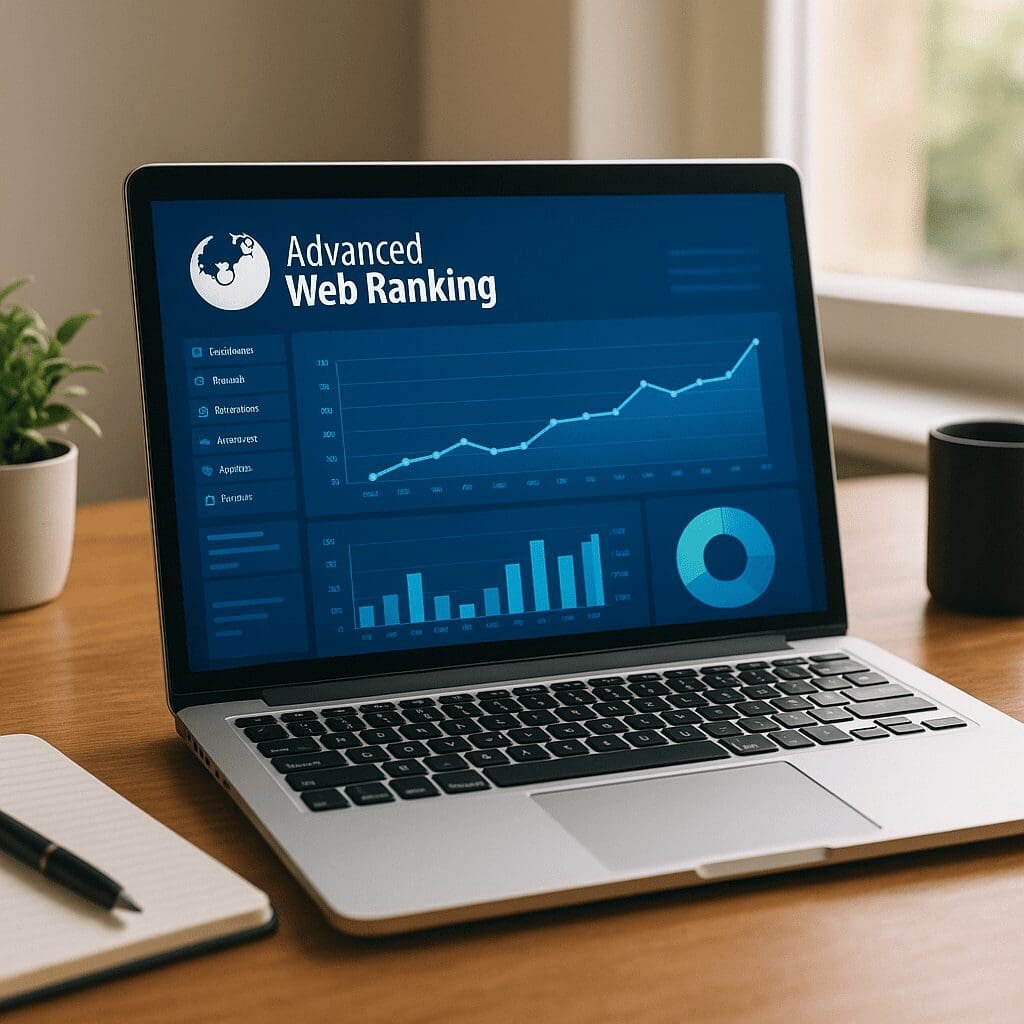
Advanced Web Ranking
Advanced Web Ranking is one of those specialized SEO platforms that earns its keep by doing one thing exceptionally well: measuring how your website ranks, and what those rankings actually mean for visibility, traffic, and strategic decision‑making. Instead of bundling dozens of loosely related tools, it focuses on depth in ranking intelligence and reporting at scale, from hyper‑local tracking to feature‑rich dashboards that help agencies and in‑house teams turn search results into actionable insights. If you need reliable data on positions, competitors, and market share across many locations and devices, it is built to be a dependable core of your measurement stack.
What Advanced Web Ranking is and where it fits in the SEO stack
Advanced Web Ranking (often abbreviated as AWR) is a mature rank tracking and reporting platform used by agencies, enterprises, and ambitious SMBs that care about precision and repeatability. It collects search engine results pages (SERPs), normalizes positions, and transforms them into metrics you can monitor longitudinally—across devices, geographies, and segments of keywords tied to product lines, intents, or markets. The software originated years ago as a desktop application and evolved into a robust cloud service. Today, its value lies in accurate measurements, flexible data slicing, and efficient reporting flows that scale to thousands of keywords and dozens of clients without breaking your processes.
Unlike generalist suites that include everything from backlink crawlers to content ideation, Advanced Web Ranking is intentionally focused. It does not try to be a site auditor or a link database. Instead, it integrates comfortably with other tools and provides the rank and visibility layer that complements your technical SEO, content, and off‑page efforts. This narrower scope is a strength: it allows AWR to deliver strong sampling controls, granular location targeting, and stable historical records that matter when you present trends to executives or clients.
Core capabilities that matter for SEO outcomes
At its heart, Advanced Web Ranking is about rank tracking done properly. That means:
- Tracking positions on Google and other major search engines across countries, regions, cities, and even specific coordinates, which is critical for local SEO.
- Capturing mobile and desktop results separately, since intent, interface, and SERP composition differ by device.
- Identifying and reporting on SERP features such as Local Packs, Featured Snippets, People Also Ask, image results, video carousels, Top Stories, and knowledge panels, along with who owns them.
- Measuring top‑level visibility metrics like share of voice and average position by keyword group, landing page, or competitor set, giving you market perspective instead of just isolated ranks.
- Offering pixel ranking and above‑the‑fold context to reflect how far down the page a result appears, which can be more honest than a pure numeric position in a SERP packed with features.
- Scheduling daily or custom‑interval updates, with options for on‑demand refreshes when you need quick validation after changes or algorithm shifts.
- Robust reporting with branding controls—logos, color schemes, and hosted dashboards—for truly white-label deliverables.
- Integrations, including connectors for Google Search Console and analytics tools, plus Looker Studio templates and an API for data extraction.
All of this is wrapped in a project‑based interface: you define a domain, add keywords, configure where and how to check them (locations, languages, devices), and choose what competitors to monitor. From there, the platform builds timeseries data that can be segmented with tags and filters. The segmentation model is one of the quieter strengths of AWR: the ability to map keyword clusters to strategic initiatives—brand vs. non‑brand, top‑funnel vs. bottom‑funnel, product families, geographies—creates dashboards that answer executive questions fast.
An often overlooked advantage is the fidelity of the SERP snapshots. When a client asks why a rank moved, being able to open the captured SERP, see which features expanded, and verify whether a competitor acquired a Featured Snippet makes for credible storytelling. This traceability reduces guesswork and allows you to propose changes (schema markup, content reformatting, internal links) anchored in the exact conditions a searcher saw.
How it helps SEO in practice: common use cases
- Agency reporting at scale: Create a standard project template, tag sets, and dashboard, then clone for each client. Schedule updates and monthly executive summaries. The consistency and repeatability reduce labor cost and variability across account teams.
- Local and multi‑location businesses: Configure city‑level and even ZIP‑code‑level checks for non‑brand keywords. Audit Local Pack presence and proximity effects. Use segments per store cluster to isolate cannibalization or underperforming areas.
- International SEO: Track by country and language, using separate search engines or ccTLDs as needed. Group keywords by market and roll them up into global visibility reports with market share comparisons.
- E‑commerce: Segment by category pages, product types, and intent stages. Monitor SERP features like product listings and image packs. Tie visibility to revenue using analytics segments for evidence‑based prioritization.
- Content publishers: Watch for Featured Snippet volatility and People Also Ask expansion. Evaluate how content updates influence position stability over longer windows (28, 56, or 90 days) rather than day‑to‑day noise.
- Competitor surveillance: Identify who owns result types that matter, monitor newcomers, and spot shifting strategies (e.g., a competitor wins more snippets after introducing structured data).
Accuracy, sampling, and methodology
Reliable decisions require confident data. Advanced Web Ranking is designed to emulate real‑world searches by aligning to the configured location, device, and language. It collects the SERP, parses organic and feature results, and associates them with your domain and named competitors. The platform’s consistency is more important than perfection: even if a SERP occasionally fluctuates between checks, standardized measurement means the trend line you present is trustworthy. For volatile queries, AWR’s ability to increase update frequency on critical segments mitigates the risk of acting on stale data.
Beyond positional numbers, the platform contextualizes competition by presence and prominence within SERP features. That granularity is useful because an organic position of 3 beneath a Local Pack and a video carousel might be less visible than a position of 5 without any features above it. With pixel or fold measurements, you can calibrate expectations with stakeholders and avoid overpromising traffic from nominal rank improvements.
Getting started: a practical setup blueprint
For teams implementing Advanced Web Ranking for the first time, a streamlined setup ensures meaningful reporting within days:
- Define the project: Pick the primary domain and protocol, and decide whether to include subdomains or specific subfolders to match your SEO lens.
- Add keywords in planned clusters: Brand, non‑brand, intent tiers (informational, commercial, transactional), and product or service families. Tag them immediately.
- Choose locations and devices: Start with your top markets; add city‑level checks for priority local areas. Enable both mobile and desktop where relevant.
- Add competitors: Include direct competitors and SERP competitors (directories, marketplaces, aggregators) that often displace your clicks.
- Set schedules: Run daily for high‑value segments and 2–3 times per week or weekly for lower‑priority clusters. Align schedule to reporting cadence.
- Create dashboards: One executive summary with visibility, market share, and changes; one operational dashboard for SEO managers with keyword movements, feature wins, and landing page mapping.
- Alerts and annotations: Enable movements greater than chosen thresholds and annotate release dates, migrations, or campaigns to read the timeline accurately.
- Integrations: Connect Search Console and your analytics platform for landing‑page validation and to sanity‑check whether visibility shifts correlate with clicks.
Interpreting metrics and avoiding common mistakes
Rank is a means, not an end. Teams get more from Advanced Web Ranking when they translate metric shifts into hypotheses and incremental tests. A few principles help:
- Visibility beats raw position: Use visibility or share of voice to compare segments and markets. It reflects real SERP composition and is easier to understand in a boardroom.
- Segment relentlessly: A single blended average hides meaningful differences between brand and non‑brand growth. Separate by intent and page type to tie work to outcomes.
- Track features as levers: If a competitor captures a Featured Snippet, study their formatting, headings, and schema. Consider revising your content to target that feature rather than chasing a one‑position organic gain.
- Validate with landing pages: Map keyword groups to landing pages and check whether ranking improvements align with the pages you actually want to rank. Misalignment signals internal linking or intent mismatch.
- Watch cannibalization: If multiple pages compete, rank instability is common. Use AWR’s page‑level views to consolidate or differentiate content.
- Measure at the right cadence: Daily checks are valuable for volatile SERPs and experiments, but weekly aggregates are often better for strategy reviews.
Reporting that clients and executives actually read
The best report is one that gets attention. Advanced Web Ranking makes it straightforward to build a consistent, branded view with trend highlights and minimal noise. A proven structure:
- Headline KPIs: visibility, organic share across the competitive set, and top winners/losers this period.
- Market narrative: a short note on SERP changes—more video results, Local Pack volatility, or snippet reshuffling—and what you plan to test next.
- Segment drill‑downs: product lines, intent levels, and geographies with movements, including which pages drove improvements.
- Action items: the three changes that matter next month, tied to expected impact (e.g., restructure FAQ to target People Also Ask on high‑volume cluster).
Because the platform supports scheduling and shareable links, you can standardize the format for each client or business line, reduce manual work, and keep a clean audit trail. If your organization favors business intelligence tools, exporting data or piping it via the API into Looker Studio lets you blend rankings with revenue, inventory, or lead data for richer insights.
Strengths, limitations, and where it beats all‑in‑one suites
Strengths include:
- Depth in rank intelligence: granular locations, device separation, and exhaustive SERP feature tracking.
- Scalability: handles large keyword sets and multiple projects with predictable performance.
- Reporting flexibility: branded dashboards, scheduled PDFs, CSV exports, and data connectors for BI teams.
- Operational stability: consistent update schedules and repeatable processes, ideal for agencies and large in‑house teams.
- Historical continuity: long‑term trend tracking that supports meaningful retrospectives after site migrations or redesigns.
Limitations to consider:
- No built‑in backlink index or site crawler that rivals specialized platforms; pair it with your preferred crawl and link tools.
- Rankings are proxies for traffic; always validate assumptions with click data and revenue to avoid optimizing for vanity metrics.
- High granularity can be overkill for small sites; without disciplined segmentation, dashboards may overwhelm.
Against broad suites, Advanced Web Ranking stands out for consistent measurement, precise scope control, and superior presentation of rank, feature ownership, and market share. If you already rely on separate tools for crawling and links, AWR fills the measurement gap without duplicating features or inflating software overlap.
A week in the life: example workflow for teams
Many successful teams run a simple cadence built around Advanced Web Ranking:
- Monday: Review weekend anomalies and confirm annotations for any releases. Check high‑priority segments for feature volatility.
- Tuesday: Deep dive into underperforming clusters; compare landing pages and assess content gaps; open SERP snapshots to see what changed.
- Wednesday: Prepare a mini‑report for stakeholders with top movements, causes, and planned actions. Update internal tickets for content or technical teams.
- Thursday: Competitor check—who gained ground and how (snippet wins, different schema, improved intent alignment)?
- Friday: Sanity‑check next week’s experiment list and confirm measurement windows and dashboard views.
This rhythm keeps the team focused on incremental wins while still surfacing strategic shifts. Because the tool emphasizes automation in data collection and reporting, more time goes to analysis rather than manual collation.
Advanced tactics to extract more value
- Create intent‑based segments with clear business attachment (e.g., informational guides vs. money pages). Compare visibility and conversion contribution side by side.
- Build city clusters for regional programs and assign each cluster a baseline visibility target to facilitate realistic, phased goals.
- Use page‑level mapping to detect cannibalization and coordinate with internal link updates or canonical adjustments.
- Overlay analytics or Search Console data to validate that rank uplifts drive real clicks; revise CTR expectations for SERPs heavy with visual features.
- Track snippet opportunities by querying who owns them and filtering by queries with coverage gaps in your content library.
- Run “competitor deltas” each month: identify net movers in your space and audit two or three of their pages to reverse‑engineer format changes.
Does Advanced Web Ranking really help SEO?
Yes—when used as intended. The platform’s role is to make your measurement both credible and insightful. Credible means repeatable, explainable, and resistant to cherry‑picking. Insightful means you can quickly connect shifts in position and SERP features to hypotheses about content, technical structure, and internal linking. That combination makes it easier to prioritize work with real opportunity cost in mind.
The impact is clearest in organizations that operate across many markets or product lines. Without a rank intelligence system, teams either drown in spreadsheets or debate data quality rather than strategy. With Advanced Web Ranking, you standardize how you look at visibility and competitive dynamics, freeing up attention for experiments and content improvements that actually move the needle.
Who benefits most—and who might not need it yet
Advanced Web Ranking shines for:
- Agencies managing multiple clients who demand transparent, branded reports and dependable update schedules.
- Enterprises with large keyword portfolios, complex geographies, or multiple business units with separate dashboards.
- Local‑first companies competing in dense, proximity‑sensitive markets that require granular location checks.
Smaller websites with a narrow keyword set may do fine with Search Console trends and occasional manual checks until their program matures. Once reporting overhead grows or local and international complexity enters the picture, the benefits of AWR’s structure and accuracy begin to outweigh the learning curve.
Performance, support, and usability
Because rank tracking often runs in the background, performance shows up as reliability: projects update when scheduled, reports arrive on time, and SERP captures are complete. That stability is where Advanced Web Ranking is strongest. The interface emphasizes clarity over flash, which is an advantage for account teams who need to onboard new analysts without weeks of training. Documentation and support resources are aligned with practical questions—how to set local packs correctly, why a specific keyword shows device divergence, or how to interpret a visibility swing after a feature reshuffle.
Ethical and compliance considerations
Modern rank tracking must respect search engine terms and user privacy. Advanced Web Ranking operates as a cloud service designed to collect public SERP data while isolating customer projects and access. Teams responsible for compliance should review data retention settings, user permissions, and project‑level sharing to ensure only intended stakeholders access sensitive dashboards. Because the platform tends to integrate with first‑party data (analytics and Search Console), your organization can maintain a clear data lineage and audit trail.
Pragmatic advice for adoption and ROI
- Start with fewer, better segments: Resist the urge to track everything at once; prioritize high‑impact clusters and add breadth later.
- Tie each segment to a business owner: Make it clear who is accountable for analysis and action on a segment’s movements.
- Standardize annotations: Releases, migrations, and campaign starts should be marked uniformly across projects.
- Limit vanity metrics: Orient executive reports around visibility and market share, not single‑keyword wins.
- Automate delivery: Schedule reports to the right stakeholders and time them to internal meetings to ensure they are read.
Opinionated verdict
Advanced Web Ranking succeeds by taking a disciplined approach to a deceptively difficult problem: turning constantly changing search results into stable intelligence. It is not a do‑everything SEO suite, and that is a feature rather than a flaw. If your team needs dependable rank measurement, rigorous segmentation, and polished reporting that scales, AWR is a smart investment. Pair it with a crawler, a link index, and your analytics platform, and you have a cohesive toolkit that covers strategy, execution, and measurement without redundant overlap.
Most importantly, the platform encourages better SEO behavior. By highlighting where SERP features siphon attention, by surfacing market share instead of fixating on averages, and by making it simple to communicate trends and hypotheses, Advanced Web Ranking pushes teams toward experimentation and clarity. In a landscape where visibility can hinge on the nuance of a snippet or the distance between a result and the fold, that clarity is a competitive advantage that compounds over time.
Used well, Advanced Web Ranking saves hours of manual checking, strengthens client and stakeholder confidence, and focuses discussions on what matters: which improvements will generate meaningful gains in visibility and, ultimately, business outcomes. That is the kind of value any serious SEO program should demand from its tools.
Key terms highlighted in this review: rank tracking, local SEO, SERP features, share of voice, pixel ranking, white-label, automation, accuracy, Looker Studio, API.