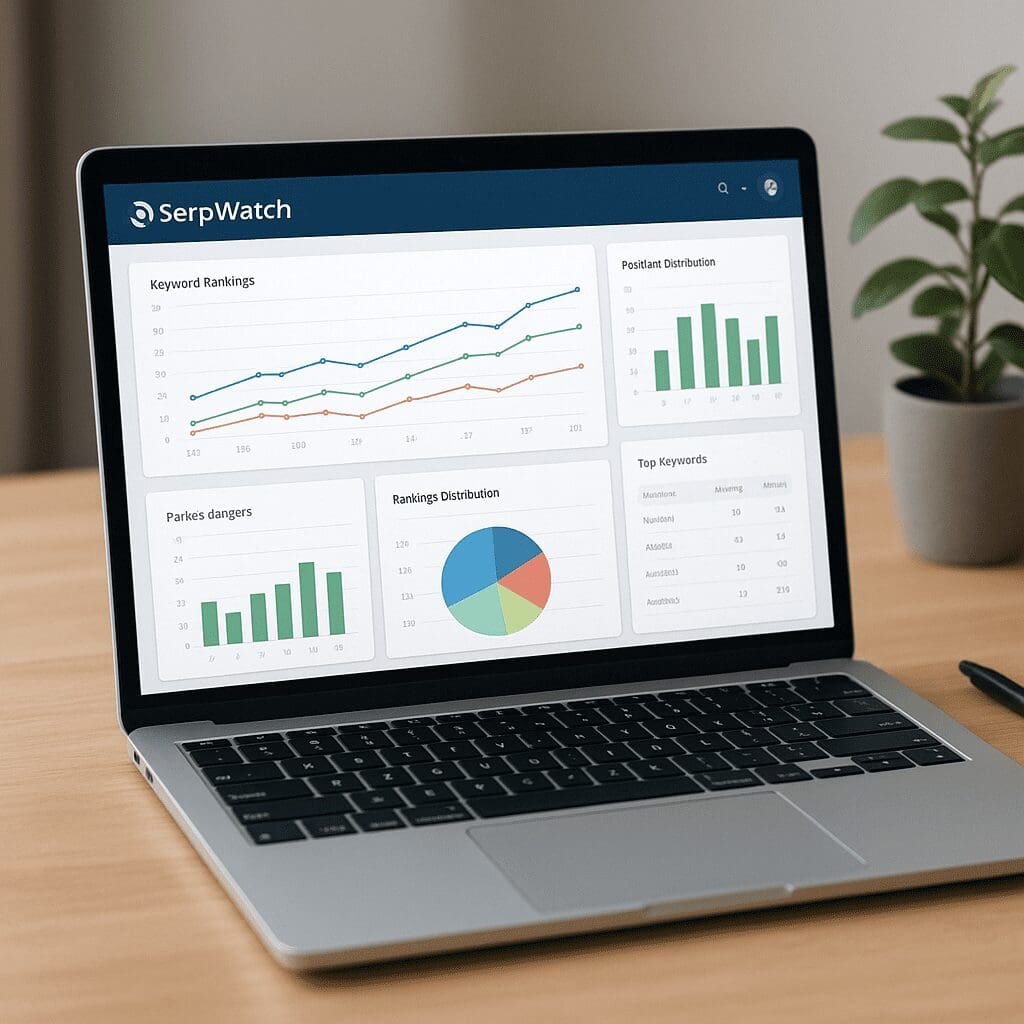
SerpWatch
SerpWatch is a focused rank tracking platform built for people who live and breathe organic performance. Instead of trying to be a do‑everything suite, it excels at one essential discipline: monitoring how your pages move across Google’s results and making those movements actionable for teams, clients, and stakeholders. If your work depends on knowing which keywords are rising, which pages are slipping, and where search features are stealing clicks, SerpWatch offers a clear, opinionated workflow that turns raw ranking data into operational decisions you can communicate and defend.
What SerpWatch Is and What It Does Well
At its core, SerpWatch collects daily (and often more frequent) ranking snapshots for the keywords you care about, across devices, geographies, and languages. You organize keywords into projects, map them to domains or specific URLs, and define the markets you need to monitor. From there, the system tracks positions, detects changes, and highlights the context around those changes—SERP features, competitor movements, and volatility—so you can separate random noise from meaningful signals.
Where the platform differentiates itself is clarity and control. You can set thresholds for movement that actually matter to your business—such as “Top 3 gains/losses,” pixel shifts that affect above‑the‑fold presence, or delta triggers for keywords tagged as high‑value. You can annotate events (site releases, content updates, link launches) so later you can relate performance changes to known causes. You can share read‑only dashboards with clients, export white‑label reports, and pipe notifications to your team’s communication tools. The experience is built around doing rank tracking properly, not as an afterthought.
- Granular tracking by location (country, city, sometimes ZIP) and device (desktop vs. mobile) to reflect real user contexts.
- Tagging and grouping to structure keywords by funnel stage, topic cluster, intent, or business unit.
- Competitor monitoring at the keyword or project level, with side‑by‑side trend lines.
- SERP feature awareness (e.g., featured snippets, People Also Ask, local packs) to understand click dynamics beyond blue links.
- Shareable dashboards and scheduled reports for clients and executives.
- Flexible notifications and webhooks so your workflows can react instantly to changes.
Put simply, SerpWatch is built for practitioners who need clean, dependable rank data and enough context to make every movement actionable.
Does SerpWatch Help With SEO Outcomes?
Yes—indirectly but meaningfully. Rankings themselves are not business outcomes; they are leading indicators. SerpWatch helps you manage those indicators with discipline so that your work influences downstream metrics like conversions and revenue. When used as the single source of truth for ranking trends and SERP context, the tool accelerates prioritization, validates hypotheses, and supports cross‑functional decisions.
- Prioritization: Tag high‑revenue keywords and monitor them separately from discovery queries. When a high‑value page drops, SerpWatch makes sure you see it first.
- Experimentation: Annotate title/meta changes, content refreshes, and internal‑link updates. Monitor the post‑change trend to evaluate impact without survivorship bias.
- Issue detection: Spike alerts can indicate crawling/indexing hiccups, accidental noindex, template regressions, or cannibalization events long before traffic reports catch up.
- Stakeholder alignment: Shareboards and scheduled summaries reduce status meetings, while consistent visualizations prevent metric drift across teams.
- Local and mobile nuance: Device and geo segmentation reveals mismatches between your assumptions and real‑world visibility, essential for brick‑and‑mortar and hybrid brands.
In practice, teams that operationalize SerpWatch tighten their feedback loops: they ship changes, measure movement, learn, and repeat. That loop is what drives sustainable search growth.
Getting Started: A Practical Workflow
1) Define scope and measurement rules
Before adding keywords, decide what you want to learn. Will you track only commercial pages or include editorial content? Do you need multiple markets? Which competitors matter? Establish naming conventions for projects and tags, select devices and locations that reflect your buyers, and set alert thresholds that correspond to meaningful changes (e.g., a drop from 4 to 11 is urgent; 27 to 34 is noise).
2) Build your keyword sets thoughtfully
Import keywords grouped by intent and map them to canonical target URLs where possible. Tag the set by funnel stage, product line, and region. This structure pays dividends in reporting: it lets you see movement for the segments that actually mirror your business.
3) Configure notifications and dashboards
Decide who needs to know what, and when. Product managers may need weekly summaries; account teams may want instant pings when trophy terms move. Create dashboards tailored to each audience, and share public links so no one waits for a custom export.
4) Operate with annotations
Treat annotations as part of your deployment checklist. Every noteworthy content change, template update, or technical fix should be logged. Later, when ranks shift, you will be able to draw defensible connections instead of guessing.
What the Data Means: Quality, Noise, and Interpretation
Rank tracking is challenging because Google’s results vary by location, language, device, and personalization. SerpWatch addresses this by using neutral, location‑specific queries and consistent user agents to minimize bias. Still, data is a model of reality, not reality itself. You should expect some variance day to day, especially for mid‑tail queries in volatile niches.
- Use medians and rolling averages to smooth noise.
- Monitor Top 3 and Top 10 coverage alongside average position; both stability and breadth matter.
- Watch SERP features that suppress clicks even when rank is stable; sometimes “holding position” equals losing traffic.
- Segment by device: mobile results often contain different features and competitors.
- Treat sudden, portfolio‑wide shifts as potential technical issues rather than “ranking changes.”
SerpWatch’s contextual panels—who entered/leaving SERPs, which features appeared/disappeared, how volatility changed—help you interpret whether movement reflects competitor action, algorithmic turbulence, or your own site changes. Those interpretations are where real value is created.
How SerpWatch Compares to Other Tools
Against all‑in‑one platforms, SerpWatch is more focused and often faster for rank‑related tasks. It avoids the bloat that can make routine monitoring feel heavy. Against specialist rank trackers, it holds its own on fundamentals and tends to shine in usability and alerting flexibility. It may not replace your crawler, your backlink database, or your keyword research platform; it is best as the ranking source in a modern toolkit that also includes analytics, Search Console, and a technical scanner.
Strengths include streamlined setup, reliable tracking at meaningful granularity, readable reporting, and flexible notifications. Weaknesses are typical of focused tools: minimal native keyword research, limited non‑Google engines in some plans, and reliance on external tools for link and technical diagnostics. If you need one pane of glass that does everything, look elsewhere; if you want a crisp, dependable rank‑tracking nucleus, SerpWatch belongs on your shortlist.
Pricing, Value, and ROI Thinking
The economics of rank tracking are straightforward: you pay primarily for the volume and frequency of keywords tracked, sometimes for additional users, projects, or data retention. The ROI case centers on risk management (catching damaging drops fast), focus (prioritizing work that moves needles), and credibility (evidence for stakeholders). For agencies, white‑label deliverables and reliable trend lines support retention and upsell; for in‑house teams, the reduction in firefighting and misallocated effort often pays for the seats and keywords many times over.
- Define a core keyword set that must be tracked daily, and an experimental set that can be sampled less frequently to control costs.
- Align alert thresholds with revenue sensitivity by segment; avoid sending low‑value noise to senior stakeholders.
- Audit regularly: remove dead queries, consolidate duplicates, and refresh long‑tail lists quarterly.
Use Cases Across Team Types
Agencies
SerpWatch’s shared dashboards and templated reports make it easy to communicate value without drowning clients in data. Tagging by landing page and intent supports narrative reporting—“we grew Top 3 coverage for transactional queries by 14% this quarter”—while annotations back those claims with a timeline of actions.
Ecommerce and marketplaces
Device and feature‑aware tracking helps product and category pages compete in crowded spaces where review carousels, ads, and shopping units restrict organic real estate. Monitoring prize categories daily prevents costly blind spots during promotions and seasonal peaks.
Local and multi‑location brands
Geo‑granular tracking reveals the real picture across service areas where pack rankings and proximity heavily impact discovery. Combined with GMB/GBP optimization, SerpWatch can be the early warning system that keeps storefront visibility healthy.
Publishers and content teams
Topic‑cluster tags, featured‑snippet tracking, and competitor movement views enable disciplined content refresh cycles. Teams can quickly see where to expand, prune, or consolidate articles to defend share and capture new angles.
Limitations and What We’d Like to See
No rank tracker is perfect, and SerpWatch is no exception. It is not a crawler or log analyzer, so you will still need technical tools to diagnose rendering, indexing, and internal link flow issues. While it recognizes major SERP features, coverage can vary by market and niche; cross‑checking with Search Console remains essential for clicks and impressions. As a focused platform, it may defer deeper keyword expansion, backlink evaluation, and content scoring to your broader stack.
- Deeper cannibalization insights that spotlight conflicting URLs per query over time.
- Share‑of‑voice models that weight ranks by estimated CTR and feature presence.
- Richer API and webhook options for custom pipelines and data lakes.
- Programmatic annotations via deployments to keep timelines perfectly synchronized.
- More fine‑grained volatility diagnostics by topic and intent.
Even with these gaps, the current feature set covers the essential jobs to be done for professional rank monitoring. The requests above are more about elevating already strong workflows than fixing critical holes.
Practical Tips to Get More From SerpWatch
- Model keyword sets after your site architecture. Mirror your sections and product lines so reporting maps directly to owners.
- Set different alert policies for different tags. A drop in brand queries deserves a rapid, loud alarm; long‑tail research terms can be digested weekly.
- Use device splits aggressively. Many “mystery” drops are mobile‑only or tied to new SERP modules that appear first on phones.
- Map target URL intent. If rankings climb but land on the wrong URL, annotate and fix internal links or content alignment to win the right traffic.
- Benchmark competitors explicitly. Pick two or three per cluster and track their movement; don’t rely on ad‑hoc manual checks.
- Clean your sets monthly. Remove deprecated pages, consolidate near‑duplicates, and add terms from Search Console that meet your threshold.
- Tie reporting to business milestones. Quarterly summaries should connect ranking outcomes to releases, campaigns, and revenue events.
Opinionated Verdict
SerpWatch is a sharp instrument for teams that value dependable rank data, actionable context, and frictionless communication. It won’t replace your crawler or your backlink index, and it doesn’t pretend to. Instead, it gives you a precise, low‑drag workflow for the part of the job where many suites underperform: turning rank movements into decisions. In hands that operate with clear tagging, disciplined annotations, and thoughtful alerting, SerpWatch becomes the heartbeat monitor of organic performance—steady when you’re stable, urgent when trouble strikes.
If your current stack buries rank tracking behind layers of menus, or if you’re tired of reports that conflate vanity metrics with real indicators, give SerpWatch a trial with a carefully designed keyword set and a strict alert policy. The platform’s strength is not only in the data it collects but in how it helps you notice what matters, ignore what doesn’t, and communicate with confidence.
Final Take: Where SerpWatch Fits in a Modern SEO Stack
Run SerpWatch alongside Search Console, analytics, a site crawler, and a content planning tool. Treat it as the canonical record of ranking trends and SERP context, the same way a good APM tool is the canonical record of application health. Its job is to surface actionable movement and to align teams with a shared understanding of what changed and when. Do that, and you will make faster decisions, waste less time, and protect the compounding returns of organic growth.
Used this way, SerpWatch strengthens the fundamentals: disciplined measurement, operational responsiveness, and clear communication. Those fundamentals are how elite teams turn search from a guesswork channel into a reliable growth engine.
Key concepts this tool sharpens for practitioners include SEO fundamentals, SERP context, change‑driven automation, measurement accuracy, decision‑grade insights, operational scalability, proactive alerts, workflow integration, organic visibility, and executional strategy.