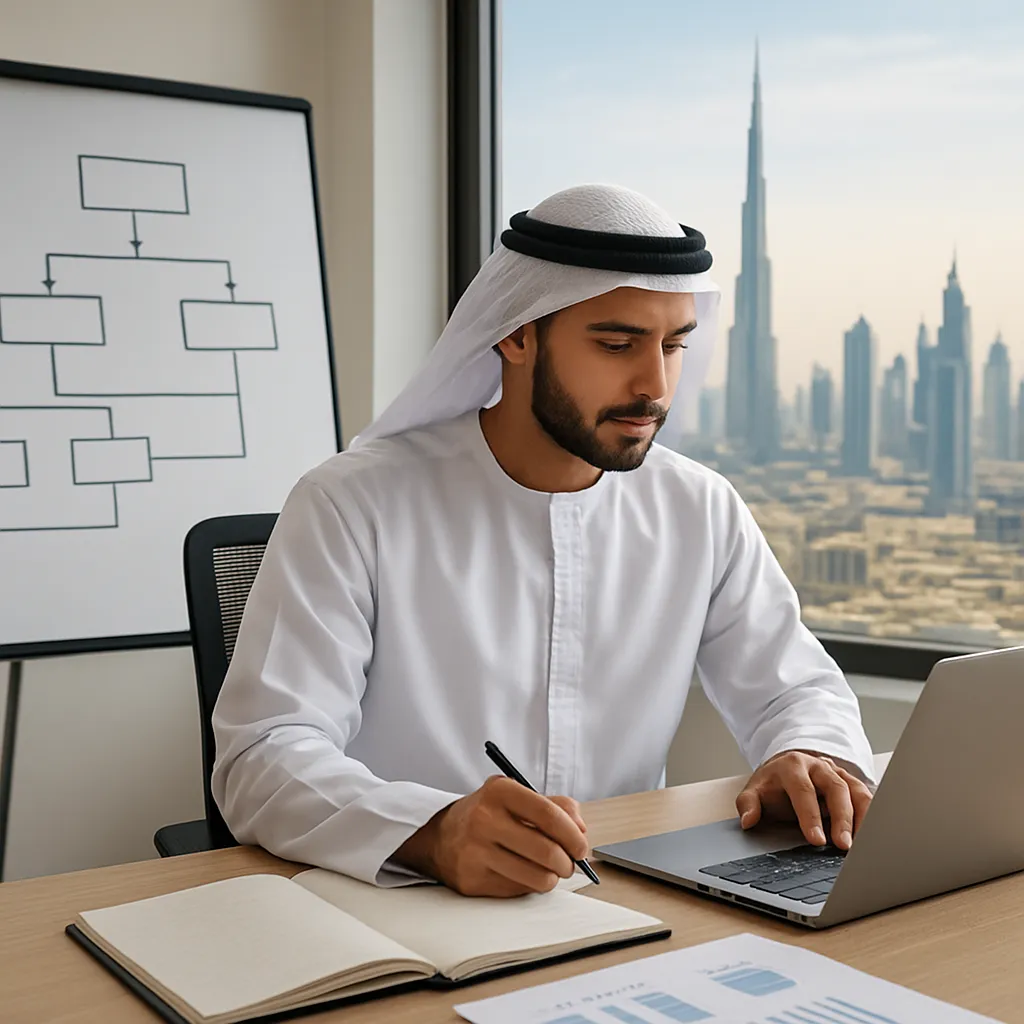
How to Build an SEO Roadmap for Dubai Companies
Companies in Dubai operate in one of the most competitive digital landscapes in the world, where rapid growth, multicultural audiences and strong purchasing power meet cutting‑edge technology. An effective SEO roadmap is not just a technical checklist but a strategic plan that connects search visibility with business goals such as lead generation, bookings, store visits or international expansion. Building that roadmap for Dubai companies requires understanding local search behavior, Arabic and English content dynamics, and the nuances of doing business in the UAE.
Understanding the Dubai Search Landscape
Dubai is a hub for tourism, real estate, finance, logistics, luxury retail and technology. Each of these sectors has its own search patterns, seasonality and level of competition. Before designing any roadmap, the company must map how people in Dubai discover products and services online.
According to regional data from multiple marketing reports, more than 95% of search traffic in the UAE comes from Google. This makes Google the primary focus for SEO, although Bing and emerging search options should not be completely ignored in B2B niches. Mobile usage is particularly strong: UAE mobile internet penetration has been reported at over 95%, which means most searches, especially Arabic ones, are made on smartphones. Any roadmap that does not treat mobile optimization as a core pillar is incomplete.
Another defining feature of Dubai is the linguistic mix. English dominates for B2B services, expatriate audiences, tourism and luxury segments, while Arabic holds a strong position among government services, public sector, local consumers and GCC visitors. For many categories, people search both in English and Arabic, often switching between languages in the same session. This creates a powerful opportunity: brands that invest in both languages and local cultural references can outperform competitors who limit themselves to a single language.
Dubai is also a market with high intent search terms. In sectors such as real estate, hospitality and healthcare, a large percentage of queries demonstrate transactional or commercial intent: “best dermatologist in Dubai,” “luxury villa for rent in Dubai Marina,” “family hotel near Dubai Mall,” “VAT consultant in Dubai.” For such queries, organic visibility has a direct impact on revenue. Various industry studies show that the first organic result can capture 25–35% of clicks on average, while the first page typically captures more than 90% of all clicks. Being visible on that first page is therefore a prerequisite for serious growth.
To build a roadmap, marketers must start with a clear picture of search demand, user behavior and competitive intensity. This foundation allows Dubai companies to set realistic expectations for traffic growth and link SEO investments to measurable business outcomes.
Step 1: Define Clear Business and SEO Objectives
Every SEO roadmap in Dubai should begin with strategic alignment. Instead of jumping straight to keywords, clarify what the business must achieve within the next 6–24 months. Dubai’s fast‑moving economy rewards companies that tie SEO targets directly to commercial goals.
Common objectives for Dubai companies include lead generation for B2B services, direct bookings for hotels and attractions, property enquiry growth for real estate, e‑commerce sales for fashion or electronics, or walk‑in customers for clinics, gyms and restaurants. For each objective, a set of SEO Key Performance Indicators (KPIs) should be defined, such as organic sessions, non‑branded impressions, conversion rate, revenue from organic traffic, and specific rankings for strategic keywords like “Dubai lawyer,” “Dubai interior design,” or “Dubai warehouse rental.”
Dubai’s business owners and marketing directors often ask how quickly SEO can deliver results. The answer depends on the starting point, competition and resources. In sectors like niche B2B services, significant progress can sometimes be seen in 4–6 months. In hyper‑competitive verticals such as real estate or luxury hospitality, solid results may take 9–18 months, especially if the website is new or technically weak. The roadmap must therefore include realistic milestones and a sequence of priorities for each quarter.
A helpful approach is to divide SEO targets into three levels. The first level is visibility and technical health: indexation, crawl efficiency, mobile usability, site speed, correct implementation of canonical tags, structured data and hreflang where needed. The second level is demand capture: ranking for high‑intent keywords, improving click‑through rates from search results, and reducing bounce rates. The third level is demand creation and brand building: content that establishes authority, thought leadership, and long‑term trust in Dubai and the wider GCC region.
Once objectives and KPIs are established, the roadmap can prioritize actions that will have the most direct impact on those objectives. For a Dubai clinic trying to increase bookings, the roadmap might emphasize local SEO and medical content. For a real estate developer, the focus may be neighborhood guides, investment content and international SEO for audiences in Europe and Asia who search for Dubai property from abroad.
Step 2: Conduct Deep Market and Keyword Research for Dubai
Keyword research for Dubai requires more nuance than simply collecting high volume phrases. An effective roadmap uses keywords as a lens into user intent, language preference and local context. The goal is to build a structured understanding of how people search for your services in this city and across the UAE.
Start with segmentation by language. Identify relevant English and Arabic keywords, noting which ones show mixed results (pages in both languages) and which are dominated by one language. A property management company may find that “property management Dubai” and related terms are primarily in English, while Arabic searches focus more on residential queries and government regulations. Creating targeted content for each audience segment is more effective than trying to rank a single generic page in both languages.
Next, map search intent along the funnel. At the top of the funnel, users search for information: “how to start a business in Dubai,” “cost of living in Dubai,” “Dubai visa types,” “best areas to stay in Dubai with kids.” In the middle, they compare options: “free zone vs mainland company Dubai,” “Downtown vs Dubai Marina hotel,” “best digital marketing agency in Dubai.” At the bottom, they are close to conversion: “book desert safari Dubai,” “Dubai business setup consultant,” “buy townhouse in Arabian Ranches.” Your roadmap should align content and landing pages with each stage, ensuring that the site captures value from first discovery to final decision.
Competitive analysis is essential. Many Dubai industries are dominated by a mix of local champions and global brands, such as hotel chains, airline groups and multinational banks. Analyze the top ranking pages for your target keywords: what type of content do they provide, how comprehensive is it, how fast do the pages load on mobile, and what kind of backlinks do they have? This will tell you the minimum level of quality required and highlight opportunities where competitors are weak.
Another critical aspect is geo‑specific modifiers. In Dubai, people frequently search using neighborhood names, malls, landmarks and free zones. Phrases such as “car rental Dubai Marina,” “clinic Jumeirah,” “restaurant near Burj Khalifa,” or “office in JLT free zone” indicate a high location intention. A robust roadmap will include content and structured data to cover key districts like Downtown Dubai, Dubai Marina, JLT, Business Bay, Deira, JVC and others that are relevant to the business.
Through this detailed research, you can build a keyword universe grouped by topic clusters and intent. Each cluster then becomes a mini‑project in the roadmap, with its own content plan, internal linking strategy and performance targets.
Step 3: Audit and Optimize Technical Foundations
Technical SEO is the base of any roadmap, particularly in Dubai where companies often rely on visually rich websites with animation, video backgrounds and complex booking or enquiry forms. These elements, while attractive, can slow down pages and harm mobile performance if not implemented carefully.
A thorough technical audit should examine crawlability, indexation, site architecture, page speed, mobile responsiveness, structured data and security. Many Dubai websites struggle with large, uncompressed images, heavy JavaScript frameworks and multiple tracking scripts that slow down load times. Given the high usage of mobile data connections and the importance of Core Web Vitals for Google rankings, the roadmap must introduce regular performance optimization tasks.
Multilingual sites add another layer. If your site targets both English and Arabic speakers, proper hreflang implementation is crucial. Without it, Google may serve the wrong language version to users in the UAE or abroad. The roadmap should include clear rules for URL structures, language toggles, and meta tags, ensuring that search engines understand which content version to display to which audience.
For local businesses in Dubai, technical optimization of local business data is also essential. Schema markup for LocalBusiness, Organization, Product and Service can improve rich results and enhance visibility in local packs. Correct NAP (Name, Address, Phone) consistency across the site, Google Business Profile and key local directories supports stronger local rankings.
Security and compliance should not be overlooked. Dubai businesses that handle payments or personal data need SSL encryption and robust security practices. Search engines now treat HTTPS as a baseline expectation, and users are unlikely to trust a site that shows browser warnings. Additionally, performance and security improvements can reduce bounce rates and increase conversion rates, amplifying the impact of the entire SEO roadmap.
Step 4: Design a Content Strategy for Dubai Audiences
Content is the engine that drives long‑term SEO results, especially in a city where many sectors are saturated with advertising and paid media. An effective content strategy for Dubai must blend global best practices with local relevance and cultural sensitivity.
Begin with defining the main topic clusters that align with your products and your audience’s questions. For a Dubai hotel, clusters might include “Dubai attractions,” “family travel,” “business travel,” “restaurants near our location,” and “event venues.” For a corporate services firm, clusters could revolve around “business setup,” “visa services,” “tax and compliance,” “free zones” and “expansion to Saudi Arabia.” The roadmap should schedule the creation or optimization of pillar pages for each cluster along with a set of supporting articles.
Local insight is particularly valuable. When content references well‑known areas like City Walk, Bluewaters, Dubai Hills, or Expo City, it signals to users and search engines that the brand understands the city in depth. Guides that explain processes under UAE law, or compare different free zones, are especially powerful for B2B audiences who are evaluating Dubai as a regional base.
Building authority also requires showcasing expertise. In the finance, legal, healthcare or construction sectors, this can involve case studies, whitepapers, detailed FAQs and interviews with senior specialists. Such content improves trust signals and earns natural backlinks from industry publications. Over time, this contributes to domain authority, which remains a strong predictor of SEO performance regardless of algorithm changes.
Content formats should adapt to the highly visual and mobile‑first preferences in Dubai. While long‑form articles rank well, the roadmap should include multimedia assets such as images, videos and interactive tools, all optimized with descriptive alt text, captions and schema where relevant. Tourism and real estate brands, in particular, benefit from virtual tours, neighborhood videos and visual comparison tools, which increase dwell time and engagement.
Finally, the content strategy must respect cultural norms and sensitivities. Festivals such as Ramadan, Eid and National Day shape consumer behavior and search patterns. Roadmaps that prepare tailored content and campaigns around these periods can capture significant incremental demand. At the same time, messaging should align with local regulations and cultural expectations to avoid reputational risk.
Step 5: Strengthen Local and Regional Presence
Although Dubai companies often have global ambitions, winning the local battle is essential. Local SEO ensures that a business appears when people nearby look for services on Google Maps or include “near me” in their queries. For hospitality, clinics, retail, F&B and fitness brands, local visibility frequently drives a substantial portion of revenue.
The roadmap should include the creation or optimization of Google Business Profiles for every location. Complete profiles with correct categories, high‑quality images, detailed descriptions and up‑to‑date opening hours perform better. Managing reviews is also key in Dubai, where consumers pay close attention to online ratings. A process for responding to feedback, encouraging satisfied customers to leave reviews, and addressing negative experiences must be integrated into ongoing operations.
Local citations in Dubai‑specific directories and industry portals further reinforce presence. Listings on regional sites for real estate, healthcare, business setup or events can improve both referral traffic and search authority. For example, being featured in reputable Dubai business directories or local magazines can generate backlinks while reaching targeted audiences.
Regional expansion is another dimension. Many Dubai companies serve or plan to serve neighboring markets such as Abu Dhabi, Sharjah, Saudi Arabia, Qatar and Oman. Your roadmap should decide whether to use subfolders, subdomains or separate country domains, and then design content plans for each market while maintaining strong technical consistency. Hreflang markup, localized currency and tailored messaging become more important as the brand extends beyond Dubai.
Step 6: Build Authority Through Strategic Link Acquisition
Backlinks remain one of the strongest signals of authority for search engines. In Dubai’s crowded sectors, where many companies have slick websites and professional branding, links often make the difference between ranking on the second page and the top three results.
An ethical, long‑term link acquisition strategy should focus on quality and relevance, not volume. The roadmap can outline initiatives such as partnerships with local chambers of commerce, sponsorship of Dubai events, collaborations with influencers, and contributions to industry publications. For example, a logistics firm might publish research on trade flows through Jebel Ali Port, then pitch that research to transport magazines and business news outlets, earning links as a result.
Content that provides unique data or local insights tends to attract more links naturally. Dubai’s status as a global hub means that international media frequently seek region‑specific information on tourism, property prices, innovation and sustainability. Companies that can supply reliable data or expert commentary have a built‑in advantage.
The roadmap should also include internal linking improvements. Many Dubai websites have fragmented structures with orphan pages and weak connections between topics. A clear internal linking plan helps distribute link equity across important pages, making it easier for them to rank. This is particularly important for large sites such as classifieds, job platforms or online marketplaces that operate in the UAE.
It is also wise to monitor and clean up potentially harmful links from low‑quality sources. Although search engines have become better at ignoring spam, a regular review of the backlink profile helps maintain a healthy authority signal and reduces risks from algorithm updates.
Step 7: Plan Measurement, Reporting and Continuous Improvement
An SEO roadmap for Dubai companies is not a static document; it is a living plan that evolves with data and market conditions. To manage it effectively, marketers must define measurement frameworks and reporting routines from the start.
At minimum, the roadmap should align with analytics tools like Google Analytics, Google Search Console and preferred SEO platforms. Tracking must be configured to attribute leads, bookings or sales to organic traffic accurately. For Dubai businesses with offline conversions, such as real estate showings or clinic visits, processes should be put in place to connect digital enquiries with final outcomes wherever possible.
Reporting should be structured around business questions, not just SEO metrics. Instead of only listing rankings, traffic and impressions, dashboards should highlight how organic channels contribute to revenue, market share in key verticals, and cost savings compared to paid acquisition. Many Dubai companies invest heavily in PPC and social ads; a well‑structured SEO program can gradually reduce the cost per acquisition by bringing in high‑intent traffic without constant media spend.
Quarterly roadmap reviews are especially useful. These sessions can evaluate which initiatives produced the best returns, which content clusters gained traction, and where technical or UX bottlenecks remain. Based on these insights, the roadmap can be re‑prioritized: doubling down on effective tactics, exploring new content angles or allocating more resources to promising international markets.
Regular testing should also be part of the plan. Dubai’s diverse audience responds differently to language, imagery and messaging. A/B testing of title tags, meta descriptions, calls to action and landing page layouts can reveal patterns that increase click‑through and conversion. Over time, these incremental gains compound, turning a solid SEO roadmap into a sustainable growth engine.
Aligning SEO with the Broader Digital Marketing Mix in Dubai
SEO rarely exists in isolation. Dubai companies typically run integrated campaigns across paid search, social media, influencer marketing, PR and offline events. A strong roadmap clarifies how SEO supports and benefits from these channels.
Paid search campaigns can provide valuable data on which keywords convert at the highest rates, feeding this intelligence back into organic content efforts. Social media campaigns around launches, festivals or major exhibitions like GITEX or Dubai Airshow can amplify new content and generate links and mentions. PR coverage and industry awards can be leveraged to secure authoritative backlinks and brand signals.
Because Dubai is highly event‑driven, with a calendar full of trade fairs, sports events and cultural festivals, planning SEO content and technical updates around these peaks can magnify impact. For example, a hotel can prepare optimized landing pages for Expo‑related stays, New Year’s Eve packages near Burj Khalifa or special events at Dubai World Trade Centre, ensuring that organic visibility is strong before demand spikes.
All these efforts reinforce each other. As organic visibility grows, cost per acquisition from other channels can decrease, and the brand becomes more resilient to fluctuations in ad pricing. The roadmap should, therefore, be shared and discussed across departments—marketing, sales, operations and customer service—to ensure that SEO insights are used throughout the organization.
Conclusion: Turning an SEO Roadmap into Competitive Advantage in Dubai
Building an SEO roadmap for Dubai companies is fundamentally about aligning strategy, content, technology and measurement in a market that moves quickly and rewards innovation. By understanding the unique search landscape, setting clear objectives, investing in robust technical foundations, creating locally relevant and multilingual content, strengthening local and regional presence, and measuring performance thoughtfully, businesses can transform organic search into a reliable growth channel.
In a city where many competitors rely heavily on paid media and short‑term campaigns, a well‑executed SEO roadmap becomes a structural advantage. It helps Dubai brands capture high‑intent traffic, build long‑term authority, and reach both residents and international audiences who see the emirate as a gateway to opportunity. With disciplined implementation and continuous refinement, SEO can evolve from a tactical activity into a core component of digital competitiveness in Dubai.