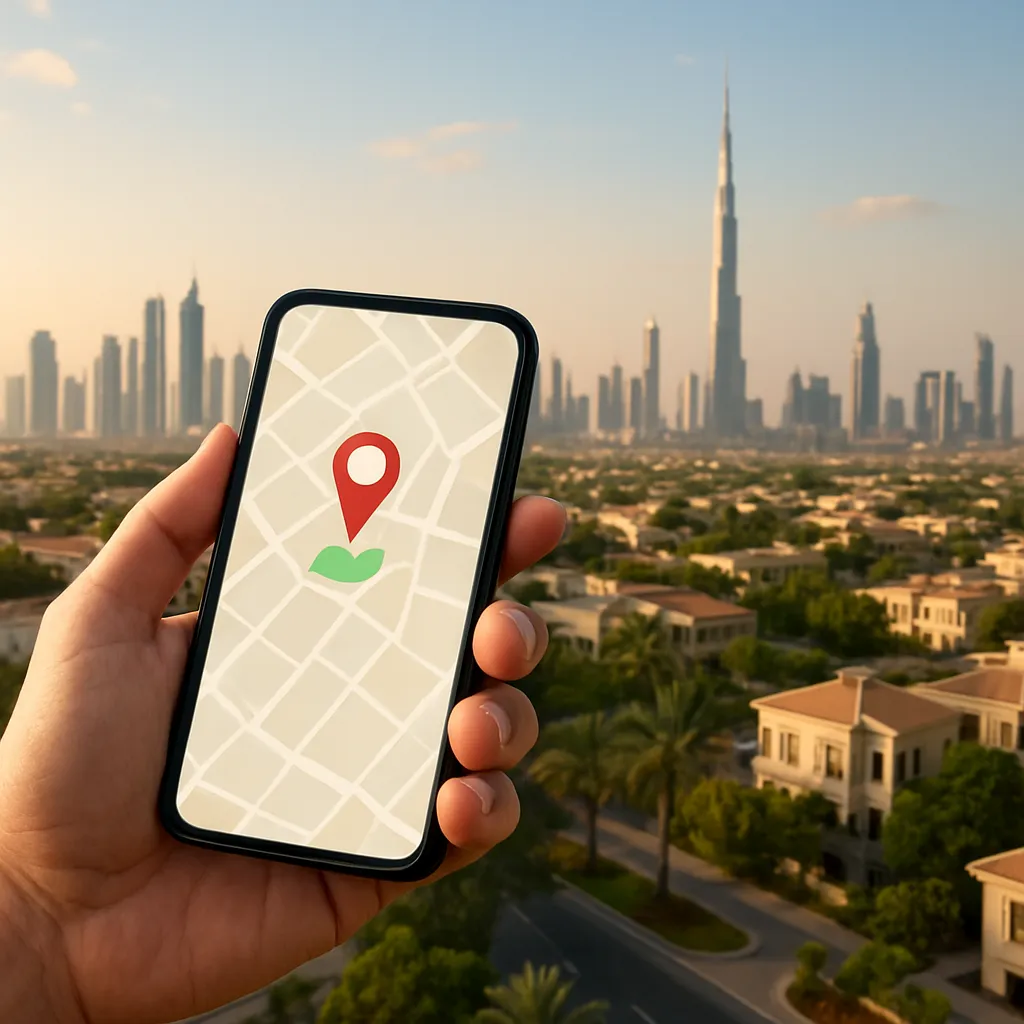
The Rise of Hyperlocal SEO in Dubai Neighborhoods
Hyperlocal SEO is reshaping how residents and tourists in Dubai discover nearby cafés, clinics, gyms, salons and service providers in specific neighborhoods like Marina, JLT, Jumeirah or Deira. Instead of competing only on broad “Dubai” keywords, businesses now focus on ultra-specific location signals that match real user intent, such as “best coffee shop in JLT Cluster D” or “Pakistani restaurant near Al Rigga metro.” This shift gives smaller brands a realistic chance to outrank big players, provided they understand how to combine precise geographic optimization with smart content, mobile performance and strong local credibility.
Why Hyperlocal SEO Matters So Much in Dubai
Dubai’s digital landscape is crowded, fast-moving and strongly influenced by mobile behavior. According to Google’s internal data across MENA, local intent queries such as “near me” have grown by well over 200% in the last few years, and in the UAE a very high percentage of these searches are performed on smartphones while people are on the move. With Dubai’s dense neighborhood structure and mixed residential–commercial zones, this behavior translates directly into a race for visibility at the micro-area level.
For internet marketing strategists, hyperlocal SEO in Dubai is about more than just ranking for a district name. It involves aligning several elements:
- Local keywords that match how people actually describe neighborhoods, clusters and landmarks.
- Optimized Google Business Profile listings with accurate categories, NAP (name, address, phone) and real photos.
- Customer reviews and ratings that build trust in a city where many providers offer similar services.
- Location-based content tailored to specific communities, from Marina residents to traders in Deira.
- Technical SEO tuned for mobile and on-the-go usage, including speed, UX and clickable calls to action.
Dubai’s population structure further amplifies hyperlocal opportunities. Over 85% of residents are expatriates, and a large proportion regularly search in English while mixing in neighborhood names and well-known buildings. For instance, an expat may search for “ladies salon near Dubai Marina Mall” or “kids dentist Jumeirah 1,” expecting results that feel both local and easy to navigate. This makes precise neighborhood targeting not just useful, but necessary.
Recent UAE-oriented digital marketing insights suggest that around 46–50% of all Google searches have local intent, and a large share of those lead to an in-person visit within 24 hours. For cafés and restaurants in Dubai, this can mean immediate footfall spikes if they appear in the top three Map Pack positions for key hyperlocal queries. Combined with the city’s tourism volumes—over 17 million international visitors in recent pre-pandemic years—hyperlocal SEO turns into a powerful bridge between online discovery and offline revenue.
Key Components of Hyperlocal SEO in Dubai Neighborhoods
The Local Keyword Landscape: From “Dubai” to Tower-Level Searches
Traditional SEO often targets broad terms like “restaurant in Dubai” or “digital marketing agency UAE.” Hyperlocal SEO goes much deeper, reflecting how people think about place at the street, cluster or even building level. In Dubai, that means understanding the country-specific structure of locations: emirate → area → sub-area → cluster → landmark.
Examples of hyperlocal keyword patterns include:
- “breakfast in Dubai Marina near Pier 7”
- “laundry service JLT Cluster J pickup delivery”
- “pet-friendly café City Walk Dubai”
- “budget hotel near Rigga Metro Station”
- “Arabic restaurant Business Bay Bay Avenue”
Effective hyperlocal keyword research in Dubai typically combines:
- Google’s autocomplete and “People also ask” suggestions around district names.
- Data from keyword tools filtered by city and by neighborhood modifiers (Marina, JLT, Deira, Bur Dubai, Al Barsha, Jumeirah Village Circle, etc.).
- Insights from Google Search Console filtered by page and country to identify long-tail queries such as “cheap manicure in jvc dubai.”
Brands that systematically collect and deploy these terms into meta titles, H1/H2 headings, image alt text and on-page paragraphs can capture high-intent micro-segments. Because many of these long-tail keywords have low competition, it is realistic for a small spa or clinic to rank well—often more realistic than chasing generic “Dubai” phrases dominated by aggregator platforms.
Google Business Profile and Map Pack Dominance
On mobile devices, especially for “near me” queries, the Map Pack often occupies the most visible portion of the screen. For hyperlocal searches in Dubai, this is frequently the primary decision point. A well-optimized Google Business Profile can therefore deliver more conversions than a traditional organic listing lower on the page.
Crucial steps for maximizing visibility in Dubai’s Map Pack include:
- Consistent NAP information across Google, the website, directories and social platforms.
- Accurate categorization: choosing the most relevant primary category (e.g., “Turkish restaurant” instead of just “restaurant”).
- Adding secondary categories that reflect services popular in Dubai, such as “delivery restaurant,” “spa,” “nail salon,” “property management company.”
- Localized business descriptions referencing neighborhoods and landmarks: “Located in Jumeirah Beach Residence, 2 minutes from The Walk.”
- High-quality photos and videos, especially interior shots for malls or tower-based locations that are hard to find at street level.
- Publishing short Google Posts about offers for Marina residents, JLT office workers, or nearby hotels.
Various local SEO studies (global, but relevant to Dubai) indicate that businesses appearing in the top 3 Map Pack positions can receive up to 60–70% of local clicks in some categories. For competitive areas like Dubai Marina or Deira, where many businesses share similar services and price points, this edge is crucial.
Reviews, Trust and Reputation Signals in a Transient City
Dubai’s population churn—expats constantly arriving and leaving—makes online reviews especially powerful. Many new residents rely heavily on Google Maps, Facebook and aggregator platforms to decide where to get a haircut, fix a car or choose a family doctor. A strong rating profile in a specific neighborhood can rapidly build trust.
From an SEO perspective, reviews influence visibility and conversions in three ways:
- Volume: more reviews help algorithms and users perceive a business as established in that locality.
- Rating: higher average star ratings improve click-through rates, which can indirectly boost rankings.
- Keywords: reviews naturally contain neighborhood names and service descriptions that reinforce relevance.
Hyperlocal internet marketing strategies in Dubai often include systematic review building campaigns: asking satisfied customers to review after a successful visit, using SMS or WhatsApp follow-ups linked directly to the review form, and responding promptly in both English and Arabic. Research from BrightLocal and similar sources suggests that over 75–80% of consumers trust online reviews as much as personal recommendations, and a difference between 3.5 and 4.5 stars can significantly influence choice, especially in areas with many alternatives.
Hyperlocal Content and Micro-Landing Pages
To truly dominate at neighborhood level, many Dubai businesses create specific landing pages or content clusters for each area they serve. For example, a cleaning company might have separate pages like:
- “Apartment cleaning in Dubai Marina”
- “Villa cleaning services in Jumeirah and Umm Suqeim”
- “Office cleaning in Business Bay and DIFC”
These pages can include:
- Descriptions of local challenges (e.g., dust from construction in new developments, parking restrictions in older districts).
- References to popular towers, streets and metro stations.
- Localized testimonials (“Client from JLT Cluster E”).
- FAQ sections tailored to that area’s common customer questions.
For content marketing, brands may also publish neighborhood guides that combine value and subtle promotion: “Where to work remotely in JLT,” “Family-friendly spots in Jumeirah 3,” or “Best gyms near Dubai Internet City.” Such guides naturally attract local search traffic, social shares and backlinks from community websites or influencers.
Mobile-First and Voice Search in a City on the Move
Dubai’s smartphone penetration exceeds 95%, and many users rely on voice commands while driving or walking. Voice search queries tend to be longer and more conversational, often including specific neighborhoods: “Hey Google, find a vet near me in JVC,” or “Where is the nearest car wash in Al Barsha?”
To capture this traffic, hyperlocal SEO strategies must align with voice patterns:
- Using natural language questions and answers in FAQ sections.
- Including modifiers like “near,” “closest,” “open now” and explicit neighborhood names.
- Ensuring fast-loading, mobile-friendly pages so that voice assistants are more likely to select them as answers.
Because voice search frequently triggers map results, the integration between on-page hyperlocal optimization and Google Business Profile becomes even more critical in Dubai’s car-centric environment.
Practical Hyperlocal SEO Strategies for Dubai Marketers
Building a Hyperlocal Information Architecture
For multi-location businesses across Dubai, the website structure should mirror the city’s geographic reality. Instead of a single generic “Locations” page, a better approach is a hierarchical structure:
- /locations/dubai-marina/
- /locations/jlt/
- /locations/al-barsha/
- /locations/deira/
Each of these can then contain more specific pages or content blocks for services. Internal links should strongly connect related neighborhoods (e.g., Marina & JBR, Deira & Bur Dubai) to signal topical and geographic relevance. Breadcrumbs, schema markup (LocalBusiness, Organization) and clearly visible addresses help search engines understand coverage.
For a single-location business, the homepage often plays the role of the main hyperlocal page. In that case, it should prominently mention the neighborhood, nearby metro stations, parking instructions and local landmarks in textual form, not only in images.
Leveraging Local Directories, Aggregators and Community Platforms
While global SEO discourse often focuses mostly on Google, hyperlocal success in Dubai also depends on building consistent citations and presence in regional platforms. These can include:
- Local directories specific to the UAE or GCC region.
- Food and salon booking apps that rank high for “near me” queries in Dubai.
- Community forums and Facebook groups centered around specific areas (e.g., “JLT Community,” “Dubai Marina Residents”).
- Real estate portals where service providers can advertise localized offerings to new tenants and owners.
From an SEO standpoint, these citations strengthen a business’s association with a specific neighborhood and provide additional backlinks. They also act as independent discovery channels: a resident of JVC might check a Facebook group recommendation before searching Google, but both behaviors are complementary in building overall brand visibility.
Data-Driven Optimization Based on Neighborhood Behavior
One of the strengths of digital marketing is the ability to measure and iterate. In hyperlocal SEO for Dubai, this means tracking separately how users from different districts behave:
- Using Google Analytics or similar tools to segment traffic by location (city and, where possible, more granular metrics).
- Analyzing which hyperlocal landing pages have the best conversion rate or highest time-on-page.
- Monitoring Google Business Profile insights: where users request directions from, which queries trigger impressions, at what times they search.
Patterns often emerge. For example, residents in Business Bay might search for lunch deals during weekdays, while Marina residents search more for weekend brunches or late-night delivery. Al Barsha might show strong interest in family services due to the high number of villa communities. These insights can then shape ad scheduling, offer design, content topics and even business hours.
Global studies from Google indicate that around 76% of people who conduct a local search on smartphone visit a business within 24 hours, and roughly 28% of those searches result in a purchase. In a city like Dubai, where many decisions are made last-minute (especially in hospitality and F&B), aligning offers with these immediate intent windows is particularly valuable.
Multilingual and Cultural Nuances in Hyperlocal Targeting
Dubai’s linguistic diversity demands attention. While English is widely used, Arabic remains official, and other languages like Hindi, Urdu, Russian, and Tagalog appear frequently in searches. Hyperlocal SEO strategies that integrate multilingual elements can outperform competitors who only optimize in one language.
Practical steps include:
- Providing at least partial Arabic content on key hyperlocal pages, including headings and meta descriptions.
- Adding Arabic business descriptions and attributes in Google Business Profile where relevant.
- Creating bilingual posts or localized ads for neighborhoods with significant Arab or South Asian communities, such as Deira or Al Qusais.
- Ensuring that transliteration variants of area names are considered (e.g., “Al Barsha” vs “Al Barsha’a” in user-generated content).
This multilingual approach boosts relevance signals in search algorithms and builds trust with users who feel that the business understands their language and culture. For health, legal or financial services, where trust is crucial, localized language can be a decisive factor in neighborhood-level choice.
Offline–Online Integration: Local Events, Partnerships and Signage
Hyperlocal SEO does not exist only in the digital space. In Dubai’s tightly knit building communities, offline actions can generate online signals. Examples include:
- Partnering with gyms, schools or nurseries within a specific neighborhood and exchanging mentions or links on websites.
- Sponsoring community events in residential clusters like JVC, Town Square or Dubai Silicon Oasis and promoting them via Google Posts and localized blog content.
- Using QR codes on physical signage or flyers that direct people to neighborhood-specific landing pages.
- Encouraging on-site customers to check in or leave Google reviews while still at the location.
These activities strengthen brand association with a particular area in users’ minds and often create user-generated content (photos, reviews, tags) that reinforces hyperlocal relevance signals to search engines.
Future Trends and Opportunities in Dubai’s Hyperlocal SEO
AI, Personalization and Predictive Local Recommendations
Search engines increasingly rely on AI-driven personalization. In a city like Dubai, this means that two people standing in the same street might see different local results based on their past behavior, language preferences and device history. Hyperlocal strategies will therefore need to be flexible and user-centric rather than purely keyword-centric.
Anticipated developments include:
- More granular use of real-time signals such as live traffic, weather and event data to influence which businesses appear for “near me” queries.
- Growing importance of behavioral metrics such as click-through rate, dwell time and return visits from users in a given neighborhood.
- Deeper integration of local results into maps, ride-hailing apps and delivery platforms that many Dubai residents use daily.
Businesses that invest in high-quality user experience, clear navigation and genuinely helpful local content are likely to benefit as algorithms increasingly reward engagement, not just keyword presence.
Rich Local Results: Photos, Short Videos and AR Navigation
Visual content already plays a major role in local decision-making. In Dubai, where venues often emphasize design and ambiance, photos and short-form videos heavily influence which restaurant, salon or coworking space users choose. Google and other platforms continue to enhance their local interfaces with:
- Image-first carousels in maps.
- Short video clips integrated into business profiles.
- Augmented reality overlays to help users navigate complex areas like large malls or cluster developments.
For hyperlocal SEO, this means that businesses should treat visual assets as core ranking and conversion tools rather than add-ons. Consistent branding, accurate depictions of interiors, menus, price boards and signage all help users quickly confirm that they’ve found the right place in the right neighborhood.
Privacy, Consent and Location Data
As global regulations around privacy tighten and users become more cautious about sharing location data, the future of hyperlocal targeting will rely on a balance between precision and respect for user control. Marketers in Dubai will need to:
- Be transparent about how they use location data in apps or websites.
- Offer clear value in exchange, such as hyperlocal promotions valid only in a specific area or building.
- Ensure that consent mechanisms comply with applicable UAE and international frameworks.
While this may slightly reduce the volume of granular data, it will likely improve its quality: users who opt in do so because they see tangible benefits. Brands that communicate these benefits explicitly—like free delivery within certain clusters, neighborhood-only loyalty tiers or location-based event invitations—can still leverage detailed hyperlocal personalization.
Competitive Differentiation Through Niche Local Authority
As more Dubai businesses adopt hyperlocal tactics, the key differentiator will shift from simply being present in neighborhood searches to being recognized as a true authority. This can involve:
- Publishing in-depth guides and FAQs tailored to neighborhood lifestyles.
- Becoming the go-to resource for a specific need in a defined radius (e.g., “the most trusted pediatric clinic in Jumeirah 1”).
- Collaborating with local influencers who are strongly associated with a particular area.
- Creating recurring neighborhood events, workshops or community initiatives and documenting them online.
Over time, search engines and users both pick up on these authority signals. Backlinks from local news outlets, community blogs and relevant government or semi-government portals in the UAE further increase domain strength for hyperlocal queries.
In summary, hyperlocal SEO in Dubai neighborhoods is not just a technical exercise but a strategic layer of digital marketing that mirrors how people actually live, travel and make decisions in the city. By aligning website architecture, Google profiles, content, reviews and partnerships around specific micro-locations, businesses can build durable visibility and trust in a highly competitive environment. Those who understand the city’s unique mix of expat mobility, smartphone dominance and neighborhood identity—and who execute consistently across channels—stand to gain the most from the ongoing rise of hyperlocal search.