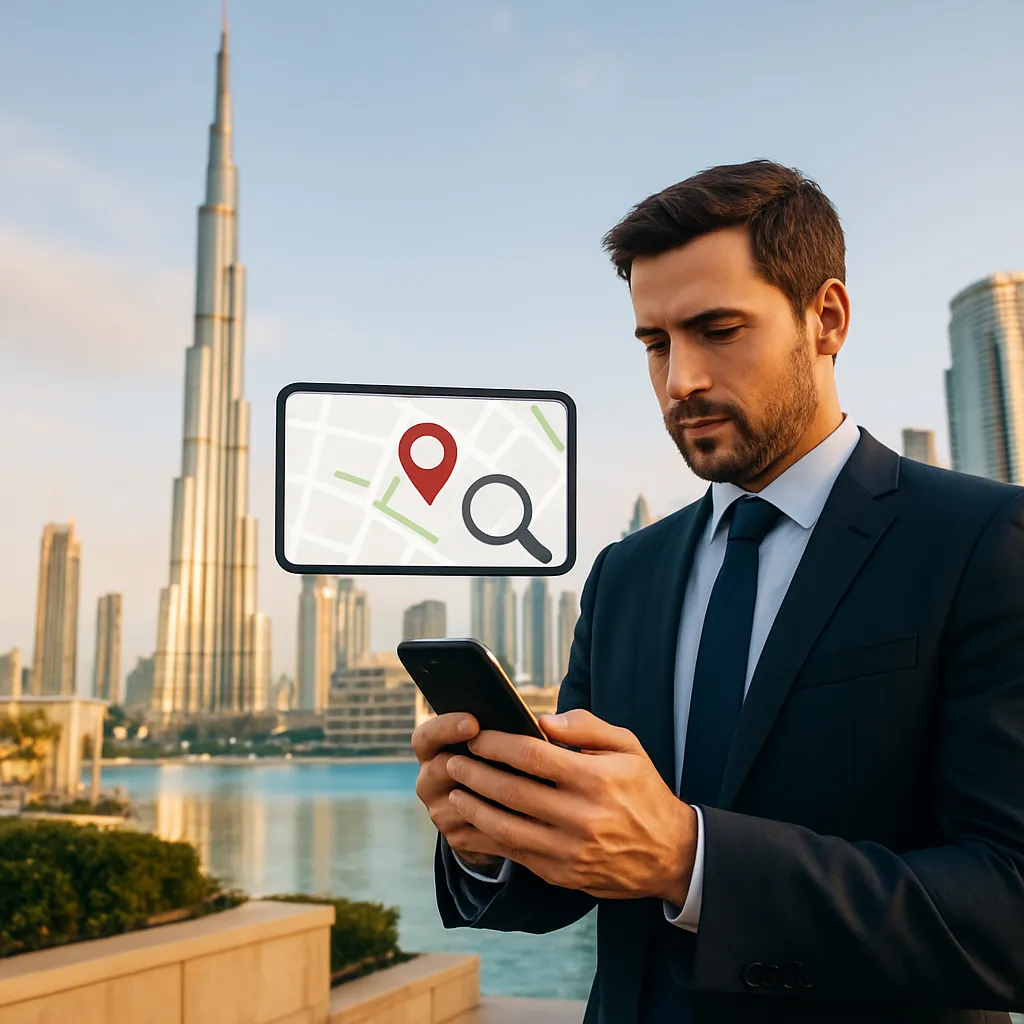
Why Local SEO Is More Important Than Ever in Dubai
Local search has become a decisive factor for businesses competing in Dubai’s fast‑moving digital landscape. With a tech‑savvy population, a strong tourism sector and an extremely competitive services market, companies that master local SEO can capture customers right at the moment they are ready to buy. For many brands, especially small and medium‑sized businesses, appearing in local search results is no longer a nice‑to‑have but a core driver of visibility, trust and revenue.
Why Dubai’s Market Makes Local SEO Crucial
Dubai is uniquely positioned at the crossroads of global commerce, tourism and innovation. This creates a specific set of conditions in which local visibility can make or break a business. Understanding these conditions is the first step in building an effective local SEO strategy.
High competition and digital maturity
Dubai’s economy is dominated by services: hospitality, real estate, retail, healthcare, finance and professional services. In each of these categories, dozens or even hundreds of businesses are fighting for the same local customers and visitors.
Research from regional digital marketing agencies indicates that more than 80% of consumers in the UAE search online before visiting a physical store or booking a service. At the same time, smartphone penetration in the UAE consistently ranks among the highest in the world, with estimates often exceeding 95% of the population. This combination—dense competition and nearly universal mobile use—means that when someone searches “dentist near me in Dubai Marina” or “best shawarma in Deira,” the businesses that appear at the top of the local pack and map results gain a serious advantage.
In many sectors, click‑through rates on the top three Google local results can account for more than 60–70% of all local clicks. If your company is buried on the second page of local search results, it is essentially invisible, even if you offer exceptional quality.
Tourism and the “on‑the‑go” searcher
Dubai welcomes millions of international visitors each year. Tourists rely heavily on search engines and map applications to find restaurants, attractions, clinics, retail outlets and entertainment. Most of these visitors are unfamiliar with the city’s neighbourhoods and depend on localized, map‑based search. For them, local listings are a primary discovery tool rather than a secondary reference.
Studies of traveler behaviour globally show that more than 70% of tourists use their phones to search for local businesses during their stay, and a large share of those searches include geographic qualifiers like “near me,” “close by,” or specific districts like “JBR” or “Business Bay.” For a business in Dubai’s tourism‑driven areas, fine‑tuning Google Business Profiles, ensuring accurate map pins, and optimizing for “near me” queries can directly translate into more walk‑in traffic and bookings.
Local trust, language and cultural signals
Dubai’s population is highly diverse, with residents and visitors from all over the world. This applies not only to languages but also to cultural expectations and search behaviour. People are often looking for services that reflect their preferences—be it cuisine, medical specialisation or language support.
For example, a user might search for “Arabic legal consultant in Dubai,” “Russian‑speaking real estate agent Dubai Marina,” or “family‑friendly brunch Downtown Dubai.” Local SEO allows businesses to signal this kind of relevance through localized content, specific keyword targeting, and well‑structured business listings. A café that highlights being “kid‑friendly in Jumeirah” or a clinic that mentions “Arabic and English speaking doctors in Dubai Media City” can earn higher click‑through rates from highly qualified prospects.
Core Elements of Local SEO in Dubai
Local SEO blends classic search engine optimization with location‑specific signals that help search engines understand where a business operates and who it serves. In the context of Dubai, some elements become particularly important.
Optimizing Google Business Profile
For most businesses, the Google Business Profile (GBP, formerly Google My Business) is the foundation of local SEO. This listing feeds information to Google Maps, the local pack and Knowledge Panels. In Dubai’s competitive ecosystem, an incomplete or poorly maintained profile is a direct loss of opportunity.
Key optimization steps include:
- Ensuring NAP consistency (name, address, phone number) with your website and other directories
- Choosing the most accurate primary and secondary business categories
- Writing a detailed business description that naturally includes relevant local keywords like “Dubai Marina,” “Al Barsha,” “Deira,” or “JLT”
- Adding high‑quality photos and, when relevant, short videos of your location, interiors and staff
- Updating opening hours, special holiday hours and service availability (e.g., delivery zones)
- Using attributes such as “women‑led,” “wheelchair accessible,” “outdoor seating” or “free parking” where applicable
- Posting regular updates: offers, new services, seasonal menus, events and images
Local search studies worldwide show that fully optimized Google Business Profiles receive significantly more actions—calls, website visits and direction requests—than incomplete ones. For service categories like restaurants and clinics, an optimized profile can drive a double‑digit percentage uplift in direct enquiries.
On‑page optimization with local intent
Traditional on‑page SEO elements still matter, but they must be adapted to local intent. Dubai businesses should ensure that important location signals are embedded in:
- Page titles and meta descriptions (e.g., “Luxury Dental Clinic in Downtown Dubai | Brand Name”)
- H1 and subheadings referencing neighbourhoods or districts when relevant
- Body copy that naturally mentions the areas served, nearby landmarks and practical directions
- Structured data (LocalBusiness schema) including address, coordinates and contact data
- Internal linking that guides users to location‑specific pages
Many multi‑branch businesses in Dubai—coffee chains, clinics, gyms, co‑working spaces—benefit from creating individual landing pages for each location. These pages can highlight specific offers, local testimonials and area‑relevant keywords, making it easier for search engines to rank them for district‑level queries such as “gym in Al Quoz” or “coworking space in DIFC.”
Local citations and directory presence
In Dubai, a rich ecosystem of local directories and listing platforms exists alongside global platforms. Maintaining consistent and accurate listings in these sources helps reinforce trust signals for search engines.
Citations typically include the business name, address, phone, website and sometimes a short description. Popular categories include restaurant guides, healthcare portals, real estate directories and tourism websites. Ensuring that your NAP data is identical across all these platforms helps search engines confirm that your business is legitimate and active.
Inconsistencies—different phone numbers, outdated addresses or name variations—can erode trust and reduce local ranking potential. A structured audit of citations followed by systematic correction is a high‑impact activity in a city where businesses frequently relocate within rapidly developing districts.
Mobile experience and page speed
Given the exceptionally high smartphone usage in the UAE, optimizing for mobile is not optional. Local searches are overwhelmingly performed on phones, often under mobile data connections rather than Wi‑Fi. Slow sites or poorly designed mobile layouts directly affect bounce rates.
User behaviour research shows that even a one‑second delay in mobile page loading can reduce conversions by several percentage points. For local queries, users tend to be even less patient because they are often in a hurry or on the move. Implementing technical improvements—image compression, caching, responsive layouts, and efficient code—ensures that locally relevant pages load quickly and are easy to navigate on smaller screens.
The Role of Reviews, Content and Analytics in Local Success
Where local SEO in Dubai really gains momentum is in the combination of social proof, localized content and disciplined measurement. These elements transform visibility into sustained business outcomes.
Online reviews as a trust and ranking factor
Reviews on platforms like Google, TripAdvisor and specialized local portals act as both conversion drivers and ranking signals. For many users, especially tourists and new residents, the volume, recency and tone of reviews are decisive.
Multiple SEO studies globally have indicated that review signals—number of reviews, average rating, review diversity and keywords in reviews—can account for a meaningful share of local ranking factors. For businesses in Dubai’s crowded verticals such as restaurants, salons and clinics, a strong review profile often separates those at the top of the map pack from those that rarely appear.
Practical steps include:
- Actively encouraging satisfied customers to leave reviews, especially after a positive interaction
- Making it easy with direct review links via SMS, WhatsApp or email
- Responding to all reviews, both positive and negative, in a professional and timely manner
- Addressing recurring issues raised in feedback and showcasing improvements
- Highlighting top reviews on your website and social profiles as social proof
In a service‑oriented city like Dubai, users often compare multiple options. A business with hundreds of mostly positive reviews and active responses will usually outperform a competitor with very few reviews—even if both appear in similar positions on the map.
Localized content marketing for Dubai audiences
Content marketing remains a central pillar of SEO, but local SEO benefits from a more geographically and culturally targeted approach. Instead of generic global articles, businesses can create content that speaks to the specific needs of Dubai residents and visitors.
Examples of localized content include:
- Guides focused on neighbourhoods, such as “A local’s guide to dining in Dubai Marina” or “How to choose a family clinic in Jumeirah”
- Seasonal pieces around Ramadan offers, summer heat issues, public holidays and major events like Expo‑related exhibitions or global conferences
- Practical tips that address local conditions: dealing with heat and humidity, planning weekend activities, navigating public transport or school terms
- FAQ pages addressing common local questions, such as parking availability, payment options, insurance partners or delivery coverage areas
This type of content accomplishes several goals: it attracts long‑tail local queries, builds topical authority for your brand in Dubai, and provides opportunities for internal linking to important service pages and local landing pages. It also positions your brand as knowledgeable and helpful, which supports trust and conversions.
Bilingual or multilingual optimization
Dubai’s multicultural environment means that many users search in Arabic, English or a mix of languages. Some industries, such as medical, legal and financial services, particularly benefit from bilingual presence. Creating content and metadata in both English and Arabic can broaden reach and resonate with a wider audience.
Multilingual local SEO involves more than simple translation. It includes:
- Keyword research in each language to understand different search patterns
- Tailoring content to cultural nuances and expectations
- Using hreflang tags correctly to guide search engines on language and regional targeting
- Ensuring that business name and address formats are consistent yet appropriate across languages
For certain services—education, government‑related advisory, healthcare—Arabic content can be a decisive factor for ranking in local queries and building credibility with key segments of the population.
Using analytics to refine local strategies
Local SEO should be guided by data rather than assumptions. Fortunately, several tools make it possible to measure performance at a granular level:
- Google Business Profile Insights: impressions in search and maps, direction requests, phone calls and popular times
- Web analytics platforms: tracking organic traffic by location, device, landing page and search query
- Call tracking solutions: understanding which local pages and keywords generate phone enquiries
- Heatmaps and user recordings: analyzing how mobile visitors from Dubai interact with local landing pages
By correlating this data, businesses can see which neighbourhoods are driving the most valuable actions, which local keywords are under‑served, and where conversion friction occurs. For example, if analytics show high traffic from “Dubai Marina coffee shop” queries but low conversions, examining mobile usability, menu clarity or booking flows can reveal specific issues to fix.
Strategic Advantages and Future Trends in Dubai’s Local SEO
Local SEO in Dubai is not just about short‑term rankings; it builds an asset that grows in value as the city continues to develop. Several strategic benefits and emerging trends are worth noting.
Owning “micro‑markets” within the city
Dubai is effectively a cluster of micro‑markets: Dubai Marina, JVC, Business Bay, Downtown, Deira, Al Barsha, JLT and many others. Each has its own demographics, traffic flows and commercial mix. Local SEO allows businesses to dominate specific micro‑markets even if they are not the biggest player city‑wide.
For example, a boutique gym might never compete with large chains across the whole city, but it can become the top choice for “personal training in Jumeirah Lake Towers” or “ladies‑only gym in Al Barsha.” This hyper‑local dominance often delivers more qualified leads than chasing broad, highly competitive keywords such as “best gym in Dubai.”
Integration with paid media and offline marketing
Local SEO works best when it is integrated with other marketing channels. In Dubai, where billboard advertising, mall promotions and event sponsorships are common, coordinated strategies amplify impact.
Consider these synergies:
- Running geotargeted search or social ads that reinforce organic local visibility
- Including QR codes on print materials that link directly to local landing pages or Google Maps locations
- Aligning seasonal offers promoted offline with updates and posts on Google Business Profile
- Using insights from local search queries to design more relevant paid campaigns
Businesses that align their paid and organic efforts often see improved click‑through rates and lower acquisition costs, because users encounter consistent messaging and strong social proof across touchpoints.
Voice search and “near me” growth
With smart speakers, in‑car assistants and voice features on smartphones, voice search is rising globally. Dubai’s high rate of smartphone adoption and modern car fleet accelerates this trend. Voice queries tend to be more conversational and frequently include local intent: “Where is the nearest pharmacy open now in Dubai Marina?” or “Find a vegetarian restaurant near me in Business Bay.”
Optimizing for voice‑driven local queries involves creating content that mirrors natural speech patterns, structuring FAQ sections clearly and ensuring that your business data is machine‑readable and accurate. Fast‑loading, mobile‑friendly pages and well‑maintained Google Business Profiles are particularly important, because many voice assistants pull data directly from Google’s local index.
The growing importance of user experience signals
Search engines increasingly incorporate user behaviour—click‑through rates, bounce rates, time on page and return visits—into their understanding of search quality. For local results, this means that the businesses providing the best overall experience tend to benefit in the long run.
In Dubai’s dynamic market, user expectations are high. Efficient booking systems, clear pricing, transparent policies, quick response times on chat or phone and accurate real‑time information can be the difference between a one‑time visitor and a loyal customer. Local SEO gets the user to your digital door; user experience determines whether they stay and convert.
Data‑driven expansion decisions
For brands considering expansion within Dubai or into nearby emirates, local search data can serve as a strategic compass. By analyzing where search demand is highest but competition is weaker, businesses can identify promising areas for new branches or pop‑up locations.
Patterns in direction requests, location‑based organic visits and call volume can reveal underserved neighbourhoods or emerging hubs. For instance, increasing search interest for particular services in developing districts like Dubai Hills or MBR City might signal an opportunity to establish an early presence and build local authority before the market becomes saturated.
Ultimately, local marketing in Dubai rewards businesses that invest in long‑term, evidence‑based strategies rather than short bursts of promotion. By combining meticulous local SEO implementation with a strong focus on user experience, reviews, multilingual communication and continuous measurement, companies can secure a durable competitive edge in one of the world’s most vibrant metropolitan environments.