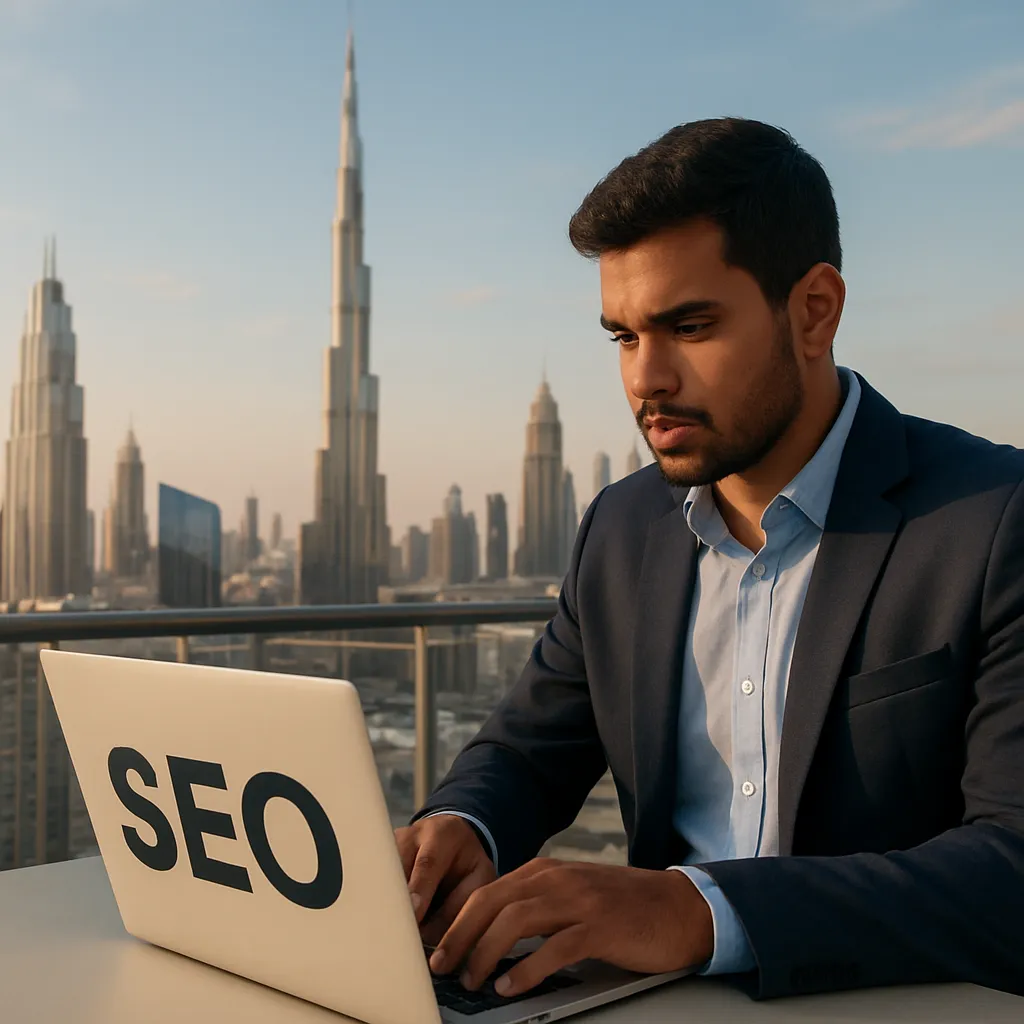
The Growing Demand for SEO Professionals in Dubai
Few global cities compress as much ambition, capital, and speed-to-market into a compact geography as Dubai. From luxury retail and fintech to hospitality and logistics, every sector competes on visibility—and that competition unfolds first on search engines. As acquisition costs in paid media climb and customers research across devices and languages, companies increasingly treat SEO as an always-on growth channel rather than a side project. The result is a sustained surge in demand for specialists who can translate market intent into crawlable architecture, authoritative content, and measurable outcomes. This article explains why demand is rising, what skills and structures the market now values, and how organizations in the UAE can future-proof their search capabilities.
Why demand for SEO professionals is accelerating in Dubai
Several structural forces push Dubai-based businesses to invest in search expertise. First, digital attention in the UAE is nearly universal. Public data compilations report internet penetration exceeding 99% and smartphone usage among the world’s highest. In practical terms, this means most discovery and comparison journeys now include a search moment—often multiple. Second, Google’s dominance in the UAE is overwhelming, with market-share readings typically in the mid-to-high 90s, creating a single, predictable surface for optimization.
Third, the city’s economy tilts toward high-intent verticals—real estate, travel, healthcare, financial services, and B2B services—where queries signal near-term purchase or booking behavior. Organic visibility against these terms compounds value because pages that solve these intents keep paying back with every impression. Fourth, acquisition math is changing. As paid click prices inflate, leadership teams look for channels that increase margin rather than only scale spend. Well-executed SEO shifts a portion of demand to owned discovery, improving blended CAC and long-run unit economics.
Finally, Dubai’s multilingual, multicultural population creates technical and editorial complexity that requires specialist stewardship: dual-language sites, hreflang governance, right-to-left layouts, and localization that respects dialect and transliteration. When organizations centralize this competence, they reduce execution risk and unlock incremental markets—from Arabic-first residents to regional GCC searchers and international travelers.
The business case and market signals
Across industries, multiple studies have estimated that organic search contributes roughly half of trackable website traffic on average, with variance by vertical. In UAE contexts specifically, businesses often observe that mobile-dominant audiences (roughly three-quarters of web traffic by device share) evaluate options quickly; subpar speed or weak first contentful paint correlates with abandonment. Google’s public guidance has long tied performance and interaction stability to better user outcomes, which is why many Dubai sites now prioritize Core Web Vitals as a board-level KPI.
On the demand side, analysts have placed the UAE’s e-commerce market in the low tens of billions of dollars in recent years, growing at double-digit rates as logistics networks mature and cash-on-delivery recedes. Hospitality rebounded strongly post-2021, intensifying competition for destination, brand, and experience queries. Real estate search ecosystems (off-plan, rentals, secondary market) draw sustained attention cycles driven by macro news. In each case, search demand graphs—seasonal, event-driven, and evergreen—reward brands that understand intent clusters and build durable topical authority.
Two more signals round out the business logic. First, Google Business Profile and Maps features increasingly capture commercial discovery for local service-area businesses, making local optimization a revenue lever rather than just a directory exercise. Second, the rise of AI-assisted answers and rich results amplifies the payoff for entities that structure data; when your information is machine-readable, it is more likely to power snippets, carousels, and answers that sit above traditional blue links.
What Dubai employers now seek in SEO talent
Job descriptions in Dubai have evolved from generic “SEO Specialist” asks to mission-specific profiles, reflecting maturity in the market. Common capability clusters include:
- Technical proficiency: crawling and indexing strategy; JavaScript SEO for frameworks such as Next.js/Nuxt; internationalization and hreflang; canonicalization; pagination; faceted navigation; sitemaps; robots governance; Core Web Vitals; log-file analysis; CDN and edge optimization.
- Editorial strategy: audience research; entity and topic modeling; editorial calendars; E‑E‑A‑T-aligned authorship; multilingual production (English/Arabic); on-page optimization that avoids over-optimization while signaling relevance.
- Authority building: digital PR, partnerships, high-signal citations, and locally relevant backlinks, with brand-safety standards and measurable impact.
- Data fluency: GSC and GA4 mastery; Looker Studio dashboards; BigQuery exports; cohort lenses; experimentation; statistical thinking; connecting SEO to revenue, not just traffic.
- Product collaboration: writing actionable tickets for engineering; QA processes; stakeholder education; prioritization frameworks that balance effort versus impact.
- Automation: Python or Apps Script for reporting and QA; regex and XPath for templated fixes; scalable internal linking systems; XML feed governance for news, jobs, and products.
Team structures mirror company scale. Early-stage brands often hire a full-stack SEO generalist, then layer a technical lead and a content lead as complexity grows. Larger enterprises build pods—technical, content, and digital PR—anchored by a Head of SEO who sets strategy and orchestrates product, analytics, and brand teams.
Local and international SEO in a bilingual city
Dubai’s language reality shapes search in ways that outsiders often underestimate. English and Arabic pages must coexist without duplicating intent cannibalistically. Correct hreflang annotations (ar-AE and en-AE, plus x-default where appropriate) help search engines deliver the right variant. Right-to-left design must be more than a flipped stylesheet; typographic choices, microcopy, and form patterns need to feel native to Arabic-first audiences.
Names and places add nuance. Transliterations (e.g., Jumeirah/Jumairah variations) create query diversity you should embrace with thoughtful synonyms, internal linking, and on-page cues—without spinning near-duplicate pages. For local businesses, NAP consistency in both scripts across high-credibility directories matters, as does an active Google Business Profile with localized posts, products, services, and Q&A in both languages.
Internationally, many Dubai companies serve GCC neighbors or global travelers. That calls for country/language mapping beyond the UAE (e.g., ar-SA for Saudi Arabia), content that addresses visas, payment methods, and shipping times, and logistics schema that sets expectations. Search intent can vary subtly by market; “villa for rent” in one country may indicate long-stay corporate housing, while in another it’s short-term leisure. Capture those nuances in keyword clustering and template logic.
Technical challenges at scale
High-velocity sites in Dubai—marketplaces, real estate portals, classifieds, large travel brands—face technical SEO issues that a single audit cannot fix; they demand continuous engineering partnership. Typical challenges include:
- Faceted navigation: balancing crawl efficiency with discoverability. Solutions blend noindex on toxic combinations, smart canonicalization to primary facets, and pre-rendered landing pages for high-intent facet sets.
- JavaScript rendering: shifting from client-side rendering to hybrid or server-side rendering for core templates; leveraging edge functions to personalize without sacrificing indexability.
- Template sprawl: ensuring title and header logic scales semantically, not just programmatically. Entity awareness and context windows (e.g., neighborhood + property type + price band) improve relevance and click-through.
- Media weight: optimizing image and video delivery with modern formats (AVIF/WebP), responsive srcsets, and lazy loading. In hospitality and real estate, imagery sells—performance engineering protects conversion.
- Internal linking: algorithmic modules that prioritize commercially important nodes; breadcrumb consistency; sitemaps that reflect priority and freshness.
- Data hygiene: deduplicating near-identical listings, handling expired inventory gracefully, and preserving equity with 301/308 strategies rather than soft 404s.
Measurement, analytics, and the ROI story
The most credible SEO roadmaps in Dubai tie initiatives to business outcomes rather than vanity metrics. That begins with a measurement model:
- Define goals: qualified leads, bookings, net revenue, or contribution margin—not just visits or average position.
- Map intent to funnel: informational, consideration, and transactional clusters with content, SERP features, and KPIs each is expected to drive.
- Instrument cleanly: server-side tagging where feasible; consistent event naming; attribution windows that reflect sales cycles; deduplication logic with paid search.
- Benchmark and forecast: use Search Console impressions and CTR curves to size opportunity; model clickshare shifts from improving average position on priority clusters.
Dashboards that business leaders actually use typically blend GA4, Search Console, and CRM/booking data in a single lens, slicing by market, language, and device. SEO teams should partner with finance on contribution models so they can show how non-paid discovery reduces blended CPA and expands profitable reach. That’s how search becomes a strategic pillar with a defensible ROI, not a discretionary line item.
Industry snapshots: how demand plays out by vertical
Real estate
Off-plan launches, secondary-market inventory, and rentals create rolling waves of intent. Winners publish structured data for properties, neighborhoods, and amenities; maintain fast, image-rich pages; and use internal linking to connect related inventory and guides. Authority grows through neighborhood-level expertise, developer collaborations, and press coverage of launches—not low-quality directory submission.
Hospitality and travel
From five-star resorts to boutique operators and DMCs, the landscape is rich with rich results. Hotel schema, event calendars, and local attraction guides earn visibility across maps and web results. Performance is critical for image galleries and booking flows. Content must bridge languages and audiences: family-friendly itineraries in Arabic, high-end dining and spa content in English, and seasonal campaigns aligned with events.
Retail and marketplaces
Category and product page templating across thousands of SKUs requires scalable metadata, canonical rules for color/size variants, and robust filtering logic. Review schema and availability signals matter. For cross-border inventory, currency clarity and delivery promises are ranking-adjacent because they improve engagement. Integrations with shopping surfaces and feeds should align with SEO so crawl budgets prioritize monetizable inventory.
Financial services and fintech
YMYL constraints raise the bar for expertise and trust. Author bios, credentials, transparent fees, and updated rate tables are table stakes. Editorial calendars center on comparisons and explainers with strong UX. Internal approval processes must balance compliance with speed; the firms that operationalize review workflows without stalling publish faster and earn durable authority.
B2B services
Dubai’s role as a regional HQ hub fuels searches for logistics, IT, legal, and corporate services. Effective strategies couple thought leadership with practical guides and conversion-optimized service pages. Case studies with concrete outcomes, structured data for FAQs, and localization for free zones and regulatory contexts win qualified leads.
Local authority and ethical link acquisition
Link strategies in the UAE perform best when aligned with brand and community. Sponsoring industry events, collaborating with universities, contributing expert commentary to reputable media, and publishing original data create legitimate, high-signal links. Chasing volume via low-quality directories or private networks risks long-term trust. For local businesses, citations in government, chamber, and sector-specific directories often outperform generic lists.
Teams, vendors, and operating models
Organizations in Dubai typically choose among three setups:
- In-house first: a core SEO leader plus embedded specialists across technical, editorial, and PR. Best for companies with large sites or complex products where institutional knowledge compounds.
- Agency-led: a retained partner supplies strategic direction and execution, with internal product and content owners. Works for brands seeking rapid lift without building headcount immediately.
- Hybrid: in-house strategy with specialized vendors for digital PR, Arabic localization, or one-off technical sprints. Common during scale-up phases.
Regardless of model, the highest-ROI programs share traits: clear ownership, executive air cover, engineering bandwidth for quarterly fixes, and a roadmap that balances quick wins with structural improvements. Procurement should evaluate partners on technical depth, transparent measurement, and fit to existing stacks—not just case studies.
Content that earns, not just ranks
Entity-centric planning beats keyword stuffing. Map the concepts your audience cares about—neighborhoods, amenities, visa pathways, tax topics, payment methods, shipping latency—and create clusters that answer real questions. Use first-hand perspectives: expert interviews, proprietary data, authentic photography, and demonstrations. Editorial quality signals and trustworthy authorship improve engagement, which in turn supports rankings.
For bilingual execution, avoid literal translation when intent differs. Commission native writers who understand idiom and search behavior. Validate with SERP deconstruction: review the mix of pages that win (guides, tools, listings, calculators) and build to match user expectations.
Future outlook: AI-shaped SERPs and brand moats
As search integrates generative summaries and more interactive result types, undifferentiated pages will shed clicks. Durable strategies emphasize unique data, utilities (calculators, maps, planners), and brand entities that engines can cite confidently. Structured data and clean information architecture are prerequisites for participation in rich answers. At the same time, privacy changes elevate first-party data and consented remarketing, pushing SEO and CRM teams closer together.
Automation will reshape workflows, but not the fundamentals. Assistive tools can cluster queries, draft outlines, and scale QA, while human experts bring judgment, experience, and accountability—especially in regulated categories. Teams that blend machine speed with editorial and technical craft will keep compounding their advantage.
Actionable steps for Dubai organizations
- Audit technical foundations quarterly, focusing on crawl paths, rendering, and Core Web Vitals.
- Invest in bilingual information architecture with rigorous hreflang and culturally attuned UX.
- Build editorial moats with first-party data, expert voices, and utilities aligned to intent.
- Operationalize internal linking and schema across templates; treat it as a product feature, not a patch.
- Tie SEO to revenue with clean attribution; forecast impact before committing effort.
- Develop ethical, local authority through community partnerships and PR, not volume link buys.
- Upskill teams in analytics, experimentation, and automation to maintain speed and accuracy.
The Gulf’s most dynamic city rewards operators who master the details. For Dubai’s growth-stage startups, family businesses, and global enterprises alike, professional search expertise is no longer optional; it is an operating capability that protects margins, diversifies demand, and compounds over time. Equip your teams to win across languages and devices, ship fast with product and engineering, and measure what matters. The brands that do will own more of the customer journey on mobile, transform visibility into pipeline, and turn search into a durable driver of profitable growth.
And while the tactics evolve—schema formats, rendering approaches, SERP features—the core remains stable: know your audience, build for their needs, and make your value legible to machines. In a market where attention is scarce and expectations are high, that combination makes the difference between being present in discovery and being invisible. Done right, search is not just a marketing channel; it is the connective tissue between product, brand, and revenue in a city built for scale.
For companies aligning their 12–24 month plans, two priorities stand out. First, codify a clear SEO operating model with accountable owners and predictable delivery. Second, invest in capabilities that compound: structured data, internal linking systems, and authoritative content people trust. With those pillars in place, Dubai organizations can compete confidently on the surface that concentrates intent—and win on their terms with measurable, defensible returns from search.
Key terms to keep front and center as you execute: SEO strategy that integrates with product, authoritative content rooted in user needs, trustworthy backlinks earned through real value, precise analytics that connect effort to impact, and a relentless focus on ROI as the north star. In a city defined by velocity and vision, those principles separate the leaders from the rest.