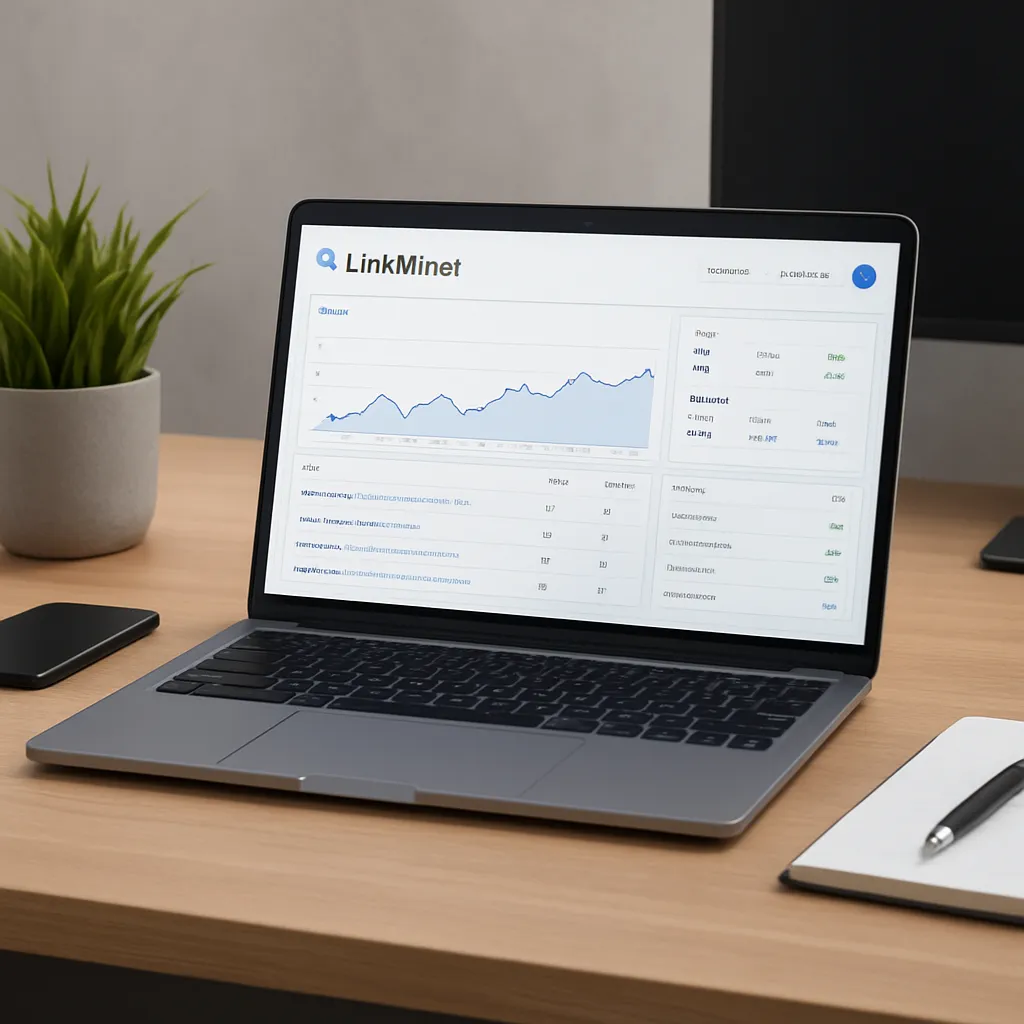
LinkMiner
LinkMiner sits at the intersection of simplicity and rigor: a focused backlink intelligence app built by Mangools that helps marketers understand who links to whom, why those links matter, and how to turn that insight into sustainable rankings and traffic. Instead of trying to be an all-in-one platform, it concentrates on one job—backlink discovery and evaluation—and makes that job faster with practical filters, an in-app page preview that shows link context, and a clean workflow for saving prospects. While no backlink index is perfect, LinkMiner’s balance of usability, credible scoring, and affordability has made it a popular companion for small teams, freelancers, and growing brands that want clarity over complexity.
What LinkMiner Is and Who It’s For
LinkMiner is Mangools’ dedicated backlink research tool. It lets you look up any domain, subdomain, or URL and see which pages are linking to it, with details such as the link’s strength, anchor, placement context, and follow status. Under the hood, the tool blends link data from established providers with Mangools’ own scoring so that you can quickly assess potential quality and prioritize your next moves.
Its audience is broad but especially appealing to practitioners who value speed and clarity: in-house marketers at small to mid-sized companies, content strategists, PR specialists working on digital PR, boutique agencies, and solo consultants. If your day-to-day work involves finding relevant backlinks, reverse-engineering what’s working for rivals, and building outreach pipelines to earn coverage, LinkMiner offers a tight, efficient environment to do it without a steep learning curve.
Core Features That Matter in Practice
Backlink Index and Scoring
Every backlink tool lives or dies by its index and the quality signals layered on top. LinkMiner aggregates link data and calculates a proprietary Link Strength (LS) score that blends multiple inputs (such as referring domain quality, topicality, and historical patterns) into a single snapshot, so you can sort a long list of links by potential impact. You’ll also see classic link quality cues—referring domains, IP/c-class diversity, and trust-like measures—so you can spot high-value links and avoid rabbit holes.
Because the LS score reacts to several independent indicators, it tends to reduce false positives (weak links that look better than they are) as well as false negatives (overlooking a niche site that punches above its weight). It’s wise to use LS for triage and then double-check the linking page using the preview panel to validate relevance and editorial context.
Powerful Filters and Segmentation
Effective link research is 80% filtering. LinkMiner’s filters help you get to signal quickly:
- Follow status: separate dofollow from nofollow to track equity-passing links versus exposure-only placements.
- New vs. lost: isolate recently discovered links or those that dropped, so you can take action (reclaim, update, or replace).
- Link type and placement cues: narrow down to editorial pages, resources, directories, forums, or user-generated contexts when planning tactics.
- Anchors and URLs: include or exclude terms in the anchor or target path to slice data by topic, campaign, or landing page.
- Strength thresholds: focus only on links above a certain LS or other strength proxies.
Segmenting by these criteria turns a sprawling backlink universe into a manageable set of prospects ordered by likelihood to help your goals.
In-App Link Preview and Context
One of LinkMiner’s standout touches is the in-app preview of the linking page. You can see the link on the page, in context, without opening a new tab—especially handy when screening dozens of candidates per hour. This encourages better judgment calls: is the link surrounded by relevant, editorial content, or buried in a templated footer? Is the page indexable and up to date? You can answer many of these questions at a glance, which saves time and reduces outreach misfires.
Lists, Favorites, and Exports
Prospecting lives or dies on organization. LinkMiner’s “favorites” and list-building make it easy to save potential targets as you browse, tag them by campaign, and move from research to outreach. CSV exports preserve the critical fields (source URL, target, anchor, follow status, LS, and notes), so you can pass clean data to your CRM, outreach platform, or a shared sheet. The combination of quick filtering, instant context, and simple saving produces a smooth handoff from research to execution.
Practical SEO Workflows With LinkMiner
Competitor Backlink Teardown
Start with two to five direct competitors ranking for the queries you want. Plug their domains into LinkMiner and capture their top-linked content and most authoritative referring domains. Filter for editorial contexts and high LS, then sort by topic relevance. Add viable targets to a campaign list. As you review anchors and landing pages, note which content formats attract the strongest links (original research, guides, tools, glossaries) to inform your own content roadmap.
Next, zoom into specific URLs that outrank you. Pull their backlinks and compare with your page’s profile. Identify gaps (domains linking to the competitor but not to you), and mark those domains for outreach with tailored reasons to link—your fresher data, better visuals, or localized angle. This “link gap” lens is typically the fastest route to accurate, high-conversion pitches.
Broken Link Building and Reclamation
Use LinkMiner’s lost/deleted filters to find targets for two valuable plays:
- Reclamation on your own domain: identify important links that disappeared. If the linking page still exists, check whether the anchor or URL changed and reach out with a friendly request to reinstate or update the link. If your page moved, implement redirects or restore the resource if it had unique value.
- Broken link building on competitor content: find high-LS links pointing to 404s or outdated pages on rival sites. Replicate or improve the missing resource on your site, then contact those linking domains with a helpful heads-up and a replacement suggestion. This tactic succeeds when the replacement genuinely solves the problem for the linking page’s readers.
Outreach Prioritization and Personalization
Backlink acquisition is rarely a numbers game anymore. Sort prospects by LS and relevance, then enrich them: who writes for the site, what topics they care about, and where your proposed resource fits editorially. Use LinkMiner’s preview to gather tidbits (tone, structure, recent posts) that help you draft emails with true personalization. Your outreach queue should be a curated list, not a dump of 500 domains—expect higher response rates with 50 high-fidelity pitches than 500 generic blasts.
Monitoring and Link Profile Health
Periodic checks keep you from drifting into trouble. Monitor your ratio of follow to nofollow links, homepage versus deep links, brand versus partial-match anchors, and topical relevance over time. If LinkMiner shows a burst of low-quality links from unrelated sites, investigate promptly: these patterns can foreshadow algorithmic turbulence. Keep a rolling list of suspect domains with context for each; if warranted, prepare a disavow file carefully and conservatively. The goal isn’t perfection but stability plus steady growth in relevant, editorial links.
Does LinkMiner Actually Help With SEO?
Yes—when used as part of a coherent strategy. LinkMiner won’t rank pages by itself; rather, it shortens the research loop behind the hardest ranking factor to earn: credible links. Here’s how it translates into outcomes:
- Better target selection: by surfacing strong, relevant prospects quickly, you avoid wasting time on low-impact or off-topic sites.
- Higher conversion pitches: seeing link context before you write the email leads to focused value propositions and higher acceptance rates.
- Risk management: ongoing visibility into new, lost, and suspicious links helps you fix issues before they compound.
- Content-market fit: competitor analysis reveals the content that attracts links in your space, guiding investments toward formats with outsized returns.
In other words, LinkMiner reduces the uncertainty and labor in the discovery-to-pitch pipeline. It helps you allocate limited resources to the right opportunities and demonstrate movement on the metrics that matter: referring domains, credible mentions, and, ultimately, keywords moving up the SERP ladder for your most important topics.
Strengths, Limitations, and Fit
What LinkMiner Does Especially Well
- Fast triage via a single, interpretable strength score plus classic quality cues.
- Time-saving in-app page preview that shows placement and context.
- Intuitive filters that map to common link-building tactics.
- Clean lists and exports that remove friction between research and pitching.
- Pricing that is accessible for small teams and freelancers, especially when bundled with the Mangools suite (KWFinder, SERPWatcher, SiteProfiler).
Where You May Want More
- Index breadth and freshness: large enterprise campaigns might still prefer combining multiple indices to ensure maximum coverage.
- Advanced analytics: specialized features such as link intersect at scale, historical anchor distribution charts, or custom crawls may require a complementary tool.
- Digital PR extras: media monitoring, journalist databases, and pitch tracking live outside LinkMiner’s scope (by design).
Overall, LinkMiner is an excellent fit for teams who value focus, speed, and cost-effectiveness over exhaustive feature bloat. If you’re running heavyweight, multinational link campaigns across dozens of brands, pairing LinkMiner with a second enterprise index can deliver the best of both worlds.
How LinkMiner Compares to Other Tools
Against all-in-one suites, LinkMiner stands out for clarity: it does fewer things, but it does backlink research with notably low friction. Compared to heavyweight backlink databases, its interface is cleaner and friendlier for newcomers, though raw index size may be smaller. That trade-off matters most when you compete in ultra-competitive verticals where every marginal link counts; in many markets, LinkMiner’s coverage is more than enough to power effective campaigns.
It also slots naturally into the Mangools ecosystem. For example, you can use KWFinder to identify keywords and content gaps, then validate linkability of those topics inside LinkMiner, and monitor outcome signals with SERPWatcher. SiteProfiler adds top-level domain snapshots (top pages, top referring domains, and authority-like measurements) for quick executive overviews. If you already use Mangools for keyword research and rank tracking, LinkMiner completes a compact, coherent workflow.
Detailed Tactics and Tips
Build a Repeatable Prospecting Cadence
- Weekly: pull newly discovered links for your site and two key competitors; categorize any patterns worth replicating.
- Biweekly: harvest high-LS, topical prospects from competitor top pages and add them to a warmed outreach sequence.
- Monthly: review lost links and send targeted reclamation emails; ship at least one linkable asset (tool, study, or updated evergreen guide).
Anchor and Landing Page Hygiene
- Map anchors to intent: ensure brand and natural anchors dominate, with a controlled portion of partial-match descriptors. Avoid aggressive exact-match patterns.
- Deep link distribution: balance homepage mentions with links to key informational and commercial pages. Use LinkMiner to surface which URLs lack support and design campaigns to reinforce them.
Outreach Quality Over Quantity
- Use the preview pane to identify a value hook (statistic, visual, local angle) specific to each site.
- Bundle pitches: when relevant, offer two or three resource options so editors can choose the best fit without extra email back-and-forth.
- Track reasons for “no”: log editorial constraints you learn from rejections; this improves future targeting and saves time.
Blend with Content Strategy
- Identify formats that consistently earn strong links in your niche: original data, calculators, templates, or long-form explainers.
- Reverse engineer the top-linked competitor pages to set benchmarks for depth, freshness, and design. If your asset isn’t clearly better, outreach will underperform.
Common Pitfalls to Avoid
- Chasing only high LS scores: relevance and editorial integrity matter just as much. A mid-strength link from a niche authority often beats a generic, off-topic mention.
- Over-indexing on volume: a handful of excellent links can outperform dozens of weak signals—and draw fewer spam flags.
- Ignoring link context: sidebar or footer placements pass less value than in-content editorial mentions; the preview pane exists for a reason.
- Copy-paste outreach: personalization scales when you build topic clusters and templates around them—still tailored, just more efficient.
Data Quality, Transparency, and Methodology
Backlink data is probabilistic: crawlers discover the web’s links at different times and with differing completeness. LinkMiner mitigates this by combining robust crawl sources with its own scoring logic, then exposing the essentials—source URL, target, anchors, follow state, LS—so practitioners can make informed judgments. The tool doesn’t claim omniscience; instead, it strives for reliable, actionable coverage. For critical campaigns, triangulate with a second index and verify top targets manually. This balanced approach keeps your decisions grounded while avoiding analysis paralysis.
Return on Investment: Why LinkMiner Can Pay for Itself
Link acquisition is one of the most expensive SEO activities. The cost isn’t just outreach headcount; it’s also the opportunity cost of pursuing the wrong prospects and the creative cost of building assets that don’t earn mentions. By reducing time-to-signal—finding viable prospects faster, judging fit quickly, and avoiding dead ends—LinkMiner typically saves dozens of hours per campaign. Pair that with a moderate learning curve and accessible pricing, and the tool’s payback window can be short, especially for teams shipping a steady drumbeat of linkable content.
A Balanced Opinion
From hands-on use, the standout benefits are speed and judgment. The interface gets out of your way, the preview makes context unavoidable, and the scoring is intuitive enough that even non-specialists can triage prospects confidently. The main caution is the same one that applies to any single-source backlink tool: for ultra-competitive niches or forensic link audits, bring a second index to the party. That said, for the majority of growth-stage companies and agencies, LinkMiner will cover the essential 80% of use cases with less friction and lower cost than sprawling enterprise suites.
Step-by-Step Quickstart Checklist
- Define goals: rankings to improve, pages to support, and outreach capacity per week.
- Collect inputs: your domain and top URLs, plus two to five direct competitors.
- Run competitor scans: filter by high LS and editorial placements; save 50–150 prospects.
- Shape offers: match each cluster of prospects to a relevant asset or angle.
- Personalize using preview: add one to two bespoke observations per email.
- Measure: track reply rate, acceptance rate, and links earned by asset and by topic.
- Iterate: double down on formats that convert and prune tactics that don’t.
Ethics and Long-Term Resilience
Real editorial value is the heart of sustainable SEO. Use LinkMiner not to game systems but to find aligned partners, cite better sources, and surface resources that make the web more useful. A trustworthy link profile—earned through relevance, transparency, and audience benefit—outlasts transient algorithm shifts. When in doubt, ask whether the link would make sense if search engines didn’t exist. LinkMiner’s role is to illuminate opportunities where the answer is yes.
Final Verdict
LinkMiner is a focused, effective ally for modern link-building. It strips the task down to its essentials—discovery, evaluation, organization—and equips you with filters and previews that sharpen decision-making. While enterprise power users may supplement it with a second index for maximal coverage, most teams will find that LinkMiner’s practicality and price-to-value ratio free up budget and time for what actually wins links: standout content, targeted pitches, and relationships. Used with intention, it helps you earn more credible mentions, build durable authority, and move the metrics that compound over time.
Key Takeaways at a Glance
- Focused tool for backlink research with credible metrics and a unique preview pane for context.
- Excellent for competitor analysis, prospect triage, reclamation, and targeted outreach.
- Best fit for small to mid-sized teams; enterprises may pair it with a second index for exhaustive coverage.
- Drives ROI by cutting research time and improving pitch quality, not by automating creativity.
- Use it to prioritize relevant, editorial links that reinforce topical depth and long-term rankings.
Combine LinkMiner with rigorous content strategy, thoughtful campaigns, and a commitment to genuine value, and you have a streamlined engine for attracting the right links from the right sites, at the right time.