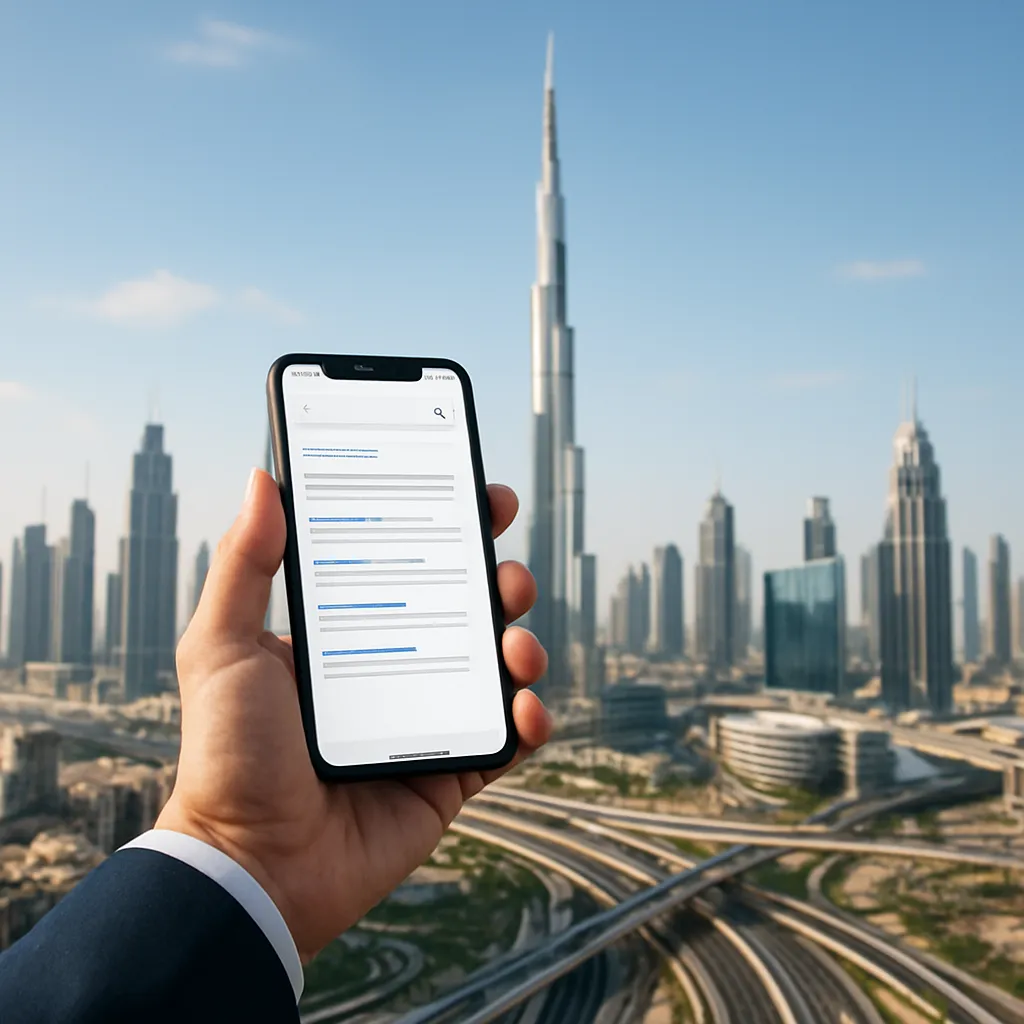
Why Dubai Businesses Should Prioritize Mobile-First SEO
For companies in Dubai, the phone in a customer’s hand is the storefront, the sales assistant, and the checkout counter all at once. A city built on speed, convenience, and global connectedness has trained residents and visitors alike to expect instant answers and flawless experiences on small screens. That is exactly why a mobile-first mindset is not just an SEO best practice here—it is a competitive necessity. This article maps the case for prioritizing mobile-first SEO in Dubai, shows what the shift means in practical terms, and lays out a blueprint you can apply this quarter to win more organic traffic and revenue from mobile users.
The mobile reality in Dubai: usage, expectations, and revenue impact
Dubai’s economy thrives on rapid decision-making, tourism, and on-the-go lifestyles—from commuters crossing Sheikh Zayed Road to travelers comparing attractions in Downtown and shoppers browsing sales at the Mall of the Emirates. Multiple independent market reports consistently place the UAE among the world’s leaders for smartphone adoption, with penetration rates well above 90%, and total mobile connections exceeding the country’s population. In many local analytics dashboards we see mobile accounting for the majority share of website sessions, and it is common to find a 65–75% slice of web traffic coming from smartphones in consumer-facing verticals such as hospitality, food delivery, real estate search, and e-commerce.
Speed is the non-negotiable currency of that traffic. Google’s research has long shown that the probability of a bounce rises sharply as load times increase—jumping by over 30% when a page slows from one to three seconds and climbing even higher beyond five seconds. Another well-cited data point from Google found that more than half of mobile site visits are abandoned if pages take more than three seconds to load. In real terms, if mobile is 70% of your traffic and you shave two seconds off the first page load, the gains cascade through the funnel: more impressions become engaged sessions, more sessions reach product pages or menus, and a larger subset converts.
Local behavior compounds the effect. Google has shared that roughly three-quarters of people who conduct a local search on a smartphone visit a related business within a day, and a substantial share lead to a purchase. In Dubai, where proximity and immediacy drive decisions—“near me,” “open now,” “delivery within 30 minutes”—capturing those micro-moments on mobile is equivalent to catching customers right at intent peak.
What mobile-first indexing really means for your rankings
Google has fully shifted to mobile-first evaluation of the web. By late 2023, the company completed the migration to mobile-first indexing for all sites. Practically, this means Google primarily uses your mobile page content, internal links, structured data, and performance signals to understand and rank your pages. If your mobile experience hides or defers critical content, uses different markup than desktop, or renders slowly on typical devices and connections, your search visibility is at risk even if your desktop site looks perfect.
Key implications to act on immediately:
- Parity of content: Ensure the same primary content, internal links, and metadata exist on mobile and desktop. Avoid cutting core text, FAQs, or CTAs for the sake of minimalism.
- Markup alignment: Keep schema.org structured data, Open Graph tags, and canonical/hreflang signals identical between versions.
- Performance on real devices: Test on mid-range Android devices over 4G to reflect realistic conditions for residents and visitors.
Dubai-specific user behavior: local intent, languages, and expectations
Dubai is multilingual and multicultural. English and Arabic dominate, with significant communities using Hindi/Urdu, Tagalog, and Russian. The upshot for SEO: when a user lands from search, the experience must immediately feel tailored to their intent and language expectations.
- Localization: Support Arabic (ar-AE) and English (en-AE) with accurate hreflang tags. Mirror key content; do not present “thin” Arabic pages if English is comprehensive.
- Right-to-left UX: For Arabic pages, flip layout direction, navigation patterns, icons, and sliders to RTL. This is not just design polish; it improves dwell time and task completion.
- Local keywords: Target “near me,” neighborhood names (Marina, JLT, Deira, Business Bay), and modifiers like “24/7,” “delivery,” “same-day,” “ladies only,” “family,” and “Arabic/English support.”
- Trust and convenience: Prominently display mobile wallets (Apple Pay, Google Pay), WhatsApp business chat, and exact pickup/delivery SLAs. These are powerful conversion cues on small screens.
The technical pillars of mobile-first SEO
1) Performance and Core Web Vitals
Core Web Vitals remain the clearest distillation of user-centric performance:
- Largest Contentful Paint (LCP): Aim for ≤ 2.5s on mobile. Prioritize hero image optimization, early HTML render, and server TTFB.
- Interaction to Next Paint (INP): Replaced FID in 2024; target ≤ 200ms. Minimize heavy JS, split bundles, and avoid long tasks on tap events.
- Cumulative Layout Shift (CLS): Target ≤ 0.1. Reserve image/video space, avoid layout-jumping banners, and set aspect ratios.
Doing this in Dubai has a twist: the city’s 4G and 5G networks are fast, so user expectations are even higher. If your site lags, it stands out—in the wrong way—next to lightning-fast competitors.
2) Adaptive, not just responsive
Responsiveness is the baseline. But the real lift comes from adapting the experience to constraints:
- Critical content first: Load primary text, prices, and calls-to-action before secondary carousels or third-party widgets.
- Image strategy: Use AVIF/WebP, correct intrinsic sizes, and lazy-load non-critical media. Provide fallbacks for Safari where needed.
- Font discipline: Limit custom fonts; use variable fonts and proper font-display strategies to prevent invisible text.
3) Crawlability and rendering
- Allow CSS/JS in robots.txt so Google can render your mobile layout correctly.
- Preconnect and prefetch critical origins (CDN, fonts, APIs) to cut initial latency.
- Avoid blocking overlays. Intrusive interstitials on mobile can hurt UX and organic visibility.
Content and UX that convert on mobile
On mobile, every pixel must justify itself. Re-center your pages around the fastest path to task completion.
- Above-the-fold clarity: Concise headline, one-sentence value proposition, primary CTA, trust proof (rating count, delivery time, location).
- Skimmable blocks: Short paragraphs, accordion FAQs, sticky “call” or “book” buttons, and tappable cards instead of dense menus.
- Conversion hygiene: Autofill, tap-friendly inputs, numeric keyboards for phone/card fields, and progress indicators at checkout.
- Accessibility: 16px+ base type, high-contrast text, and 44px+ tap targets—these also boost conversion for everyone.
Local SEO for Dubai businesses
1) Google Business Profile and maps visibility
For many mobile searches, your Google Business Profile (GBP) is the new homepage. Keep it meticulous:
- Consistent NAP: Name, address, phone in exact formatting across site, GBP, and citations.
- Categories: Primary category that matches your core offer; secondary categories for services.
- Attributes: “Delivery,” “Takeout,” “Wi‑Fi,” “Valet Parking,” “Wheelchair Accessible” if applicable.
- Photos and videos: Upload high-quality mobile-first visuals regularly; geotagging is not a ranking factor but visual relevance is.
- Posts and offers: Promote time-bound offers for holidays, seasonal tourism peaks, and city events.
- Reviews: Ask and answer quickly. Reply to Arabic and English reviews; signal bilingual service.
2) On-page signals that power local visibility
- Location pages: One page per branch with embedded map, parking/Metro info, opening hours, and unique photos.
- Schema: LocalBusiness schema with openingHours, geo, sameAs, and menu/service schema if relevant.
- Internal links: From blogs (e.g., “Best Friday brunch in Dubai Marina”) to the nearest branch page.
- Near-me optimization: Natural language that mirrors how people search on phones: “Open now in JLT,” “book in 2 minutes.”
Bilingual architecture: getting hreflang and UX right
For Arabic and English parity, implement:
- URL structure: /en-ae/ and /ar-ae/ or subdomains, but keep mirrored structures.
- Hreflang: en-AE and ar-AE mapped page-to-page; avoid pointing both to the homepage.
- Content parity: Translate core content fully, including FAQs, meta titles, and schema text.
- RTL testing: Validate layout in Arabic for overlapping elements, clipped headings, and icon direction.
When done right, you’ll improve both discoverability and on-site engagement for Arabic speakers, a group often underserved by otherwise high-quality sites.
Performance blueprint for Dubai’s mobile shoppers and searchers
Server and delivery
- Edge caching and CDN: Use regional PoPs close to UAE to minimize TTFB.
- HTTP/2 or HTTP/3: Multiplexing cuts request overhead on mobile networks.
- Image CDN: On-the-fly resizing for DPR and viewport, AVIF/WebP conversion, and smart quality settings.
Front-end and rendering
- Code-split JS: Ship only what the current page needs. Defer non-critical scripts.
- Prioritize LCP: Inline critical CSS, preload hero image, preconnect to origin, reduce render-blocking resources.
- Limit third-parties: Audit tags quarterly; remove dormant pixels and chat widgets that load on every page.
Media and interactions
- Lazy-load below-the-fold components and carousels.
- Replace heavy hero videos with short, muted, compressed clips or static alternatives; test impact on INP.
- Use hardware-accelerated transitions for smooth gestures; avoid layout trashing on scroll.
Measurement: what to track and how to iterate
- Google Search Console: Mobile usability issues, Core Web Vitals (mobile), and query analysis filtered by country=UAE.
- GA4: Break down acquisition, engagement rate, and revenue by device category and language. Watch mobile checkout steps for drop-offs.
- Field monitoring: Real User Monitoring (RUM) for LCP/INP/CLS; compare Dubai traffic vs. other regions if you also serve tourists in transit.
- Call tracking and WhatsApp clicks: Attribute phone and chat conversions correctly; many mobile users prefer these over forms.
E-commerce and lead-gen specifics for Dubai
- Checkout trust: Prominent payment options, delivery windows for Dubai zones, and clear return policies tailored to UAE regulations.
- Flexible fulfillment: Click-and-collect, same-day and scheduled delivery; add precise time slots and live courier ETAs if possible.
- Schema for products and services: Availability, price, and review markup to support rich results on mobile SERPs.
- Lead routing: Instant callback CTAs, WhatsApp buttons, and calendar booking for services like salons, clinics, real estate viewings, and car showrooms.
Voice search and conversational discovery
Smartphone voice assistants and in-car navigation drive new query patterns in Dubai’s car-centric environment. Optimize for natural language and context:
- Conversational FAQs: “How much is valet parking in Downtown?” “Is there prayer room access?” “Do you deliver to JVC?”
- Featured snippets: Concise answers (40–60 words) and ordered steps improve chances to be read aloud or surfaced in rich results.
- NAP and hours accuracy: Voice queries often rely on GBP data for directions, open status, and phone calls.
Content that wins mobile moments
On small screens, decision speed trumps verbosity. Serve the right depth at the right step:
- Micro-guides: One-scroll guides like “How to renew your driving license in Dubai (2026)” with collapsible sections.
- Neighborhood pages: “Best cafés to work from in JLT” linking to your branch nearby.
- Event-aligned content: Ramadan hours, Eid offers, Dubai Shopping Festival promotions—publish early and refresh annually.
Balance discoverability with speed: pre-render or statically generate frequently visited guides, and keep media lean.
Security, privacy, and credibility on mobile
- HTTPS everywhere: HSTS and TLS 1.3 for top performance and trust.
- Clear privacy flows: Explain why you request location or notification permissions; defer until contextually relevant.
- Trust signals near CTAs: Ratings, UAE trade license numbers where applicable, and verified contact channels.
Common mistakes that quietly kill mobile SEO
- Hiding content on mobile that exists on desktop (e.g., service descriptions, price notes, or FAQs).
- Auto-redirecting all mobile users to the homepage instead of the equivalent deep URL.
- Bloated script bundles powering sliders and effects that add little conversion value.
- Unlocalized Arabic pages or incorrect hreflang pairings leading to pogo-sticking and lost relevance.
- Interstitials and cookie banners that block content, pushing CLS and rage-taps.
90-day action plan for Dubai businesses
Days 1–30: Audit and stabilize
- Benchmark mobile LCP/INP/CLS across top 50 pages; set targets.
- Ensure content, metadata, and schema parity between mobile and desktop.
- Fix robots.txt or rendering blocks; audit and prune third-party scripts.
- Clean and enrich Google Business Profile; gather 20–50 fresh reviews.
Days 31–60: Accelerate and localize
- Implement image CDN with AVIF/WebP and responsive sizes; inline critical CSS and preload key assets.
- Ship bilingual improvements: mirrors of core pages, correct RTL, and verified hreflang.
- Publish two mobile-optimized local landing pages (Marina, JLT, Downtown) and a seasonal guide.
- Integrate WhatsApp and one-tap payment options; streamline checkout fields.
Days 61–90: Expand and iterate
- Launch structured data enhancements for products/services, FAQs, and LocalBusiness.
- Test PWA features (offline caching, add-to-home-screen) for repeat users if applicable.
- Run A/B tests on mobile CTAs and key layouts; measure impact on conversion rate.
- Review rankings and GSC data filtered for UAE; plan next quarter’s content sprints around high-intent gaps.
Why mobile-first is a revenue strategy, not just an SEO tactic
Mobile-first SEO is not about chasing algorithms. It is about aligning your business to how Dubai’s customers actually decide: within seconds, often in transit, often through maps, and almost always by instinctively judging speed, clarity, and trust on a tiny screen. The technical wins—faster page speed, cleaner markup, and better Core Web Vitals—reliably translate into commercial wins: lower acquisition cost from organic search, higher mobile checkout completion, and better retention thanks to faster repeat visits.
Make your mobile pages the single source of truth for Google’s crawler and for human visitors alike. Deliver the content parity that mobile-first indexing expects, the laser-focused UX that busy Dubai shoppers value, and the local relevance signals that map packs reward. Do that consistently, and your visibility grows in the very moments that matter most—when a potential customer nearby wants exactly what you sell and is ready to act right now.
Checklist: essentials to prioritize this quarter
- Serve identical primary content and schema on mobile and desktop.
- Hit LCP ≤ 2.5s, INP ≤ 200ms, CLS ≤ 0.1 for the top 50 pages.
- Implement image optimization (AVIF/WebP), lazy-loading, and code-splitting.
- Fix Arabic/English parity with correct hreflang and RTL UX.
- Level up Google Business Profile: categories, attributes, photos, posts, and reviews.
- Add trust accelerators: WhatsApp chat, mobile wallets, and clear delivery/pickup SLAs.
- Publish high-intent local content and seasonal Dubai guides.
- Instrument GA4, GSC, and call/chat tracking with device and language segmentation.
Looking ahead: where Dubai mobile SEO is heading
As networks get faster and user patience gets shorter, the bar for mobile performance will continue to rise. Expect more SERP surfaces that extract answers directly from structured data, more emphasis on real-user performance signals, and stronger ties between local search and transactional flows (reserve, order, book) directly within Google. At the same time, richer 5G-enabled experiences—high-fidelity AR previews for real estate, immersive restaurant menus, instant video consultations—will become feasible on the go. The winners will be those who pair ruthless technical efficiency with culturally and linguistically attuned content.
In a city where people act quickly and expect the best, mobile-first SEO is the shortest path between discovery and revenue. Invest in it as a core growth driver—and let every tap, swipe, and scroll move customers closer to a decision they feel great about.