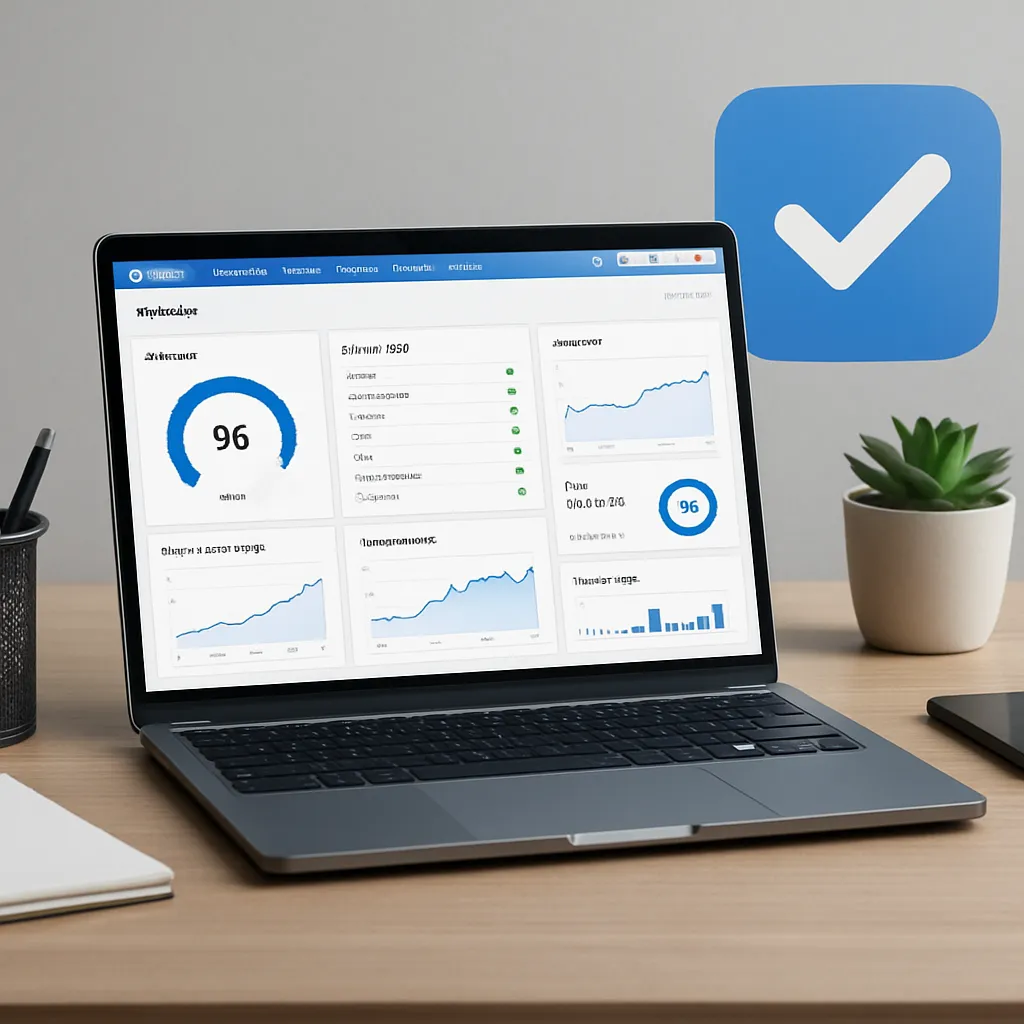
Woorank
Few tools in the optimization stack have managed to balance usability, breadth of checks, and agency-ready reporting the way Woorank does. It promises a clear picture of a website’s health, performance, and discoverability, then turns that picture into an actionable to‑do list. For freelancers and agencies juggling multiple projects, this combination can be the difference between guesswork and a disciplined, measurable pipeline of improvements. For in‑house marketers, it is a way to bring visibility and accountability to initiatives that otherwise disappear into tickets and spreadsheets.
What Woorank is and how it fits into a modern optimization workflow
Woorank is a website review and monitoring platform focused on diagnosing issues and opportunities across content, technology, and authority signals. In practice, it sits between tactical research suites and your execution tools. Rather than replacing specialized suites for deep competitive analysis, it gives you a reliable baseline and an at‑a‑glance status for both quick wins and long‑term improvements.
The platform’s value shows up in three moments that matter: during discovery (to qualify prospects or new initiatives), during delivery (to enforce consistent standards across multiple sites), and during reporting (to translate complex changes into stakeholder‑friendly progress). For teams that need to make sense of scattered signals, Woorank packages those signals into prioritized tasks with clear explanations and links to supporting resources.
Core features that matter in day‑to‑day use
Instant website review and scoring
When you plug a domain into Woorank, you get a consolidated review that scores the site across multiple categories. The score is less about bragging rights and more about triage: it exposes patterns that need immediate attention and flags areas where your standards are close to being met. The overview is especially useful when managing a portfolio of properties; within minutes you can spot outliers that warrant deeper investigation.
Site crawl and technical checks
At the heart of the review is an internal crawler that surfaces indexation issues, broken links, duplicate content, and status code anomalies. The output consolidates both top‑level signals (e.g., missing canonical tags) and granular problems (e.g., individual redirect chains). Because the crawl is scheduled and comparable over time, it becomes your early‑warning system. One overlooked deployment can quietly create hundreds of thin pages; a scheduled crawl catches it before the weekly report does. This is also where the platform provides concrete directions—what changed, why it matters, and how to fix it—turning findings into a living checklist rather than a static PDF. For many organizations, this becomes their operational heartbeat for technical SEO.
Keyword and rankings tracking
Woorank supports localized tracking of targeted terms, charting visibility over time. While it will not replace a heavyweight research suite, it provides context for current priorities: are the pages you fixed two sprints ago now trending upward, and do the terms you moved into title tags and headings reflect positively in positions? This feedback loop helps teams validate whether their implementation is closing the gap on chosen targets, connect changes to outcomes, and decide whether the next sprint should extend a winning pattern or address a stubborn bottleneck.
Backlink and authority overview
The platform supplies a high‑level snapshot of a site’s linking profile to support health checks and risk scans. You will not find the largest index on the market here; instead, you get a focused view of authority signals, anchor distribution, and potential toxicity markers. For pitch decks or quarterly reviews, this is often sufficient to demonstrate whether your acquisition efforts are bearing fruit and whether a rise or fall in visibility is plausibly connected to link dynamics. For deep prospecting or digital PR planning, you can complement this snapshot with a specialized index.
Chrome extension for on‑page diagnostics
Woorank’s browser extension condenses much of the platform’s logic into a quick‑reference panel. It’s a convenient way to perform spot checks while reviewing templates, QAing rollouts, or exploring competitors. Instead of switching contexts, you can verify page‑level metadata, headings, indexability directives, and performance hints in the very moment you’re looking at the page. For teams conducting content reviews or migration audits, this eliminates friction and speeds up decision‑making.
Integrations and reporting
Integrations with data sources such as Google Search Console and Google Analytics allow Woorank to ground its recommendations in real usage and visibility. This blending of telemetry and diagnostic rules helps avoid generic prescriptions. The reporting system can be white‑labeled and exported, aligning with agency needs. Because the reports are consistent across projects, teams can maintain a single standard of evidence when communicating with stakeholders, even when underlying sites vary dramatically in stack or scale.
Lead generation tools for agencies
One of Woorank’s underappreciated strengths is how it supports sales. The embeddable lead capture module lets prospects run lightweight assessments on your site, generating qualified conversations without manual effort. Paired with automated project creation, this transforms the top of your funnel: you are no longer emailing vague offers—you are responding to a prospective client’s live issues with a concrete action plan already mapped in the platform.
Does Woorank actually help improve results?
Tools do not rank pages—work does. Still, the right tool changes the economics of that work. Woorank helps improve outcomes by enforcing systematic habits: clear baselines, prioritized roadmaps, and measurable increments. Several practical scenarios illustrate how this turns into results:
- New site launch readiness: A pre‑launch review combined with a post‑launch comparison catches regressions like blocked resources, sloppy redirects, or missing security headers before they become costly.
- Content program acceleration: The platform flags thin pages, warns about cannibalization, and tracks the impact of revised headings and internal links. Over a quarter, this keeps content investments aligned with search intent and reduces waste.
- Migration risk reduction: Scheduled crawls and side‑by‑side comparisons help ensure that legacy URLs are correctly mapped, metadata survives template changes, and traffic‑holding pages retain their equity during platform shifts.
- Stakeholder alignment: Progress dashboards transform hand‑wavy discussions into objective milestones. This defuses scope creep and clarifies whether slow movement is rooted in resource bottlenecks, dependency delays, or hypothesis failure.
There is also a motivational aspect that should not be underestimated: when teams see a consistent score rise as they chip away at foundational tasks, they are more likely to keep shipping. That rhythm incrementally compounds into significant gains.
Key areas Woorank evaluates and why they matter
Woorank’s checklist spans multiple categories that directly influence search performance and user outcomes. Each category connects to a distinct lever in your strategy:
- Indexability and crawlability: Without predictable discovery, even excellent content remains invisible. By monitoring directives, sitemaps, and server responses, you minimize friction for bots and ensure changes are noticed quickly.
- Meta and headings: Titles and headings communicate relevance and intent. Small improvements at scale can shift click‑through rates and rankings, especially for mid‑tail and long‑tail terms.
- Page experience and performance: Fast, stable pages with responsive layouts correlate with lower bounce rates and stronger engagement. Signals related to Core Web Vitals are particularly useful when prioritizing front‑end work.
- Content depth and duplication: Consolidating overlapping assets and elevating thin pages improves topical authority and internal link efficiency. This often produces outsized returns for mature sites with legacy content.
- Link profile health: A stable, relevant link graph protects gains and supports sustainable growth. Woorank’s summaries help you assess risks and opportunities without drowning in noise.
- Enhancements and semantics: Marking up entities with structured data can unlock rich results, improve disambiguation, and enhance eligibility for features that capture more screen real estate.
Strengths, limitations, and practical trade‑offs
Where Woorank shines
- Clarity and speed: The interface distills complex checks into digestible findings. Non‑specialists can act without reading a textbook first, while specialists appreciate the coverage and consistency.
- Operational discipline: Projects, tasks, and schedules impose a cadence. This is crucial for teams that struggle to translate insights into repeatable execution.
- Agency enablement: White‑label reports and lead capture bridge the gap between presales and delivery. That alignment reduces friction and shortens deal cycles.
- Portfolio scale: If you manage dozens of domains, uniform scoring and comparable dashboards let you spot and fix problems at scale, not just one site at a time.
Where it may fall short
- Deep research: For exhaustive competitor mapping, large‑scale link prospecting, or content gap modeling across markets, you will want specialized suites dedicated to those tasks.
- Log analysis and custom diagnostics: Enterprise teams that rely on raw log files, nuanced rendering studies, or bespoke quality scoring will view Woorank as complementary, not central.
- Backlink depth: The link snapshots are appropriate for health checks and reporting, but not for exhaustive discovery in competitive niches where the marginal link matters.
What this means in practice
Think of Woorank as a foundation and accelerator. It ensures you do the right basic things, in the right order, at the right time. If your operation is chaotic, this is the fastest fix. If your operation is already mature, Woorank becomes a guardrail—keeping the fundamentals tight while your analysts dive deeper elsewhere.
Practical workflows that deliver results
From audit to action
Start by running a comprehensive review and categorizing findings by difficulty and impact. Share this as a sprint backlog, not a report archive. Assign owners, set due dates, and align each item with a measurable objective such as improved indexation, faster load time, or increased conversions. Re‑run the review after each sprint and annotate the deltas. Over several cycles, this transforms chaotic lists into institutional memory.
Content lifecycle management
Build a feedback loop that ties ideation, publishing, refinement, and deprecation into a single system. Use Woorank to monitor meta hygiene, indexation, and engagement signals. Pair those insights with rank tracking to identify where small changes can lift pages into stronger positions. Most programs discover that 20 percent of their library deserves 80 percent of the attention; Woorank helps you spot those leverage points.
Template‑driven improvements
If your site uses a design system or CMS templates, fix issues once at the template level—headings order, meta defaults, internal linking modules, lazy loading rules—and watch improvements roll out across large sections. Woorank’s before‑and‑after comparisons quantify the impact of these systemic changes, helping you make the case for engineering time.
How Woorank compares to alternatives
It is helpful to position Woorank relative to adjacent categories:
- Crawlers like Screaming Frog or Sitebulb: These desktop tools provide extreme depth and flexibility, especially for technical deep dives. Woorank’s advantage is ease, scheduling, collaboration, and integrated reporting. Many teams use both: a desktop crawler for surgical analysis and Woorank for ongoing governance.
- All‑in‑one research suites: Robust platforms excel at competitive landscaping, advertising insights, and massive keyword catalogs. Woorank is lighter, faster to onboard, and better suited to operationalizing the fundamentals across many properties.
- In‑house dashboards: Custom stacks can be powerful but require maintenance. Woorank minimizes maintenance overhead and improves time to value, particularly for small teams and agencies.
Does it help with rankings and traffic?
Direct causation is rare in complex ecosystems, but reliable patterns exist. Teams that keep indexation clean, metadata coherent, performance solid, and content aligned to searcher intent usually improve visibility. Woorank shortens the path to those patterns. When paired with a realistic roadmap and the capacity to implement, you typically see earlier lifts in mid‑tail queries, steadier crawl frequency, and improved engagement on evergreen assets. Over quarters, these gains compound. The key is to treat the platform as a process enabler rather than a silver bullet.
Opinion: what stands out and who will benefit most
Three traits make Woorank easy to recommend. First, its emphasis on prioritization keeps teams honest about what matters now versus later. Second, the sales‑to‑delivery bridge is rare and valuable; agencies can turn cold interest into scoped projects with minimal friction. Third, the user experience remains approachable without sacrificing the depth required for serious work.
Organizations that benefit most include agencies managing multiple small to mid‑sized sites, in‑house teams seeking a governance layer over their stack, and founders who need a reality check on their site’s readiness. Power users in highly competitive categories will still pair Woorank with specialist tools—but they will appreciate having a reliable foundation so deep tactics are not built on shaky ground.
Tips to maximize value and avoid common pitfalls
- Set thresholds and alerts: Treat scores and warnings as SLAs. If a metric falls below your threshold, it triggers work, not a discussion.
- Close the loop: Every recommendation should have an owner, a due date, and a follow‑up measurement. Without this, audits become wallpaper.
- Integrate data sources early: Pulling in verified search and behavior data improves prioritization and prevents cargo‑cult changes.
- Document exceptions: Some warnings are acceptable by design. Mark them as known exceptions so the team focuses on real regressions.
- Calibrate with business goals: Map tasks to revenue levers—products, geographies, or funnels—so improvements translate into outcomes leadership cares about.
Pricing, support, and learning curve
Woorank’s pricing tiers generally align with the number of projects, the depth of crawling and tracking, and the scale of reporting needs. For solo consultants or small teams, entry tiers are enough to establish discipline and deliver client‑ready outputs. As you scale into more domains and stakeholders, higher tiers unlock more automation and collaboration. The interface itself is friendly, which shortens the learning curve; most users are productive in a day. Support resources—guides, checklists, and contextual help—reinforce best practices and reduce the need for hand‑holding.
Security, governance, and team dynamics
Beyond features, Woorank supports a governance mindset. Role‑based access and project scoping keep client data segmented. Exportable, standardized reports remove personality from the equation; whether you are onboarding a new analyst or presenting to a skeptical CTO, the facts arrive in the same format each time. Over months, this consistency builds trust and helps teams spend less time debating and more time delivering.
Verdict: a dependable foundation for sustainable improvement
Woorank will not write your content or earn your links, but it will make you better at the work that moves the needle. Treat its recommendations as a living backlog, revisit them on a schedule, and show your stakeholders the deltas. In environments where resources are constrained and expectations are high, the platform repays its cost by preventing unforced errors, accelerating feedback loops, and clarifying next actions. When paired with disciplined execution, it becomes a steady engine for growth.
Key concepts highlighted in this review
- Foundational importance of SEO hygiene and governance
- Operational value of a comprehensive site audit with prioritized tasks
- Impact of thoughtful keyword research and alignment to intent
- Template‑level fixes that improve on-page optimization at scale
- Monitoring health and risk through backlinks snapshots
- Ensuring reliable discovery via strong crawlability
- Prioritizing page experience with attention to Core Web Vitals
- Enhancing eligibility and clarity through structured data
- Protecting fundamentals within a broader technical SEO program
- Grounding decisions in trustworthy analytics and search telemetry